Infrastructure as code has become the backbone of modern DevOps workflows. The tools below each take a different approach to defining, provisioning, and managing infrastructure. This list is not a ranking of quality; it is a set of options worth knowing as you evaluate what fits your team's practices and constraints.
How We Picked These Tools
We selected tools that are actively maintained and documented, cover a range of IaC workflows (provisioning, orchestration, policy, and platform building), and have publicly available source pages describing their capabilities. Each entry includes verified facts drawn directly from those pages.
| Provider | Best For |
|---|---|
| Terraform | Teams standardizing on a declarative configuration language for multi-cloud provisioning |
| Pulumi | Teams that want to use familiar programming languages and IDEs for infrastructure |
| Spacelift | Platform teams orchestrating multiple IaC tools with policy and Day 2 automation |
| env0 | Teams balancing developer self-service with governance and drift remediation |
| Scalr | Teams migrating from Terraform Cloud who want run-based pricing and built-in drift detection |
| OpenTofu | Teams seeking an open-source, Terraform-compatible IaC tool with community governance |
| Crossplane | Platform engineering teams building Kubernetes-native control planes and custom APIs |
The 7 Tools in Focus
#1 Terraform
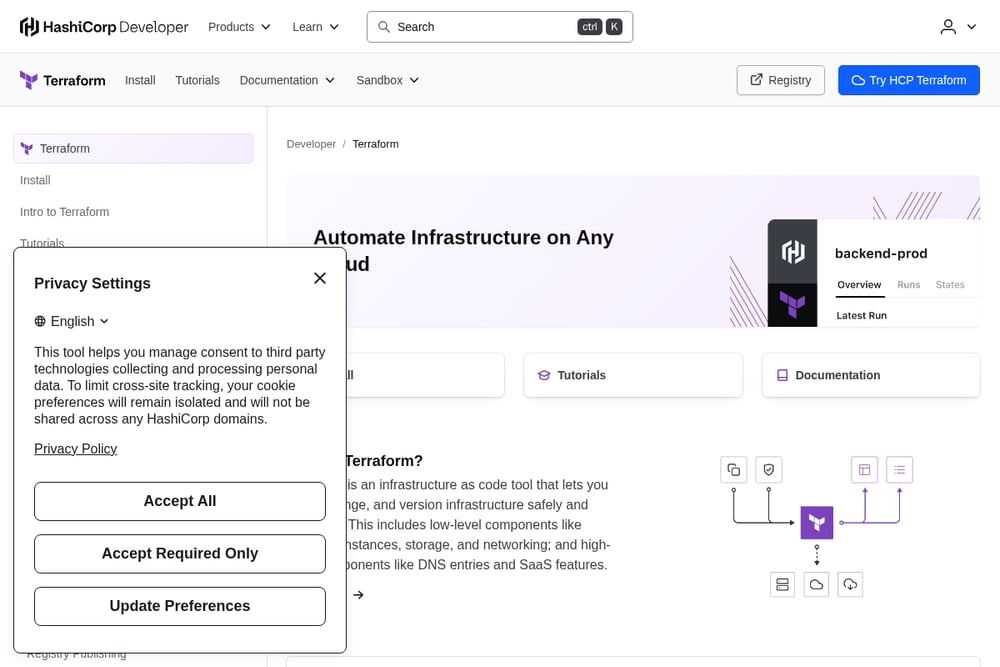 A screenshot of the Terraform website.
Terraform is an infrastructure as code tool that lets you build, change, and version infrastructure safely and efficiently. It covers low-level components like compute instances, storage, and networking, as well as high-level components like DNS entries and SaaS features. The tool uses a configuration language and CLI-based workflows, and HCP Terraform provides collaboration for teams provisioning infrastructure. It suits DevOps teams that want a widely documented, provider-driven approach to managing cloud and on-prem resources.
#2 Pulumi
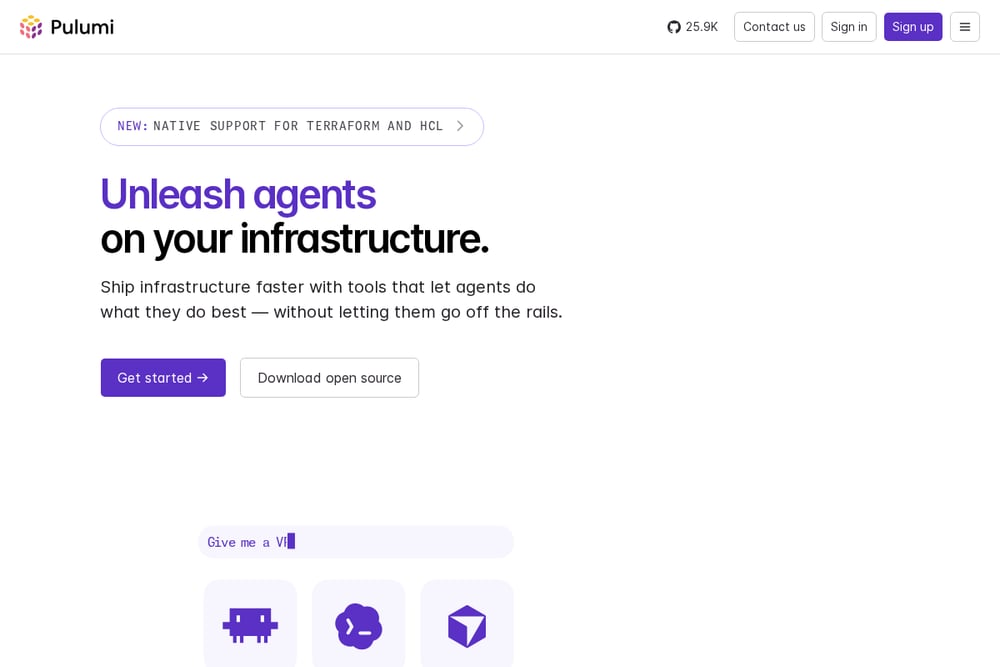 A screenshot of the Pulumi website.
Pulumi is an infrastructure as code platform that lets teams build infrastructure with modern languages like TypeScript, Python, Go, .NET, and Java, or with YAML and HCL. It includes capabilities for encrypted secrets, dynamic credentials, policy as code, and audit trails, and it offers an AI infrastructure agent called Neo. Pulumi also provides centralized configuration and secrets management across providers such as Vault, AWS Secrets Manager, and Azure Key Vault. It suits DevOps and platform teams that prefer general-purpose programming languages and reusable components via package managers.
#3 Spacelift
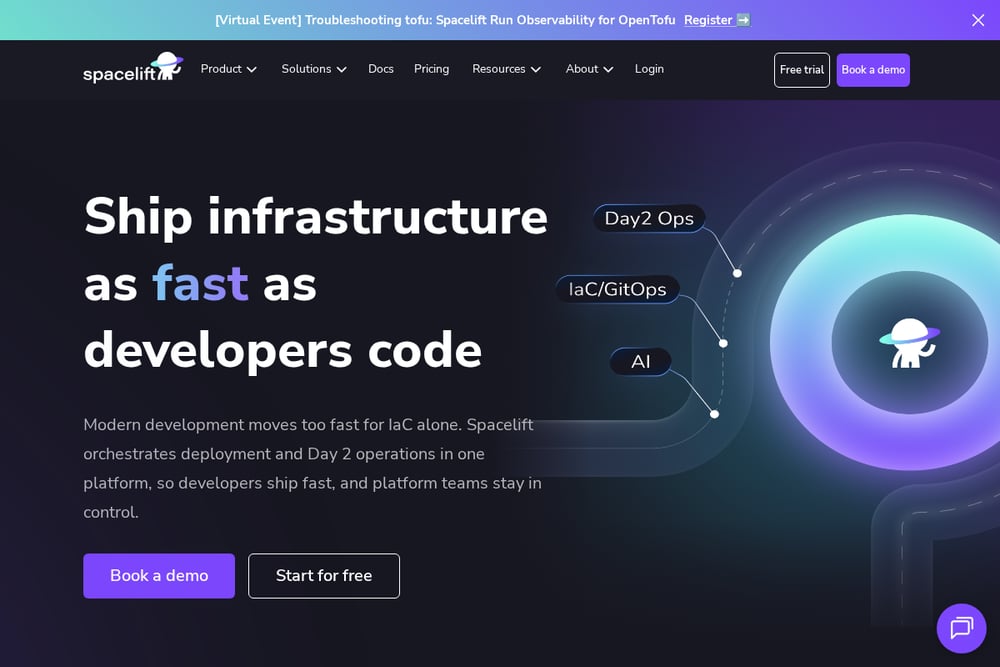 A screenshot of the Spacelift website.
Spacelift is an orchestration platform for infrastructure as code that brings governed IaC and GitOps deployment together with Day 2 operations. It supports Terraform, OpenTofu, CloudFormation, Pulumi, Kubernetes, and Ansible in one workflow, and it models environments with stacks and dependencies. The platform includes OPA-based policies for plans, approvals, and notifications, plus Spaces, Contexts, and RBAC for delegation. It suits platform teams that need to standardize how multiple IaC tools run and to automate post-deployment operations.
#4 env0
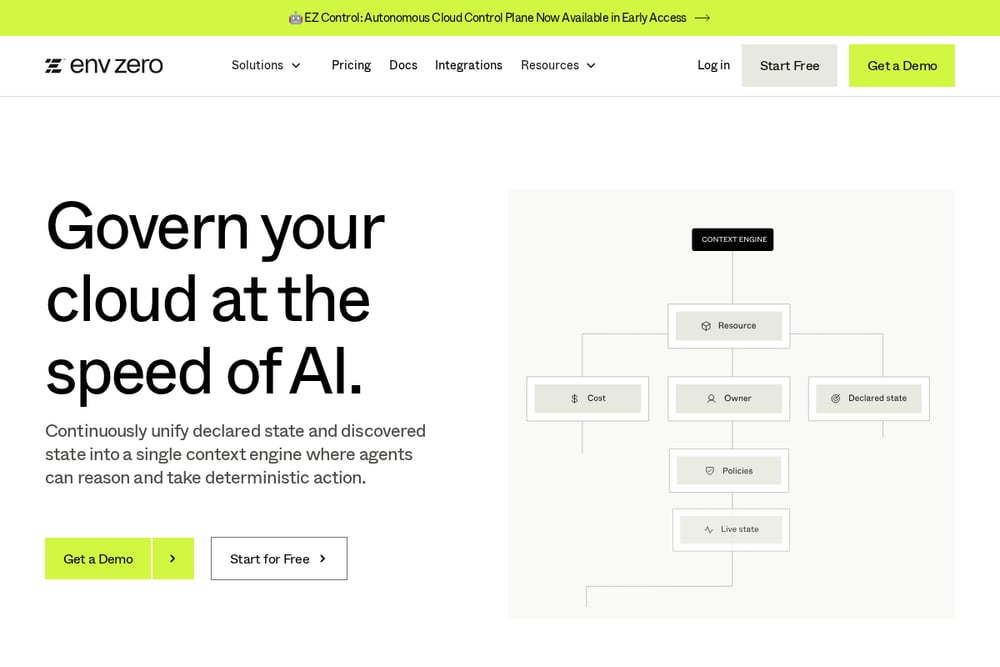 A screenshot of the env0 website.
env0 is a cloud control plane that focuses on self-service infrastructure with guardrails, drift detection and remediation, cloud asset management, and continuous policy enforcement. It connects to existing code from GitHub, GitLab, Bitbucket, or Azure DevOps without changes, and it applies approvals, cost limits, and security rules across teams. The platform compares declared state against discovered state and enforces fixes at the IaC source. It suits platform and governance teams that want to give developers self-service environments while keeping policy and drift under control.
#5 Scalr
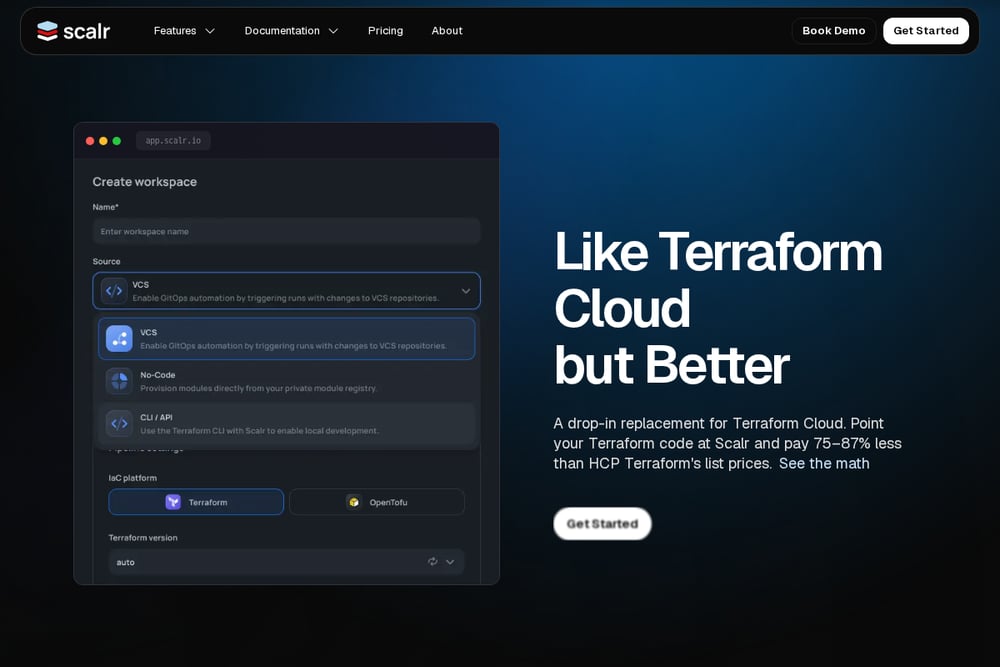 A screenshot of the Scalr website.
Scalr is a Terraform Cloud alternative that provides the same workspaces, variables, state, and run workflow, plus drift detection and self-hosted agents at no extra charge. It offers PR-native GitOps with apply-before-merge and slash commands, policy as code using Open Policy Agent or Checkov, and granular RBAC with SAML, OIDC, and secrets management. The platform also includes reporting on run metrics, versions, providers, modules, and stale workspaces. It suits platform teams looking for a drop-in replacement for Terraform Cloud with predictable run-based billing.
#6 OpenTofu
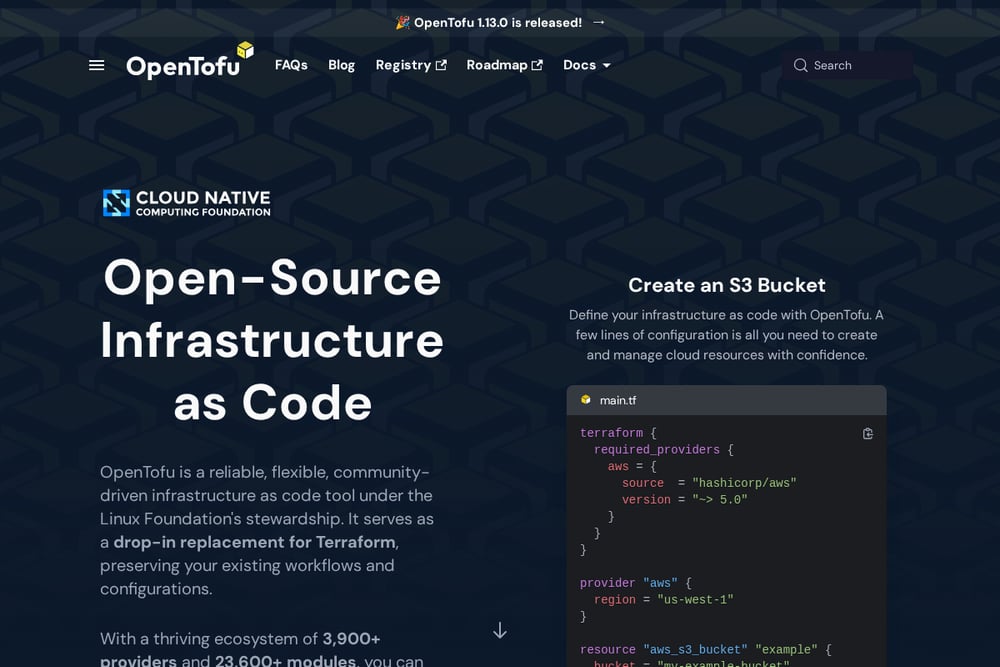 A screenshot of the OpenTofu website.
OpenTofu is an open-source infrastructure as code tool under the Linux Foundation's stewardship, positioned as a drop-in replacement for Terraform that preserves existing workflows and configurations. It offers features such as the -exclude flag, provider iteration with for_each, early variable and local evaluation, and client-side state encryption with multiple key providers. The project is community-driven and supported by a registry of providers and modules. It suits DevOps teams that want an open-source, Terraform-compatible toolchain with community-led feature development.
#7 Crossplane
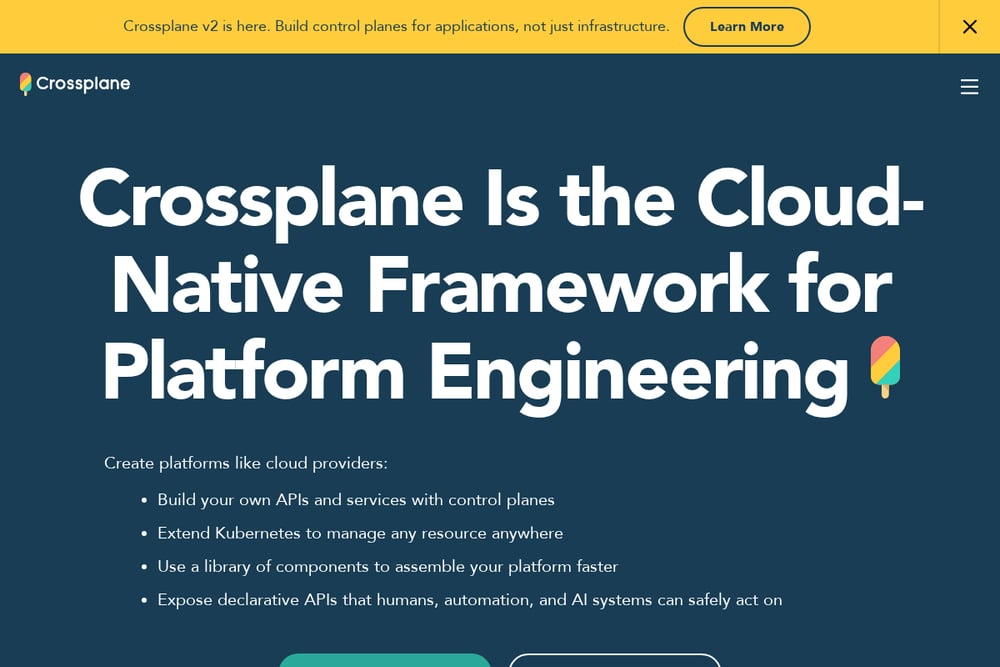 A screenshot of the Crossplane website.
Crossplane is an open-source, CNCF project built on Kubernetes that lets teams build control planes for applications and infrastructure. It extends Kubernetes to manage any resource anywhere and lets you expose declarative APIs that humans, automation, and AI systems can act on. The framework is extensible through Providers and Configurations, and it inherits Kubernetes features such as Role Based Access Control. It suits platform engineering teams that want to build custom, Kubernetes-native control planes and self-service APIs.
Which One Should You Choose?
Start by mapping your team's existing skills and workflows to each tool's model. If your team already writes Terraform configurations, evaluate Terraform, OpenTofu, Scalr, and Spacelift for compatibility and orchestration needs. If you prefer general-purpose languages, Pulumi may fit. If governance and drift remediation are central, consider env0. If you are building a Kubernetes-native platform with custom APIs, look at Crossplane. Check each tool's documentation for integration details, policy support, and operational requirements before committing.
Final Thoughts
Each tool on this list addresses a different part of the infrastructure as code lifecycle, from authoring and provisioning to orchestration, governance, and platform building. There is no single best choice; the right fit depends on your team's language preferences, existing toolchain, compliance requirements, and operating model. Use the verified facts above as a starting point for your own evaluation.
Know a company that belongs on this list? Email us at editorial@peekwire.com.