
When your baby struggles with feeding, it can feel like the whole world stops. You want expert help, but dragging a fussy newborn to appointments feels impossible. That is why in-home infant therapy and lactation support has become a lifeline
The Rise of Integrated Infant Care
The field of infant therapy is evolving rapidly. Parents no longer accept a fragmented approach where a lactation consultant addresses feeding while a separate physical therapist works on motor delays. The most effective practitioners now combine both disciplines, recognizing that a baby's ability to feed is deeply connected to their body alignment, muscle tone, and oral motor skills. In-home visits have also become the gold standard, allowing therapists to observe natural feeding patterns and use your own environment for treatment. This integrated, home-based model reduces stress for both baby and parent while accelerating progress.
How We Ranked These Practices
We evaluated each practice on four key criteria: depth of dual expertise in both physical therapy and lactation, availability of in-home sessions, range of conditions treated (from torticollis to tongue-tie recovery), and client feedback on outcomes and communication. Practices that offered a truly integrated approach and personalized, responsive care scored highest.
Here is a quick look at how these five providers compare. Each brings something unique to the table, but all share a commitment to helping your baby thrive.
| Provider | Best For |
|---|---|
| Physical Therapy For Infants | Parents wanting a free initial consultation and rapid progress |
| Breastfeeding Center for Greater Washington | Families in the DC metro area needing a full-service lactation and bodywork center |
| Pediatric Therapy Specialists | Families seeking a one-stop shop for multiple pediatric therapies |
| Pediatric Physical Therapy and Lactation | Parents in the Washington, DC area needing a dual PT and IBCLC for in-home care |
| GO Physical Therapy Children's Rehab Center | Nebraska families needing a clinic-based team with breastfeeding specialist support |
Detailed Reviews of the Top 5 Providers
#1 Physical Therapy For Infants
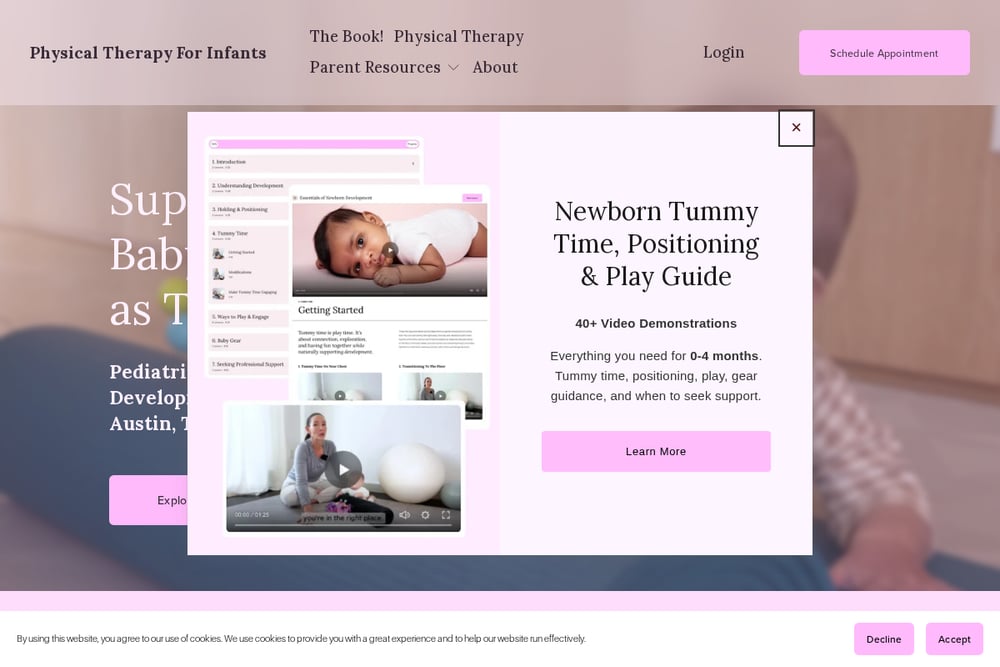 A screenshot of the Physical Therapy For Infants website.
Dr. Jennifer Gaewsky leads this Austin-based practice with a rare combination of a Doctorate in Physical Therapy and a Certified Breastfeeding Specialist credential. She specializes in delayed milestones, torticollis, and breastfeeding difficulty, offering all sessions in the comfort of your home. Her approach is play-based and parent-focused, giving you tools to support development between visits. Clients appreciate her direct access via text and the free 15-minute consultation call to see if she is the right fit. The practice's clear focus on movement and feeding as interconnected systems makes it a standout choice for families seeking efficient, meaningful results.
#2 Breastfeeding Center for Greater Washington
 A screenshot of the Breastfeeding Center for Greater Washington website.
This Washington, DC area center offers infant bodywork and feeding therapy through a partnership with NOVA Infant Physical Therapy. Their holistic, hands-on approach addresses oral-motor coordination, tongue and jaw mobility, and postural alignment to improve feeding success. The therapist integrates gentle manual therapy with developmental positioning and caregiver education on body mechanics. They treat conditions like body tension, torticollis, tongue tie, and reflux in a calm, supportive setting. The collaboration between a dedicated lactation center and a skilled physical therapist creates a seamless care experience for families.
#3 Pediatric Therapy Specialists
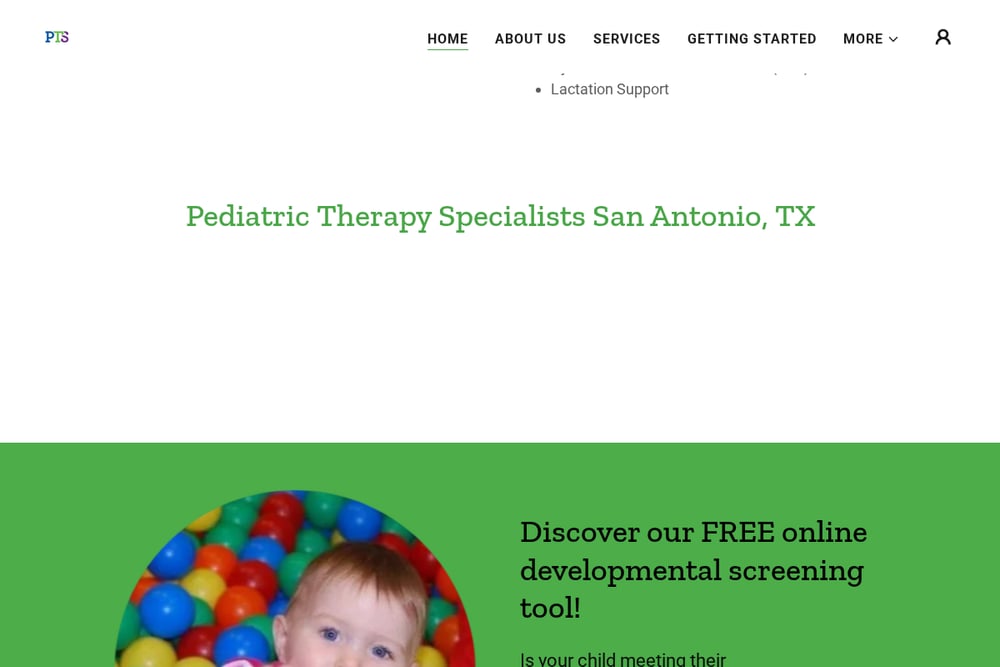 A screenshot of the Pediatric Therapy Specialists website.
Based in San Antonio, Texas, this multidisciplinary practice offers occupational, physical, and speech therapies alongside lactation support. Their therapists use play-based techniques to improve strength, coordination, and sensory processing while addressing feeding challenges. They provide a free online developmental screening tool to help you determine if your child needs intervention. The practice accepts TEFA vendors and offers teletherapy options for added flexibility. With a wide range of services under one roof, they are a strong choice for families who want comprehensive pediatric care beyond just feeding.
#4 Pediatric Physical Therapy and Lactation
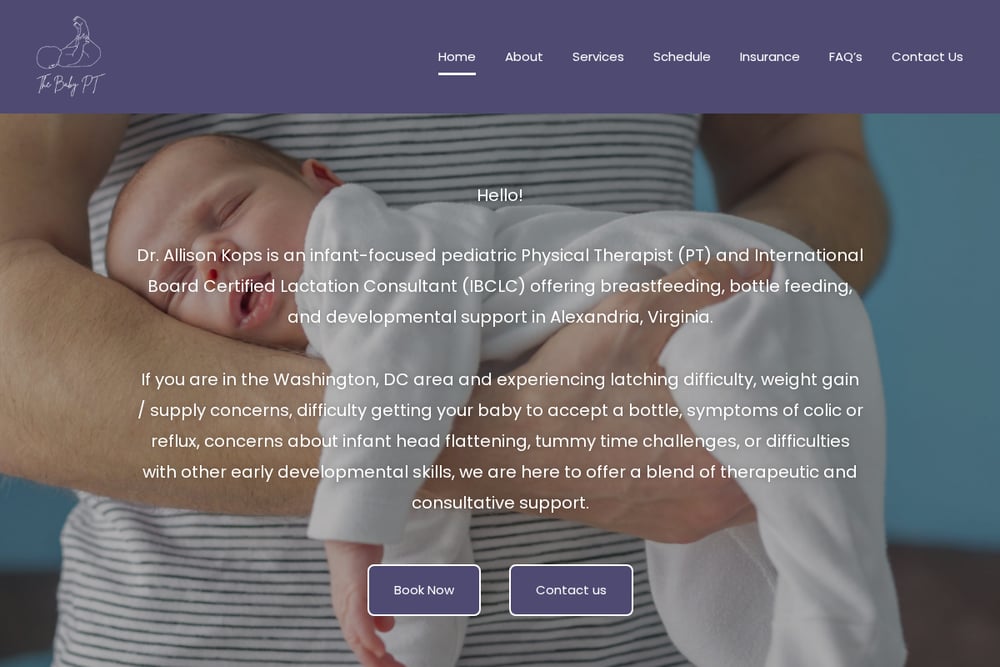 A screenshot of the Pediatric Physical Therapy and Lactation website.
Dr. Allison Kops runs this Alexandria, Virginia practice as both a pediatric physical therapist and an International Board Certified Lactation Consultant. She offers in-home visits that blend therapeutic exercises with feeding support, addressing latching difficulty, weight gain concerns, colic, reflux, and torticollis. Her dual expertise allows her to create personalized care plans that tackle both motor and feeding challenges simultaneously. Clients praise her warm demeanor, thorough evaluations, and responsiveness via text between sessions. For families in the DC area, she provides a uniquely integrated approach that treats the whole infant.
#5 GO Physical Therapy Children's Rehab Center
 A screenshot of the GO Physical Therapy Children's Rehab Center website.
With locations in Grand Island, Kearney, and Hastings, Nebraska, this center offers a Certified Breastfeeding Specialist as part of a broad pediatric therapy team. They treat a wide range of conditions including failure to thrive, feeding problems, torticollis, and tongue-tie. Their approach includes physical, occupational, and speech therapies, as well as specialized techniques like MNRI craniosacral therapy and myofunctional therapy. While they do not specifically advertise in-home visits, their comprehensive clinic-based services provide strong support for feeding and developmental delays. Families in central Nebraska benefit from having multiple therapy disciplines available in one location.
How to Pick the Right Provider for Your Baby
Start by looking for a practitioner who holds both a physical therapy license and a lactation credential, as this dual expertise ensures they understand how body mechanics affect feeding. Prioritize in-home visits if your baby is easily overstimulated or if travel is stressful. Ask about the specific conditions they treat, especially if your baby has torticollis, tongue-tie, or reflux. Finally, read client testimonials to gauge communication style and responsiveness, since you will likely have questions between sessions.
Streamline Your Search with a Simple Workflow
First, list your baby's primary challenges, such as latching difficulty or head flattening. Then, use the rankings above to identify two or three providers that match your location and needs. Schedule a free consultation call if offered, and prepare a list of questions about their experience with your specific concerns. Finally, trust your gut after the first session, the right therapist will make both you and your baby feel at ease.
The Bottom Line on Infant Feeding and Therapy Support
Finding the right support for your baby's feeding and development does not have to be overwhelming. The five practices highlighted here represent the best of integrated, in-home care. Whether you choose a national leader like Physical Therapy For Infants or a local expert like Pediatric Physical Therapy and Lactation, the key is to act early and choose a provider who sees the whole picture. Your baby's comfort and progress are worth the investment.