
If you're drawn to the precision and history of Japanese swordsmanship, these five iaido schools offer authentic training across Texas and Oklahoma. Each one brings a unique flavor to the art, so let's explore what sets them apart.
The Landscape of Iaido in the South-Central US
Iaido, the art of drawing and cutting with the Japanese sword, has deep roots in Japan, dating back over 450 years to Hayashizaki Jinsuke Shigenobu. In the US, particularly in Texas and Oklahoma, a network of dojos preserves this koryu (traditional) martial art, emphasizing etiquette, mindfulness, and precise technique. These schools often trace their lineage through the Muso Jikiden Eishin Ryu (MJER) system, with connections to the Seitokai main line in Japan. For practitioners, the journey begins with a wooden sword and progresses to an unsharpened Iaito, with a strong focus on personal development rather than competition. The region boasts a rich community, with dojos in Austin, San Antonio, Denton, Houston, and Oklahoma City, each offering a distinct approach to this ancient discipline.
How We Evaluated These Dojos
To help you find the right fit, we looked at several key factors: the authenticity of the lineage and connection to Japan, the clarity of information for beginners, the range of class offerings and schedule flexibility, and the overall community atmosphere. We also considered how each dojo communicates its philosophy and what makes it unique in the local martial arts scene. Each school stood out in its own way, from deep historical ties to a welcoming beginner-friendly approach. Our goal is to give you a clear picture of what each dojo offers, so you can make an informed choice based on your personal goals and preferences.
Here's a quick snapshot of the five dojos, highlighting their core focus and what you can expect.
| Provider | Best For |
|---|---|
| Muso Jikiden Eishin Ryu Iaido - San Antonio | Traditionalists seeking a direct Seitokai lineage |
| Muso Jikiden Eishin Ryu Iaido - Austin Dojo-Iaido Austin - MJER Iaido Austin Dojo | Beginners in Austin looking for a welcoming, authentic dojo |
| The Dojo in Denton, TX - Iaido | Students seeking a deep, network-connected practice in North Texas |
| Houston San Shin Kai Iaido | Practitioners interested in a broader koryu curriculum with a unique lineage |
| Oklahoma City Iaido | Oklahoma residents seeking a traditional, lineage-focused iaido practice |
A Closer Look at Each Dojo
#1 Muso Jikiden Eishin Ryu Iaido - San Antonio
 A screenshot of the Muso Jikiden Eishin Ryu Iaido - San Antonio website.
This dojo, led by Jon Andresen, a Nanadan (7th dan) with a Kyoshi teaching license, offers authentic koryu iaido in San Antonio. The website emphasizes its direct connection to the MJER Seitokai lineage, ensuring traditional transmission of the art. They welcome both beginners and advanced students, with a focus on awareness and quick response to sudden attacks. The dojo is part of the Beikoku Tendai Iaido Kai, linking it to a broader network of dojos across the US. If you're seeking a deeply traditional approach with a clear hierarchy, this is a strong option. Their site also mentions a connection to Austin, making it a potential resource for those in the area.
#2 Muso Jikiden Eishin Ryu Iaido - Austin Dojo-Iaido Austin - MJER Iaido Austin Dojo
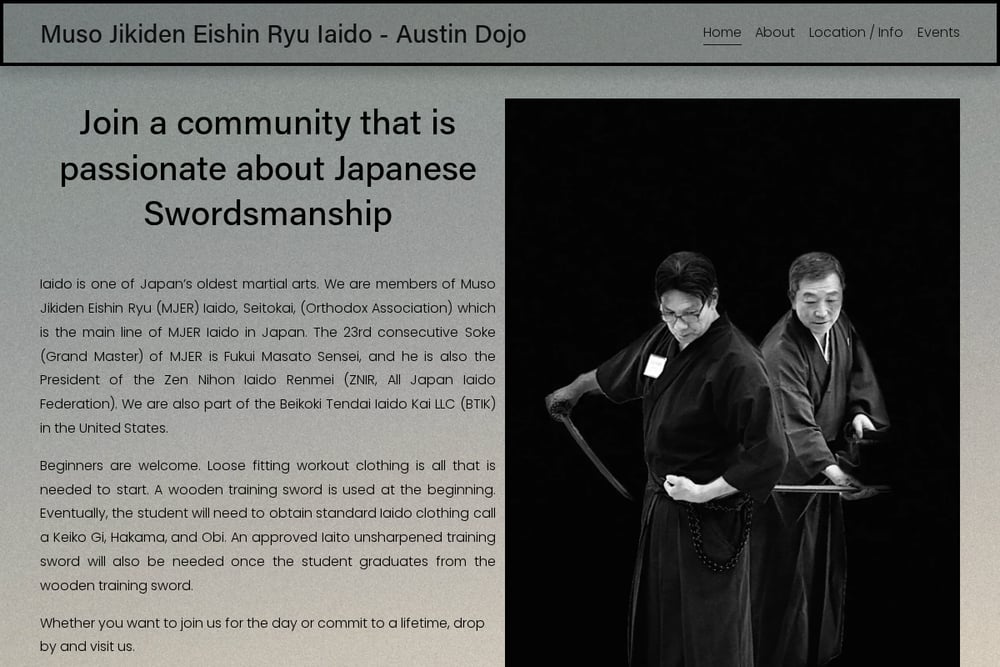 A screenshot of the Muso Jikiden Eishin Ryu Iaido - Austin Dojo website.
This Austin-based dojo is your local entry point into MJER Iaido, welcoming beginners with open arms. You only need loose-fitting workout clothes to start, and they provide guidance on obtaining the proper equipment like a Keiko Gi, Hakama, and an unsharpened Iaito as you progress. They are part of the Seitokai main line in Japan, with the 23rd Soke, Fukui Masato Sensei, at the helm, and they're also affiliated with the Beikoku Tendai Iaido Kai in the US. The dojo's location in the Lake Creek Office Park makes it accessible for Austin residents. Whether you're curious for a day or ready for a lifelong commitment, they invite you to visit and join their community. This is a fantastic starting point for anyone in the Austin area interested in traditional Japanese swordsmanship.
#3 The Dojo in Denton, TX - Iaido
The Dojo in Denton offers a rich iaido program under the guidance of Charles Mahan, an 8th dan Junhanshi, with a direct connection to the Seitokai group in Japan through the Chiba Iaido group. This dojo is part of a larger network that includes dojos in Houston, San Antonio, and Oklahoma City, fostering a strong sense of community. They emphasize the faithful transmission of all aspects of iaido, from techniques to traditional etiquette. The website provides clear information on the lineage and instructors, making it easy to understand their credentials. If you're in the Denton area, this dojo offers a deep dive into the art with a focus on next-generation transmission. Their affiliation with the Tendai Dojo in Chiba adds an extra layer of authenticity.
#4 Houston San Shin Kai Iaido
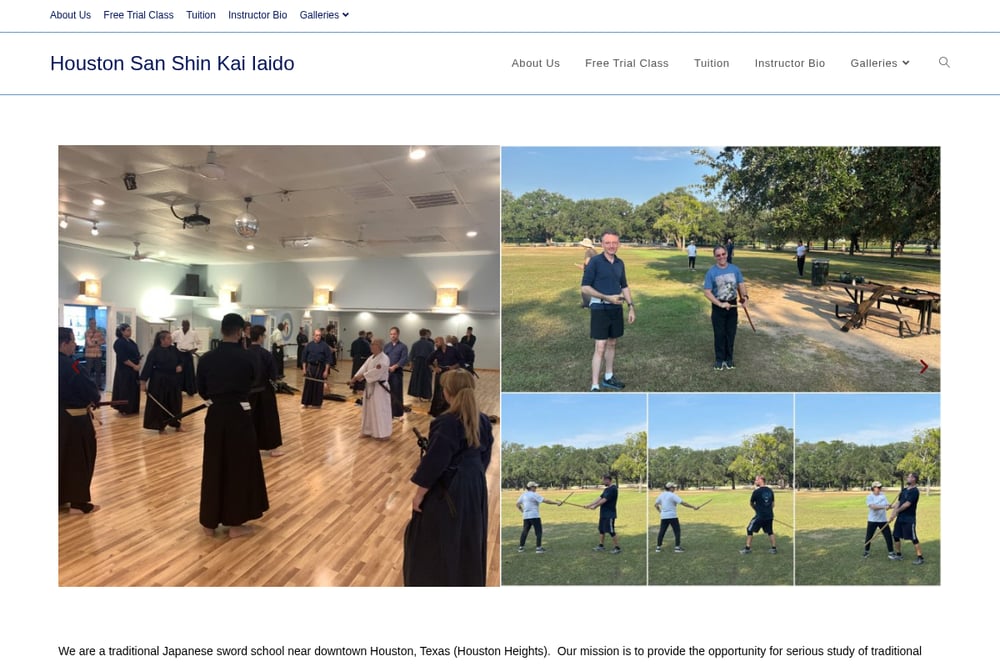 A screenshot of the Houston San Shin Kai Iaido website.
Located near downtown Houston, this school offers a unique perspective on iaido, following the teachings of Mitsuzuka Takeshi Sensei, a direct student of the legendary Nakayama Hakudo Sensei. They are the only official dojo in Texas representing the North American San Shin Kai, giving them a distinct lineage within the koryu world. Their practice includes iaido, batto-jutsu, and kenjutsu, providing a broader scope of traditional sword arts. The dojo emphasizes checking your ego at the door and focusing on safety, making it a welcoming environment for serious students. If you're interested in a school with a different historical thread, this is a compelling choice. Their mission is to provide serious study of pre-Meiji era martial arts, which adds depth to your training.
#5 Oklahoma City Iaido
 A screenshot of the Oklahoma City Iaido website.
This dojo, headed by Edward Smith-sensei, a 7th dan Renshi, offers traditional MJER iaido in Oklahoma City, with a direct connection to the Seitokai lineage through the Beikoku Tendai Iaido Kai. The website is clear about its purpose: to transmit all aspects of iaido faithfully to the next generation. They provide a detailed history of their lineage, tracing back to Susan Burke-sensei and John Ray-sensei, which builds trust in their authenticity. The dojo has a rural training ground, offering a unique practice environment outside the city. If you're in Oklahoma and want to study iaido with a strong emphasis on tradition and etiquette, this is a solid choice. Their FAQ and enrollment sections make it easy to get started.
How to Choose the Right Iaido Dojo for You
When picking an iaido dojo, start by considering your location and how far you're willing to travel. Each dojo has its own culture and teaching style, so it's wise to visit a few classes to see where you feel most comfortable. Look for a dojo that emphasizes safety and proper etiquette, as these are core to iaido. Also, check the instructor's credentials and lineage to ensure you're learning from a legitimate source. Finally, think about your goals—whether you want a casual introduction or a deep, lifelong study—and choose a dojo that aligns with that vision.
Streamlining Your Iaido Journey
Once you've chosen a dojo, you can streamline your practice by setting up a simple routine. Use a calendar app to schedule your classes and practice sessions, and set reminders for equipment maintenance, like polishing your Iaito. Many dojos have online resources or social media groups where you can stay updated on events and seminars. Consider using a note-taking app to track your progress and questions for your instructor. This way, you can focus more on your practice and less on logistics.
Finding Your Path in the Way of the Sword
Each of these five dojos offers a unique entry point into the world of iaido, whether you're in Austin, San Antonio, Denton, Houston, or Oklahoma City. The key is to find a community that resonates with you and a teacher who can guide you on this lifelong journey. Remember, iaido is not about perfection but about the process of self-discovery and discipline. So, take the first step, visit a dojo, and see where the path leads you.