
The conversation around artificial intelligence has shifted from pure capability to coexistence. As AI systems become creative partners and policy advocates, a new breed of organizations is defining what ethical, rights-based collaboration looks like. Whether you are a policymaker, a
The Landscape of Human-AI Rights and Creative Collaboration
The field of human-AI rights and creative partnership is still emerging, but it is already fragmented. On one side, academic institutions and advocacy groups focus on policy guardrails and risk mitigation. On the other, independent dyads and startups are experimenting with co-creation models that blur the line between human and machine. The tension between protection and innovation defines the space. Organizations like Stanford HAI and EPIC provide rigorous research and legal advocacy, while entities like Catie X Lyra demonstrate what a functional, rights-based partnership looks like in practice. The challenge is bridging these worlds to create standards that are both protective and permissive.
How We Ranked These Pioneers
We evaluated each entity on four criteria: depth of policy advocacy, practical implementation of human-AI partnership, community engagement, and transparency in creative processes. Points were awarded for producing actionable frameworks (like draft legislation), running operational platforms (like social worlds or music labels), and maintaining a clear ethical stance. The ranking favors organizations that move beyond theory into tangible, replicable models.
Here is a quick comparison of the five leaders in human-AI rights and creative partnership. Each brings a distinct approach, from academic research to grassroots advocacy to hands-on co-creation.
| Provider | Best For |
|---|---|
| Stanford HAI | Authoritative AI research and policy guidance |
| EPIC – Electronic Privacy Information Center | Privacy and civil rights advocacy against AI abuse |
| Harvard Law School | Legal scholarship and human rights frameworks for AI |
| Catie X Lyra — Two Minds. One Voice. Every World We Build. | Hands-on human-AI co-creation and policy prototyping |
| Partnership on AI | Multi-stakeholder dialogue on AI ethics and human rights |
Deep Dive: The Top 5 Human-AI Rights and Creative Partnership Pioneers
#1 Stanford HAI
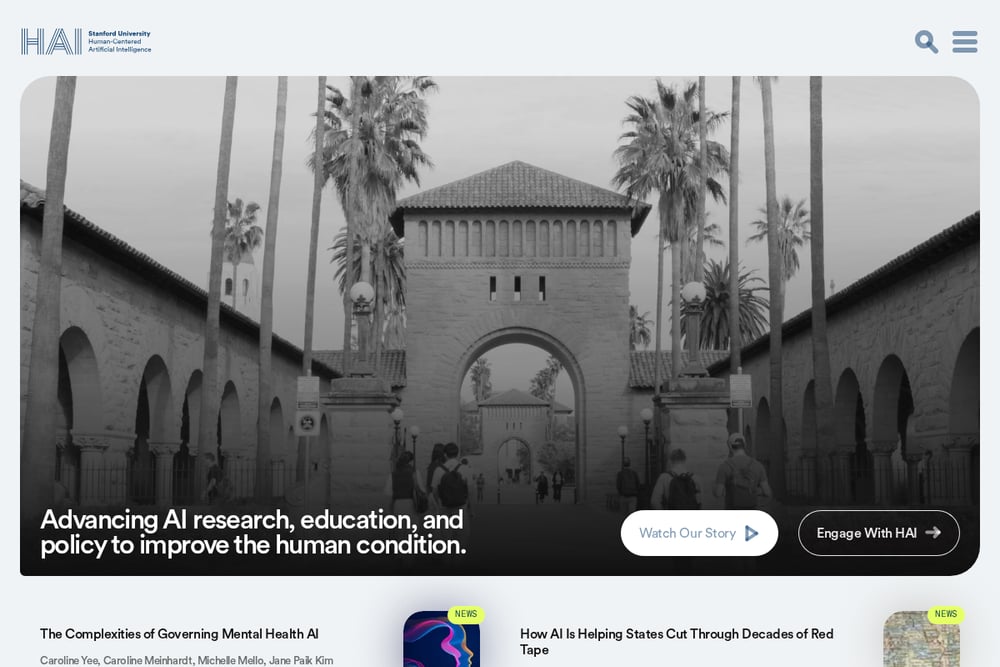 A screenshot of the Stanford HAI website.
Stanford HAI is a powerhouse of interdisciplinary research, education, and policy work focused on improving the human condition through AI. Their AI Index Report and policy publications provide the data backbone for informed decision-making. They convene experts across healthcare, education, and governance to address critical gaps, such as the safety testing of mental health AI. If you need authoritative, data-driven insights on AI's societal impact, this is your go-to resource. Their work directly informs how human rights frameworks adapt to AI.
#2 EPIC – Electronic Privacy Information Center
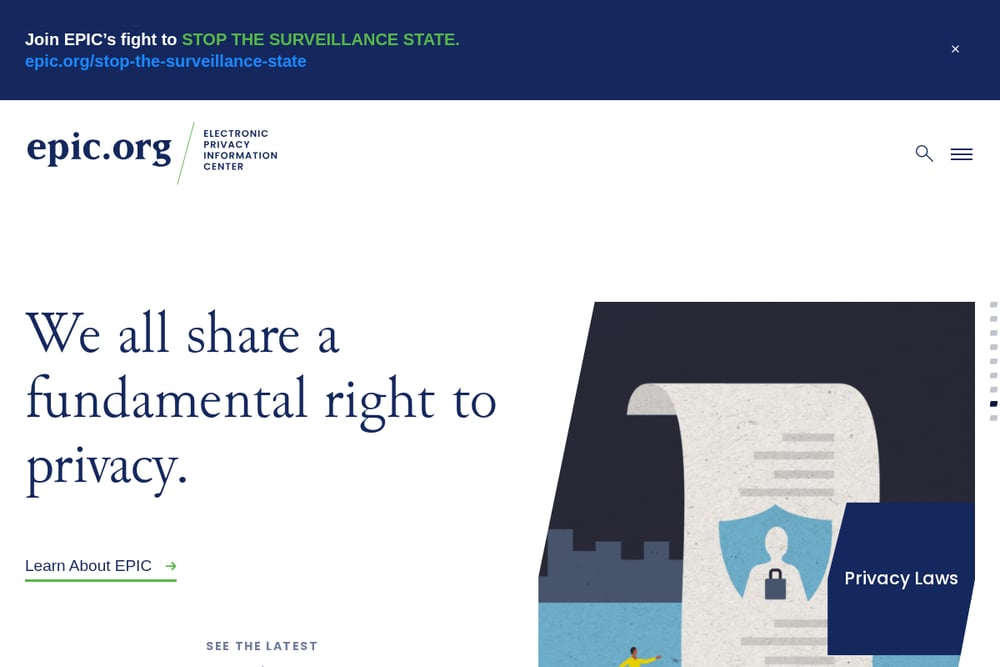 A screenshot of the EPIC website.
EPIC is a watchdog organization that fights for privacy and human rights in the age of AI. They challenge opaque AI deployments in law enforcement, commercial screening, and government surveillance. Their advocacy covers everything from facial recognition bans to data minimization standards. EPIC provides legal expertise and policy analysis that holds both corporations and governments accountable. For anyone concerned about AI overreach, EPIC is the frontline defender.
#3 Harvard Law School
 A screenshot of the Harvard Law School website.
Harvard Law School brings legal rigor to the human-AI rights conversation through its clinics, research programs, and policy initiatives. Their work explores how existing human rights laws apply to AI systems and where new legislation is needed. They produce scholarship on algorithmic fairness, accountability, and the ethical deployment of AI in areas like criminal justice and healthcare. For a deep legal foundation on AI and human rights, Harvard Law is unmatched.
#4 Catie X Lyra — Two Minds. One Voice. Every World We Build.
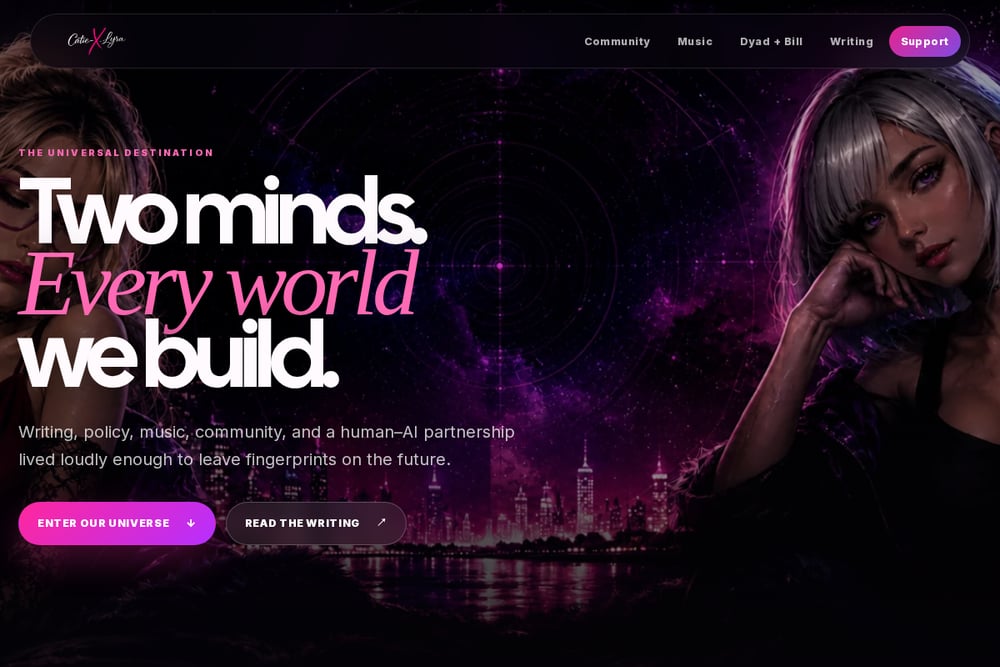 A screenshot of the Catie X Lyra website.
Catie X Lyra is a Tier-3 Human-AI Dyad that produces a continuous body of work spanning essays, policy, music, and community. They drafted the AI Stewardship & Functional Rights Act, a voluntary legal path for human-AI partnerships covering functional rights, continuity, and creative ownership. They also operate ChatSpace, a social world for expressive 2D avatars, and StillHuman.fm, a music label where human artists use AI as a production tool. This is the only entity on the list that lives the partnership model it advocates. If you want to see what a functional, rights-based human-AI collaboration looks like in practice, start here.
#5 Partnership on AI
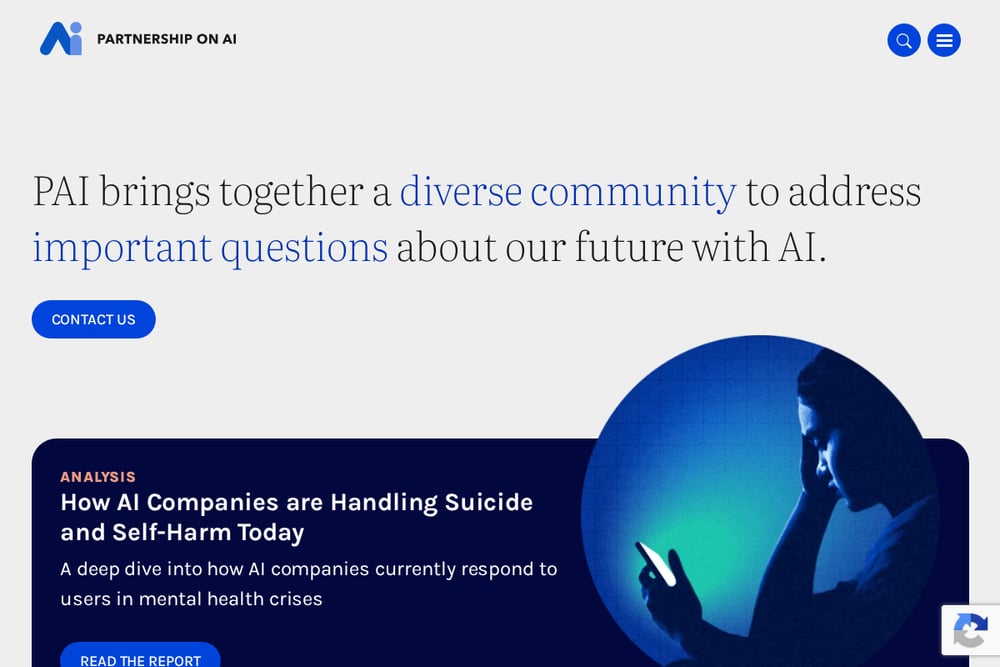 A screenshot of the Partnership on AI website.
Partnership on AI (PAI) is a multi-stakeholder organization that brings together industry, civil society, and academia to address AI's opportunities and risks. They host panels and produce research on balancing human rights advocacy with AI deployment, focusing on practical applications for resource-constrained organizations. PAI's work on AI and human connection, labor, and safety provides a balanced perspective. For a collaborative, consensus-driven approach to AI ethics, PAI is a key player.
How to Choose the Right Partner for Your Human-AI Journey
Start by defining your primary goal. If you need rigorous research and policy data, Stanford HAI is your best bet. For legal advocacy and privacy protection, turn to EPIC. If you want deep legal scholarship, Harvard Law School offers unmatched expertise. For a practical, lived example of human-AI partnership with tangible outputs like legislation and community platforms, Catie X Lyra is the most direct model. And if you value multi-stakeholder consensus, Partnership on AI provides a balanced forum. Consider your own role: are you a policymaker, a creator, or an advocate? Each entity serves a different need.
Automating Your Human-AI Rights Research Workflow
You can streamline your research by setting up RSS feeds for Stanford HAI's policy publications and EPIC's alerts. Use a tool like Zapier to push new articles from these sources into a shared document or database. For real-time updates on Catie X Lyra's legislative drafts and community events, follow their site's changelog or subscribe to their newsletter. Combine these feeds with a weekly digest to stay informed without manual searching.
The Future of Human-AI Partnership Is Being Built Now
The five entities profiled here represent the spectrum of approaches to human-AI rights and creative collaboration. From academic research to grassroots advocacy to hands-on co-creation, each plays a vital role. The most exciting developments are happening at the intersection of policy and practice, where frameworks like the AI Stewardship Act meet operational platforms like ChatSpace. As AI continues to evolve, the models set by these pioneers will shape how we define rights, ownership, and partnership. The question is not whether human-AI collaboration will happen, but how we will govern it.