
Houston is no stranger to water. From Tropical Storm Allison to Hurricane Harvey, the city has learned the hard way that traditional drainage and development patterns don't work anymore. Today, a new wave of landscape architects is rethinking how we
Why Houston Needs Resilient Landscape Architecture Now
Houston's relationship with water has always been complicated. Built on a coastal prairie with flat topography and clay soils, the city is naturally prone to flooding. But rapid development and climate change have turned occasional floods into chronic crises. After three 500-year floods in 24 years, the city has overhauled its stormwater codes, doubling detention requirements and banning net fill in floodplains. This regulatory shift has created a new demand for landscape architects who understand hydrology, ecology, and urban design. The firms that thrive here are those that see water not as a problem to be piped away, but as an asset to be integrated into the fabric of the city. They design parks that flood safely, streets that absorb runoff, and neighborhoods that bounce back after storms.
How We Ranked These Firms
We evaluated each firm based on three criteria: demonstrated expertise in water management and flood resilience, a portfolio of built projects in the Houston region, and a clear philosophy that integrates ecological function with human experience. We also considered how each firm helps clients navigate Houston's evolving regulatory environment. The rankings reflect a balance of technical depth, creative vision, and real-world impact.
Here's a quick comparison of the five firms to help you find the right fit for your project.
| Provider | Best For |
|---|---|
| SWA Group | Large-scale civic infrastructure and public realm design |
| Design Workshop | Ecological restoration and climate-adaptive parks |
| HOK | Developers navigating new flood standards |
| Watershed Landscape | Integrated watershed planning and ecological urban design |
| JBC Landscape Architects | Integrated water management and green infrastructure |
Deep Dive: The Top 5 Firms
#1 SWA Group
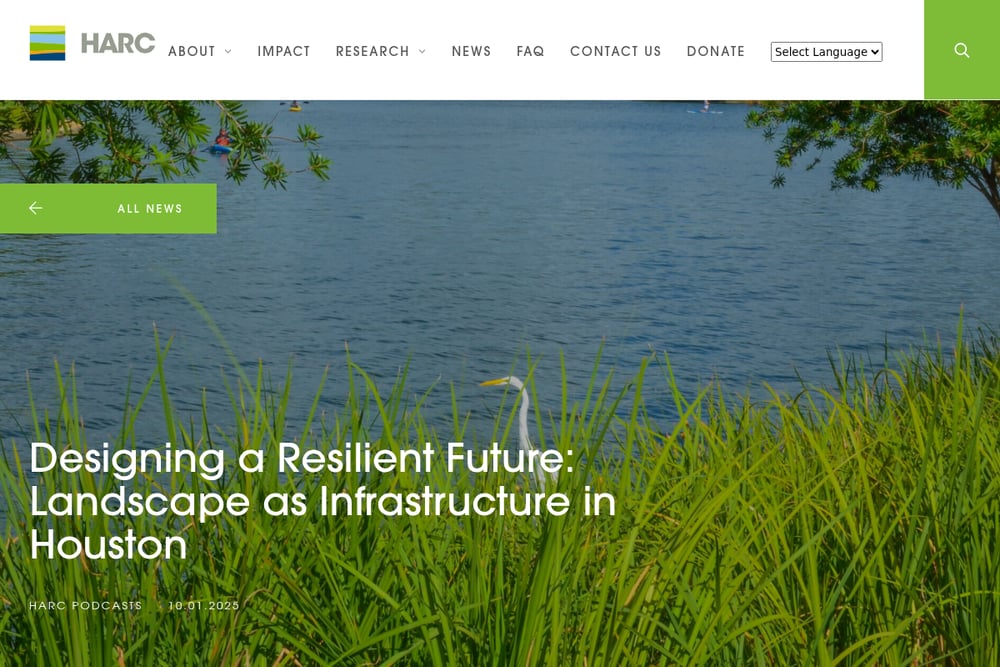 A screenshot of the SWA Group website.
SWA Group has been shaping public spaces in Texas for nearly three decades, with a focus on humanizing infrastructure. Principal Scott McCready emphasizes turning streets, parks, and drainage systems into multi-functional spaces that serve both communities and ecosystems. Their work is deeply rooted in the idea that landscapes are essential infrastructure, not just decoration. As highlighted in a Houston Advanced Research Center feature, SWA approaches resilience by reimagining how urban environments can absorb water and support daily life. They are a go-to for large-scale civic projects that need to balance flood control with public enjoyment.
#2 Design Workshop
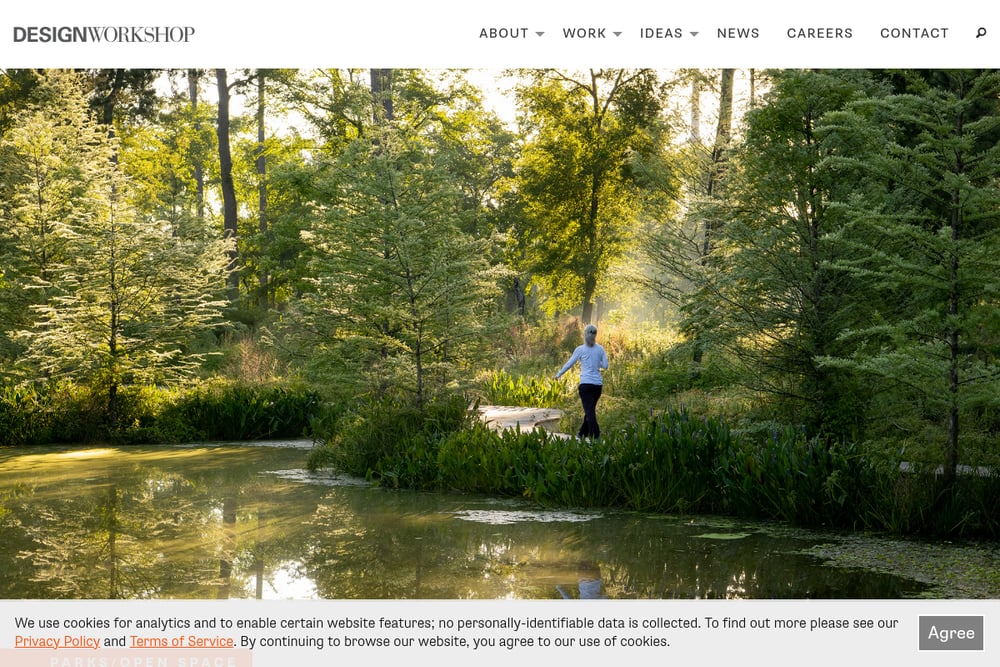 A screenshot of the Design Workshop website.
Design Workshop turned devastation into resilience at the Houston Arboretum and Nature Center after Hurricane Ike and a record drought. By restoring native prairie grasses instead of replanting lost woodlands, they created a landscape that can withstand both extreme wet and dry conditions. Their master plan for the 155-acre arboretum is now a model for other Gulf Coast regions facing similar climate threats. The project earned an Honor Award from the ASLA for Analysis & Planning, proving that ecological restoration can be both beautiful and functional. If you need a park or open space that doubles as a stormwater buffer, this firm knows how to deliver.
#3 HOK
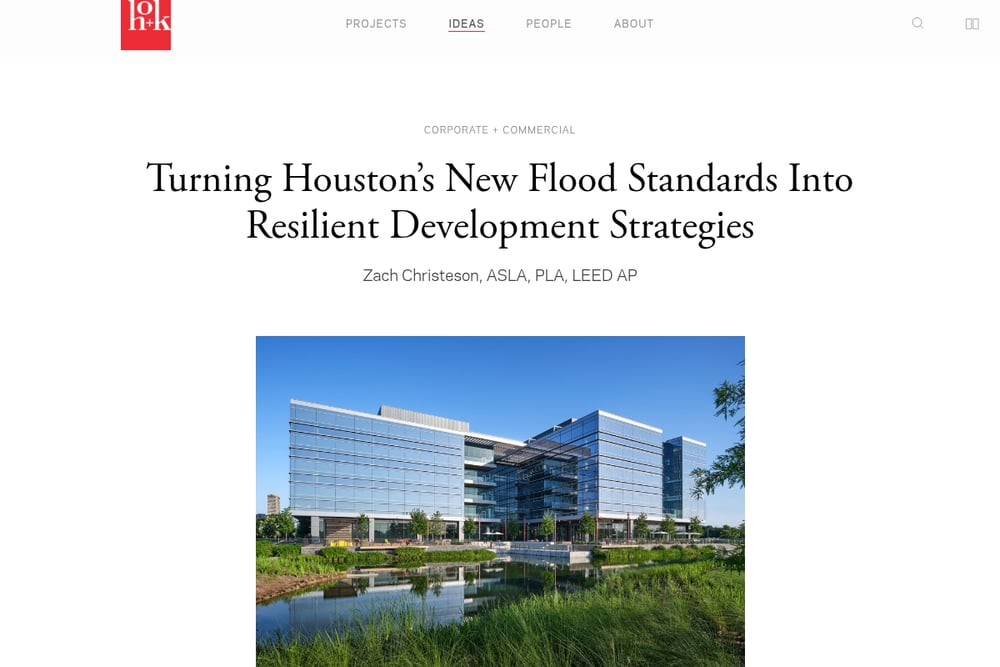 A screenshot of the HOK website.
HOK's planning and landscape architecture teams are turning Houston's stricter flood codes into competitive advantages for developers. After three 500-year floods in 24 years, the city nearly doubled stormwater detention requirements and implemented no-net-fill rules in floodplains. HOK helps clients see these regulations not as hurdles, but as opportunities to create more valuable, resilient properties. Their approach, detailed in a HOK publication, focuses on integrating water management into site design from day one. For commercial and mixed-use projects, they offer a strategic edge in navigating Houston's evolving regulatory landscape.
#4 Watershed Landscape
 A screenshot of the Watershed Landscape website.
Watershed Landscape is a Houston-based studio that designs resilient landscapes where water, infrastructure, ecology, and public life intersect. They specialize in flood resilience, watershed planning, and civic open spaces, transforming complex environmental systems into places people actually want to use. Their work spans from regional watershed planning to riverfronts, parks, and trails, integrating stormwater management with native planting and habitat regeneration. As they put it, they transform infrastructure, water systems, and ecological processes into resilient civic landscapes. If you need a firm that thinks like an ecologist and designs like an urbanist, Watershed Landscape is your partner.
#5 JBC Landscape Architects
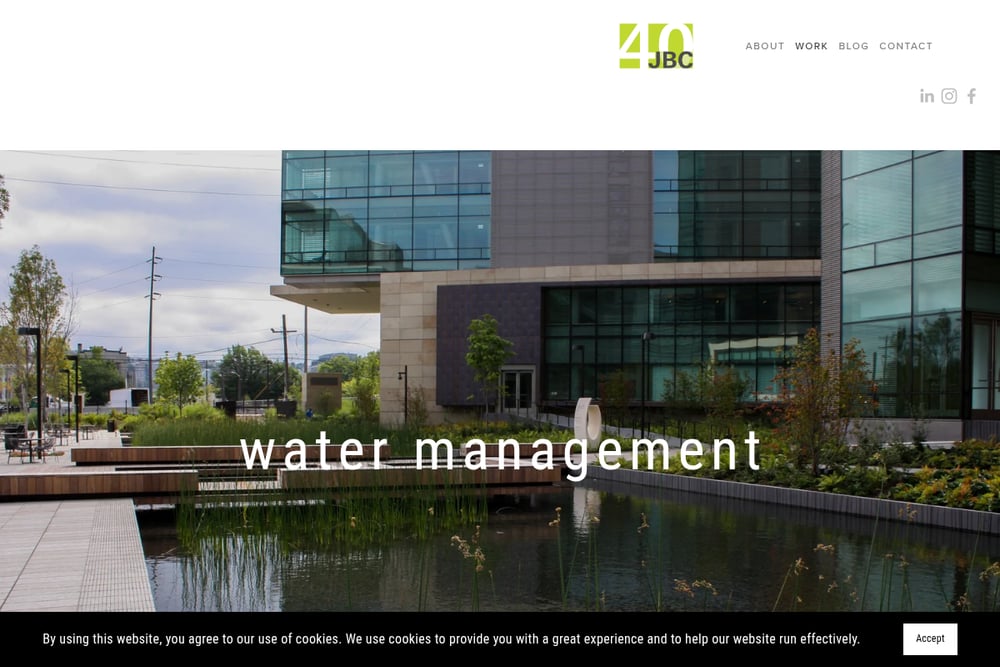 A screenshot of the JBC Landscape Architects website.
JBC Landscape Architects is a national leader in integrated water management, with projects ranging from the Gates Foundation campus to the Houston Arboretum. Founder Jeffrey Bruce helped develop a water management course for Green Roofs for Healthy Cities, and the firm continues to push the boundaries of how landscapes can capture, clean, and reuse water. Their portfolio shows that water management doesn't have to be an afterthought—it can be the defining feature of a landscape. For projects that demand cutting-edge hydrology and a track record of innovation, JBC is a solid choice.
How to Choose the Right Resilient Landscape Firm for Your Project
Start by defining the scale and type of your project. If you're a developer working on a large mixed-use site, a firm like HOK or SWA Group can help you navigate flood codes and create value. For a public park or nature center, Design Workshop or JBC Landscape Architects bring deep ecological expertise. If your project involves watershed planning or integrating water management into urban design, Watershed Landscape offers a specialized, holistic approach. Always ask potential firms how they handle stormwater on site, what native plant palettes they recommend, and how they've adapted to Houston's changing climate. The best firms will show you case studies, not just renderings.
Automating Your Landscape Design Workflow
While landscape architecture is inherently hands-on, you can streamline your selection process. Use project management tools like Asana or Trello to track RFPs and proposals. Set up Google Alerts for keywords like 'Houston resilient landscape' or 'flood resilience design' to stay informed. When evaluating firms, create a scoring matrix based on your criteria and share it with your team. This keeps the decision objective and saves time.
Building a More Resilient Houston, One Landscape at a Time
Houston's future depends on how well we integrate water into our built environment. The firms on this list are not just designing landscapes—they're redefining what a resilient city looks like. Whether you're planning a new park, a commercial development, or a neighborhood master plan, partnering with the right landscape architect can turn a regulatory requirement into a community asset. The choice is yours, but the direction is clear: work with water, not against it.