
Aging in place shouldn't mean going broke. These five resources help you find the money to make your home safe, accessible, and truly yours.
The State of Home Modification Funding
The demand for home modifications is exploding as more Americans choose to age in place. But paying for grab bars, ramps, and walk-in showers can feel like a maze. Grants, loans, and waivers vary wildly by state and program. That's where specialized directories and advocacy groups come in. They translate complex eligibility rules into plain English. They also connect you with local Area Agencies on Aging and Centers for Independent Living. Without them, you'd spend weeks chasing dead ends. With them, you can focus on making your home safer.
How We Evaluated These Resources
We looked at five key factors. First, scope: does the resource cover all 50 states and multiple funding types? Second, clarity: is the information written for real people, not policy wonks? Third, actionability: can you apply for programs directly or get a clear next step? Fourth, cost transparency: does it show what modifications actually cost? Fifth, updates: is the content current for 2026? Each resource below excels in different areas. Some shine on national advocacy, others on state-by-state detail. We noted what stood out for each so you can pick the right starting point.
Here's a quick look at five go-to resources for funding your home modifications.
| Provider | Best For |
|---|---|
| NerdWallet | Broad financial overview |
| Aging in Place Grants: Find Money to Make a Home Safe to Age In | State-by-state program discovery |
| United Spinal Association | Disability-led advocacy and support |
| New Mobility | In-depth stories and cost strategies |
| Center for Parent Information and Resources | Curated list for families |
The 5 Resources in Detail
#1 NerdWallet
 A screenshot of the NerdWallet website.
NerdWallet is a trusted personal finance site that covers home modification grants and loans for people with disabilities. Its guide breaks down national programs like VA grants and USDA loans, plus state-specific options. You'll find clear explanations of eligibility and how to apply. The article also links to related resources on accessible home improvements. It's a solid starting point if you want a broad financial overview. Just note that it doesn't list every local program.
#2 Aging in Place Grants: Find Money to Make a Home Safe to Age In
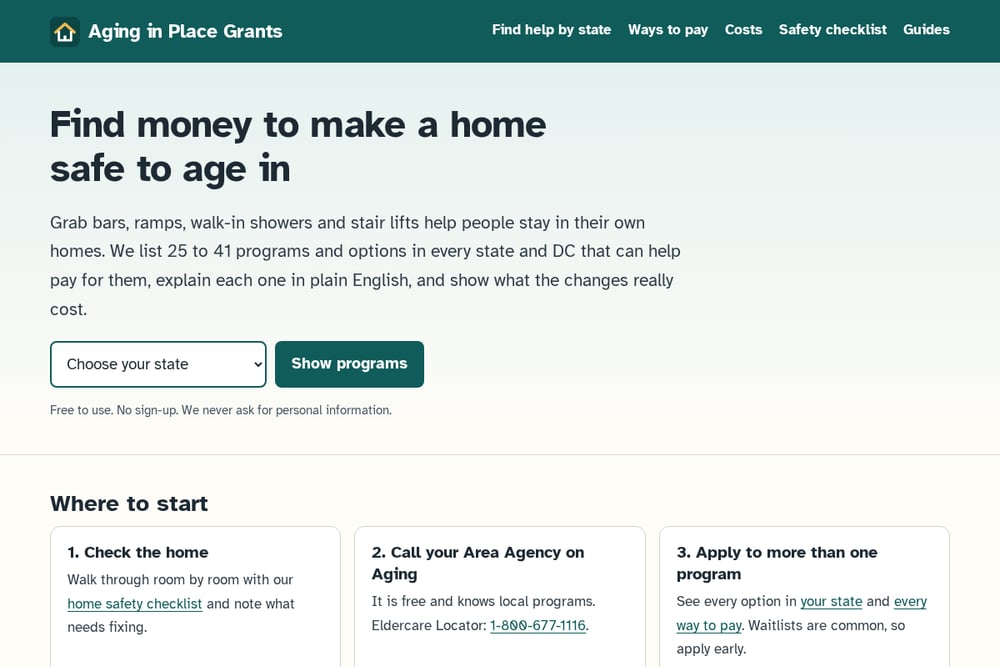 A screenshot of the Aging in Place Grants website.
This site is a dedicated directory for aging-in-place funding. It lists 25 to 41 programs and options in every state and DC. You choose your state and see grants, loans, and waivers explained in plain English. It also shows what grab bars, ramps, walk-in showers, and stair lifts really cost. The site is free, requires no sign-up, and never asks for personal information. It even includes a home safety checklist and a step-by-step guide to applying for multiple programs.
#3 United Spinal Association
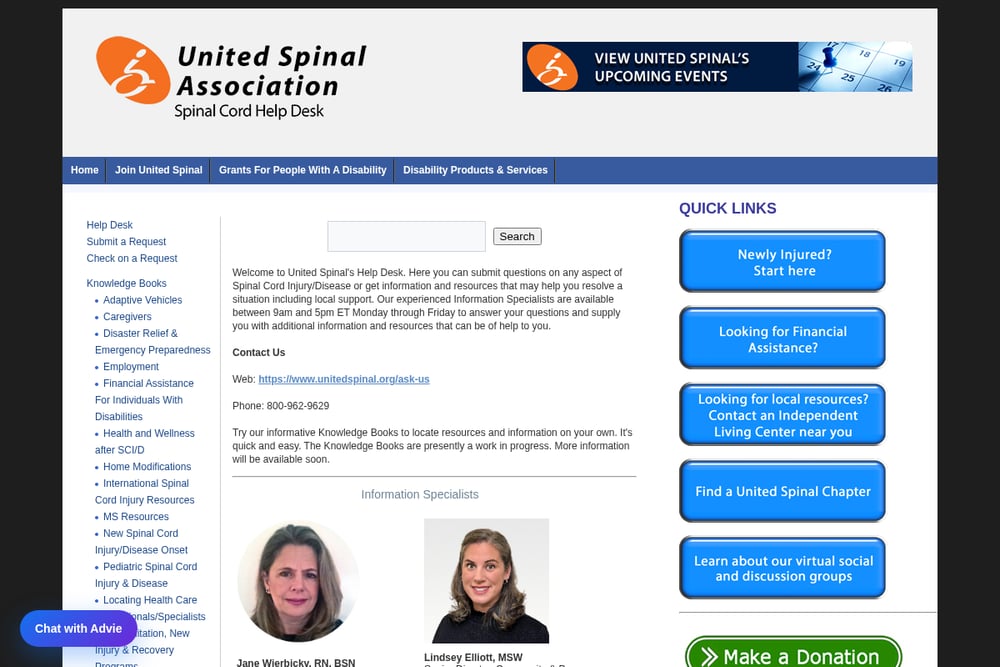 A screenshot of the United Spinal Association website.
United Spinal Association runs a resource center with a detailed knowledge book on home modifications. Its guide covers how to pay for repairs and accessibility upgrades. You'll learn about Rebuilding Together, vocational rehabilitation, and local Centers for Independent Living. The content is written for people with spinal cord injuries and other disabilities. It emphasizes advocacy and peer support. This is a great hub if you want disability-led guidance and community connections.
#4 New Mobility
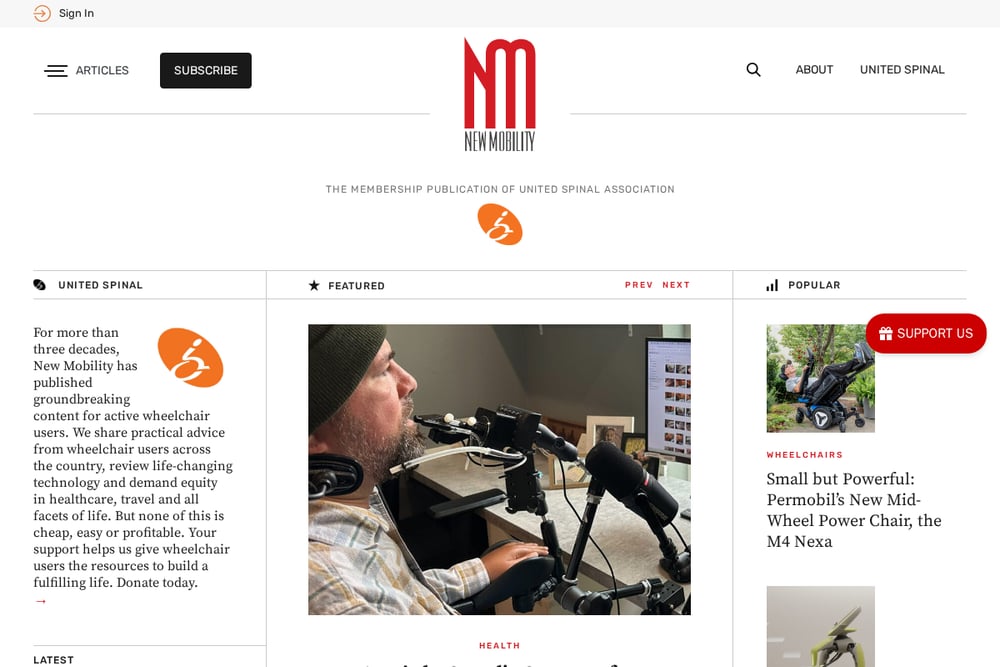 A screenshot of the New Mobility website.
New Mobility is the membership publication of United Spinal Association. Its article on funding accessible home modifications dives into real-world costs and funding strategies. You'll find personal stories and expert tips on navigating insurance, grants, and loans. The piece is especially useful for wheelchair users planning a remodel or new build. It highlights creative funding sources like crowdfunding and home equity. The tone is practical and peer-oriented.
#5 Center for Parent Information and Resources
 A screenshot of the Center for Parent Information and Resources website.
CPIR offers a guide titled 'Grants for Home Modification: 16 Resources for Homeowners with Disabilities.' It links to national and state-specific programs. The guide is reviewed by the RAISE Advisory Partnership for quality and relevance. You'll find suggestions on which modifications are most rewarding. It's designed for families of children with disabilities but useful for adults too. This is a solid choice if you want a curated list with expert vetting.
How to Choose Your Funding Guide
Start with your state. If you need a program in your area, a state-by-state directory like Aging in Place Grants is your fastest route. If you want a broad financial overview, NerdWallet works well. For disability-specific advocacy, turn to United Spinal Association or New Mobility. If you're a parent or caregiver, CPIR's curated list is a great fit. Always cross-check with your local Area Agency on Aging. Call 1-800-677-1116 to find yours. And apply to more than one program—waitlists are common.
Automating Your Funding Search
You can streamline your search with a simple workflow. First, use a state directory to list all programs you might qualify for. Second, set up a spreadsheet to track deadlines, required documents, and contact info. Third, use calendar reminders to follow up on applications. Fourth, save links to advocacy groups for appeals or questions. Fifth, revisit the directory quarterly—new funding rounds open throughout the year. This system keeps you organized and reduces missed opportunities.
The Bottom Line on Funding Your Safe Home
You don't have to figure out home modification funding alone. These five resources cover national programs, state-specific grants, disability advocacy, and real-world cost advice. Start with the one that matches your situation. Then take action: check your home, call your Area Agency on Aging, and apply to multiple programs. A safer home is within reach. Use these guides to get there.