Community associations run on coordination: boards, managers, residents, vendors, and money all moving at once. The software behind that work shapes how smoothly it goes. This list looks at platforms built for association life, from self-managed boards to management companies running large portfolios. Each entry describes what the platform does and who it fits, drawn from the companies' own published material.
How This List Was Chosen
These platforms were picked because each one publicly presents itself as software for community associations or the management companies that serve them. The list spans different shapes of the market: platforms aimed at management companies, tools for self-managed boards, and systems that blend software with services. Every factual claim below comes from the company's own homepage or published source text, quoted directly. No company is ranked as better or worse; the numbers are simply list order.
| Provider | Best For |
|---|---|
| Vantaca | Management companies seeking automated back-office operations |
| CINC Systems | Management companies wanting connected accounting and operations |
| TownSq | Boards and managers wanting connected communication and operations |
| HOA Express | Associations wanting a simple website plus communication tools |
| Smartwebs | Management companies and self-managed associations wanting one login |
5 HOA Management Software Platforms to Know
#1 Vantaca
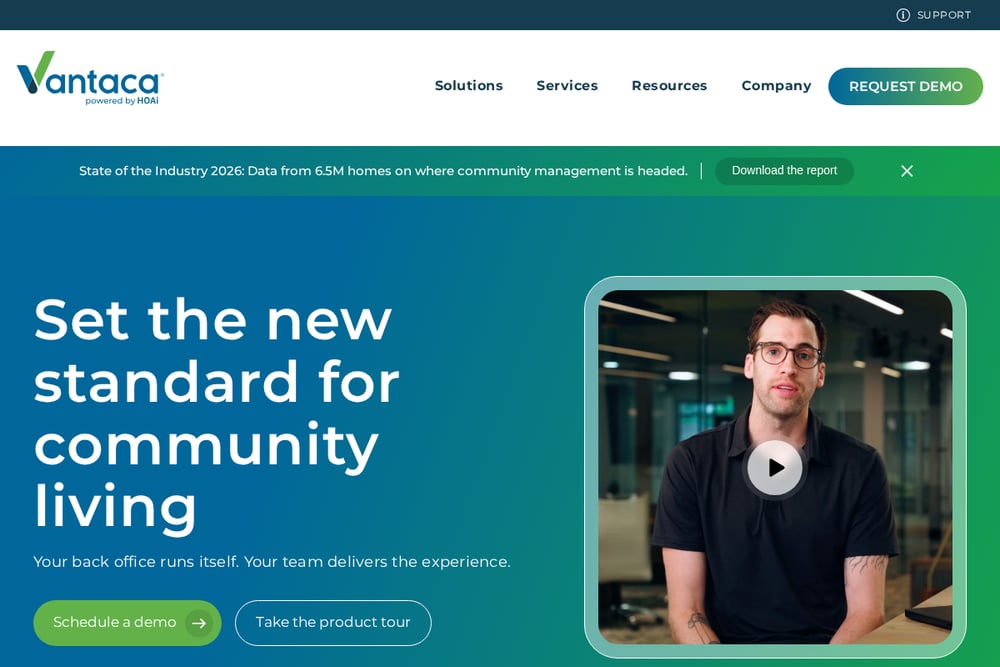 A screenshot of the Vantaca website.
Vantaca describes itself as community association management software for every stakeholder, with separate surfaces for management companies, residents, and vendors. Its platform centers on back-office automation, and it also offers HOAi, described as an AI workforce that does the work proactively at scale. Vantaca Home covers resident-facing transactions and payments, while Vantaca Vendor addresses vendor intelligence. It suits management companies that want to automate operations while keeping a connected experience across boards, residents, and vendors.
#2 CINC Systems
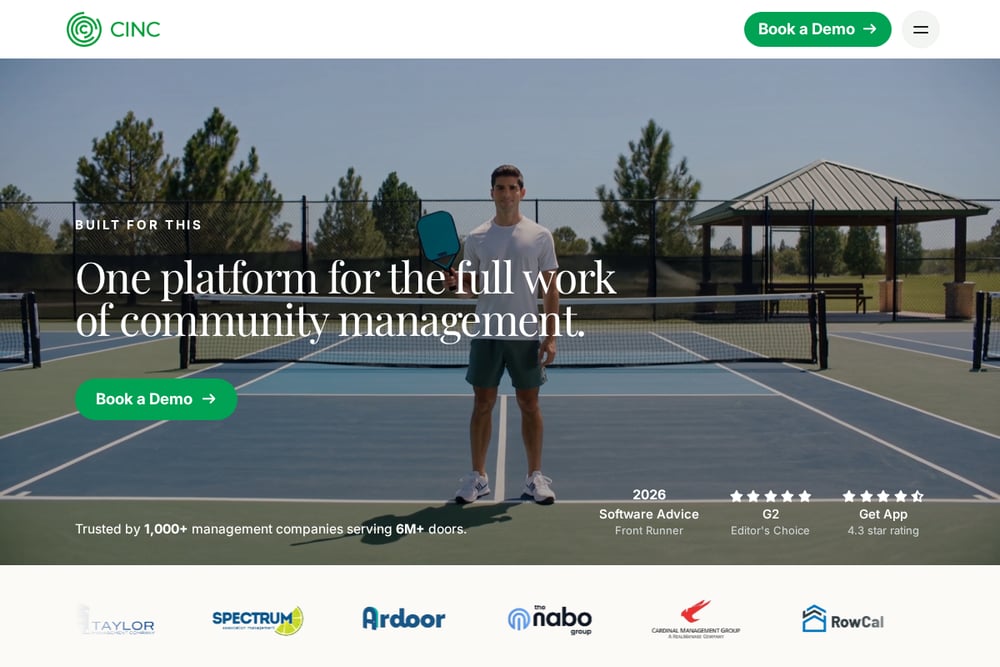 A screenshot of the CINC Systems website.
CINC Systems presents one platform for the full work of community management, connecting management teams, accountants, boards, and residents. It covers accounting, operations, communication, compliance, and community administration, plus a branded web and mobile experience called CINC Connect for boards and residents. CINC also describes Community Intelligence, powered by Cephai, which brings relevant context and next steps into the work while keeping people in control. It suits management companies that want accounting and operations to stay connected across roles.
#3 TownSq
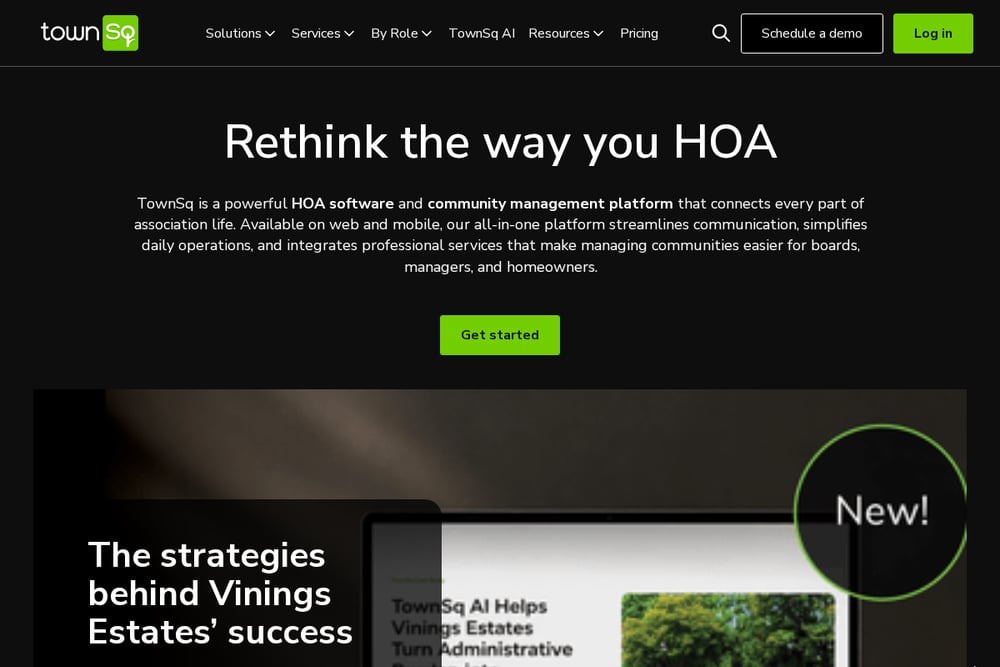 A screenshot of the TownSq website.
TownSq describes itself as an HOA software and community management platform that connects every part of association life on web and mobile. It splits into TownSq Community for community operations, TownSq Business for managing multiple communities, and TownSq Resale Solutions for the resale disclosure process. The platform also offers professional services such as bookkeeping, resale order document processing, and print and mail. TownSq AI drafts replies to resident requests using community-specific documents. It suits boards, managers, and homeowners who want communication, payments, and daily operations in one place.
#4 HOA Express
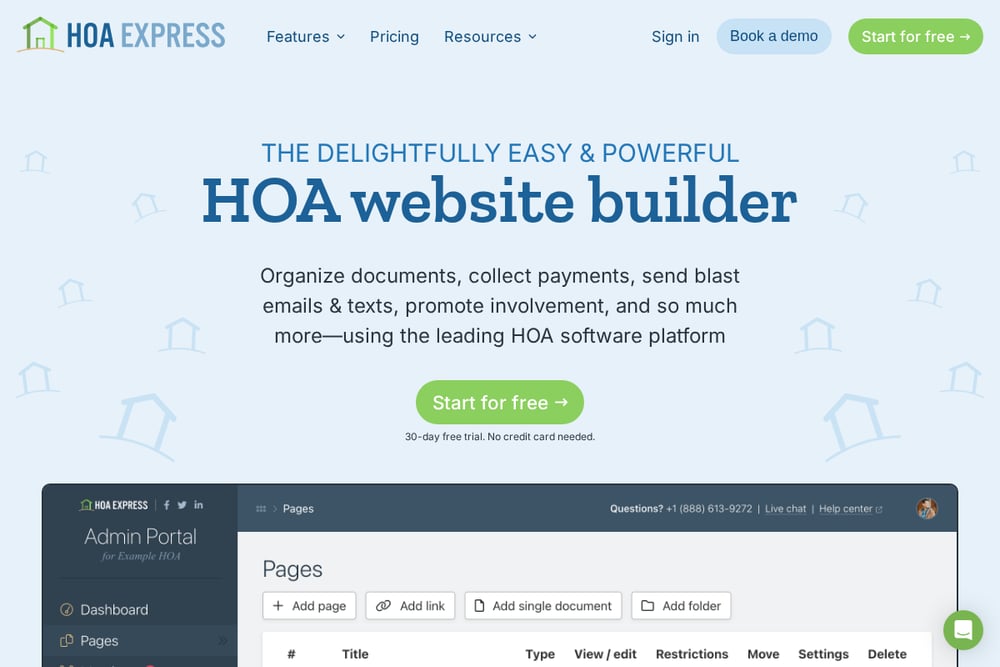 A screenshot of the HOA Express website.
HOA Express presents itself as an HOA website builder and software platform for organizing documents, collecting payments, and sending blast emails and texts. It includes resident profiles, custom forms, calendars with RSVPs, community information pages, surveys, and photo galleries. Documents, forms, and photos can be access-restricted, and the platform offers a 30-day free trial with no credit card needed. It suits community associations that want an easy-to-run website with communication and payment tools in one package.
#5 Smartwebs
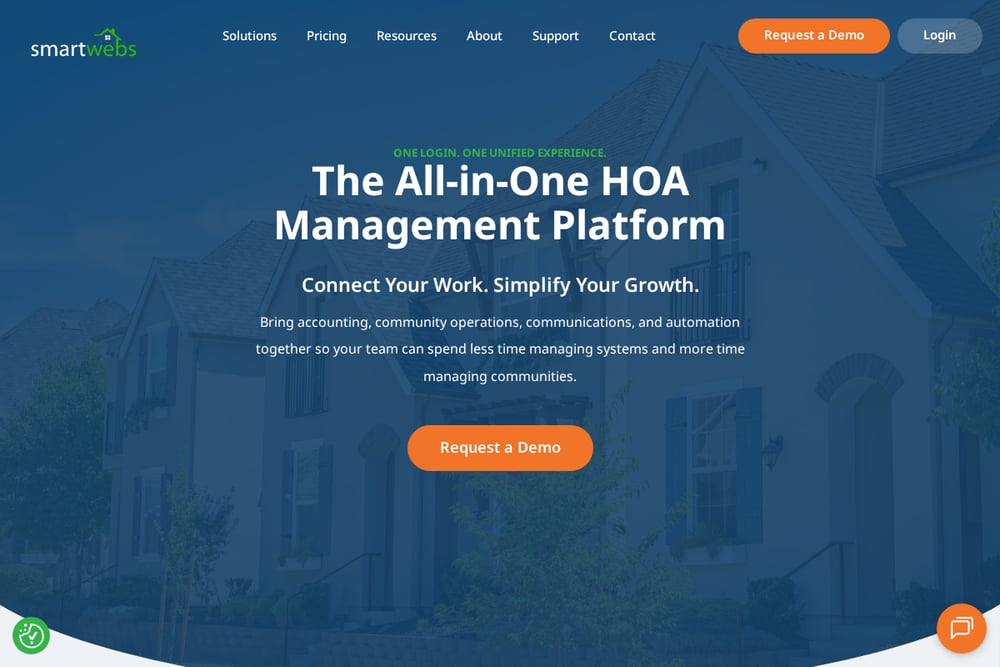 A screenshot of the Smartwebs website.
Smartwebs describes itself as an all-in-one HOA management platform that brings accounting, community operations, communications, and automation together under one login. Its management side covers violations, architecturals, work orders, communications, resident and board portals, and online payments, while the accounting side covers budgets, receivables and payables, collections, vendor management, and bank integrations. Mobile apps with virtual maps let teams manage violations, work orders, and ARC approvals on-site. It suits both management companies and self-managed associations that want management and accounting in one system.
Which One Should You Choose?
Start with who will use the software day to day. A self-managed board may want a straightforward website with communication and payment tools, while a management company may need accounting, operations, and resident portals connected in one system. Look at whether the platform separates tools for boards, residents, and vendors, and whether it offers services like bookkeeping or print and mail alongside software. Consider how the platform handles accounting and whether mobile access matters for on-site work. Ask for a demo and check the published pricing or trial terms before committing.
Final Thoughts
These platforms approach community association work from different directions. Some are built around management companies and their accounting and operations, others around boards and residents who want a connected website and communication tools. The right fit depends on the size of the community or portfolio, who handles the daily work, and whether software alone is enough or professional services are wanted too. Each entry here is worth knowing as a starting point for that comparison.
Know a company that belongs on this list? Email us at editorial@peekwire.com.