
If you need to move heavy things without a pilot in the cockpit, these five US-based drone makers are pushing the limits of payload, endurance, and autonomy. From military-grade logistics to commercial disaster response, here’s who’s worth your attention.
The Heavy-Lift Drone Landscape in 2026
The heavy-lift drone market has exploded beyond hobbyist quadcopters. Today, you’re looking at platforms that carry 30 to 1,000 pounds, fly for over an hour, and operate in contested or disaster-stricken environments. The key drivers? NDAA compliance, modular payload systems, and software-defined architectures that let you update capabilities without buying a new airframe. Whether you’re in defense logistics, agriculture, or emergency response, these drones are becoming the workhorses of the sky. But not all are created equal—you need to match the platform to your mission, not just the spec sheet.
How We Evaluated These Drone Builders
We looked at each company’s payload capacity, endurance, range, and real-world field testing. We also considered NDAA compliance, modularity, and how easily you can integrate custom payloads. Finally, we weighed the clarity of their product lineup and how quickly you can get a demo or quote. Each company brings a different strength—some excel in military ruggedness, others in commercial flexibility, and a few in sheer payload muscle.
Here’s a quick snapshot of the five platforms we’re diving into, from the compact and agile to the massive and persistent.
| Provider | Best For |
|---|---|
| Harris Aerial | Modular heavy-lift with multi-hour endurance |
| Soaring – A more efficient way to move heavy things | Military-grade reliability with civilian adaptability |
| Aero Systems West | Field-serviceable, NDAA-compliant platforms with long endurance |
| Draganfly | Blue UAS certified heavy-lift for government and military |
| Kaizen Aerospace | Ultra-heavy payloads up to 1,000 lbs |
The Five Heavy-Lift Drone Builders You Should Know
#1 Harris Aerial
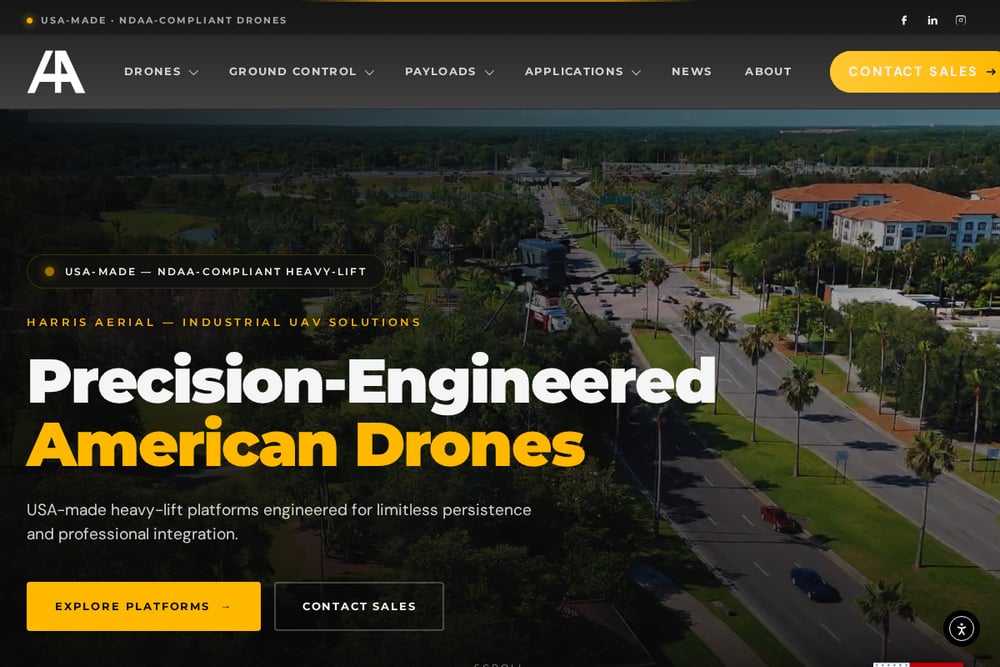 A screenshot of the Harris Aerial website.
Harris Aerial is a USA-made, NDAA-compliant specialist with a focus on industrial UAV solutions. Their H6 platform is a modular workhorse—you can switch between electric, hybrid, or hydrogen fuel cell power in under 15 minutes, giving you multi-hour endurance when you need it. They also offer the H4C quad, a compact heavy-lift that fits in a standard transport case and deploys in seconds. If you need a drone that adapts to different missions without buying a new airframe, Harris Aerial’s modularity is a game-changer. Their pre-order for the H4C is launching Q4 2026, so you can get in early. For persistent operations and payload flexibility, this is a top pick.
#2 Soaring – A more efficient way to move heavy things
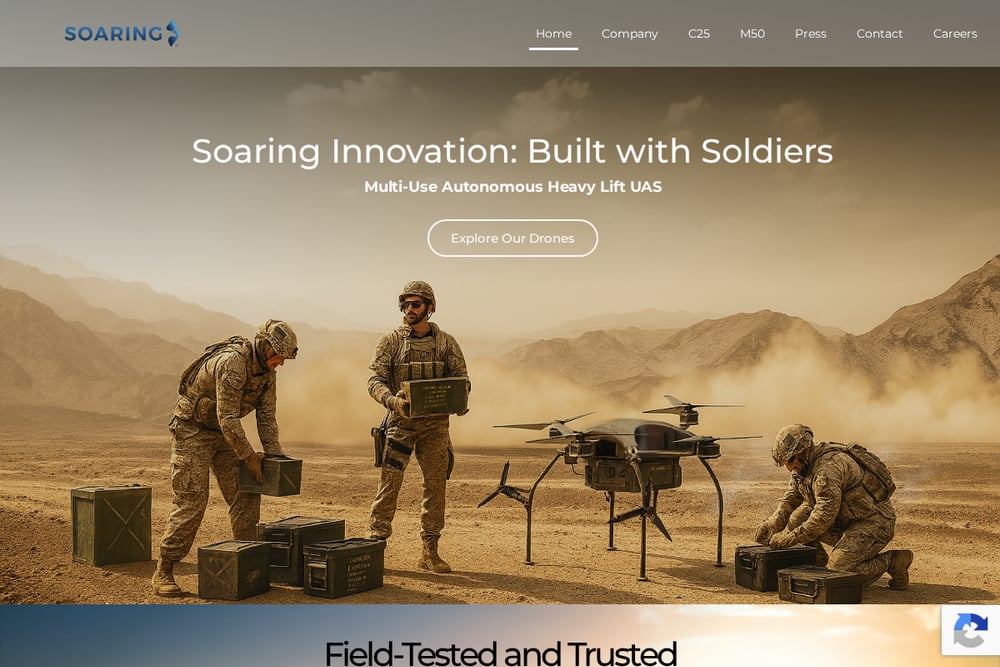 A screenshot of the Soaring Aerospace website.
Soaring Aerospace designs autonomous heavy-lift drones built in close collaboration with military units, so you know they’re field-tested under extreme conditions. Their C25 commercial model carries 30 lbs with a 40-minute endurance and 13 km range, while the M50 military variant ups the payload to 50-60 lbs. The software-defined architecture means you get seamless updates, keeping your drone effective as missions evolve. They’re positioned for both civilian disaster response and contested logistics, making them a versatile choice. If you need a drone that’s proven in harsh environments and ready for sensitive payloads, Soaring delivers. Their demo request process is straightforward, so you can see it in action.
#3 Aero Systems West
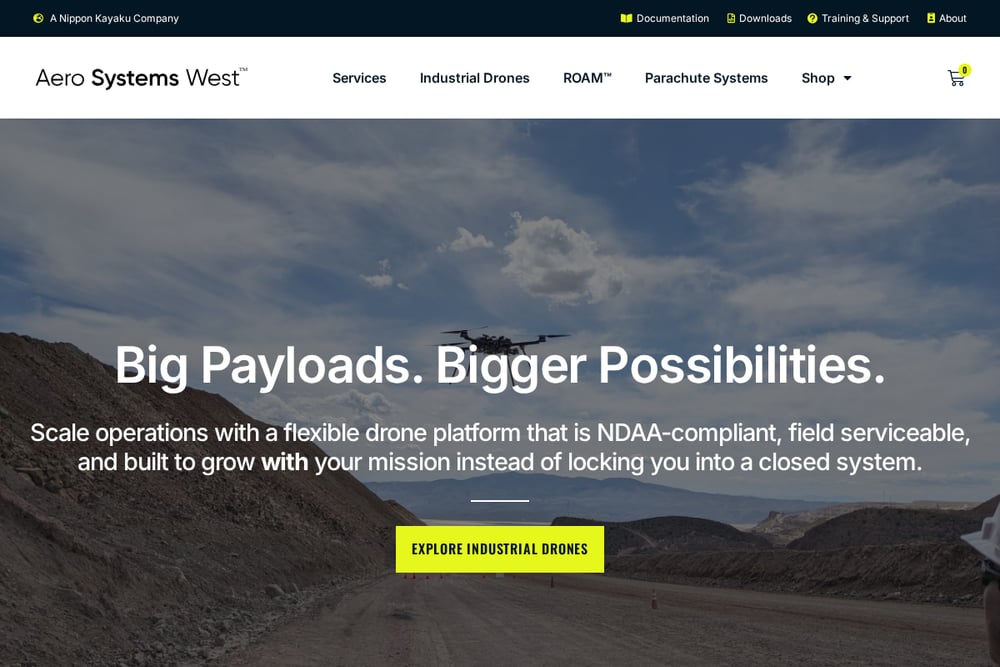 A screenshot of the Aero Systems West website.
Aero Systems West (ASW) is an NDAA-compliant, US-based manufacturer with over a decade of field-proven experience. Their HLM Quadcopter offers 44 lbs of payload capacity with a 65-minute max flight time and a 25-mile range, making it a solid choice for long-endurance missions. The HLM Hexacopter bumps payload to 66 lbs with a 60-minute flight time, and both platforms feature user-adjustable height and ground clearance. ASW is backed by Nippon Kayaku, adding corporate stability, and they offer custom payload integration and training. If you want a platform that’s built to outlast the mission and adapt to your changing needs, ASW is a reliable bet. Their modular design means you’re not locked into a closed system.
#4 Draganfly
 A screenshot of the Draganfly website.
Draganfly is one of the longest-standing drone manufacturers in the world, and their Heavy Lift drone is a testament to their experience. It carries 66 lbs with a 55-minute flight time, and it’s Blue UAS certified for government and military applications. The triple redundant IMU autopilot system adds a layer of safety that’s crucial for sensitive missions. You can configure your drone with various communication options, whether you’re operating in RF-heavy environments or need long-range control. Starting at $55,495, it’s a premium investment, but you’re paying for reliability and certification. If you need a drone that’s ready for government contracts, Draganfly’s pedigree is hard to beat.
#5 Kaizen Aerospace
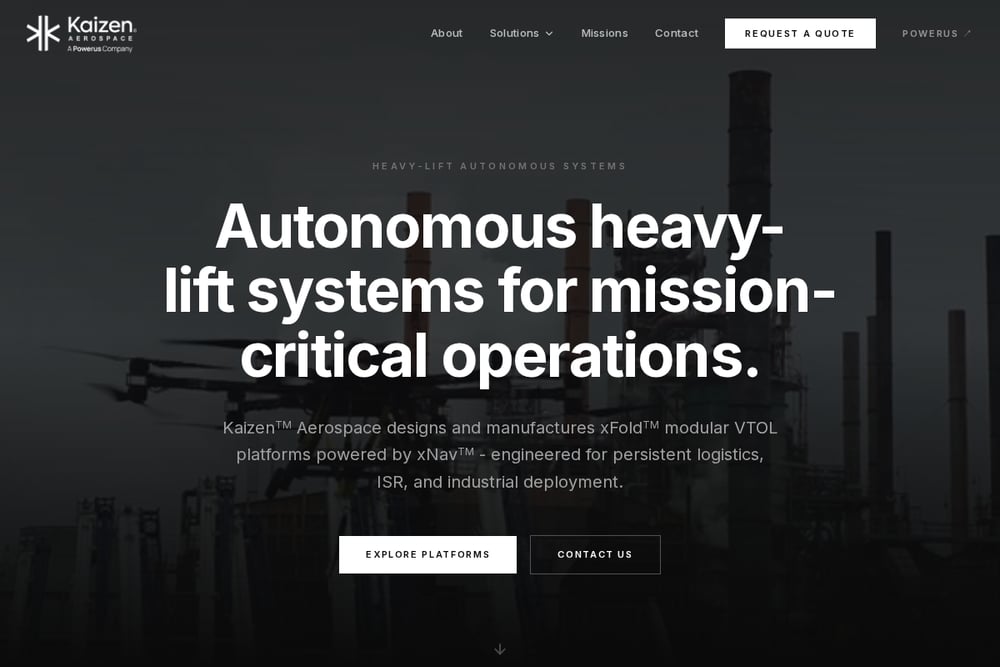 A screenshot of the Kaizen Aerospace website.
Kaizen Aerospace takes heavy-lift to the extreme with their xFold platform family, offering configurations up to 1,000 lbs of payload. Their modular VTOL designs are NDAA-compliant and built for rapid field deployment, with options like the compact xFold Spy for ISR missions. The hybrid propulsion systems extend endurance significantly, making them suitable for persistent logistics and industrial deployment. If you need to move seriously heavy equipment—think construction materials or large sensors—Kaizen is the only one here that scales to that level. Their xFold Travel is a portable medium sensor platform that assembles without tools, perfect for field teams. For sheer payload muscle and modularity, Kaizen is a standout.
How to Choose the Right Heavy-Lift Drone for Your Mission
Start by defining your payload weight and how long you need to stay airborne. If you’re carrying under 60 lbs and need quick deployment, Soaring or Draganfly are solid. For longer endurance and modular power options, Harris Aerial’s hybrid or hydrogen systems are worth a look. If you’re moving serious weight—over 100 lbs—Kaizen is your only bet. Also, check NDAA compliance if you’re working with government contracts, and consider how easy it is to integrate your own sensors or cargo. Finally, think about field serviceability: can you swap parts quickly, or are you locked into a proprietary system? Test the demo if you can—nothing beats seeing it fly.
Automation and Software: The Hidden Differentiator
The best heavy-lift drones aren’t just about payload—they’re about autonomous flight and software updates. Soaring’s software-defined architecture ensures your drone gets better over time without hardware changes. Draganfly’s triple redundant IMU and Blue UAS certification mean you can trust the autopilot in contested environments. Harris Aerial’s modular power systems let you switch between electric and hybrid on the fly, extending your mission endurance. When you’re evaluating, ask about the ground control software, autonomous waypoint planning, and how easy it is to update the firmware. A drone that can’t adapt is a liability.
The Bottom Line on Heavy-Lift Drones
The heavy-lift drone market is maturing fast, and these five builders represent the best of what’s available in the US. Whether you need a compact, field-ready drone for disaster response or a massive platform for industrial logistics, there’s a match here. Don’t just look at the spec sheet—think about your mission, your payload, and how the drone will fit into your existing operations. Reach out for demos, ask about NDAA compliance, and consider the long-term software support. The right drone will pay for itself in efficiency and reliability.