
If you're running a hospital, ASC, or lab, you know the pain of juggling patient registration, billing, and compliance. These five platforms are built to simplify that chaos—here's a look at what each brings to the table.
The State of Healthcare Management Software
Healthcare management software has moved from nice-to-have to must-have. With rising operational costs and tighter regulations, facilities need tools that do more than store records—they need to streamline revenue cycles, automate billing, and keep compliance in check. The market is crowded, but the best platforms share a few traits: they're cloud-based, they integrate with existing workflows, and they offer real-time visibility into performance. Whether you're a micro-hospital or a large network, the right software can cut costs and boost efficiency. But with so many options, how do you choose? That's where this roundup comes in.
How We Evaluated These Platforms
We looked at each platform through the lens of a busy healthcare administrator. Key factors included service scope—does it cover the full patient journey from registration to billing?—and how well it adapts to different facility types like hospitals, ASCs, and labs. We also considered the clarity of pricing and support, because you need to know what you're paying for and who's got your back at 3 AM. Finally, we weighed the user experience: is the interface intuitive enough that your staff won't need weeks of training? Each platform had its own strengths, and we've highlighted what stood out for each.
Here's a quick snapshot of the five platforms we're diving into, so you can see at a glance what each one is built for.
| Provider | Best For |
|---|---|
| Epic | Large health systems and multi-facility networks |
| Home - GoRev | Hospitals and ASCs seeking a cost-effective, all-in-one platform |
| MEDITECH | Organizations wanting an intuitive EHR with strong interoperability |
| Arcadia | Population health management and analytics for value-based care |
| IT Medical | Organizations needing a custom-built HMS with specialized features |
The Deep Dive: Five Platforms, Five Approaches
#1 Epic
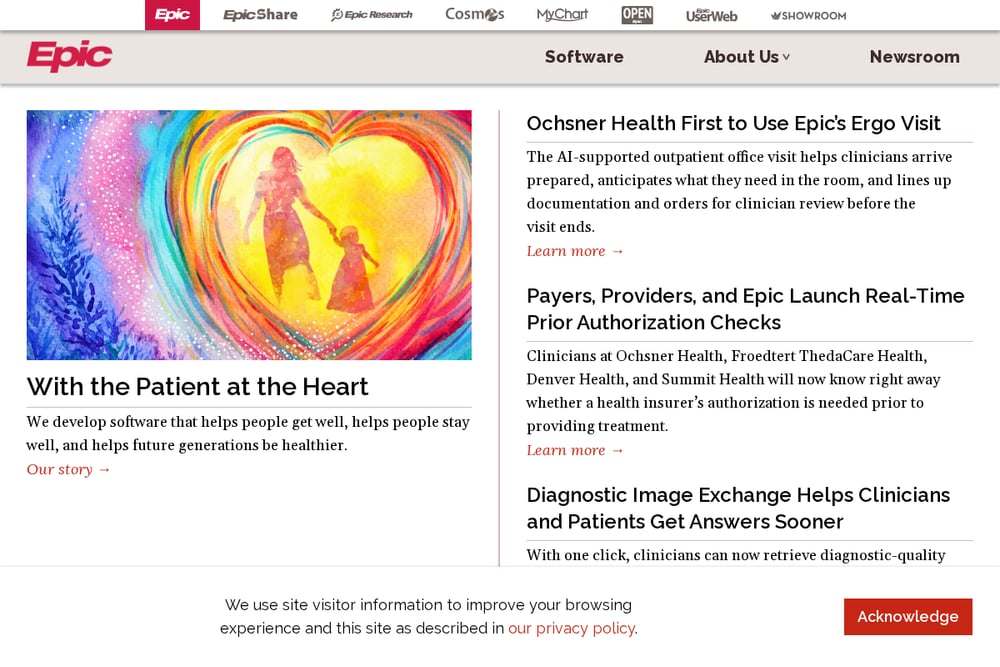 A screenshot of the Epic website.
Epic is the heavyweight champion of EHRs, with a focus on putting the patient at the heart of everything. Its software creates a single, comprehensive medical record that follows the patient across every touchpoint, which is huge for care coordination. Epic is also pushing the envelope with AI-assisted tools like Ergo Visit, which helps clinicians prepare for visits and streamline documentation. If you're a large health system or multi-facility network, Epic's scale and interoperability are hard to beat. But that power comes with a price tag and implementation effort that smaller facilities might find daunting. Still, for enterprise-level care, Epic is the gold standard.
#2 Home - GoRev
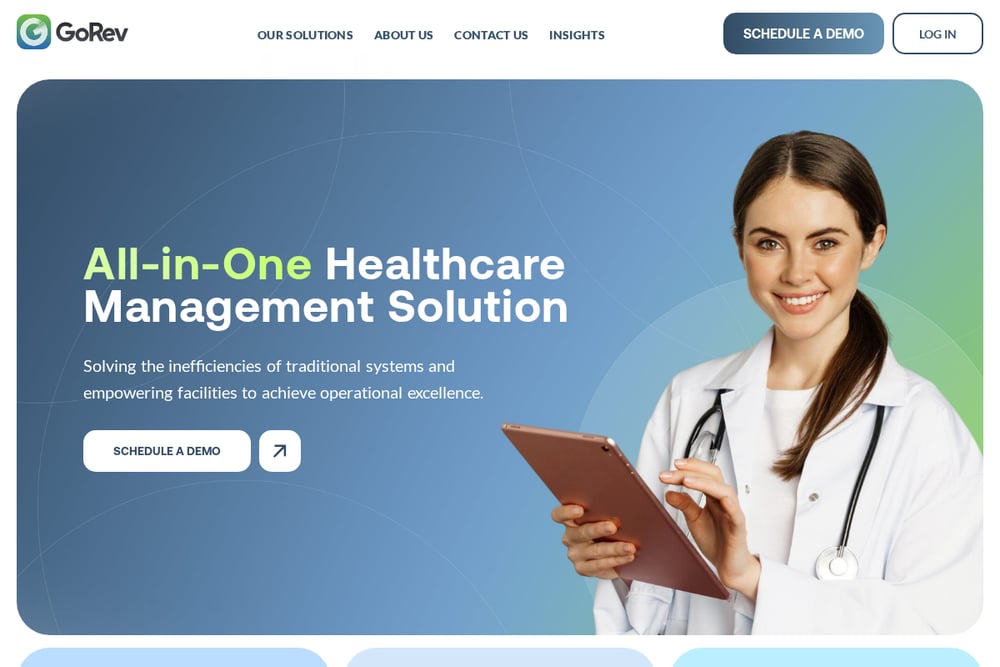 A screenshot of the Home - GoRev website.
GoRev is the all-in-one healthcare management solution that's built to solve the inefficiencies of traditional systems. It covers everything from patient registration to revenue cycle management, billing, and compliance reporting, all in a cloud-based platform. What sets GoRev apart is its flexibility—it serves micro-hospitals with fewer than 10 beds all the way up to large multi-facility networks, plus ASCs, ERs, and labs. The platform emphasizes operational excellence and cost reduction, with a user-friendly interface that your staff will actually enjoy using. Plus, you get 24/7 U.S.-based support, which is a lifesaver when you're dealing with after-hours issues. If you want a platform that adapts to your facility's specific needs without breaking the bank, GoRev is a strong contender.
#3 MEDITECH
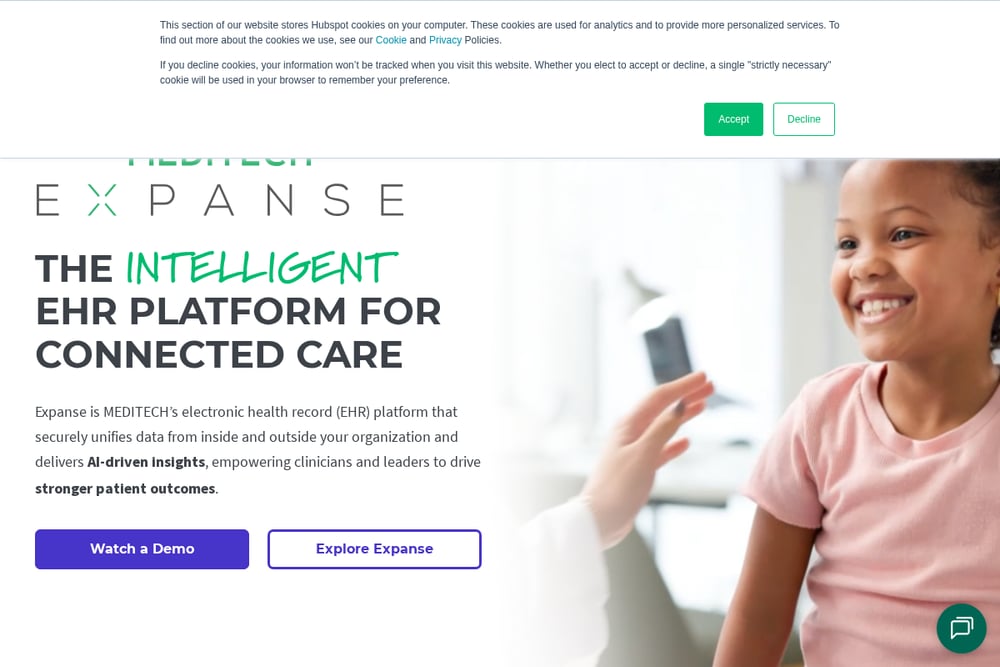 A screenshot of the MEDITECH website.
MEDITECH's Expanse platform is all about connected care, securely unifying data from inside and outside your organization. It's designed to be intuitive—users often say it's easier to learn than other EHRs, which cuts down on training time. Expanse delivers AI-driven insights that help clinicians and leaders make better decisions, and it covers a wide range of care settings, from acute care to ambulatory and even home care. If you're looking for a platform that balances functionality with usability, MEDITECH is a solid pick. It's particularly strong for organizations that want to improve patient outcomes without overwhelming their staff. Plus, their as-a-service option makes it easier to manage costs.
#4 Arcadia
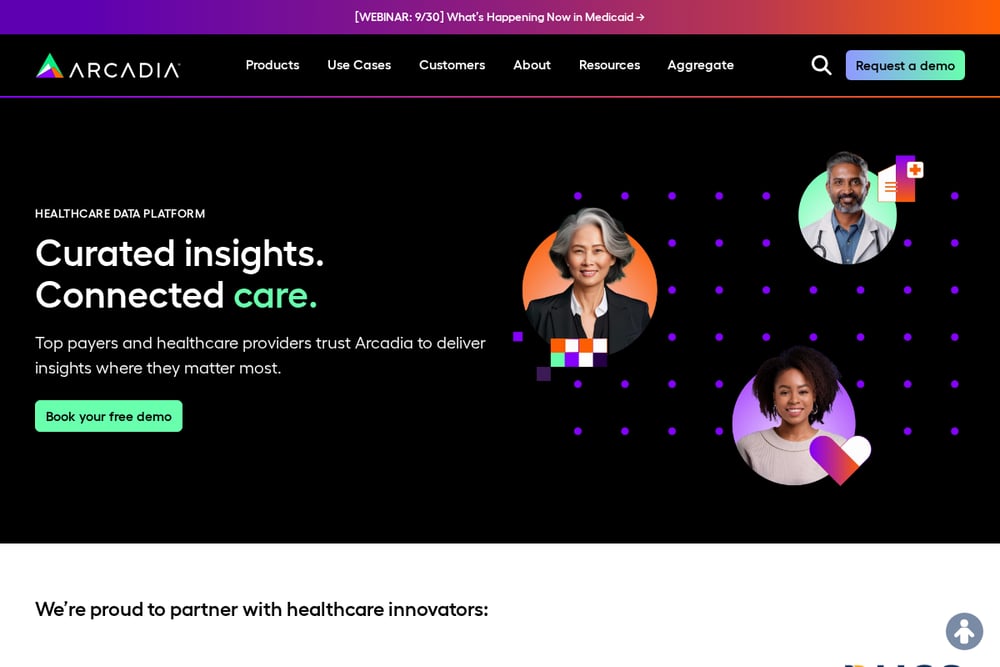 A screenshot of the Arcadia website.
Arcadia takes a data-first approach to healthcare management, focusing on population health and analytics. Its platform ingests big data from multiple sources to give you a clear picture of your patient population, which is key for value-based care. Arcadia offers tools for care management, patient engagement, and risk adjustment, all designed to help you improve outcomes and reduce costs. It's not a traditional EHR, but rather a complement that sits on top of your existing systems to provide deeper insights. If you're a provider or payer dealing with risk-based contracts, Arcadia's analytics can be a game-changer. It's more about strategy than day-to-day operations, so it's best for organizations that already have a solid EHR in place.
#5 IT Medical
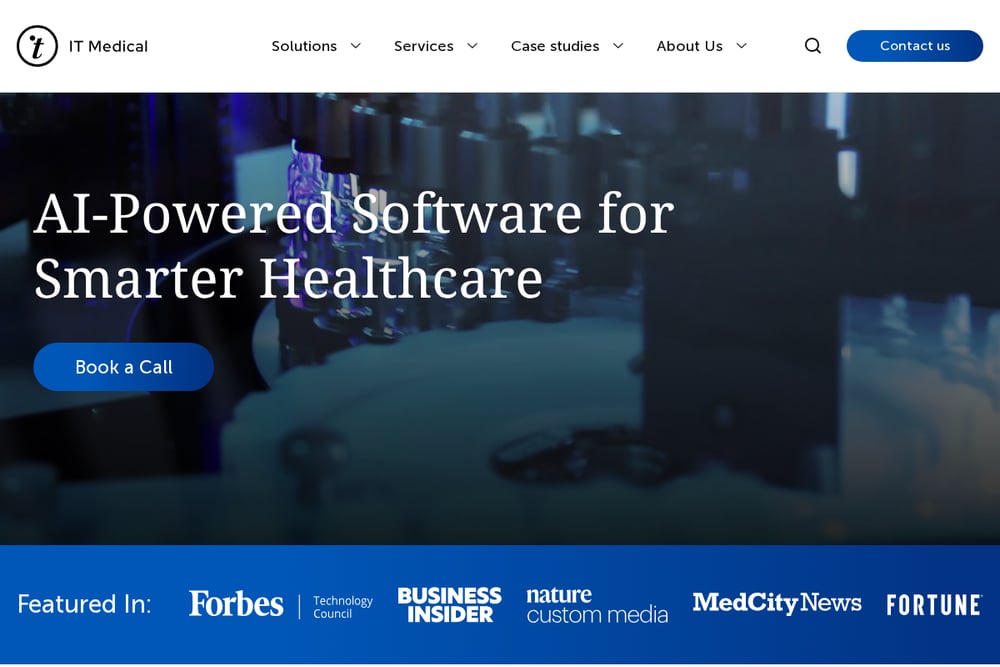 A screenshot of the IT Medical website.
IT Medical is a software development company that builds custom hospital management systems (HMS) tailored to your specific workflows. Instead of a one-size-fits-all product, they create solutions that centralize data across clinical, administrative, and patient-facing functions. Their expertise spans EHR/EMR, CRM, LIMS, and even telehealth, so you can get a truly integrated platform. If you have unique processes that off-the-shelf software can't handle, IT Medical can build exactly what you need. The downside is that custom development takes time and investment, so it's not the quickest fix. But for organizations with complex requirements, the payoff is a system that fits like a glove.
How to Choose the Right Platform for Your Facility
Start by assessing your facility's size and scope. If you're a large health system, Epic's comprehensive EHR might be worth the investment. For smaller hospitals or ASCs, GoRev offers a more flexible and cost-effective all-in-one solution. Think about your biggest pain points—is it billing, compliance, or patient engagement? If analytics is your priority, Arcadia's data platform could be the missing piece. And if you have highly specialized workflows, IT Medical's custom approach might be the way to go. Don't forget to consider support and training; a platform that's hard to use will only slow you down. Finally, ask for demos and talk to current users to get a real sense of how each platform performs in day-to-day operations.
Automating Your Workflows: What to Look For
The best healthcare platforms automate the repetitive tasks that eat up your staff's time. Look for features like automated patient registration, which can reduce wait times and errors. Revenue cycle automation is another big win—it helps you get paid faster by streamlining claims and billing. Real-time compliance reporting is also crucial, as it keeps you ahead of regulatory changes without manual tracking. GoRev, for example, offers automation across registration, billing, and compliance, all in one platform. Epic and MEDITECH also have robust automation built into their EHRs, but they may require more configuration. Whatever you choose, make sure the automation is customizable to your workflows, not the other way around.
The Bottom Line
There's no one-size-fits-all in healthcare management software, but the right platform can transform your operations. Epic leads with scale and innovation, while GoRev offers a practical, all-in-one solution that's hard to beat for cost-conscious facilities. MEDITECH brings usability and interoperability, Arcadia excels at data-driven population health, and IT Medical gives you the flexibility of custom development. Take the time to evaluate your needs, and don't be afraid to mix and match—some facilities use an EHR like Epic or MEDITECH alongside an analytics tool like Arcadia. The goal is to simplify your workflows, reduce costs, and ultimately improve patient care. Choose wisely, and you'll set your facility up for success.