Headless content platforms keep changing what marketing teams can ship without waiting on engineering. These seven are worth knowing for how they handle editing, structure, and collaboration in 2026. Each entry sticks to what the vendor pages actually say.
How We Picked These Tools
We looked at platforms that explicitly speak to marketing teams or content editors, offer structured content modeling, and describe workflows for publishing across channels. The list is a plain order, not a quality ranking.
| Provider | Best For |
|---|---|
| Payload | Marketing teams working alongside developers on custom builds |
| Sanity | Content operations teams that want a configurable studio |
| Storyblok | Enterprise marketing teams collaborating closely with developers |
| Strapi | Teams that want an open-source, self-hostable content framework |
| Hygraph | Multi-brand organizations managing content across markets |
| Prismic | Marketing teams that want AI-assisted page creation with review |
| DatoCMS | Digital marketers and content creators who prioritize editor experience |
The 7 Tools in Focus
#1 Payload
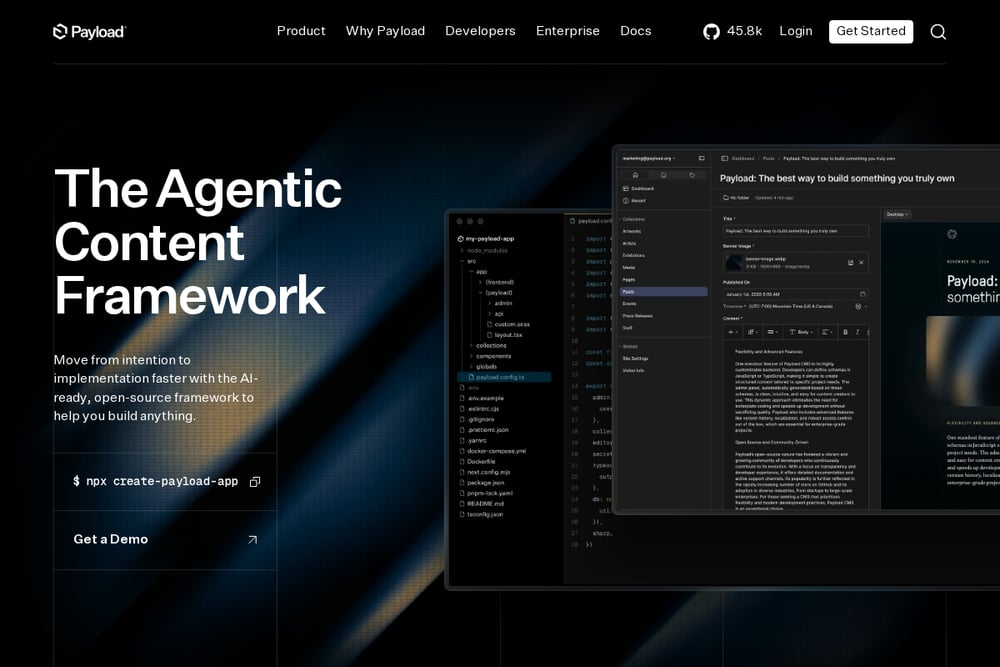 A screenshot of the Payload website.
Payload is an open-source, code-first content framework that pairs a developer-defined schema with a content editing experience. The homepage frames it as code-first for builders and content-first for marketers, and lists marketing teams among the groups it is for. It includes visual editing so teams can see the look and feel of content while working. Because the schema lives in code, the editing experience is shaped around the project rather than a fixed template.
#2 Sanity
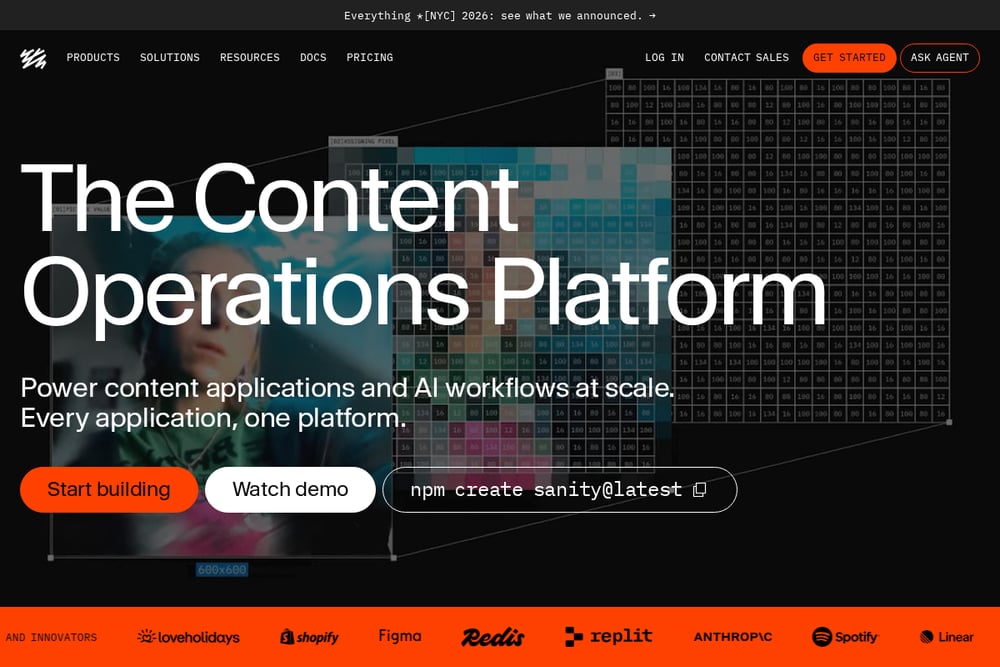 A screenshot of the Sanity website.
Sanity describes itself as a content operations platform for powering content applications and AI workflows. Its Studio is fully configurable, and the platform emphasizes structured content, content releases, and automation through agent actions and functions. The homepage highlights editorial freedom and a modern content studio as part of what teams get. It suits organizations that want to model content around their own operations rather than a rigid template.
#3 Storyblok
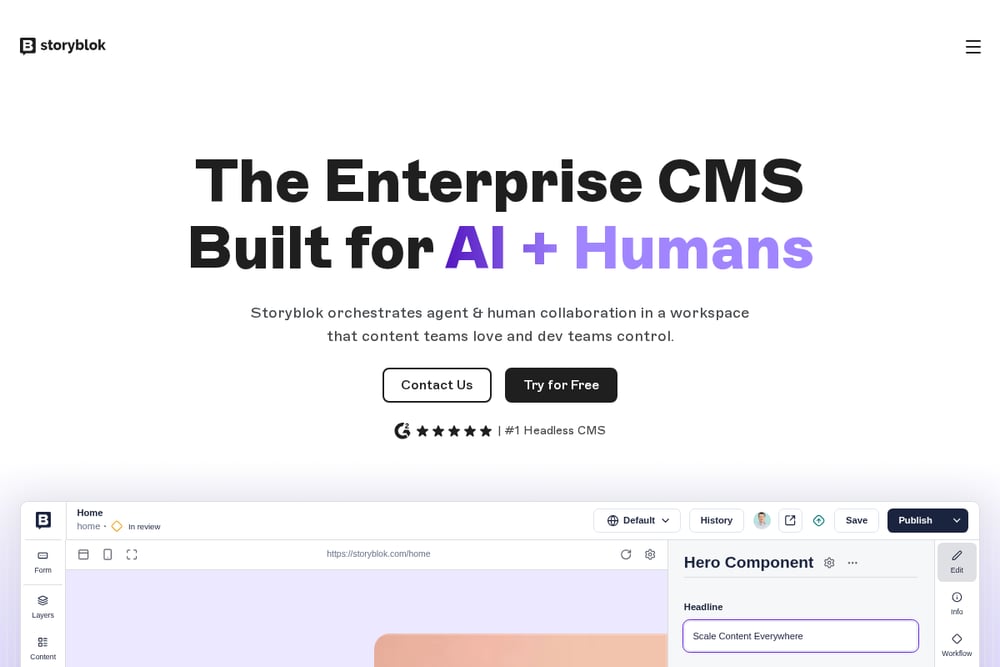 A screenshot of the Storyblok website.
Storyblok presents itself as an enterprise CMS built for AI and humans, with a workspace designed for collaboration between content teams and developers. It has a dedicated Marketers solution page and a visual editor that all teams can use. The platform emphasizes structured content, governance with roles and workflows, and a native MCP server for agent access. It is aimed at organizations that want marketing and development to move together.
#4 Strapi
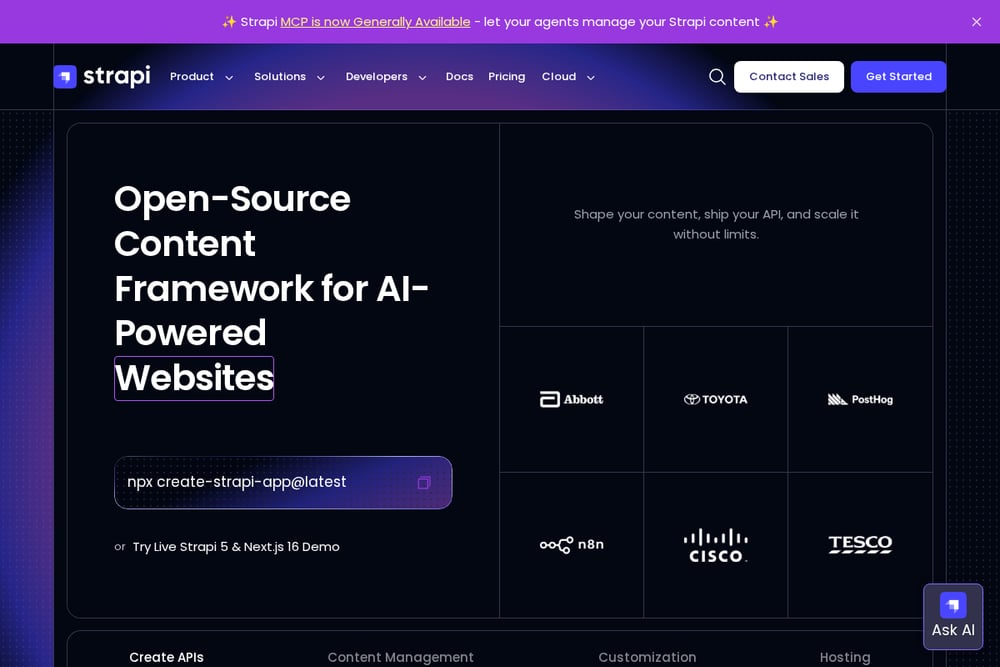 A screenshot of the Strapi website.
Strapi is an open-source content framework that lets teams shape content models and generate APIs. It includes a Content Type Builder and support for components and dynamic zones, which let editors rearrange page structure without a developer. The platform can be self-hosted or run on Strapi Cloud, and it provides governance features such as audit logs and review workflows. It suits teams that want control over the code and data layer while giving editors a manageable interface.
#5 Hygraph
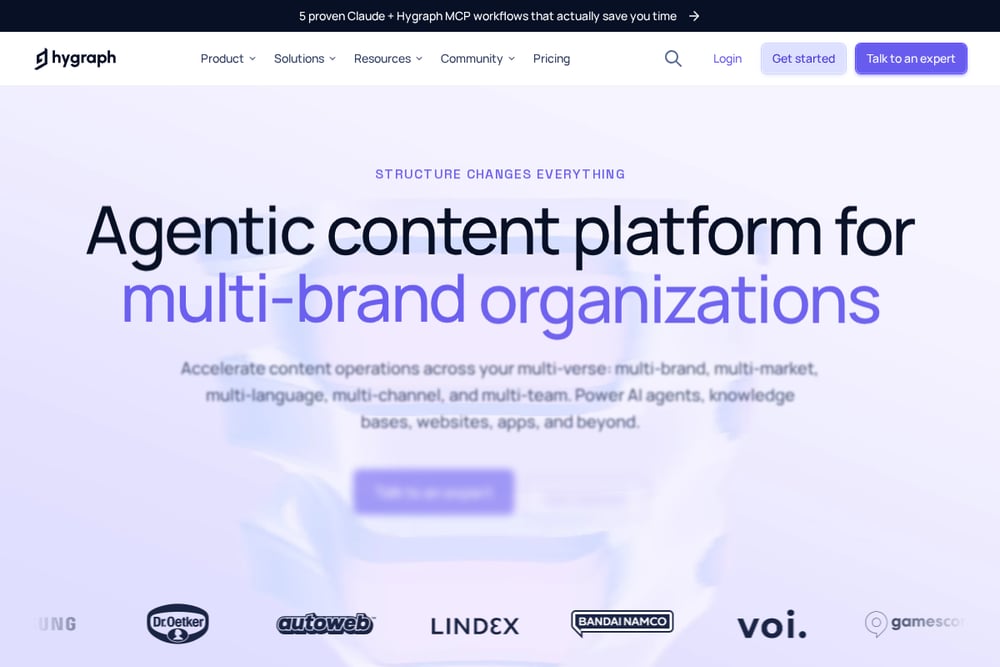 A screenshot of the Hygraph website.
Hygraph calls itself an agentic content platform for multi-brand organizations. It focuses on structured content, brand spaces, schema inheritance, and distributed governance so teams can run multiple brands and markets from one project. The platform connects content to AI assistants via MCP and delivers content through a GraphQL endpoint. It is built for organizations managing complex, multi-brand content operations.
#6 Prismic
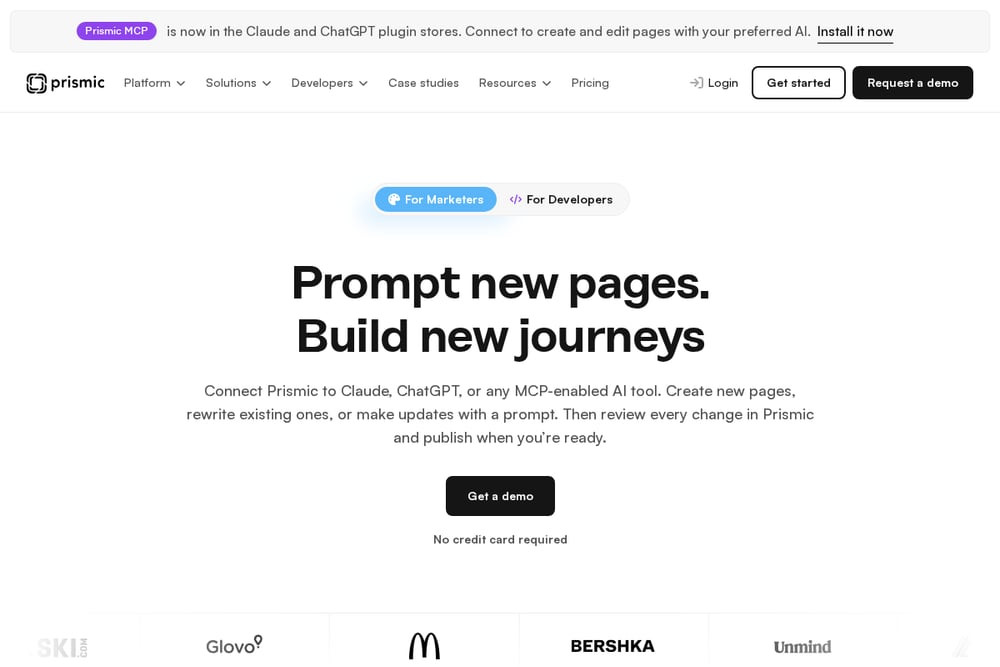 A screenshot of the Prismic website.
Prismic describes itself as an agentic web platform where teams and AI agents turn strategy into on-brand pages. It connects to Claude, ChatGPT, and other MCP-enabled tools so marketers can prompt new pages, rewrite content, or update existing pages, then review changes before publishing. The platform uses slices to keep pages modular and on-brand, and it includes preview and change tracking. It is aimed at marketing teams that want to use AI within a governed publishing workflow.
#7 DatoCMS
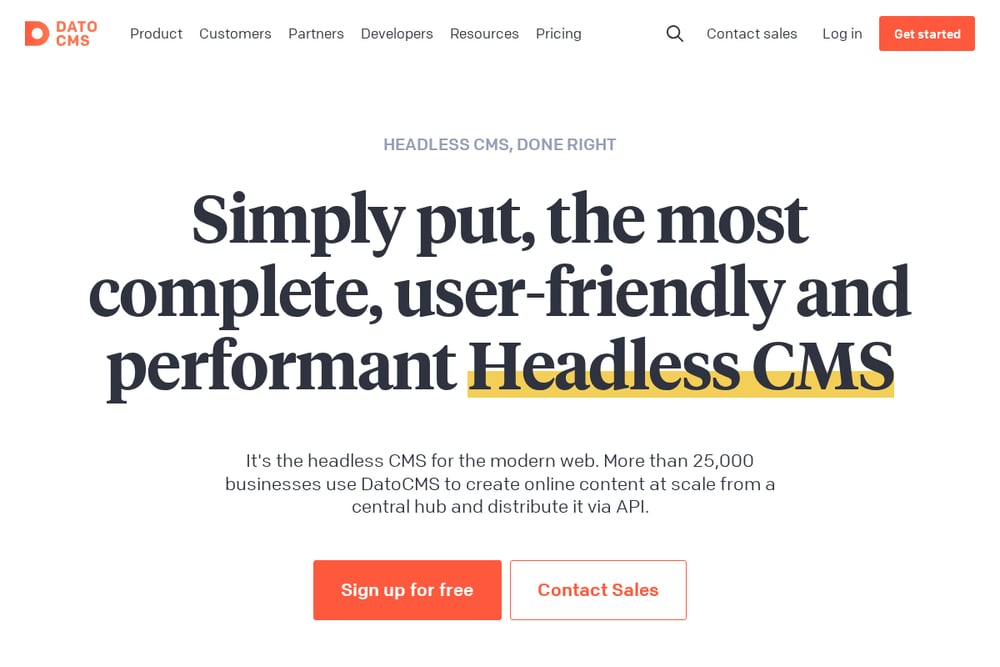 A screenshot of the DatoCMS website.
DatoCMS presents itself as a headless CMS with a strong focus on editor experience. It offers modular content, localization out of the box, and visual editing so editors can see and change content in context. The platform also includes structured text and AI and automation features. It suits digital marketers and content creators who want a friendly editing interface backed by a structured content model.
Which One Should You Choose?
Start with how your team works. If developers need to own the schema, look at code-first or open-source options. If marketers need to move fast with AI, look at platforms that connect to AI tools and keep review in the loop. If you run many brands or markets, prioritize structured governance and localization. Match the platform to your workflow rather than chasing a single feature.
Final Thoughts
These platforms differ in how much control they give developers versus editors, and in how they handle AI and multi-brand complexity. The right fit depends on your team structure and publishing model. Use this list as a starting point for conversations with each vendor.
Know a company that belongs on this list? Email us at editorial@peekwire.com.