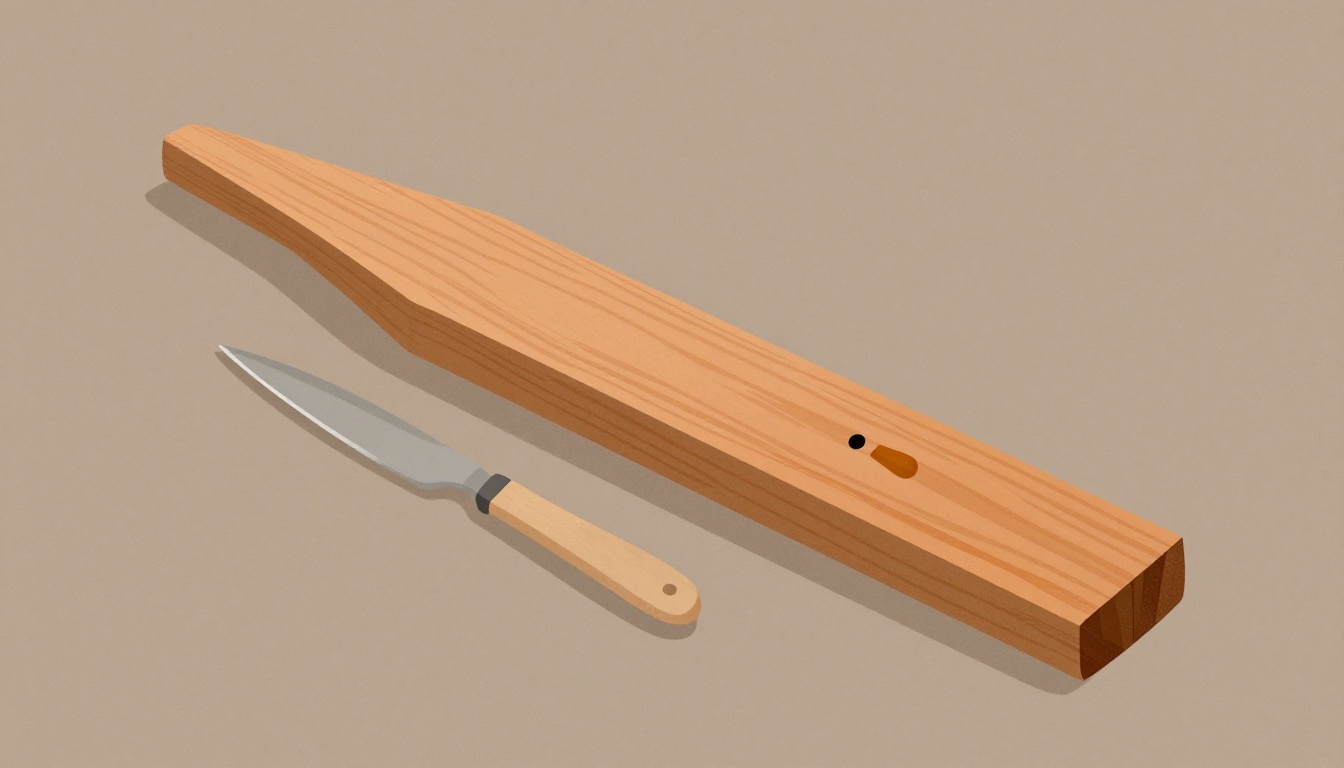
When golfers browse for a new divot tool or ball marker, they often sort by style: modern, classic, minimalist, or rustic. But according to Josh, owner of Out West Atelier, a Florida-based workshop making hardwood golf accessories and home goods, that framing misses the point entirely.
“They think handmade is a style. It’s not. It’s a material reality: every curve on my divot tools was shaped by a knife in my hand, not a machine in a factory.”
That distinction matters more than most buyers realize. A machine-made accessory can mimic the look of handcraft—the same grain patterns, the same rounded edges—but it cannot replicate the structural consequences of hand shaping. When a knife removes material, it follows the wood’s natural resistance, leaving a surface that is subtly irregular and uniquely responsive to pressure. A CNC router, by contrast, follows a digital path, producing identical copies with no memory of the tree they came from.
For golfers, this isn’t just sentimental. A hand-shaped divot tool sits differently in the hand. The balance point shifts slightly with each piece, and the edge geometry—the part that actually lifts a divot—is determined by the maker’s eye and touch, not a tolerance setting. That means no two tools behave identically on the course. Some players notice it immediately; others only realize it after using a factory-made tool side by side.
Josh’s point also challenges the common assumption that handmade equals expensive for the sake of being expensive. In reality, hand production is slower and less scalable, but it allows for material choices that factories avoid. Hardwoods with dramatic grain or minor character marks are often discarded by mass manufacturers because they don’t meet uniformity standards. A hand maker can select those pieces and let the wood’s personality drive the design. The result is an accessory that carries a kind of material honesty that no finish can fake.
That’s not to say handmade is automatically better. It can be inconsistent, and some buyers prefer the predictable feel of a machined tool. But the common mistake is treating handmade as a visual preference—like choosing matte over gloss—when it’s actually a process with physical consequences. The look is secondary. The making is the message.
For anyone considering a handmade golf accessory, the practical takeaway is to ask how it was made, not just what it looks like. Look for signs of hand work: slight asymmetries, tool marks that follow the grain, and a finish that feels like part of the wood rather than a coating on top of it. And if you’re shopping online, read the maker’s description carefully. If they talk about knives, chisels, or sanding by hand, that’s a clue. If they only mention “hand-finished” or “hand-inspected,” the actual shaping may have been done by a machine.
Out West Atelier’s approach is a useful example. Josh shapes each divot tool by hand, which means the wood’s density and grain direction influence every cut. That’s why his pieces often feel lighter or heavier than their dimensions suggest—because the wood itself is the final spec. It’s a far cry from the uniform, weight-matched accessories that dominate most pro shop shelves.
Ultimately, the next time you see a “handmade” golf accessory, don’t ask if it fits your aesthetic. Ask if it was made by a hand that responded to the wood. That’s the only question that separates a style from a reality.