
Grief can feel isolating, but you don't have to navigate it alone. These five services offer different paths to healing—from faith-based groups to professional counseling.
The Landscape of Grief Support
Grief support has evolved far beyond traditional therapy. Today, you can find everything from drop-in peer groups and structured video curricula to licensed clinical counseling and specialized programs for children and teens. In California, the options are especially diverse, reflecting the state's varied communities and needs. Whether you're looking for a one-time seminar, a long-term therapeutic relationship, or a faith-centered group, there's likely a service that fits your comfort level and schedule. The key is finding a setting where you feel safe to express your loss and begin the work of restoration.
How We Evaluated These Services
We looked at each service's scope of offerings, including whether they provide individual counseling, group sessions, or both. We considered the clarity of their approach—how easily you can understand what you'll get and how to start. Local fit mattered, too, especially for in-person options in California. We also weighed the accessibility of resources like free eBooks, seminars, and online groups. Finally, we noted the unique strengths of each service, from faith-based integration to specialized youth programs.
Here's a quick snapshot of the five services, ranked by overall fit for a range of grief needs.
| Provider | Best For |
|---|---|
| OUR HOUSE Grief Support Center | Comprehensive, multi-age grief support with in-person and online options |
| Grief and Loss | Good Mourning with Marilyn | Fresno | Personalized, faith-informed counseling with a clear restoration roadmap |
| GriefShare | Structured, video-based group support with national reach |
| Kara | Drop-in peer groups and youth-focused grief support in the Bay Area |
| LifeStance Health - Grief and Loss Group Therapy | Clinically supervised group therapy with insurance acceptance |
The Full Breakdown
#1 OUR HOUSE Grief Support Center
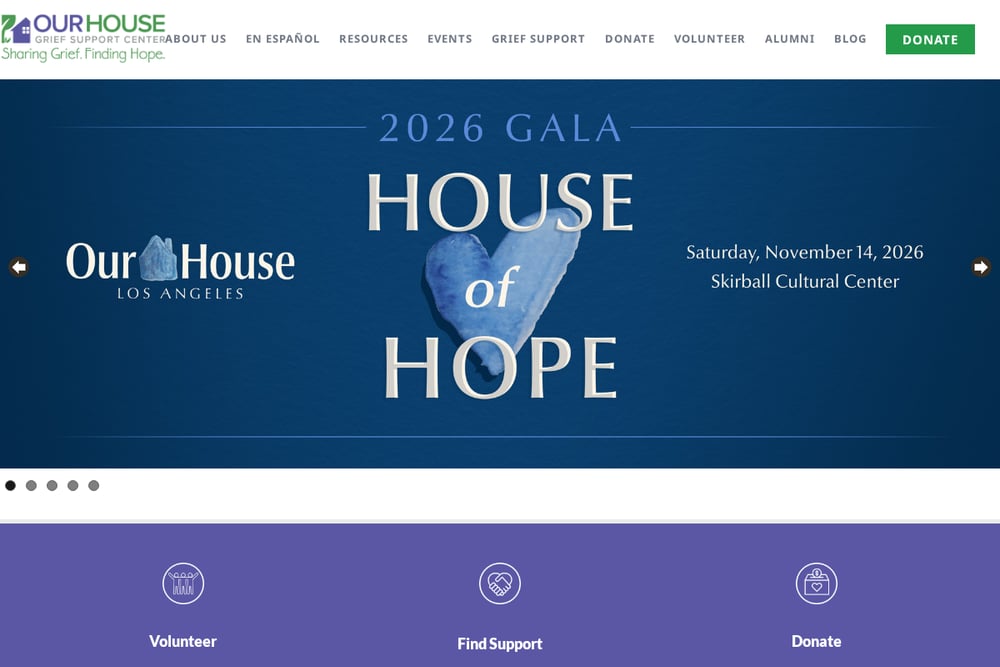 A screenshot of the OUR HOUSE Grief Support Center website.
OUR HOUSE offers a comprehensive suite of grief support services across Los Angeles and New York, including peer support groups, individual counseling, and specialized programs for children, teens, and families. They also provide community education and crisis response, making them a versatile resource for anyone navigating loss. Their website is packed with resources, from grief videos to recommended reading, so you can start exploring even before you attend a session. If you're in LA, their in-person groups are a lifeline, but they also offer virtual options for broader reach. The organization's longevity and structured approach give it a strong foundation for trust. For a one-stop shop that covers all ages and types of loss, this is a solid starting point.
#2 Grief and Loss | Good Mourning with Marilyn | Fresno
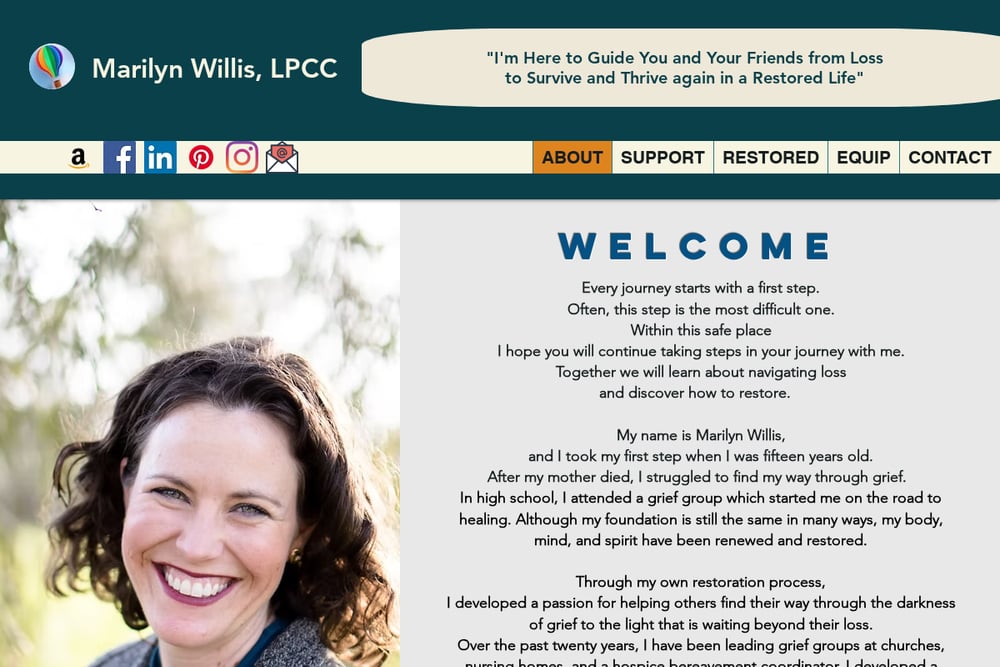 A screenshot of the Grief and Loss | Good Mourning with Marilyn | Fresno website.
Marilyn Willis, a Licensed Professional Clinical Counselor, brings a personal touch to grief recovery, drawing on her own experience of losing her mother at fifteen. Her step-by-step restoration process focuses on rebuilding physical functioning, mental clarity, emotional stability, and purpose. She offers guided counseling, leads grief groups at churches and nursing homes, and provides free eBooks like the Holiday Grief Survival Guide. Her faith-based perspective is woven throughout, but it's not exclusive—she welcomes anyone seeking a path through darkness. If you're in Fresno or prefer remote sessions, her practice offers a warm, structured approach. The free resources are a great way to test if her style resonates with you.
#3 GriefShare
 A screenshot of the GriefShare website.
GriefShare is a nationwide network of support groups that meet both in-person and online, making it easy to find a group near you or join from home. Each weekly meeting combines expert-led video segments with group discussion, giving you a structured yet flexible format. The program is designed for anyone grieving the death of a family member or friend, regardless of how recent the loss. You'll find a safe, non-judgmental space where you can share as much or as little as you want. The website also offers articles and resources for specific losses like a spouse, parent, or child. If you're looking for a community-based approach with a proven curriculum, this is a reliable choice.
#4 Kara
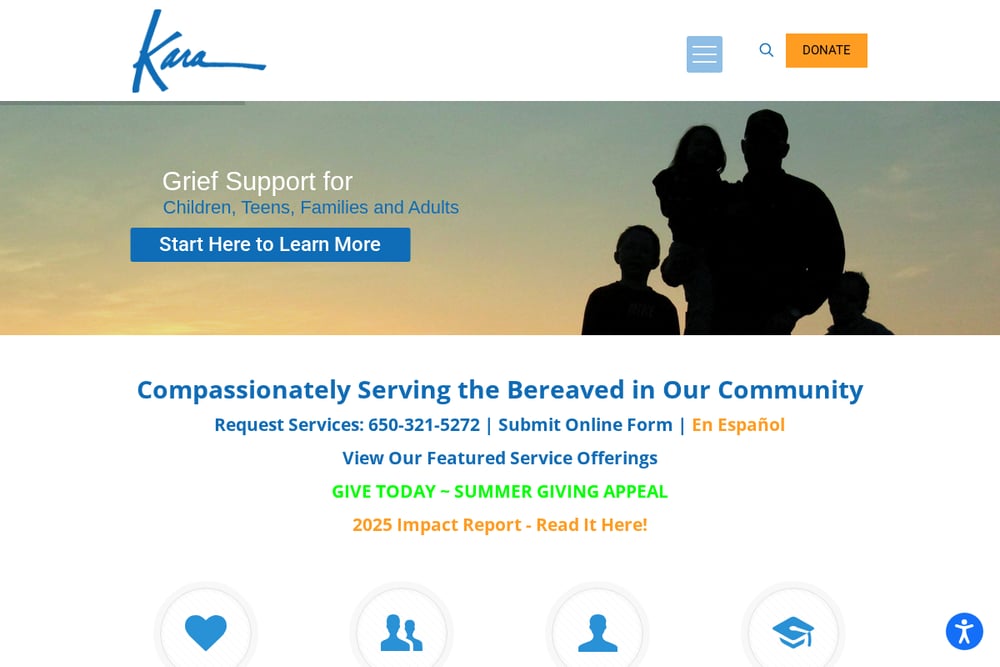 A screenshot of the Kara website.
Kara, based in Palo Alto, offers a unique blend of peer support and professional therapy, with drop-in groups for adults that require no appointment or interview. They also provide specialized programs for children, teens, and families, as well as services in Spanish. Their crisis response and community education workshops extend their reach beyond traditional grief support. If you're in the Bay Area, their in-person presence is a major plus, but they also offer virtual consultations. The organization's 2025 Impact Report shows a strong commitment to serving the bereaved with compassion. For those who prefer a less formal entry point, Kara's drop-in model is refreshingly accessible.
#5 LifeStance Health - Grief and Loss Group Therapy
 A screenshot of the LifeStance Health - Grief and Loss Group Therapy website.
LifeStance Health offers a professional, clinical approach to grief and loss through group therapy, with locations across California including Glendale. Their services are part of a larger mental health network, so you can also access individual therapy, medication management, and other specialties if needed. The group therapy format is led by licensed clinicians, providing a structured and evidence-based environment. You can search for providers by location and specialty, making it easy to find a group that fits your schedule. While it may feel more clinical than peer-led options, this is a solid choice if you're looking for professional oversight. Insurance is accepted, which can make it more affordable than private counseling.
How to Choose the Right Grief Support
Start by asking yourself what kind of setting feels most comfortable. Do you prefer a one-on-one relationship with a counselor, or do you find strength in a group of peers? Consider whether faith-based guidance is important to you—Marilyn Willis and GriefShare both integrate Christian principles, while others are secular. Think about logistics: in-person vs. online, location, and cost. If you're on a budget, look for free resources like eBooks or drop-in groups. Finally, trust your gut—the right fit is one where you feel safe and understood, not pressured to move faster than you're ready.
Streamlining Your Search for Grief Support
To find the right service quickly, start by listing your non-negotiables: location, budget, and whether you want faith-based or secular support. Use online directories like Psychology Today to filter by specialty and insurance. Then, visit each service's website to check for free resources—like Marilyn's eBooks or Kara's drop-in groups—that let you sample their approach. Set up a simple spreadsheet to compare each option's hours, cost, and start dates. Finally, reach out to two or three services for a brief consultation; most offer a free initial call. This way, you're not just picking a name—you're choosing a path that fits your life.
Finding Your Path to Restoration
Grief is a journey, not a race, and the right support can make all the difference. Whether you choose the clinical expertise of LifeStance, the community warmth of GriefShare, or the personal guidance of Marilyn Willis, each of these services offers a unique way to move forward. Take your time, explore the free resources, and remember that seeking help is a sign of strength. Your restored life is possible—you just need to take that first step.