
The AI hardware market is booming, but buying and selling GPUs still feels like a wild west. These five platforms are bringing order to the chaos, each with a unique angle on price discovery and supply aggregation.
The GPU Market's New Middlemen
The GPU market has exploded in 2026, but it remains fragmented. OEM allocations, cloud capacity, brokers, and secondary sellers each hold a piece of the puzzle, and prices vary wildly based on SKU, timing, and context. This opacity has created a pressing need for dedicated marketplaces that can aggregate supply, verify counterparties, and provide real-time price signals. As AI labs and enterprises scale up, they're turning to these platforms to cut through the noise and make informed purchasing decisions. The platforms profiled here are at the forefront of this shift, each tackling the problem from a different angle.
How We Evaluated These Platforms
We assessed each platform on its ability to provide price discovery, the breadth of its supply network, the verification of its participants, and its overall ease of use for both buyers and sellers. We also considered the specific tools each offers for navigating the complex GPU market, from forward curves to auction mechanisms. What stood out for each platform was its unique approach to solving the core problem of market fragmentation. Some excel at aggregating diverse supply sources, while others focus on creating standardized pricing benchmarks or facilitating competitive bidding processes.
Here's a quick look at the five platforms we're covering, from the most comprehensive to the most specialized.
| Provider | Best For |
|---|---|
| Compute Exchange | Comprehensive GPU procurement and forward planning |
| Stoa | The market behind AI hardware | Institutional-grade GPU trading with verified counterparties |
| Silicon Data | GPU pricing benchmarks and forward curves |
| Fluence GPU Marketplace | Competitive bidding on reserved GPU capacity |
| NVIDIA Marketplace | Buying new NVIDIA hardware directly from the source |
The Platforms, Explored
#1 Compute Exchange
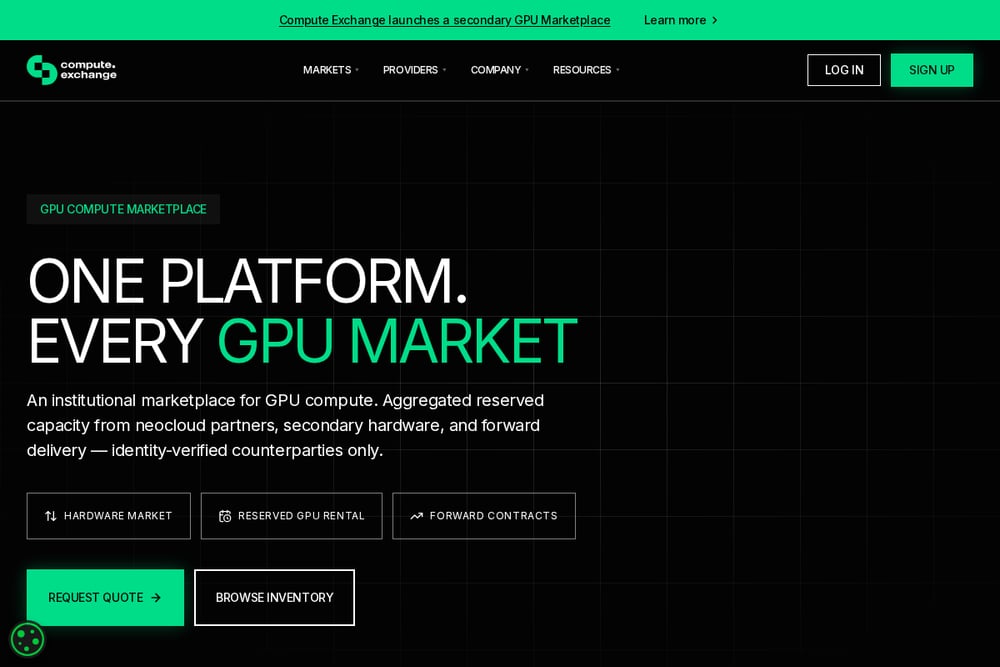 A screenshot of the Compute Exchange website.
Compute Exchange has positioned itself as a comprehensive secondary marketplace for GPUs, offering everything from refurbished units to reserved capacity for next-gen hardware like the B200 and H200. Its platform includes forward contracts and tokenized forwards, giving you a way to hedge against future price movements. The site's blog, 'The Rise of GPU Marketplaces in 2026,' highlights a real-world case where a startup cut GPU costs by over 50% by switching to reserved capacity, showcasing the tangible benefits of using such a marketplace. With a wide range of GPU models and flexible purchasing options, it's a strong choice for both short-term needs and long-term planning. The platform's focus on reserved capacity and forward contracts makes it particularly appealing for enterprises looking to lock in pricing.
#2 Stoa | The market behind AI hardware
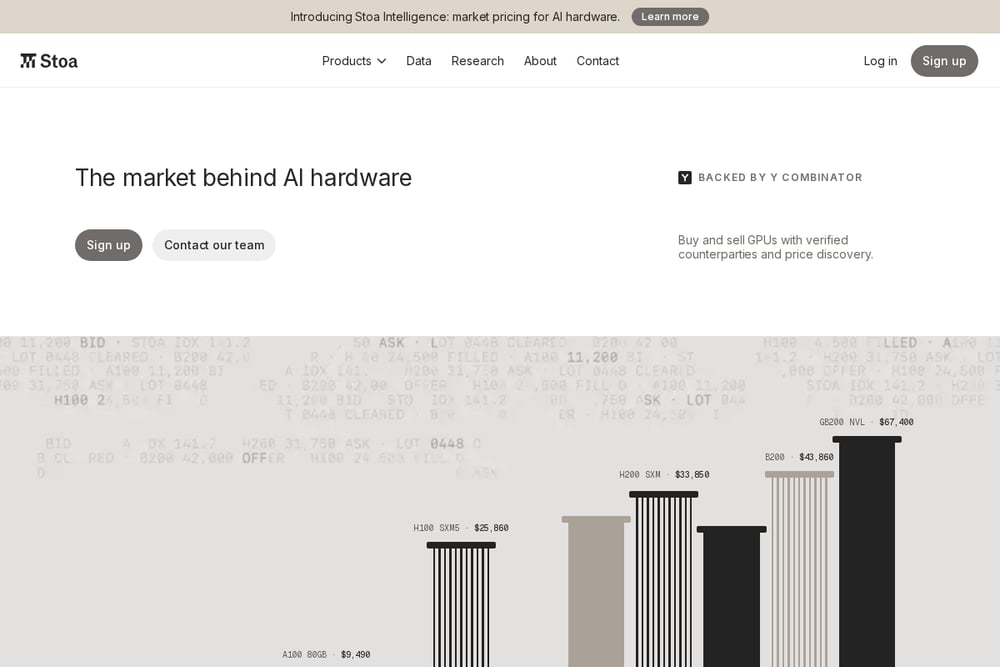 A screenshot of the Stoa website.
Stoa is an institutional marketplace designed to bring transparency to GPU trading, with a strong emphasis on verified counterparties and real-time price discovery. The platform aggregates supply from brokers, operators, and secondary sellers, giving you a single venue to compare offers and see where the market is actually clearing. Its coverage spans key models like the H100, A100, and H200, and it's built for every side of the market, from brokers and dealers to data center operators and AI labs. Stoa's approach directly addresses the problem of scattered supply and incomplete signals, making it a valuable tool for anyone serious about GPU transactions. Backed by Y Combinator, it's a credible player in this emerging space.
#3 Silicon Data
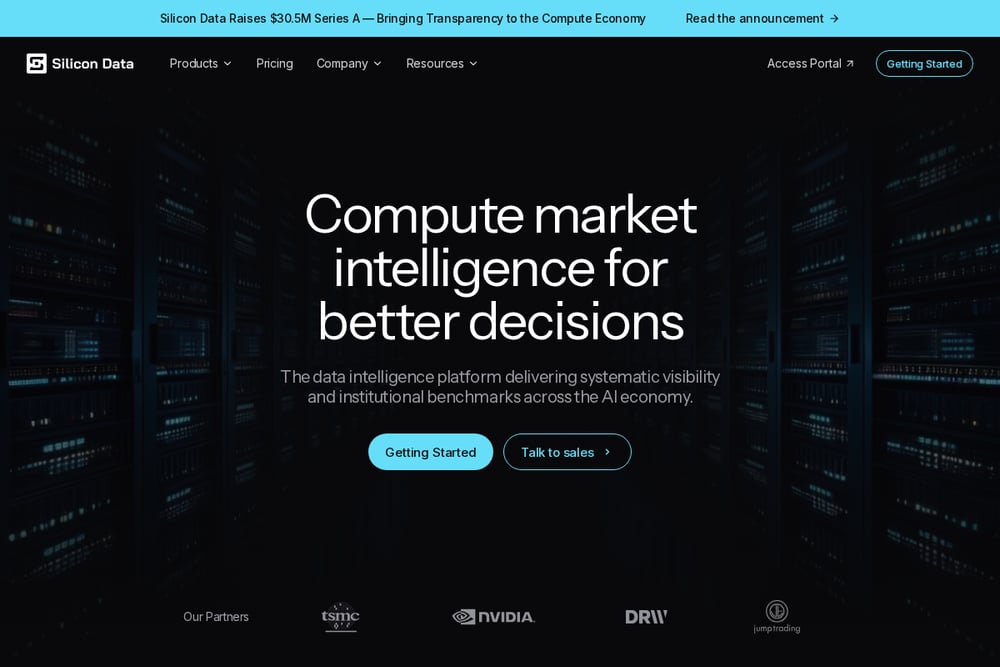 A screenshot of the Silicon Data website.
Silicon Data is building the 'price layer' for the compute economy, offering daily GPU rental price indices, forward curves, and even an LLM Token Index. Their platform provides benchmarks for H100, H200, A100, B200, and MI300X rentals, giving you a clear view of where prices are heading. They also offer tools like SiliconPriceIQ for predictive pricing intelligence and SiliconMark for performance benchmarking, which are invaluable for underwriting data center deals. The recent $30.5M Series A raise underscores their traction and the market's need for transparency. If you're looking to understand GPU pricing trends or hedge against volatility, Silicon Data's data products are a must-have.
#4 Fluence GPU Marketplace
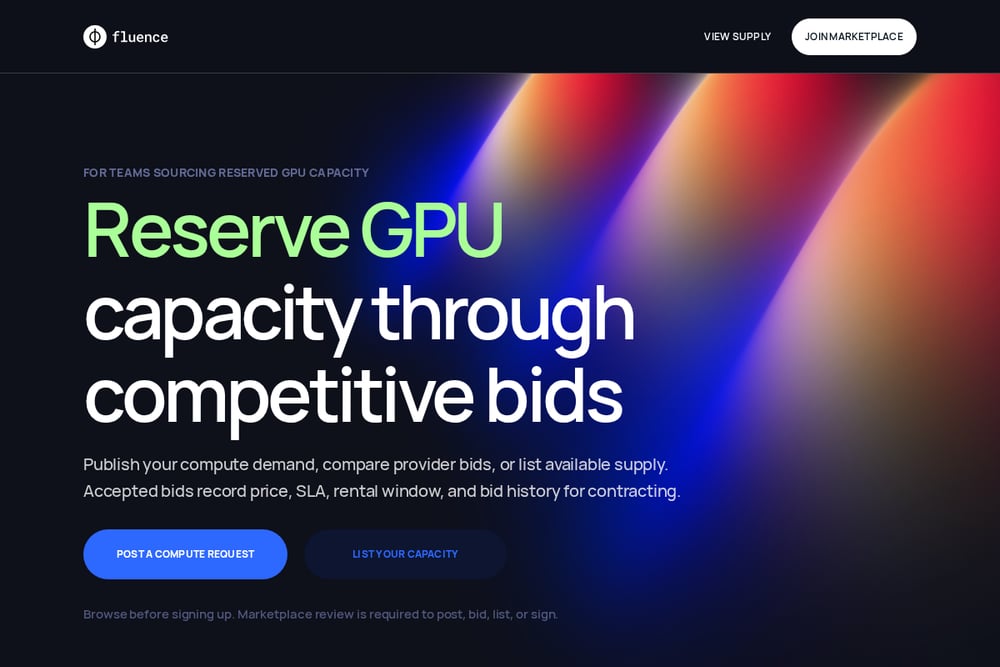 A screenshot of the Fluence GPU Marketplace website.
Fluence takes a different approach by using an auction model to match buyers and sellers of reserved GPU capacity. You can post your compute demand and let providers bid on it, or list your available supply and let buyers compete. The platform shows a live market snapshot with available GPUs across regions, with prices starting as low as $2.30/hr for H100s in Europe. This competitive bidding process ensures you get a fair market price, and the structured format records price, SLA, and rental window for each accepted bid. It's a great option if you want to avoid the back-and-forth of private quotes and instead let the market come to you.
#5 NVIDIA Marketplace
NVIDIA's official marketplace is the go-to source for brand-new, directly-from-the-manufacturer hardware, including data center GPUs, DGX systems, and even GeForce RTX 50 series cards. It's the most straightforward option if you want to buy new gear without worrying about third-party verification. The site also offers software, workstations, and enterprise AI factory solutions, making it a one-stop shop for all things NVIDIA. However, it lacks the secondary market depth and price discovery features of the other platforms, so you won't find used or refurbished deals here. For guaranteed authenticity and the latest releases, it's hard to beat.
How to Pick Your GPU Marketplace
Start by defining your primary need: are you buying new hardware, sourcing used GPUs, or looking to understand pricing trends? If you need the latest models with a warranty, NVIDIA Marketplace is your safest bet. For a wide selection of both new and used hardware with flexible terms, Compute Exchange offers a robust solution. If you're an institutional player needing verified counterparties and real-time price discovery, Stoa is built for you. For data-driven insights and forward pricing, Silicon Data's indices are invaluable. And if you prefer a competitive bidding process to get the best price on reserved capacity, Fluence's auction model is worth exploring. Consider your budget, timeline, and the level of transparency you need, and you'll find the right fit.
Automating GPU Procurement
You can streamline your GPU procurement by integrating these marketplaces into your workflow. Start by using Silicon Data's APIs to monitor price indices and forward curves, setting alerts for favorable pricing. When the time is right, use Stoa or Compute Exchange to execute trades, leveraging their verified networks and price discovery tools. For reserved capacity, you can automate bids on Fluence based on your budget and requirements. Finally, for new hardware, set up notifications on NVIDIA Marketplace for product launches. This multi-platform approach ensures you're always getting the best deal without manual research.
The Future of GPU Trading
The GPU market is maturing, and these five platforms are leading the charge toward greater transparency and efficiency. Whether you're a broker, a data center operator, or an AI lab, there's a tool here that can help you navigate the complex landscape of AI hardware. As the market continues to evolve, we can expect even more sophisticated financial instruments and data products to emerge. For now, these platforms offer the best ways to buy, sell, and understand GPUs in 2026. Choose the one that aligns with your strategy, and you'll be ahead of the curve.