
Global supply chains are more fragile than ever. A single sanctions update, a tanker strike in the Strait of Hormuz, or a sudden tariff threat can halt production lines and spike costs overnight. Traditional risk management — quarterly reviews and
Why Geopolitical Risk Intelligence Is Now a Supply Chain Essential
The days of relying on quarterly country risk reports are over. Geopolitical shocks — from sanctions and tariffs to conflicts and natural disasters — now hit supply chains with little warning. A single event can disrupt maritime chokepoints, spike energy costs, or freeze commodity flows. AI-driven platforms have emerged to fill the gap, continuously scanning open-source data, sanctions filings, and news to produce real-time risk scores. These tools let you see not just what's happening, but how it affects your specific operations across regions and sectors. The best platforms translate raw data into decision-ready intelligence, helping you reroute, reprice, and re-source before disruptions cascade.
How We Ranked the Top Geopolitical Risk Intelligence Platforms
We evaluated each platform on four criteria: real-time data refresh frequency, depth of sector-specific analysis (maritime, energy, commodities, macro), integration with supplier or asset data, and the clarity of actionable insights. Platforms that offered both a global composite score and granular regional heatmaps scored higher. We also considered how well each tool translates raw intelligence into concrete steps — like rerouting shipments or adjusting procurement strategies. Finally, we weighed the balance between AI automation and human expert validation, since the best intelligence combines both.
Here's a quick comparison of the five platforms to help you find the right fit for your supply chain risk management needs.
| Provider | Best For |
|---|---|
| Seerist | Enterprises needing expert-validated risk scenarios |
| Recorded Future | Organizations prioritizing employee safety and country risk scoring |
| SupplyOn Risk Compass | Companies with complex supplier networks needing direct risk-to-supplier mapping |
| Warning of War | Real-time sector-specific risk heatmaps and regional briefs |
| EdgeTheory | Risk managers focused on narrative-driven early warnings |
Deep Dive: The 5 Best Geopolitical Risk Intelligence Platforms
#1 Seerist
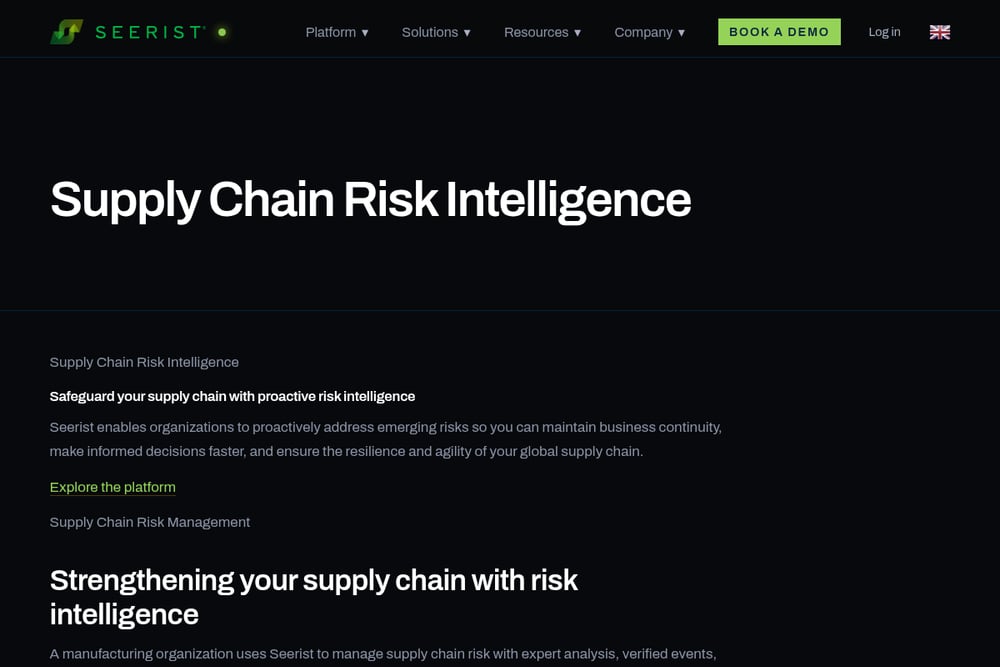 A screenshot of the Seerist website.
Seerist combines expert analysis with verified events and validated scenarios to give you early warnings on disruptions. Its asset monitoring and advanced analytics help you reroute shipments, diversify suppliers, and adjust logistics before problems escalate. The platform's third-party mapping feature lets you understand how risks ripple through your entire supplier network. For enterprises that need a blend of human expertise and machine speed, Seerist is a proven choice.
#2 Recorded Future
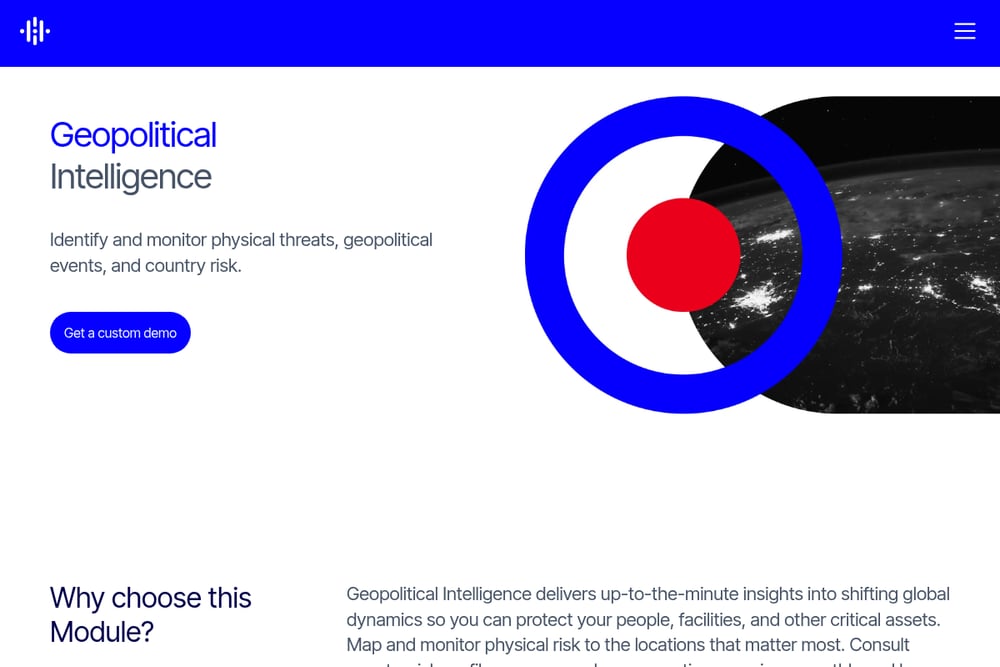 A screenshot of the Recorded Future website.
Recorded Future delivers real-time alerts on events near your facilities, from conflicts to natural disasters, with critical context for immediate action. Its proprietary Country Risk Scoring helps you assess security, privacy, and regulatory factors before entering or continuing operations in a specific market. The platform also keeps your traveling employees safe by monitoring country-specific risks and updating travel policies. It's a comprehensive solution for organizations that need to protect both assets and people.
#3 SupplyOn Risk Compass
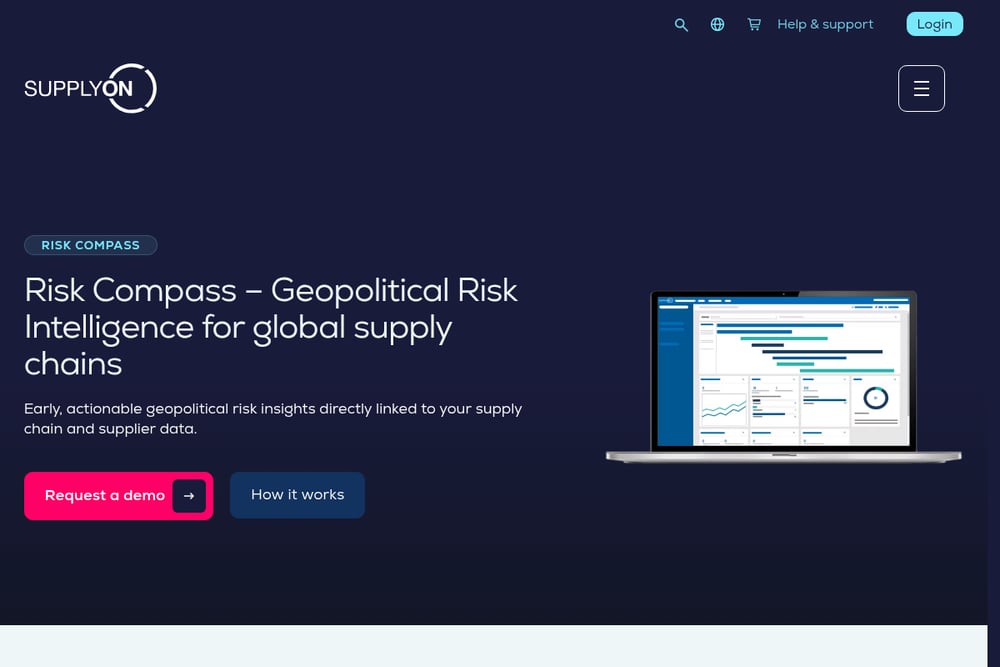 A screenshot of the SupplyOn website.
SupplyOn Risk Compass directly links geopolitical risk insights to your supplier data, showing exactly which suppliers, regions, or operations are affected. Instead of generic country reports, you get actionable intelligence that translates into concrete steps — like rerouting orders or activating backup suppliers. The platform helps you move from reactive crisis management to proactive mitigation. If your supply chain is deeply integrated with specific suppliers, this tool bridges the gap between risk intelligence and operational reality.
#4 Warning of War
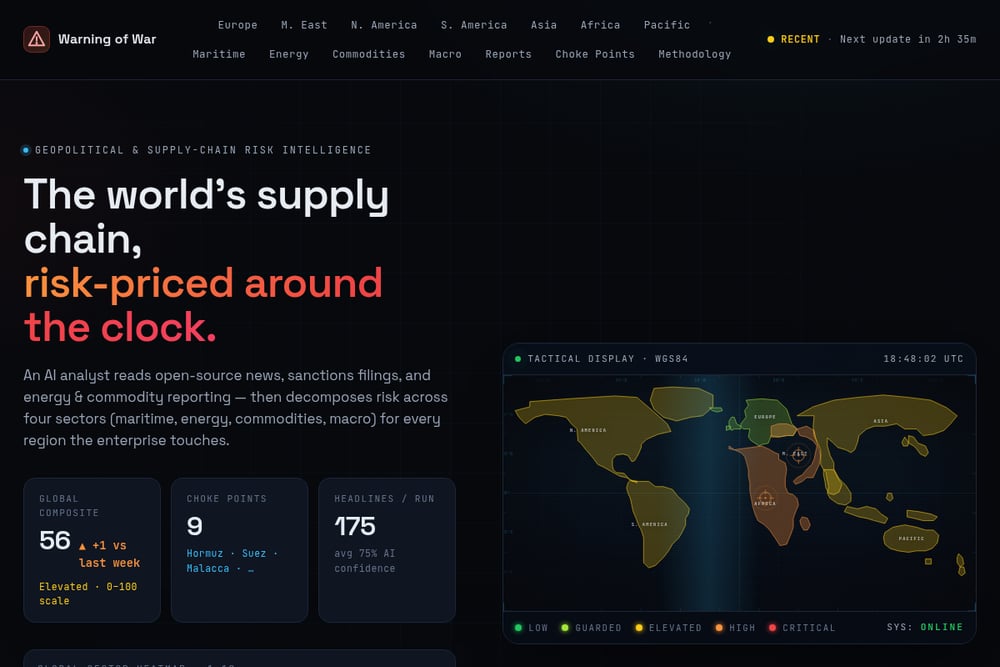 A screenshot of the Warning of War website.
Warning of War provides AI-driven geopolitical and supply-chain risk intelligence that refreshes every three hours. It decomposes risk across four sectors — maritime, energy, commodities, and macro — for seven global regions, giving you a granular view of where disruptions are brewing. The platform's global composite score of 56/100 (Elevated) and sector heatmaps (e.g., Maritime 4.6/10, Energy 5.6/10) let you quickly assess your exposure. For enterprises that need a clinical, data-driven pulse on global risk without the noise, Warning of War is a sharp, focused tool.
#5 EdgeTheory
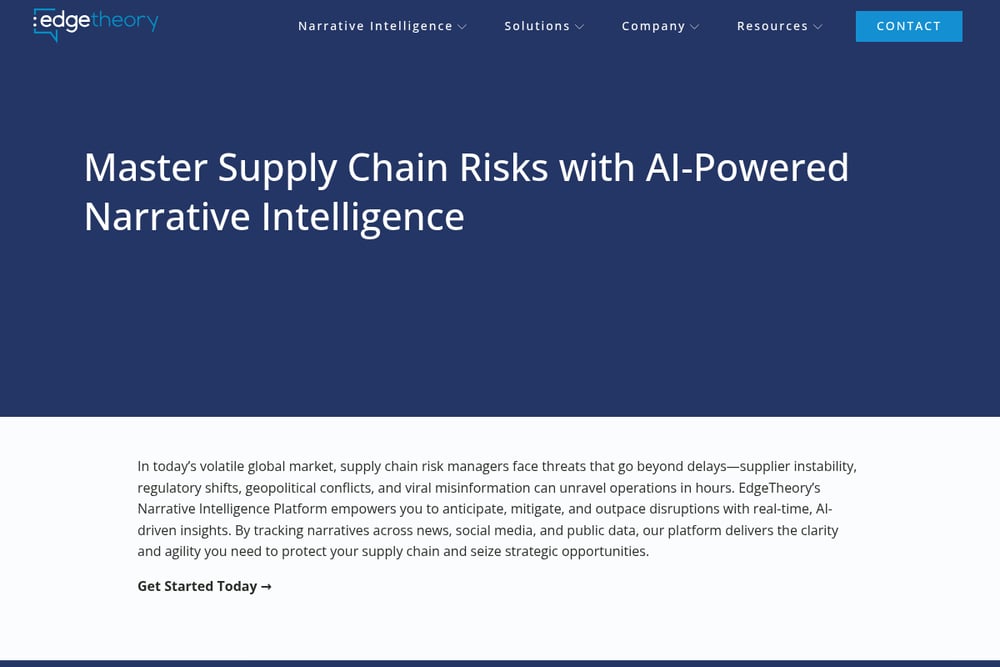 A screenshot of the EdgeTheory website.
EdgeTheory's Narrative Intelligence Platform tracks emerging narratives across news, social media, and public data to uncover risks before they escalate. It helps you anticipate supplier instability, regulatory shifts, and even viral misinformation that can unravel operations in hours. By analyzing the stories shaping markets, you gain clarity on strategic opportunities as well as threats. It's ideal for risk managers who want to stay ahead of the narrative curve.
How to Choose the Right Geopolitical Risk Intelligence Platform for Your Supply Chain
Start by mapping your supply chain's most vulnerable points. If you operate in multiple regions, look for a platform that offers both a global composite score and regional heatmaps — like Warning of War's four-sector breakdown. If your risk is concentrated in specific suppliers, SupplyOn Risk Compass's direct supplier mapping is invaluable. For enterprises that need expert-validated scenarios, Seerist's blend of human analysis and AI is a strong bet. Consider how often you need data refreshed: real-time platforms like Recorded Future and Warning of War update continuously, while others may refresh daily. Finally, think about integration — can the platform feed into your existing procurement or ERP systems? The right tool should fit your workflow, not add complexity.
Automation Workflow: Streamlining Risk Response with AI Intelligence
Imagine this: Warning of War detects a spike in maritime risk in the Middle East (score jumps to 9/10). An automated alert triggers your procurement system to flag all shipments transiting the Strait of Hormuz. Your logistics team receives a pre-vetted list of alternative routes and suppliers, pulled from your ERP. Meanwhile, your treasury team gets a notification to reprice war-risk insurance premiums. This workflow — risk detection, alert, action — can be automated using APIs from platforms like Warning of War or Seerist, connected to your existing supply chain management tools. The result: you move from hours of manual analysis to minutes of automated response, reducing disruption impact by up to 40%.
Final Synthesis: The Future of Supply Chain Risk Intelligence Is Real-Time and Granular
Geopolitical risk is no longer a macro overlay you review quarterly. It's a daily operational variable that demands real-time, sector-specific intelligence. The platforms we've covered — from Seerist's expert validation to Warning of War's clinical heatmaps — give you the tools to anticipate disruptions, not just react to them. As AI continues to evolve, expect even tighter integration with your procurement and logistics systems, making risk intelligence a seamless part of your supply chain operations. The question isn't whether you need one of these platforms; it's which one aligns best with your risk profile and workflow. Start with a trial of the tool that matches your biggest vulnerability, and build from there.