
If you're deploying conversational AI, you know the stakes: one bad update can erode trust fast. These five platforms help you test smarter and deploy safer.
The New Safety Net for AI
Generative AI is everywhere, but it's also unpredictable. Unlike traditional software, AI doesn't give the same answer twice, making testing a whole new ballgame. Enterprises are realizing they need dedicated tools to ensure stability, safety, and compliance—not just for launch, but for every update. The market is responding with platforms that automate test creation, monitor performance, and even generate scenarios from your own documents. By 2027, Gartner predicts 80% of enterprises will use AI-augmented testing tools, up from 15% in early 2023. That's a massive shift, and these five platforms are leading the charge.
How We Evaluated These Platforms
We looked at each platform's core strengths: how well they handle the stochastic nature of AI, their ability to integrate into your existing workflow, and the depth of their monitoring and compliance features. We also considered ease of use—because you don't want a tool that requires a PhD to operate. Each platform brings something different to the table, from autonomous bug hunting to deterministic assertions for non-deterministic outputs. Here's what stood out for each.
Here's a quick snapshot of the five platforms we're diving into, so you can see at a glance what each one is built for.
| Provider | Best For |
|---|---|
| Momentic | Autonomous bug discovery and self-healing tests |
| Hoot | Using AI wisely | Enterprise AI safety, compliance, and automated test generation |
| QA Wolf | Managed QA services with deterministic AI testing |
| Functionize | Agentic testing for web UI with a focus on enterprise industries |
| Testlio | Crowdsourced testing with AI-powered insights |
The Platforms, Up Close
#1 Momentic
 A screenshot of the Momentic website.
Momentic is your AI QA agent that you can point at any URL to get real bugs back, complete with recordings and repro steps. It's built for web and mobile, and its agentic testing lets AI author, repair, and maintain tests as your UI changes. You can write tests in plain English, and it runs them on hosted browsers or your own infrastructure. The MCP server integration means your coding agent can write a test, run it in a live browser, and fix it from the failure. If you want to catch real bugs before they ship without writing a ton of code, this is your tool. It's like having a QA engineer that never sleeps.
#2 Hoot | Using AI wisely
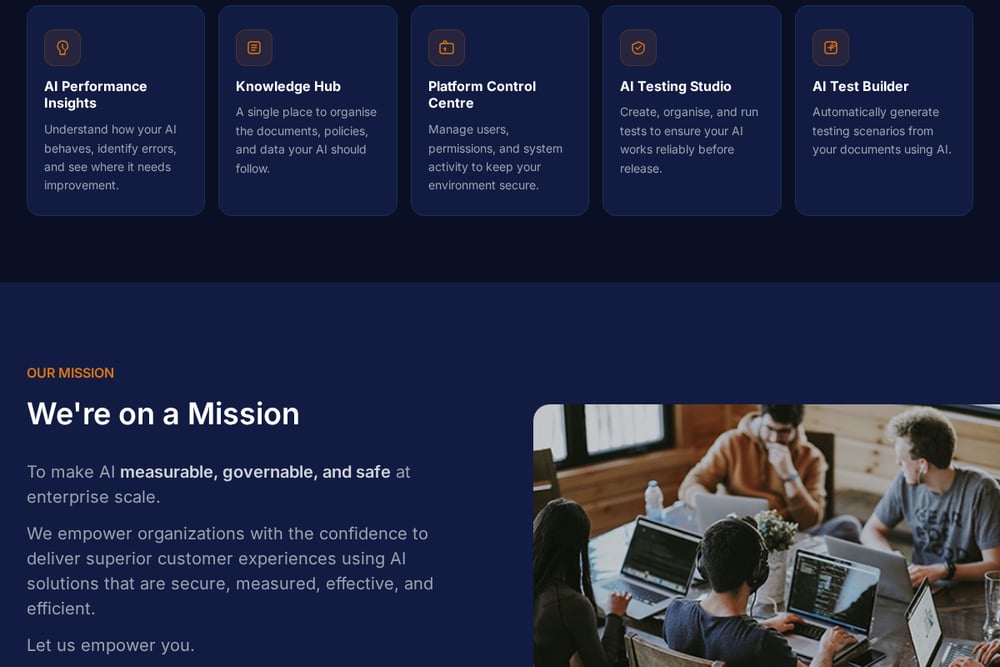 A screenshot of the Hoot website.
Hoot is a full testing suite for generative AI, designed to ensure stability, safety, and compliance with every update. It gives you AI performance insights to understand how your AI behaves, identify errors, and see where it needs improvement. The Knowledge Hub organizes your documents, policies, and data in one place, so your AI follows the right rules. Its AI Test Builder automatically generates testing scenarios from your documents, saving you hours of manual work. With 100% AI coverage visibility and 24/7 continuous monitoring, Hoot is built for enterprise scale and security. If you're deploying conversational AI and need a partner for safety and compliance, Hoot has your back.
#3 QA Wolf
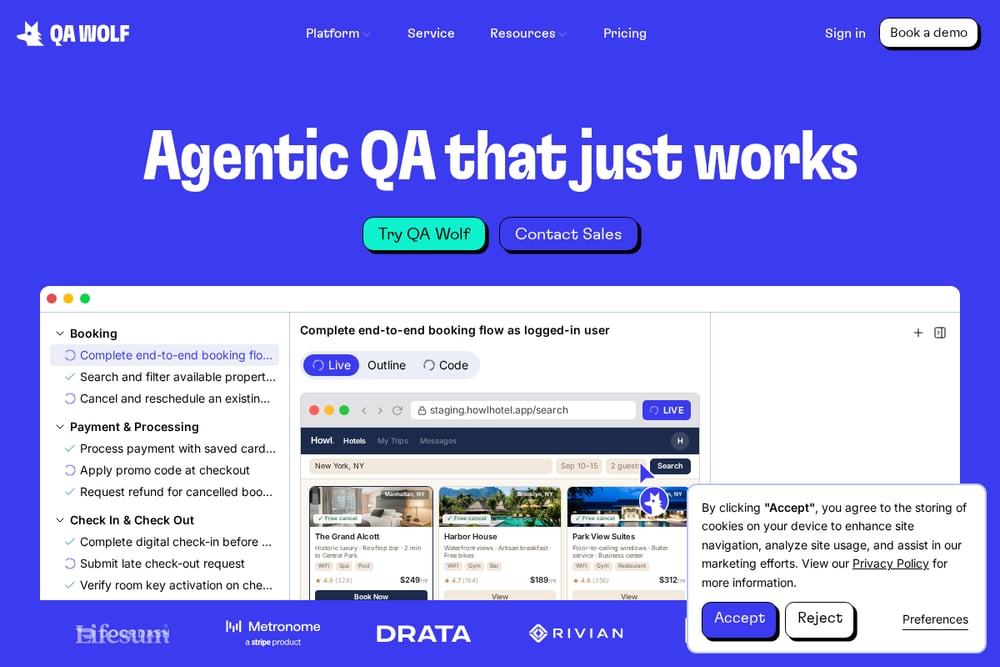 A screenshot of the QA Wolf website.
QA Wolf is a hybrid platform and service that takes QA completely off your plate, with a focus on generative AI testing. It uses deterministic assertions for non-deterministic products, so you can trust that your GenAI features return consistent, relevant results. You'll get coverage for token usage regression, bias and fairness testing, and prompt template testing—all critical for AI. It also helps you control compute costs by using selective execution and smart sampling, so you don't burn through your budget. If you want a team that handles your QA end-to-end, QA Wolf is a solid choice. They even map your entire app autonomously in minutes.
#4 Functionize
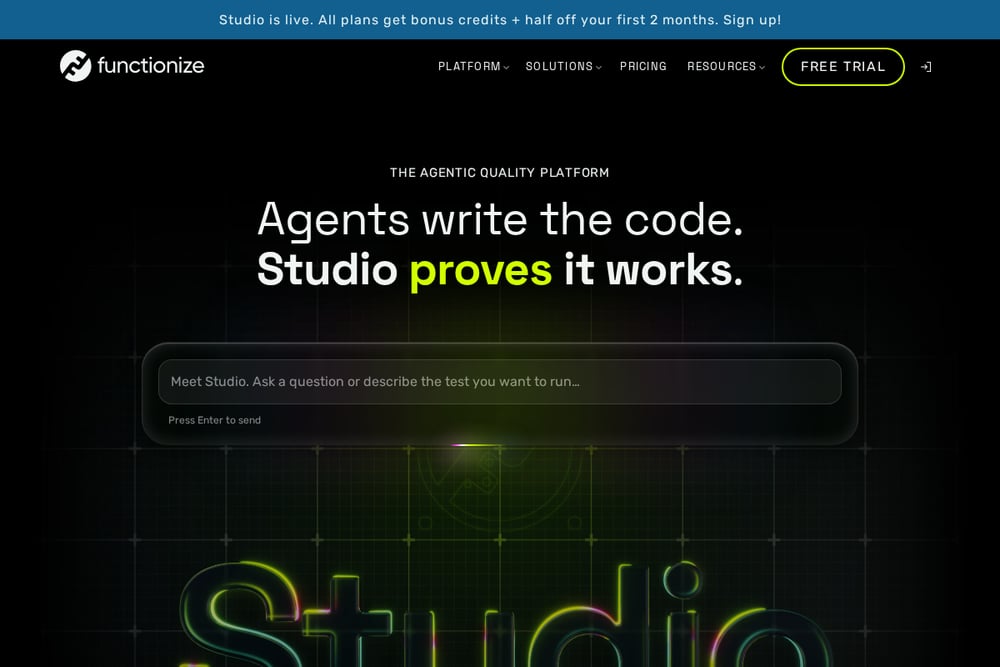 A screenshot of the Functionize website.
Functionize's Studio is an independent testing agent for your full web UI workflow, built to prove quality. You set what good looks like, and Studio handles the testing—it builds, runs, and keeps your tests green. It uses reasoning where reasoning helps and deterministic checks where the answer has to be exact. The platform is designed for testers, developers, and leaders, with a focus on quality that compounds as you scale. It's particularly strong for industries like healthcare, insurance, and financial services, where compliance is key. If you want an agent that gives every build a second opinion, Functionize is worth a look.
#5 Testlio
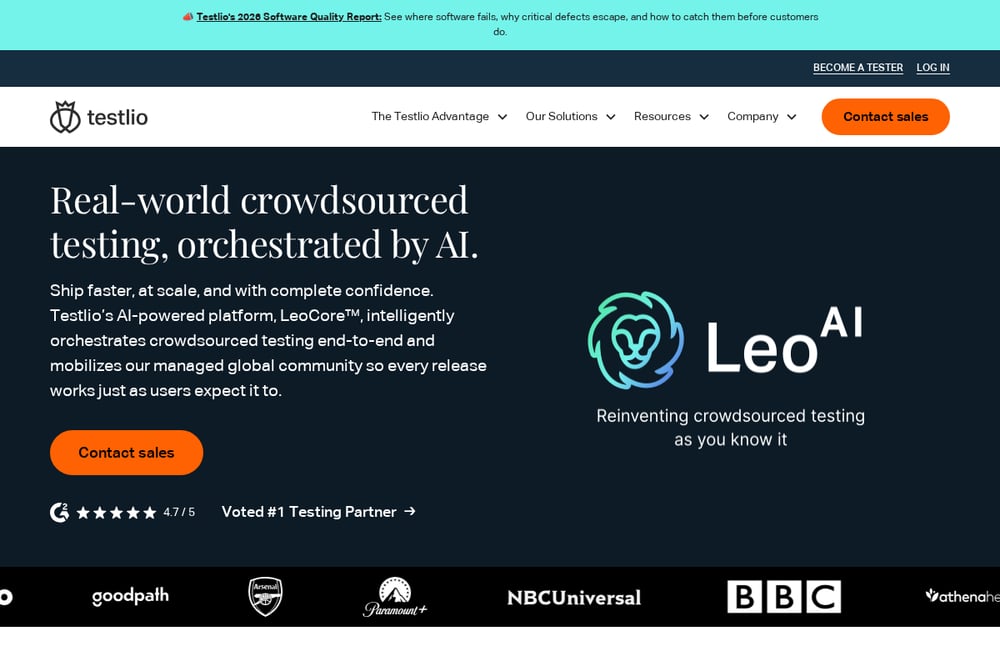 A screenshot of the Testlio website.
Testlio combines a proprietary AI engine, LeoAI Engine™, with a curated community of expert testers to deliver quality at scale. It covers everything from manual and functional testing to AI agent testing and conversational AI testing. You can tap into their network for crowdsourced testing, which is great for getting real-world feedback on your AI's performance. They also offer specialized services for payment testing, accessibility, and localization, so you can cover all bases. If you need a flexible, human-in-the-loop approach to AI testing, Testlio is a strong option. It's like having a global QA team on demand.
How to Choose the Right AI Testing Platform
Start by asking yourself: what's your biggest pain point? If you're drowning in manual test creation, look for a platform with automated test generation like Hoot or Functionize. If you need to catch bugs without writing tests, Momentic's point-and-click approach might be your speed. For teams that want a full-service partner, QA Wolf or Testlio can take the load off. Consider your industry's compliance requirements—Hoot and Functionize have strong enterprise security features. And don't forget about cost: some platforms charge per token, so watch out for that. Ultimately, the right choice depends on your team's size, technical expertise, and how much you value automation versus human oversight.
Automating Your AI Testing Workflow
Imagine this: you push a new update to your conversational AI, and within minutes, a suite of tests runs automatically. Hoot's AI Test Builder generates scenarios from your documents, so you don't have to write them. Momentic's agents repair tests as your UI changes, so you're not constantly fixing broken scripts. QA Wolf uses smart sampling to keep token costs down while still catching regressions. Functionize's Studio runs in your CI pipeline, giving every build a second opinion. And Testlio's LeoAI Engine can route tests to human testers when needed. The goal is to make testing a seamless part of your development cycle, not a bottleneck.
The Bottom Line
Generative AI is here to stay, and so is the need for robust testing. Whether you choose Hoot for its compliance focus, Momentic for its autonomous bug hunting, or QA Wolf for its managed service, the key is to start testing before you launch. Each of these platforms offers a unique approach to ensuring your AI is stable, safe, and compliant. Don't wait for a costly mistake to happen—invest in a testing platform that gives you confidence. Test smarter, deploy safer, and your customers will thank you.