
The era of DC-powered and low-voltage Ethernet building infrastructure is here. Whether you're a Fortune 500 company, a school district, or a healthcare system, transitioning from traditional AC to efficient, intelligent DC systems can slash energy costs and future-proof your
The Shift to DC-Powered Buildings
Traditional AC infrastructure is giving way to DC-powered and low-voltage Ethernet systems that are safer, more energy-efficient, and easier to manage. Power over Ethernet (PoE) allows you to run data and power over a single cable, reducing installation costs and enabling smart building features like adaptive lighting, environmental sensors, and automated shades. Companies like VoltServer are pioneering Fault Managed Power to deliver high power over long distances without the risks of high-voltage AC. This shift is especially critical for Fortune 500 companies, schools, and healthcare facilities looking to future-proof their buildings. Source: VoltServer Intelligent Buildings
How We Ranked These Providers
We evaluated each provider based on their service breadth (design through deployment), innovation in DC power and PoE technology, client focus (commercial, institutional, healthcare), scalability for large projects, and overall market reputation. We also considered partnerships with major vendors like Cisco, Panduit, and VoltServer, as well as proprietary software offerings. Pricing transparency was noted but not a primary factor since all operate on custom quotes.
Here’s a quick comparison of the top five providers to help you narrow down your options.
| Provider | Best For | Pricing |
|---|---|---|
| MHT Technologies | Large-scale commercial and multi-family projects requiring integrated DC power and PoE management. | Project-based / custom quote |
| Sinclair Digital | New construction or major retrofits where material and labor savings are top priorities. | Project-based / custom quote |
| TSI Global | Organizations needing a traditional electrical contractor with deep low-voltage expertise and nationwide coverage. | Project-based / custom quote |
| DBS | Fortune 500 companies, municipalities, schools, and healthcare organizations seeking a full-service partner for DC-powered building transformation. | Project-based / custom quote |
| BIITS (Business Intelligence & IT Solutions) | Small to mid-sized commercial properties and hospitality venues needing integrated low-voltage and IT services. | Project-based / custom quote |
Detailed Reviews of Each Provider
#1 MHT Technologies
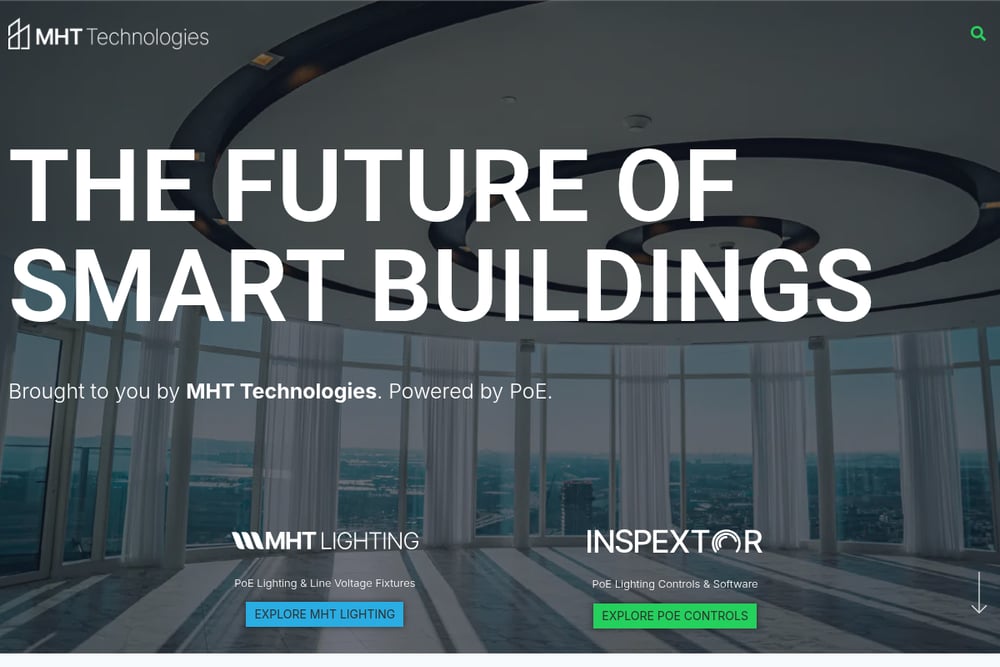 A screenshot of the MHT Technologies website.
MHT Technologies delivers end-to-end DC power distribution and PoE smart building solutions for commercial, multi-family, and hospitality sectors. They partner with Cisco and Panduit to provide a full stack from design through deployment. Their centralized management software, Inspextor, gives you real-time control over PoE lighting, environmental sensors, energy-efficient shades, and access controls. Founded in 2009, MHT has the experience and scale to handle Fortune 500 clients. If you need a turnkey partner that covers both infrastructure and software, MHT is a strong contender. Source: MHT Technologies DC Power Distributions
Provider Comparison:
- Pro: Comprehensive service model with proprietary management software (Inspextor) and strong partnerships.
- Con: No public pricing; may be cost-prohibitive for smaller projects.
- Pricing: Project-based / custom quote
#2 Sinclair Digital
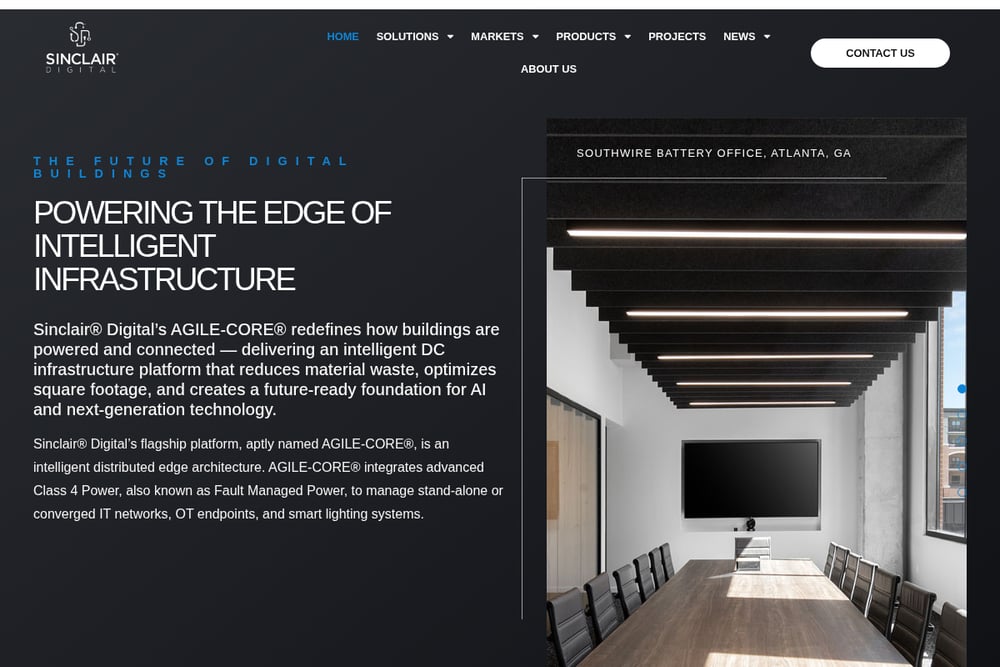 A screenshot of the Sinclair Digital website.
Sinclair Digital stands out with its AGILE-CORE Distributed Edge Architecture, which delivers safe low-voltage DC power and high-speed data up to 60GB over a single backbone. They partner with VoltServer for Fault Managed Power, enabling significant material savings — up to 80% less copper and 100% less conduit. Their solutions serve IT networks, operational technology, and lighting for offices, classrooms, warehouses, and data centers. If you’re building from scratch or retrofitting for maximum efficiency, Sinclair’s manufacturing approach can reduce construction costs by $3–8 per square foot. Source: Sinclair Digital AGILE-CORE
Provider Comparison:
- Pro: Innovative architecture that dramatically reduces copper and conduit requirements, lowering overall project costs.
- Con: As a manufacturer, they may not offer the same hands-on installation services as a full-service contractor.
- Pricing: Project-based / custom quote
#3 TSI Global
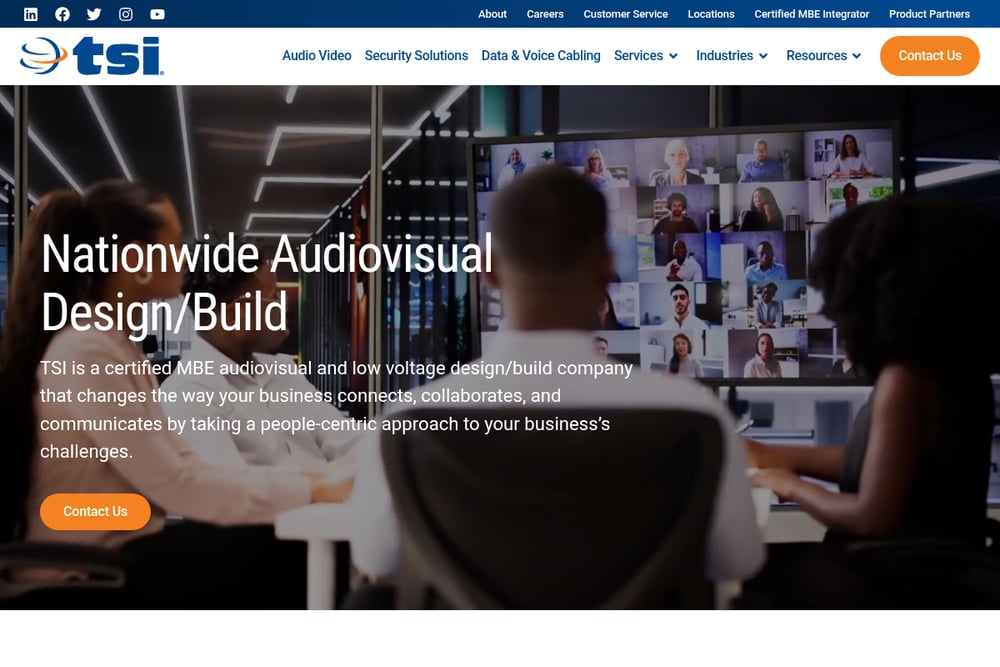 A screenshot of the TSI Global website.
TSI Global is a commercial electrical contractor with a strong focus on low-voltage solutions, including structured cabling, LED lighting, phone/data lines, access control, and industrial breaker panels. Headquartered in St. Charles, MO, they offer nationwide service with an IBEW Local 1 workforce. They provide 24/7 emergency service, surge protection, UPS support, and preventative maintenance. If you need a reliable service provider that can handle both traditional electrical and low-voltage infrastructure, TSI Global is a proven choice. Source: TSI Global Low Voltage Solutions
Provider Comparison:
- Pro: Union workforce, 24/7 emergency support, and broad service scope from electrical to low-voltage.
- Con: Less specialized in DC power distribution and PoE compared to dedicated smart building firms.
- Pricing: Project-based / custom quote
#4 DBS
DBS positions itself as your end-to-end solution for the DC digital age, offering design, construction management, procurement, and installation for DC-powered and low-voltage Ethernet infrastructure. They target Fortune 500 clients, municipalities, schools, and healthcare organizations, helping them transition from traditional AC to future-ready, energy-efficient facilities. Their holistic approach covers everything from initial planning to final deployment, making them a single point of accountability. If you’re a large institution looking for a partner that understands both the technical and project management sides, DBS is worth a close look. Source: DBS Home
Provider Comparison:
- Pro: End-to-end service from design to installation, with a focus on large-scale institutional clients.
- Con: Less publicly known than some competitors; limited information on proprietary technology or software.
- Pricing: Project-based / custom quote
#5 BIITS (Business Intelligence & IT Solutions)
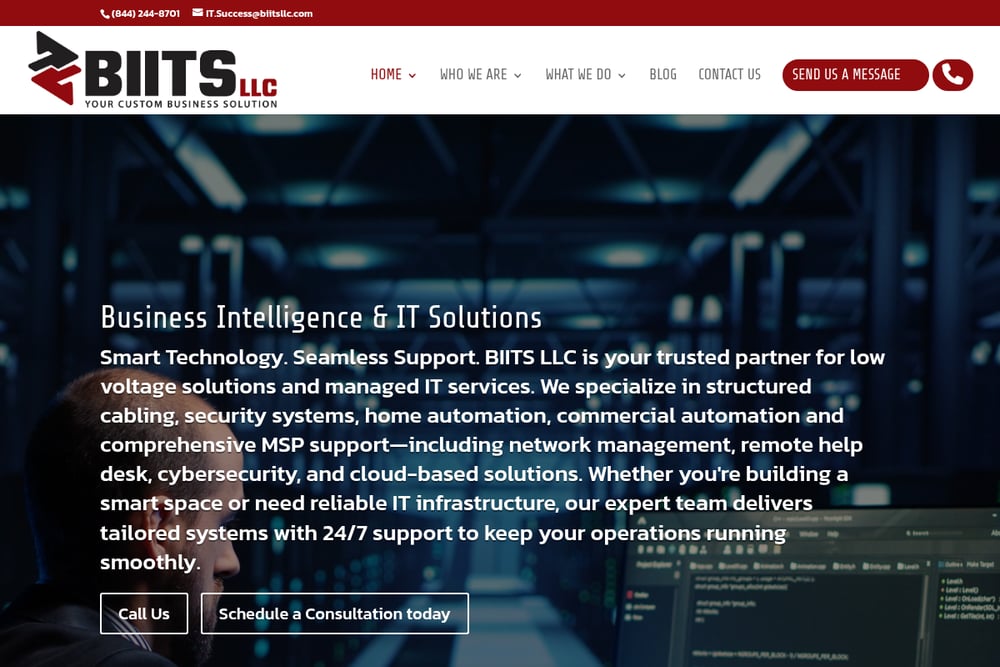 A screenshot of the BIITS website.
BIITS provides low-voltage cabling, PoE systems, smart building/home automation using Grenton and Loxone integration, CCTV/IP camera installation, access control, and IT infrastructure services. They also offer cloud hosting, VDI, and managed IT, making them a versatile partner for smaller commercial properties, hospitality, and education. While their scale is smaller than others on this list, they bring a personal touch and can handle both smart building and IT needs under one roof. Source: BIITS PoE Systems
Provider Comparison:
- Pro: Combines smart building automation with managed IT services, offering a one-stop shop for smaller clients.
- Con: Limited track record with large-scale Fortune 500 projects; smaller geographic footprint.
- Pricing: Project-based / custom quote
How to Choose the Right Partner for Your Project
Start by defining your project scope: are you building new or retrofitting? Do you need a full-service partner or just installation? For large-scale institutional projects, DBS and MHT Technologies offer end-to-end services with proven track records. If material savings are critical, Sinclair Digital’s AGILE-CORE architecture can cut costs significantly. For traditional electrical work with low-voltage add-ons, TSI Global is a reliable choice. Smaller projects may benefit from BIITS’ combined IT and automation services. Always ask for case studies and references in your sector.
Automating Your Building’s Future: A Workflow Example
A typical project begins with an energy audit and needs assessment. The provider designs a DC-powered backbone with PoE switches and sensors. Installation involves running low-voltage cabling and mounting devices like LED fixtures and occupancy sensors. Centralized software (e.g., MHT’s Inspextor) then automates lighting, shading, and HVAC based on occupancy and daylight. Over time, you can add access control and CCTV on the same network. The result is a unified, energy-efficient building that adapts in real time.
The Bottom Line on Future-Ready Building Infrastructure
Transitioning to DC-powered and low-voltage Ethernet infrastructure is no longer a futuristic concept — it’s a practical investment that reduces energy costs, simplifies maintenance, and enhances occupant comfort. The five providers reviewed here represent the best in the space, each with distinct strengths. Whether you choose a full-service integrator like DBS or an innovative manufacturer like Sinclair Digital, the key is to partner with a company that understands your specific needs and can deliver a scalable, future-ready solution.