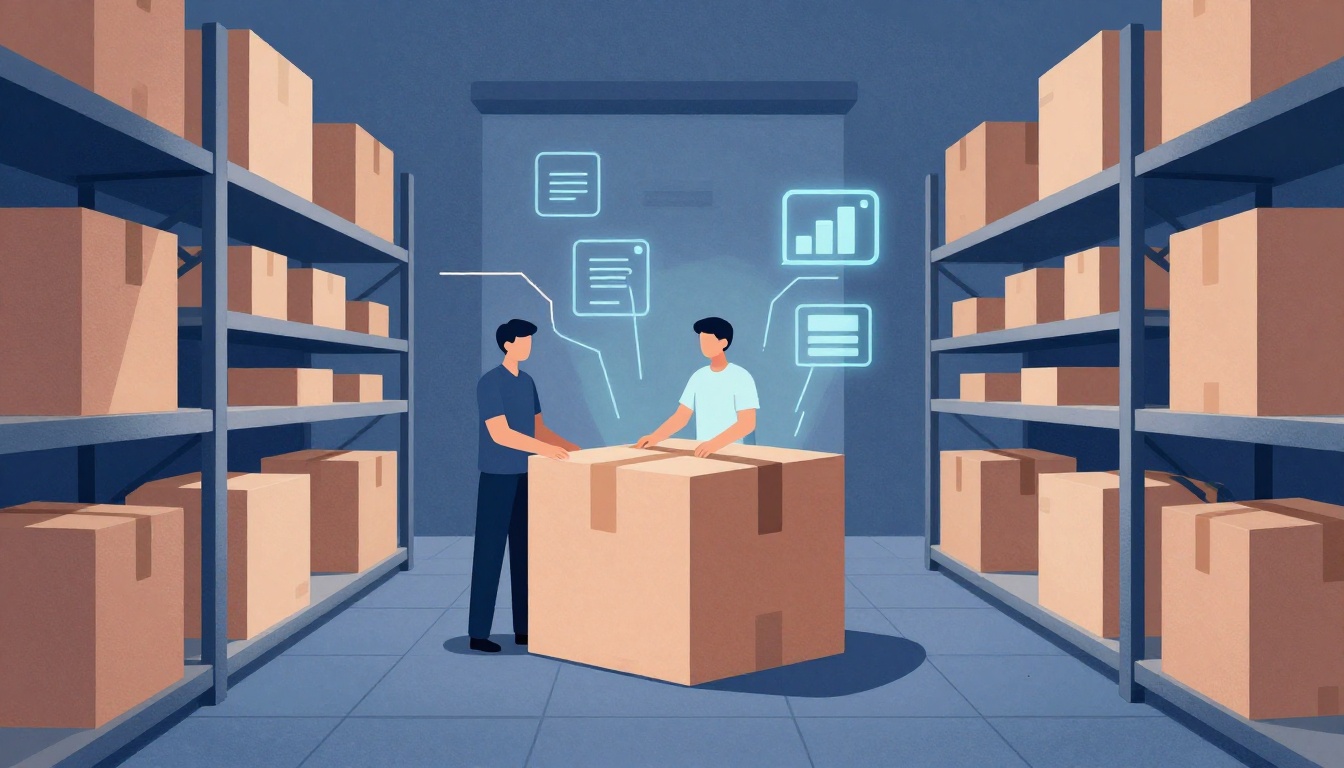
When most people picture a warehouse, they imagine rows of shelves, pallets wrapped in plastic, and workers sliding boxes onto conveyor belts. The final step—slapping a label on a box and putting it on a truck—seems almost trivial. But that mental image is dangerously incomplete. According to GPA Logistics, a 3PL provider specializing in warehousing, fulfillment, and shipping, the biggest misconception is exactly this: "That it's just slapping a label on a box and putting it on a truck."
In reality, the best fulfillment operations are running what GPA calls "active logistics engineering." This isn't a poetic exaggeration. It's a technical discipline that includes slotting optimization—deciding where each SKU lives in the warehouse to minimize travel time and maximize throughput. It involves labor forecasting, so staffing levels match order volumes without over- or under-hiring. It demands real-time inventory accuracy, so that what the system says is on the shelf actually is on the shelf. And it requires systems integration across a WMS (warehouse management system), OMS (order management system), and carrier platforms, so that data flows seamlessly from order placement to delivery.
Why does this matter? Because "Fulfillment done well is invisible to the end customer, and that invisibility is the product of a lot of technical and operational sophistication behind the scenes." When you order a product online and it arrives on time, correctly packed, with no damage, you don't think about the warehouse. You think about the brand. That invisibility is the ultimate sign of success—but it's also why the work is so undervalued.
The misconception isn't just a matter of perception; it has real financial consequences. GPA points out that "The misconception costs companies money, because they treat 3PL selection like a commodity purchase instead of a strategic operations decision." When a business views fulfillment as a low-skill, interchangeable service, they choose a partner based primarily on price per order. They ignore critical factors like technology stack, scalability, error rates, and the ability to handle peak-season surges. The result is often missed SLAs, inventory discrepancies, and angry customers—costs that far outweigh any savings from a cheaper per-unit rate.
Consider the operational complexity that goes into a single order. The system must check inventory availability, reserve the item, route the picker to the correct bin, verify the pick, pack the item with the right dunnage, generate a shipping label, select the optimal carrier based on cost and delivery promise, and update the tracking number in real time. Any one of those steps can fail, and a failure is visible to the customer. That's why leading 3PLs invest heavily in automation, data analytics, and continuous improvement—not because they enjoy complexity, but because it's the only way to make fulfillment look effortless.
For brands, the lesson is to treat fulfillment as a core part of the customer experience, not an afterthought. When evaluating a 3PL, look beyond the price sheet. Ask about their WMS capabilities, their integration APIs, their labor management practices, and their contingency plans for disruptions. A partner like GPA Logistics emphasizes that the right 3PL is an extension of your operations, not just a vendor. They should be able to articulate how they optimize slotting for your specific product mix, how they forecast labor for your demand patterns, and how they maintain inventory accuracy in real time.
In a world where e-commerce expectations are higher than ever, the invisible work of fulfillment is what separates a memorable brand from a forgettable one. The next time you see a package on your doorstep, remember that it wasn't just a label and a truck—it was the result of a carefully engineered system designed to make the complex look simple. And if you're a business owner, don't make the mistake of treating that system as a commodity. Your customers will notice the difference, even if they can't see it.