When data protection and hosting location matter, the form builder you choose can make compliance simpler or more complex. This list covers five tools that offer GDPR-friendly features or EU hosting, based on information from their own websites. Each entry describes what the tool does and who it might suit, without ranking them as better or worse.
How We Picked These Tools
We selected form builders that explicitly mention GDPR compliance, EU hosting, or self-hosting options on their public pages. Only tools with clear statements about data handling or hosting were included. The list is not exhaustive, and features may change; always verify current details with the vendor.
| Provider | Best For |
|---|---|
| Typeform | Businesses wanting engaging, interactive forms with advanced features |
| Jotform | Users needing a versatile form builder with extensive integrations |
| Tally | Privacy-conscious users seeking a free, EU-hosted form builder |
| Formbricks | Organizations needing self-hosted, open-source survey solutions |
| Heyflow | Marketers focused on conversion-optimized funnels |
The 5 Tools in Focus
#1 Typeform
 A screenshot of the Typeform website.
Typeform is a form builder known for conversational, one-question-at-a-time forms that adapt to responses. It offers AI-powered form creation, analytics, and integrations with many business apps. The platform is used by businesses for lead generation, research, and customer feedback. Typeform provides a range of plans, including free and enterprise options.
#2 Jotform
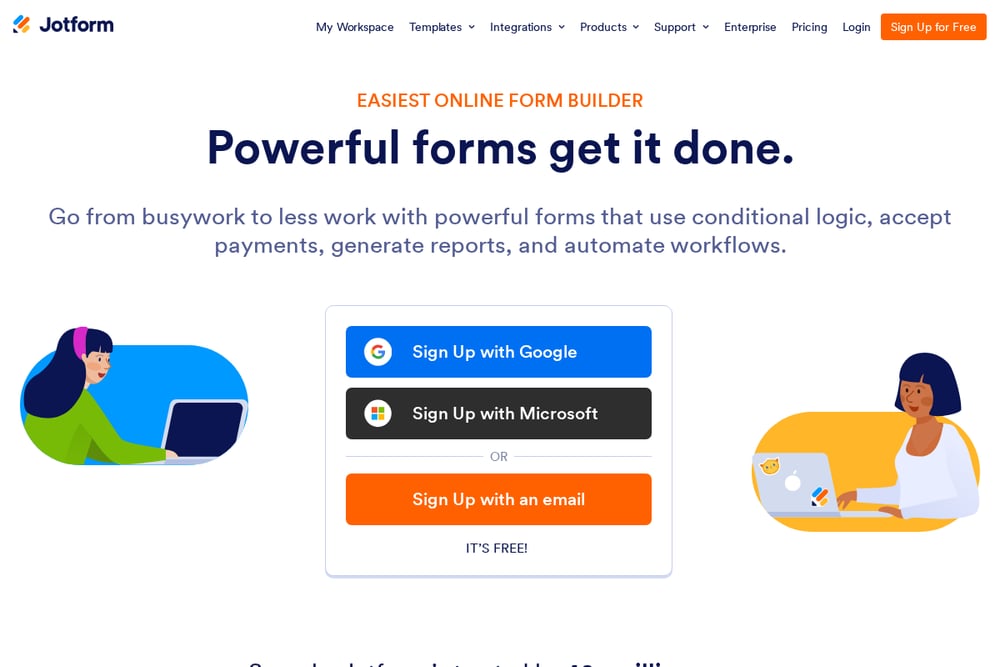 A screenshot of the Jotform website.
Jotform is an online form builder that allows users to create forms with drag-and-drop functionality. It supports payments, conditional logic, and integrations with many third-party services. Jotform also offers additional products like app building, e-signatures, and workflow automation. It is used by a large user base worldwide.
#3 Tally
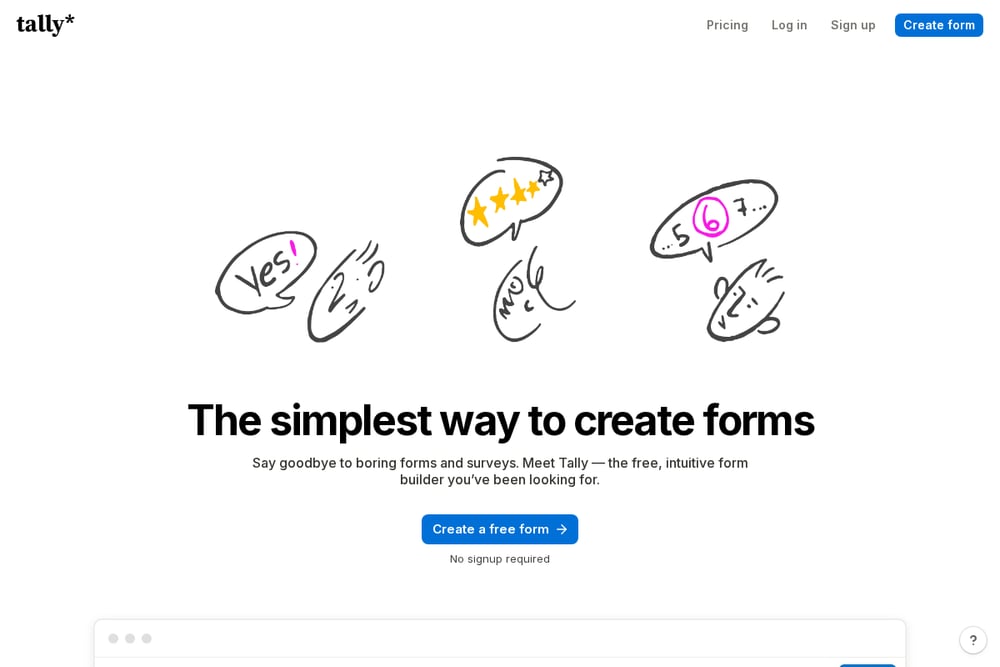 A screenshot of the Tally website.
Tally is a form builder that works like a text document, allowing users to type and insert blocks similar to Notion. It offers unlimited forms and submissions for free under fair usage guidelines. Tally emphasizes privacy, stating it is GDPR compliant and hosted in Europe. It supports features like conditional logic, payments, and integrations.
#4 Formbricks
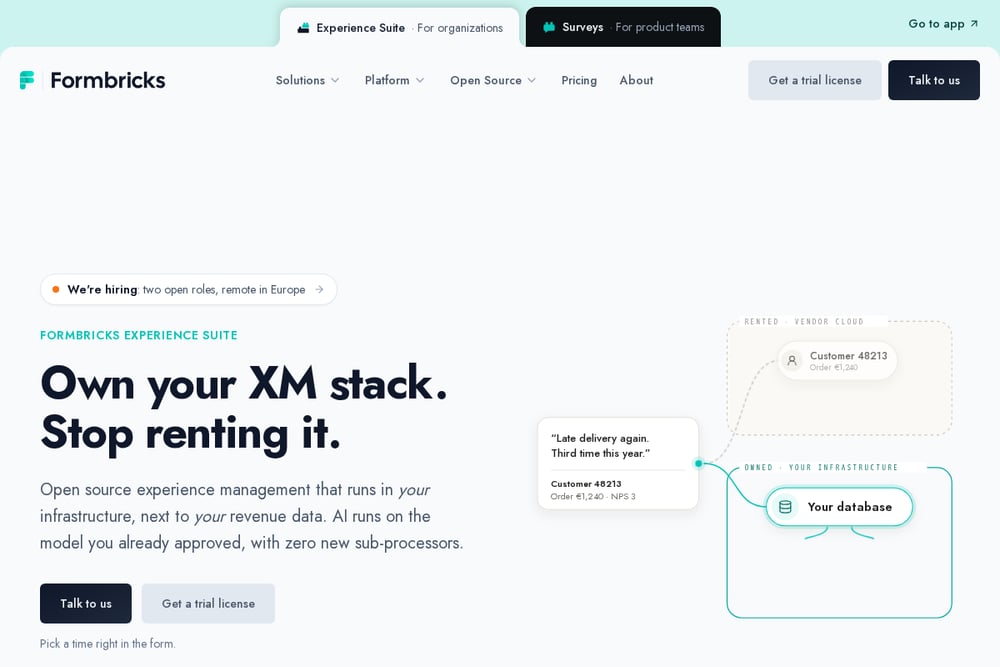 A screenshot of the Formbricks website.
Formbricks is an open-source experience management platform that can be self-hosted, allowing organizations to keep data in their own infrastructure. It focuses on surveys and feedback collection with AI analysis using approved models. Formbricks emphasizes data ownership and compliance, with no new sub-processors when self-hosted. It is suitable for teams that require full control over their data.
#5 Heyflow
 A screenshot of the Heyflow website.
Heyflow is a platform for building and optimizing interactive funnels, including forms, for lead generation and conversions. It offers AI-powered funnel creation, A/B testing, and analytics. Heyflow emphasizes conversion performance and integrates with various marketing and CRM tools. It is used by businesses to improve ad campaign results.
Which One Should You Choose?
Consider your data protection requirements first: if you need EU hosting, look for explicit statements about server location. If you require full control, self-hosted options may be preferable. Also evaluate the features you need, such as payment collection, integrations, or advanced logic. Check each vendor's compliance documentation and pricing to ensure it fits your organization.
Final Thoughts
The form builders in this list each offer different approaches to GDPR-friendliness and EU hosting. Some emphasize compliance and EU servers, while others provide self-hosting for complete data control. Assess your priorities around data residency, features, and budget to find the tool that aligns with your needs.
Know a company that belongs on this list? Email us at editorial@peekwire.com.