
New food legislation is coming, and your data needs to be audit-ready. These five AI-driven services help you turn messy food data into compliance reports without writing code.
The Compliance Shift: Why Food Waste Data Suddenly Matters
Food waste legislation is tightening across the US, pushing farmers, schools, local authorities, and manufacturers to measure, report, and audit their waste streams. The problem isn't a lack of data—it's that the data sits in invoices, spreadsheets, and supplier records that don't talk to each other. AI is stepping in to standardize this fragmented information, calculate environmental impact, and generate the reports regulators and funders demand. Whether you're facing EPR deadlines or procurement transparency rules, these services promise to close the gap between messy data and compliance.
How We Evaluated These Services
We looked at each service's ability to handle fragmented data, automate reporting, and fit into existing workflows without requiring technical expertise. We also considered sector focus—whether they cater to schools, local authorities, manufacturers, or hospitality—and how clearly they communicate their process and outcomes. Pricing transparency and the speed from setup to first report were also key factors. Each service brings a different strength, from touchless hardware to pure software frameworks.
Here's a quick snapshot of the five services, ranked by how well they match the needs of organizations facing new food waste compliance rules.
| Provider | Best For |
|---|---|
| Winnow | Commercial kitchens and hospitality chains |
| Unlock AI Insights | Organizations needing a structured framework and training |
| NANDO | Enterprises needing multi-stream waste monitoring and ESG reporting |
| Leanpath | High-volume kitchens wanting touchless tracking and analytics |
| Topanga | Campus dining, healthcare, and senior living facilities |
The Five Services, Closer Look
#1 Winnow
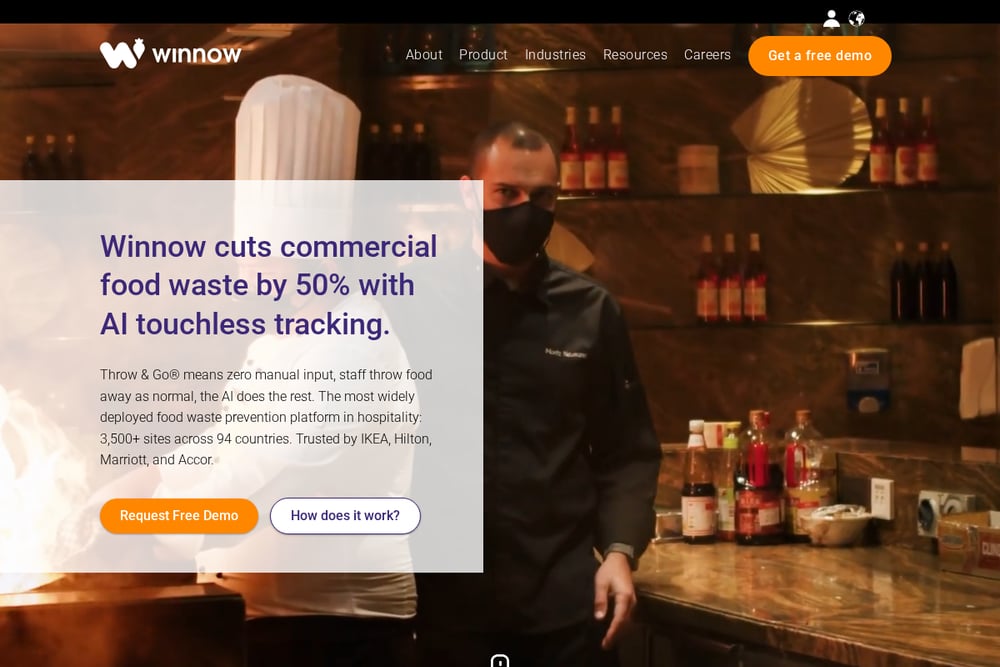 A screenshot of the Winnow website.
Winnow is the most widely deployed AI food waste prevention platform in hospitality, with over 3,500 sites across 94 countries. Its Throw & Go® system uses touchless AI to automatically record what's thrown away, capturing item, weight, cost, and reason without manual input. This turns daily kitchen actions into insights that cut repeat waste by up to 50%, as seen with clients like IKEA, Hilton, and Marriott. If you run a commercial kitchen, Winnow's hardware-plus-software approach is proven at scale. It's not just about compliance—it's about saving money and reducing waste simultaneously. For high-volume operations, this is the gold standard.
#2 Unlock AI Insights
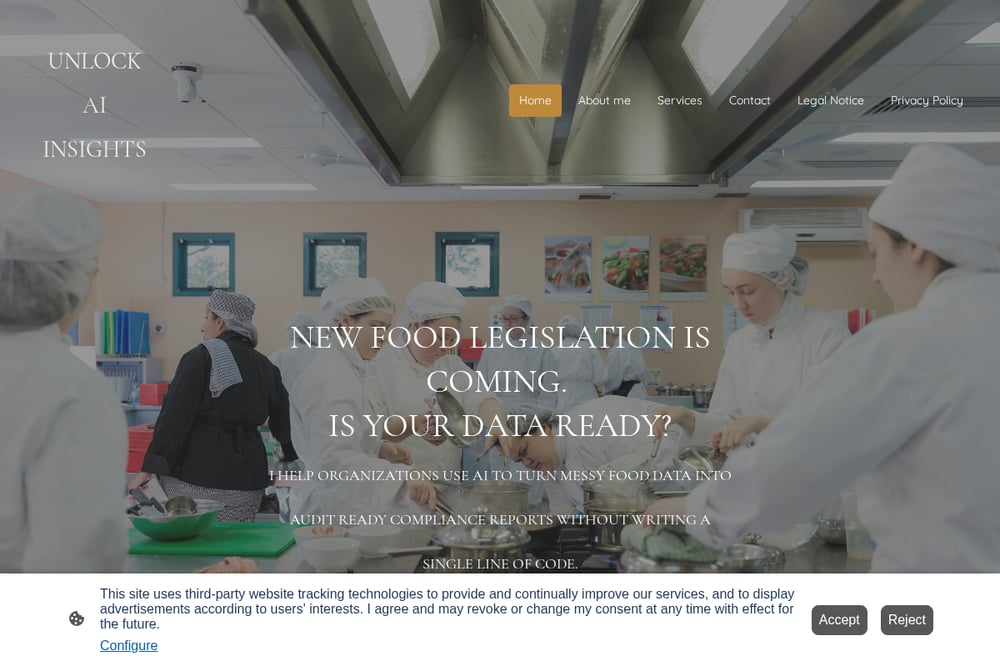 A screenshot of the Unlock AI Insights website.
Unlock AI Insights, run by Becky Collins, is a specialized AI training service for food waste legislation compliance. It helps farmers, schools, local authorities, and manufacturers turn fragmented data into audit-ready reports without coding. The Sustainable Intelligence Framework standardizes data, calculates environmental impact, and generates the reports your auditors, governors, and funders need. What sets Unlock AI Insights apart is its focus on training your team—results come in just four sessions, no technical background required. If you're drowning in invoices and spreadsheets, this service bridges the gap between your existing data and compliance deadlines. It's a practical, hands-on approach for organizations that need to act fast.
#3 NANDO
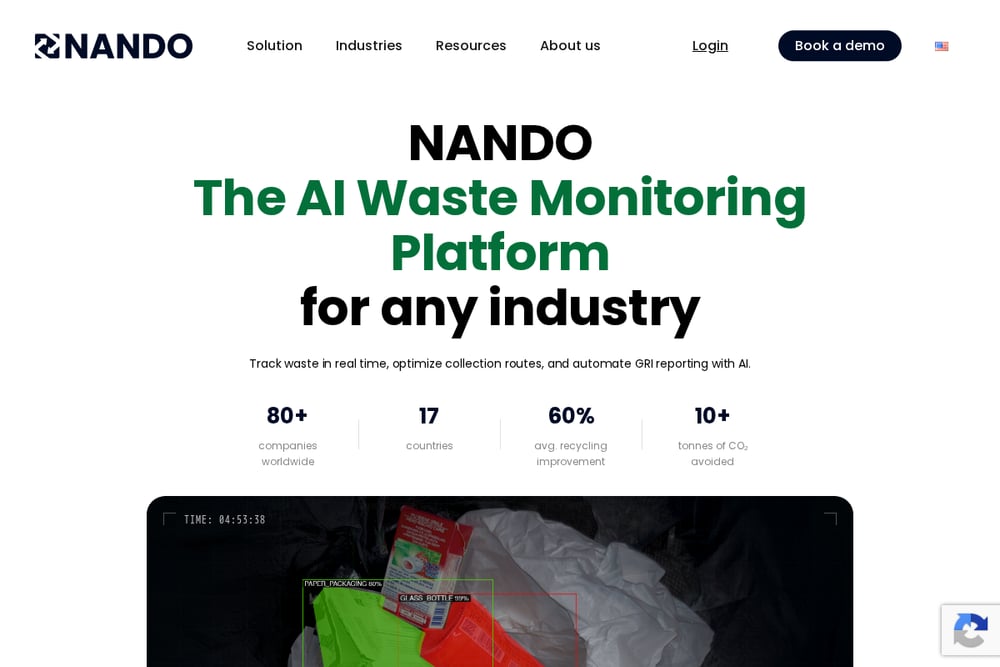 A screenshot of the NANDO website.
NANDO is an AI-powered waste monitoring platform that tracks waste in real time across any industry, from offices to food canteens. It combines computer vision, machine learning, and IoT sensors to deliver certified, audit-ready data with zero manual entry. NANDO automates ESG waste reporting and ensures compliance with CSRD and GRI 306 standards, making it a strong choice for larger enterprises. With over 80 companies in 17 countries, it's proven across diverse sectors. If you need a comprehensive waste intelligence solution that goes beyond food, NANDO covers all waste streams. Its ROI calculator helps you see the financial impact before you commit.
#4 Leanpath
 A screenshot of the Leanpath website.
Leanpath, based in Portland, Oregon, has been a food waste management pioneer and recently launched its Floor Scale AI tracker for high-volume kitchens. The system uses embedded machine vision to recognize food waste items automatically, capturing photos and operational details without user input. Data feeds into Leanpath's dashboard, providing analytics and guidance for chefs and managers. This is a hardware-plus-software solution that integrates with your existing kitchen workflow. If you're looking for a touchless, AI-driven tracker that plugs into your operations, Leanpath is a solid option. It's particularly suited for kitchens that want to prevent waste before it happens.
#5 Topanga
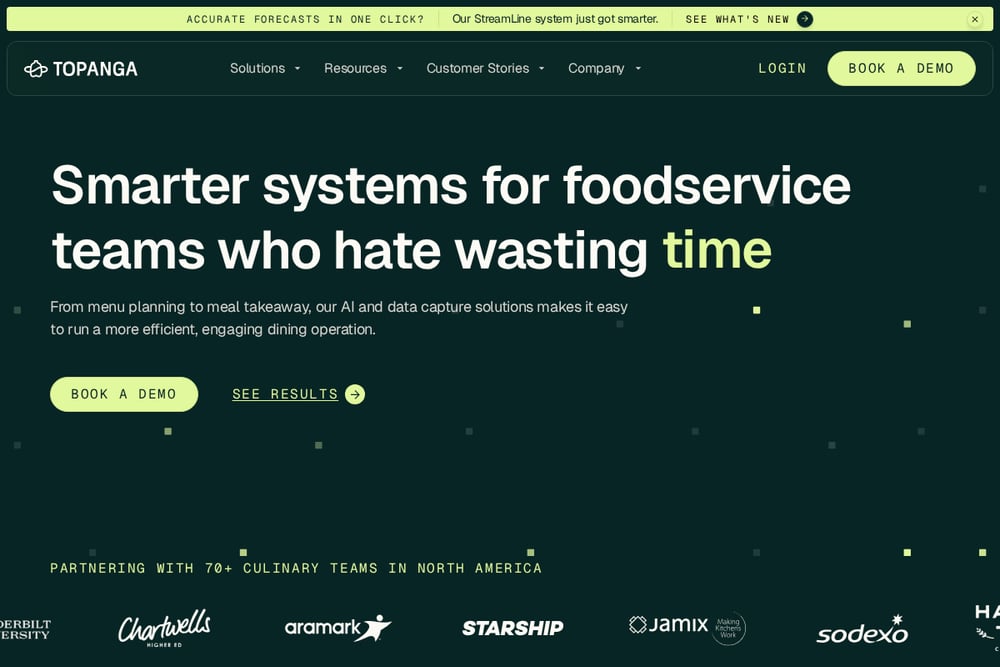 A screenshot of the Topanga website.
Topanga's StreamLine platform focuses on food production and waste tracking for campus dining, healthcare, and senior living. It offers AI-powered forecasts to help you produce just the right amount of food, reducing waste at the source. StreamLine also tracks plate waste automatically, giving you insights into what diners leave behind. The platform integrates with existing tools like NetMenu and CBORD, making it easy to adopt. If you're in education or healthcare, Topanga's tailored solutions are designed for your specific challenges. It's a practical choice for organizations that want to cut costs and waste simultaneously.
How to Choose the Right Service for Your Compliance Needs
Start by identifying your biggest pain point: is it data fragmentation, lack of reporting skills, or the need for hardware to capture waste? If you need a structured training program that teaches your team to use AI, Unlock AI Insights is your best bet. If you run a commercial kitchen and want a proven, touchless system, Winnow leads the pack. For multi-stream waste monitoring across a large enterprise, NANDO offers the broadest coverage. Leanpath is ideal if you want a dedicated floor scale tracker with machine vision. Topanga shines in education and healthcare settings. Consider your sector, your technical comfort level, and how quickly you need to meet compliance deadlines.
Automating Compliance: From Messy Data to Audit-Ready Reports
The core workflow across these services is similar: capture waste data automatically, standardize it, calculate environmental impact, and generate reports. Winnow and Leanpath use hardware to capture data at the point of disposal, while NANDO uses sensors and computer vision across multiple streams. Unlock AI Insights focuses on training your team to use AI tools to standardize existing data from invoices and spreadsheets. Topanga uses AI forecasts to prevent waste before it happens. The result is the same—you get audit-ready reports without manual data entry, freeing your team to focus on reducing waste rather than chasing numbers.
The Bottom Line: Your Data Is Ready—You Just Need the Right Tool
Food waste legislation is coming, and the clock is ticking. The good news is that you already have the data you need; it's just trapped in silos. Whether you choose a training-based approach like Unlock AI Insights, a hardware solution like Winnow or Leanpath, or a comprehensive platform like NANDO or Topanga, the goal is the same: turn fragmented data into compliance. Don't wait for the deadline to hit. Pick a service that fits your sector, your team's skills, and your budget, and start turning your waste data into a competitive advantage today.