
Florida's short-term rental compliance landscape is a moving target. Between state DBPR licensing, county tourist development taxes, local registration ordinances, and platform tax collection, self-managing owners often find themselves buried in paperwork. You don't need a full-service property manager just
Florida STR Compliance: A Patchwork of Rules That Keeps Growing
Florida's short-term rental industry is booming, but so is the regulatory complexity. State laws like Senate Bill 280 and House Bill 1537 have attempted to centralize vacation rental regulations through the DBPR, yet local governments still wield significant control over zoning, registration, and minimum stay requirements. Counties like Miami-Dade, Sarasota, and Pinellas each have their own ordinances, creating a confusing patchwork for owners. Meanwhile, platforms like Airbnb and Vrbo collect some taxes automatically, but not all, leaving you responsible for filing tourist development taxes directly with your county. The result is that self-managing owners often miss deadlines, overlook required registrations, or fail to keep proper documentation. Without a structured approach, compliance becomes a constant source of stress rather than a routine task.
How We Ranked These Compliance Services
We evaluated each service based on five criteria: ease of use for self-managing owners, breadth of compliance coverage (state, county, and local), affordability for single-property owners, level of personalized support, and ability to keep you organized over time. Services that offered hands-on guidance and clear next steps scored higher than those that only provided information or tools without direct assistance. We also considered whether the service is accessible to owners across multiple Florida counties versus being limited to a single jurisdiction.
Here is a quick comparison of the five services to help you see which one fits your situation best.
| Provider | Best For |
|---|---|
| Avantio | Staying informed on Florida STR law changes |
| MCCi | Automating compliance for multi-property operators |
| GovBuilt | Streamlining compliance with local government systems |
| Florida Host Desk | Personalized compliance roadmaps for self-managing owners |
| Pinellas County STR Program | Pinellas County owners needing local registration and inspections |
Detailed Reviews of Each Compliance Service
#1 Avantio
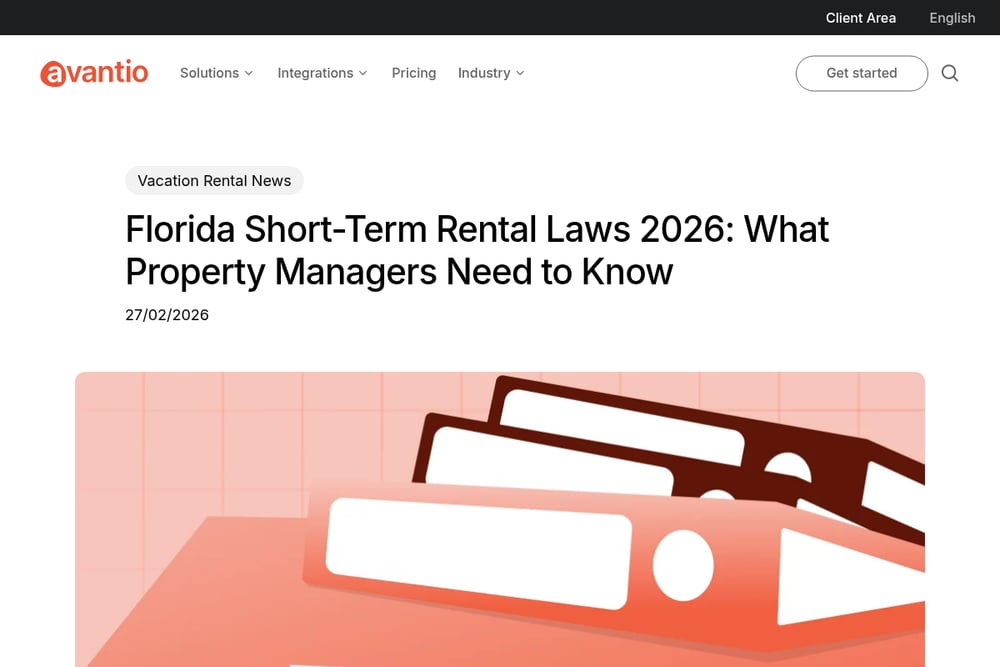 A screenshot of the Avantio website.
Avantio provides a comprehensive blog and resource hub that keeps property managers up to date on Florida's rapidly changing short-term rental laws. Their coverage of Senate Bill 280 and House Bill 1537 helps you understand the tug-of-war between state and local regulations. While Avantio is primarily a property management software platform, its educational content gives you a solid foundation for understanding what compliance steps you need to take. You can use their guides to identify whether your property falls under DBPR jurisdiction or local county rules. However, Avantio does not offer hands-on compliance support or personalized roadmaps for individual owners. It is best suited for managers who want to stay informed rather than owners who need direct assistance.
#2 MCCi
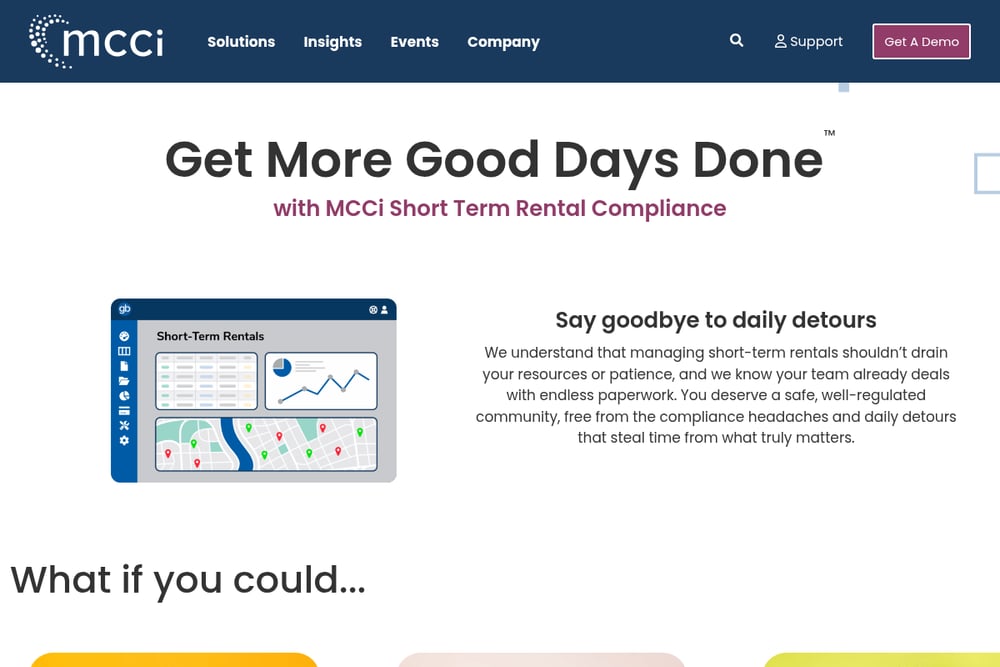 A screenshot of the MCCi website.
MCCi offers short-term rental compliance and registration software designed for government agencies and large-scale operators. Their platform automates paperwork, reduces risk, and helps you manage compliance across multiple properties without drowning in administrative tasks. If you are a small portfolio manager or co-host handling several units, MCCi's automation can save you hours of manual filing. The software integrates with existing systems to streamline renewals and inspections. However, MCCi is built for scale and may feel overwhelming if you own just one or two rentals. It also requires a learning curve and ongoing subscription fees that might not justify the cost for a single-property owner.
#3 GovBuilt
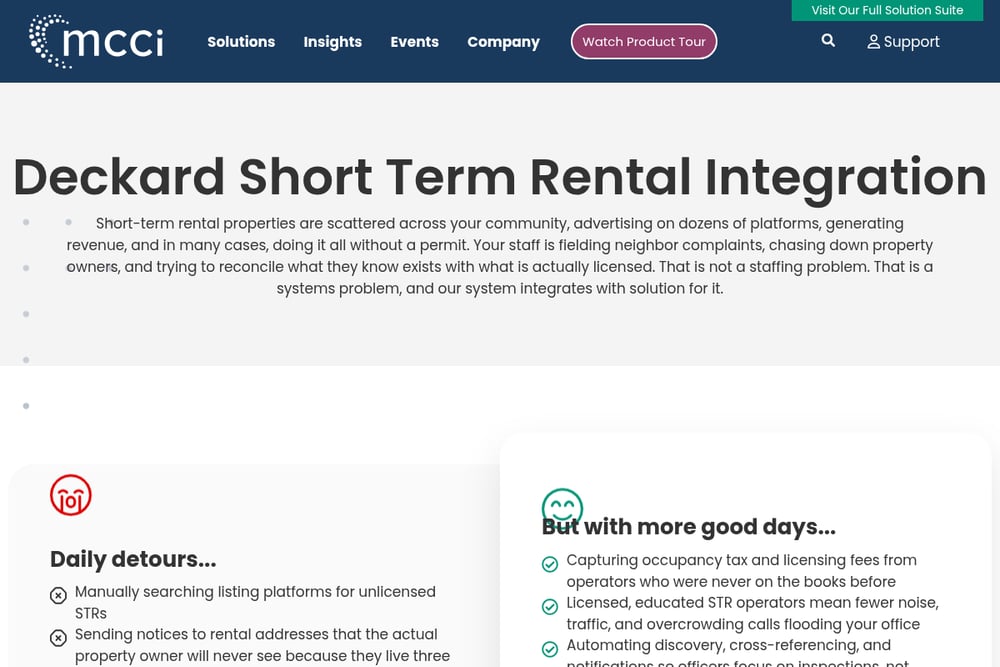 A screenshot of the GovBuilt website.
GovBuilt focuses on short-term rental compliance integration for local governments, helping cities and counties track permits, licenses, and inspections. Their system solves the problem of scattered properties advertising on dozens of platforms without proper registration. For property owners, GovBuilt's value lies in its ability to centralize compliance data so you can prove your rental is properly licensed. The platform reduces the back-and-forth with municipal offices by digitizing applications and renewals. However, GovBuilt is primarily a government-facing tool, so individual owners may not have direct access to its features. It works best if your local jurisdiction already uses GovBuilt, making your compliance process smoother by default.
#4 Florida Host Desk
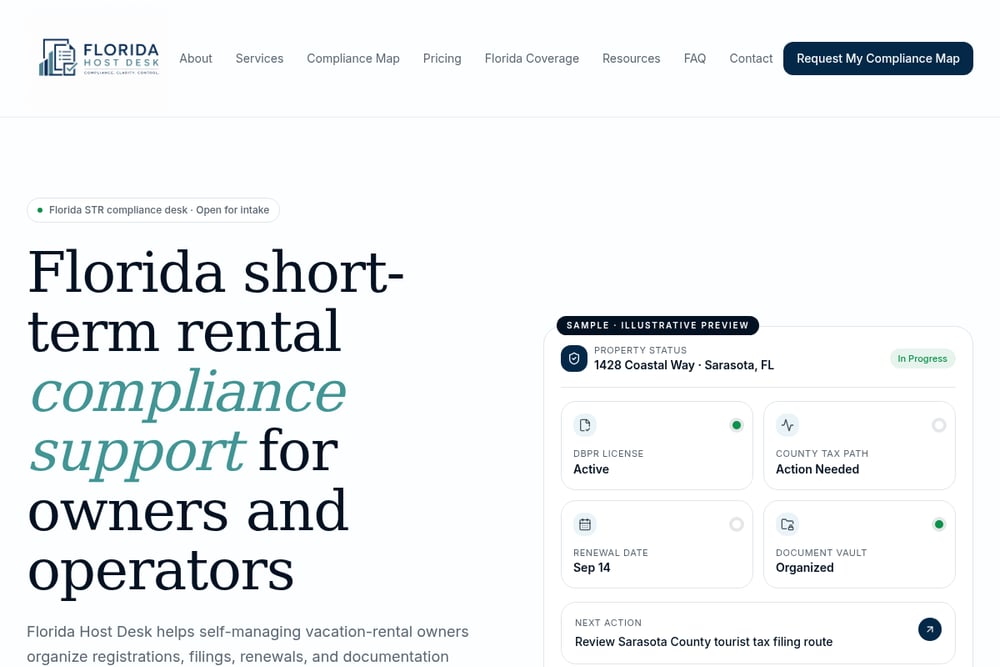 A screenshot of the Florida Host Desk website.
Florida Host Desk is a compliance support service built specifically for self-managing Florida short-term rental owners. Based in Sarasota, FL, they organize state and county registrations, filings, renewals, and documentation into a clear, property-specific Compliance Map starting at $149. You submit your property details, they review your compliance path, and you receive a structured roadmap with deadlines, missing items, and next steps. Their service covers DBPR licensing, Florida sales tax, county tourist development tax, and document vault organization. Florida Host Desk does not replace legal, tax, or property management services, but it fills the gap for owners who want a structured sequence to follow without hiring a full-service manager. It is ideal for single-property owners, out-of-state investors, and new hosts who need clarity on what to do next.
#5 Pinellas County STR Program
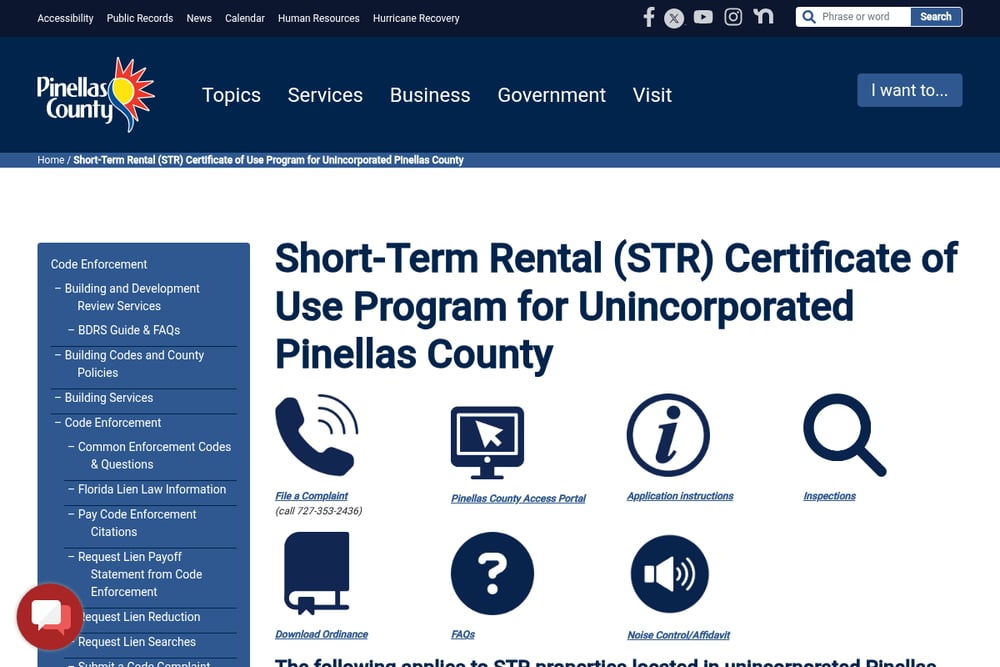 A screenshot of the Pinellas County STR website.
Pinellas County's Short-Term Rental Certificate of Use Program provides a direct government portal for owners in unincorporated areas to register, schedule inspections, and pay fees online. The program requires a certificate of registration for each rental unit and enforces a minimum stay of 7 days and 7 nights in certain zones. You can manage inspections and payments through the Pinellas County Access Portal, which simplifies the compliance process for local owners. This service is free to use beyond standard application fees, making it a budget-friendly option for Pinellas County residents. However, it only applies to unincorporated Pinellas County, so owners in municipalities like St. Petersburg or Clearwater must check their own city rules. It also does not provide guidance on state-level DBPR licensing or sales tax filings.
How to Choose the Right Compliance Service for Your Florida STR
Start by assessing how many properties you own and how much time you want to spend on compliance. If you own one or two rentals and want a clear, personalized roadmap without hiring a property manager, Florida Host Desk is your best bet. If you manage a larger portfolio and need automation, MCCi or GovBuilt can save you hours. For owners in Pinellas County, the county's own STR program is a free and direct option for local registration. If you simply want to stay informed on legal changes, Avantio's blog is a valuable resource. Consider your budget, your comfort level with paperwork, and whether you need help with state-level filings or just local registration. The right service will match your property count, location, and desired level of hands-on support.
Automation Workflow: Tame the Paperwork Beast
You can combine these services to create a streamlined compliance workflow. Start with Florida Host Desk to get a personalized Compliance Map that identifies all your required registrations and deadlines. Use that roadmap to set up automated reminders for renewals and tax filings in your calendar or project management tool. For multi-property owners, integrate MCCi's software to handle bulk renewals and document storage. If your county uses GovBuilt, link your property records there to automate inspection scheduling and fee payments. Finally, subscribe to Avantio's blog or newsletter to receive updates on legislative changes that might affect your compliance requirements. This layered approach ensures you never miss a deadline and always have organized documentation ready for audits or guest inquiries.
Final Synthesis: Stay Compliant Without the Headache
Florida's short-term rental compliance landscape is not going to simplify anytime soon, but you do not have to navigate it alone. Whether you choose a personalized service like Florida Host Desk, a government portal like Pinellas County's STR program, or an automation tool like MCCi, the key is to pick a system that matches your property count and your comfort with administrative tasks. The worst approach is doing nothing and hoping you are compliant. Take the time to map out your requirements, set up reminders, and keep your documents organized. Your future self will thank you when renewal season arrives and you are not scrambling to find last year's tax certificate.