Product teams hear feedback from everywhere: support tickets, sales calls, chat threads, and community posts. The tools below each take a different approach to collecting that signal, organizing it, and closing the loop with customers. This list looks at what each one does and who it tends to suit, so you can match a tool to how your team already works.
How We Picked These Tools
These tools were picked because each one centers on capturing feature requests and customer feedback and turning it into something a product team can act on. Each entry is described using only what the company says about itself on its own site, with quotes for the specific claims. The order is a plain list, not a quality ranking.
| Provider | Best For |
|---|---|
| Productboard | Product orgs that want feedback linked to roadmaps and strategy |
| Canny | Revenue-focused teams that want feedback tied to deals and accounts |
| Featurebase | Teams that want support and feedback in one suite |
| Frill | Product teams that want an embeddable feedback and roadmap loop |
| Nolt | Teams that want a simple community feedback board through to changelog |
The 5 Tools in Focus
#1 Productboard
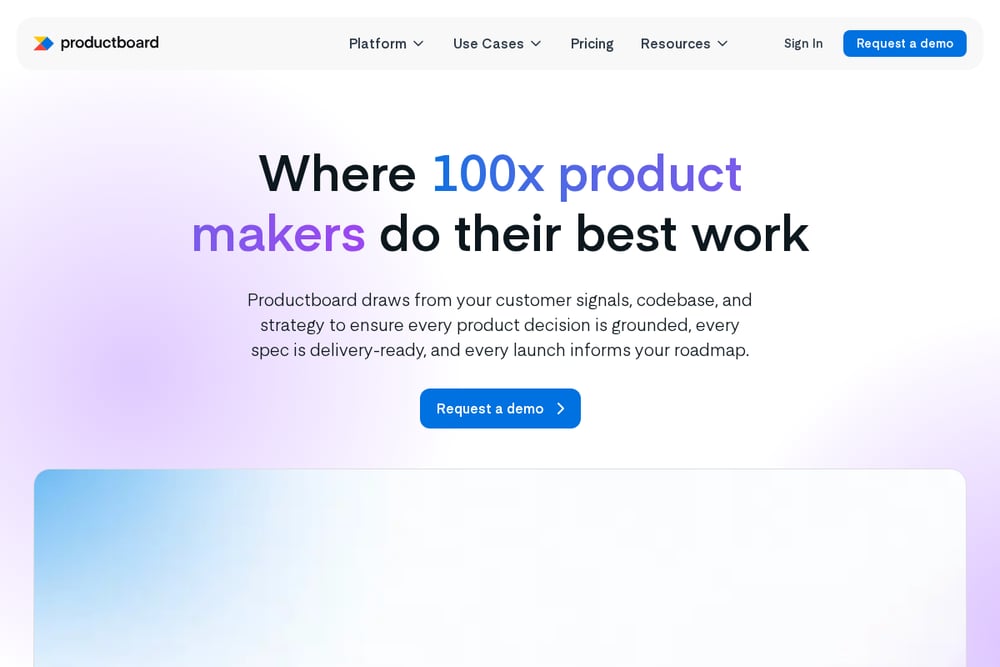 A screenshot of the Productboard website.
Productboard positions itself as a system for product management, drawing from customer signals, codebase, and strategy to ground product decisions. It centralizes feedback from many sources into one searchable repository and links insights to related feature ideas. Roadmaps, specs, and customer engagement sit alongside feedback analysis, so the tool spans the whole product workflow rather than just request collection. It suits product organizations that want feedback tied to strategy and roadmapping in one place.
#2 Canny
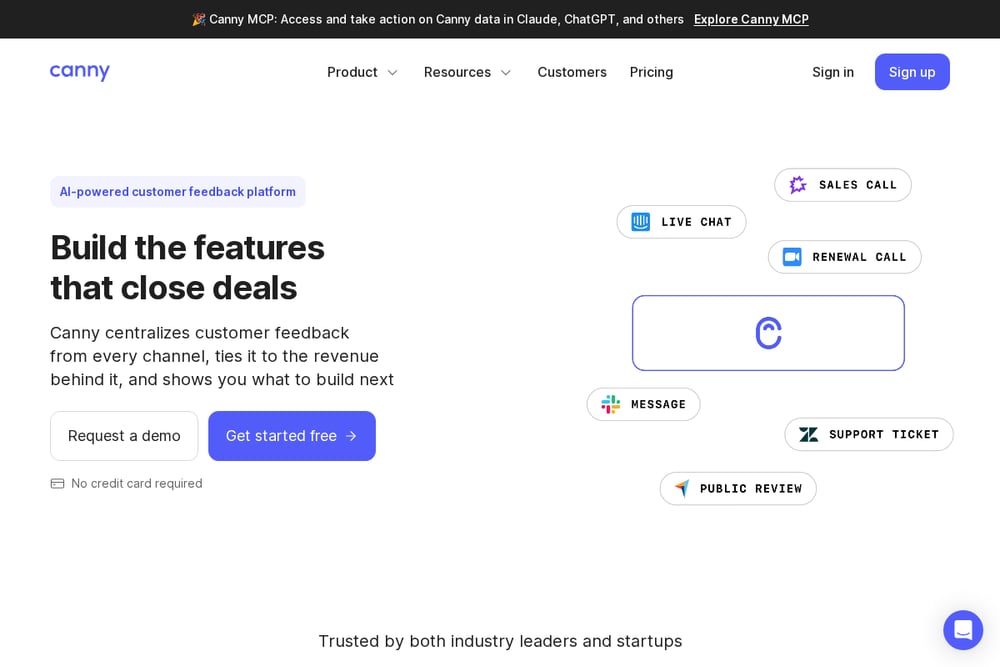 A screenshot of the Canny website.
Canny is an AI-powered customer feedback platform that centralizes feedback from every channel and ties it to the revenue behind it. Its Autopilot reads call transcripts, support tickets, and reviews to pull out feature requests and merge duplicates. A dedicated feedback portal lets customers submit requests, vote, and receive status updates, while integrations keep engineering in sync. It suits teams that want to weigh feedback against revenue impact and keep customers informed as requests progress.
#3 Featurebase
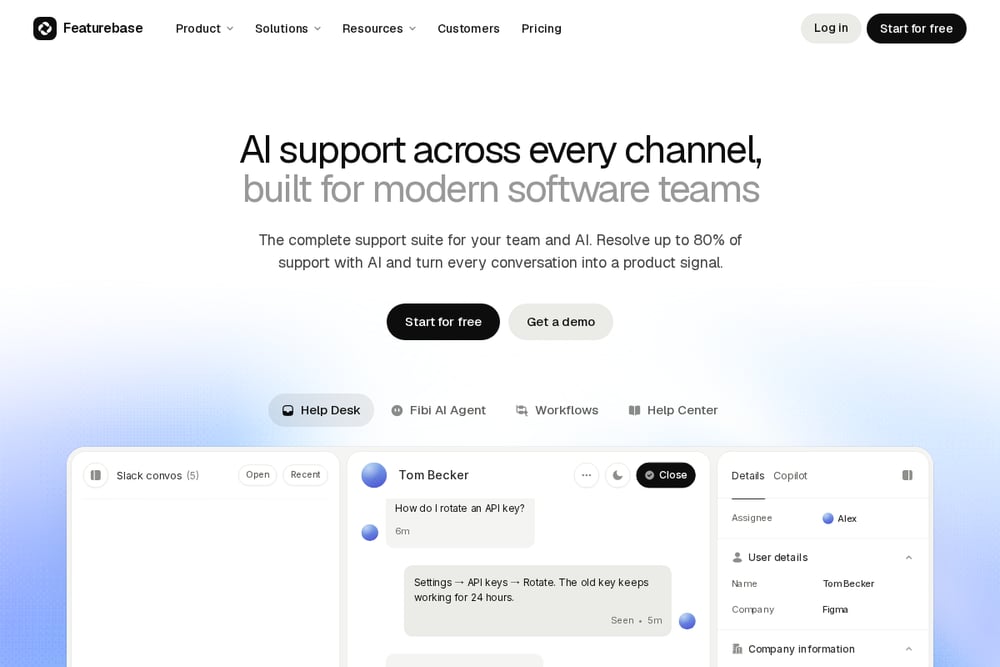 A screenshot of the Featurebase website.
Featurebase describes itself as an AI support suite that also handles feedback, pairing a help desk and AI agent with feedback collection and prioritization. It aims to resolve support conversations with AI and turn every conversation into a product signal. The product set includes a help center, live chat, workflows, and a customer portal alongside its feedback tools. It suits software teams that want support and feedback handled in the same system.
#4 Frill
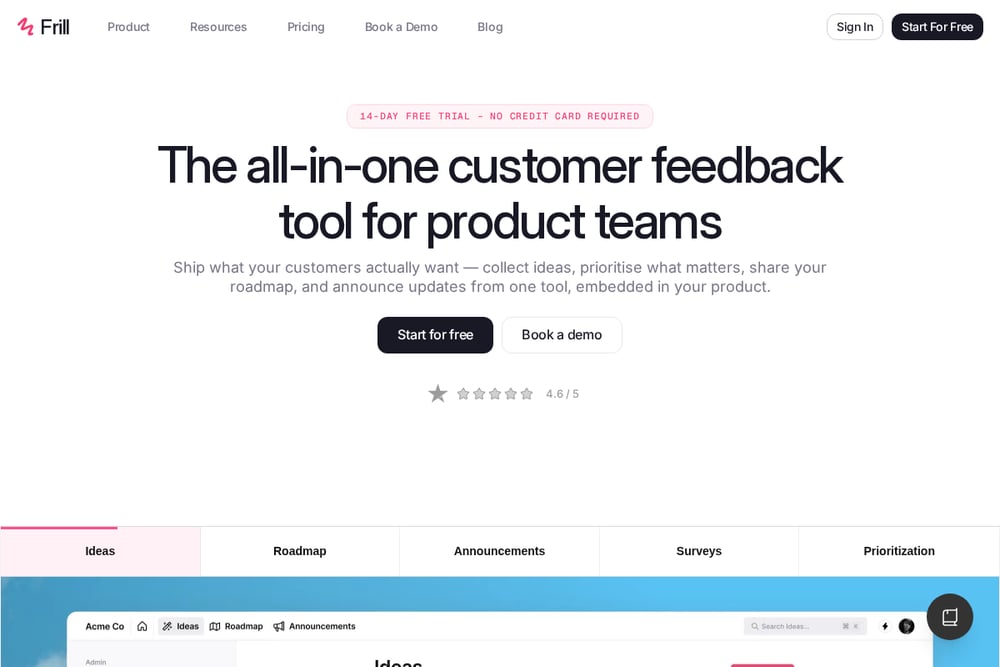 A screenshot of the Frill website.
Frill calls itself an all-in-one customer feedback tool for product teams, covering idea collection, prioritization, roadmaps, and announcements in one embedded tool. Its AI Inbox reads Slack, Zendesk, Jira, Linear, and Trello and pulls out feature requests for review. The tool emphasizes being easy to embed in a product and simple for end users to engage with. It suits product teams that want a lightweight feedback and roadmap loop embedded directly in their app.
#5 Nolt
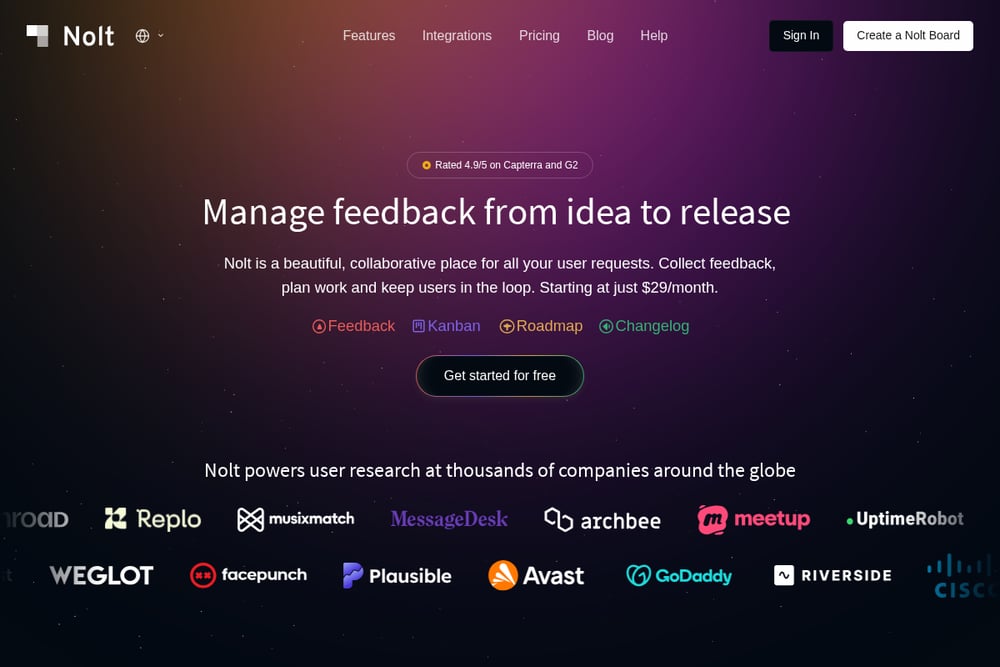 A screenshot of the Nolt website.
Nolt is a collaborative place for user requests, combining a feedback board with Kanban planning, a roadmap, and a changelog. It supports custom fields, comments on feedback items, SSO, and duplicate merging, and it offers two-way sync with selected project-management tools plus a GraphQL API and MCP server. The changelog lets teams announce when feedback turns into action. It suits teams that want a simple, community-facing feedback loop from idea through release.
Which One Should You Choose?
Start with where your feedback already lives. If it is scattered across calls, tickets, and chat, look for a tool that ingests those sources automatically. If your priority is tying requests to revenue, weigh tools that connect feedback to account data. If you want feedback handled alongside support, consider a suite that includes a help desk. And if you want something customers see directly, favor tools with an embeddable portal, roadmap, and changelog. Match the tool to your existing workflow rather than changing the workflow to fit the tool.
Final Thoughts
Each of these tools approaches feature requests and feedback from a different angle: Productboard ties feedback to strategy and roadmaps, Canny connects it to revenue, Featurebase merges it with support, Frill keeps it embedded and simple, and Nolt runs a community board through to changelog. None is universally better; the right fit depends on whether your team needs strategy alignment, revenue context, support integration, embeddability, or a lightweight public loop.
Know a company that belongs on this list? Email us at editorial@peekwire.com.