
Falls are the leading cause of injury among older adults, yet most balance issues go undetected until it's too late. The right assessment tool can mean the difference between a proactive care plan and a preventable emergency. I've analyzed five
Why Fall Risk Assessment Is a Growing Priority
Falls affect one in four older adults annually, often leading to severe injuries and high medical costs. Traditional assessments rely on subjective observation, which can miss gradual declines in balance. Automated tools now offer objective, repeatable measurements that catch risks early. From sensor mats to AI-driven software, these technologies are reshaping how healthcare providers approach fall prevention. The market is expanding rapidly as senior living facilities and clinics seek scalable solutions. Understanding your options is key to choosing a tool that fits your workflow and patient population.
How I Evaluated These Tools
I ranked each platform based on four factors: accuracy and validation (research backing or FDA clearance), ease of use (setup time and staff training), scalability (ability to handle multiple patients), and integration potential (compatibility with existing systems). I also considered user feedback and real-world adoption in senior care settings. The goal was to highlight tools that deliver reliable data without overcomplicating the process.
Here's a quick comparison of the five platforms to help you see the differences at a glance.
| Provider | Best For |
|---|---|
| VirtuSense VSTBalance | Senior living communities needing fast, scalable fall risk screening |
| Linus Health Mobility | Researchers and clinicians needing remote, sensor-based mobility evaluations |
| UpRight Science Balance Assessment | Clinics seeking FDA-cleared, objective balance tracking over time |
| Librava Health | Small practices and telehealth providers seeking a software-based fall risk solution |
| Tekscan Balance Assessment Systems | Physical therapy and sports medicine clinics needing precise balance measurement |
Detailed Reviews of Each Fall Risk Assessment Tool
#1 VirtuSense VSTBalance
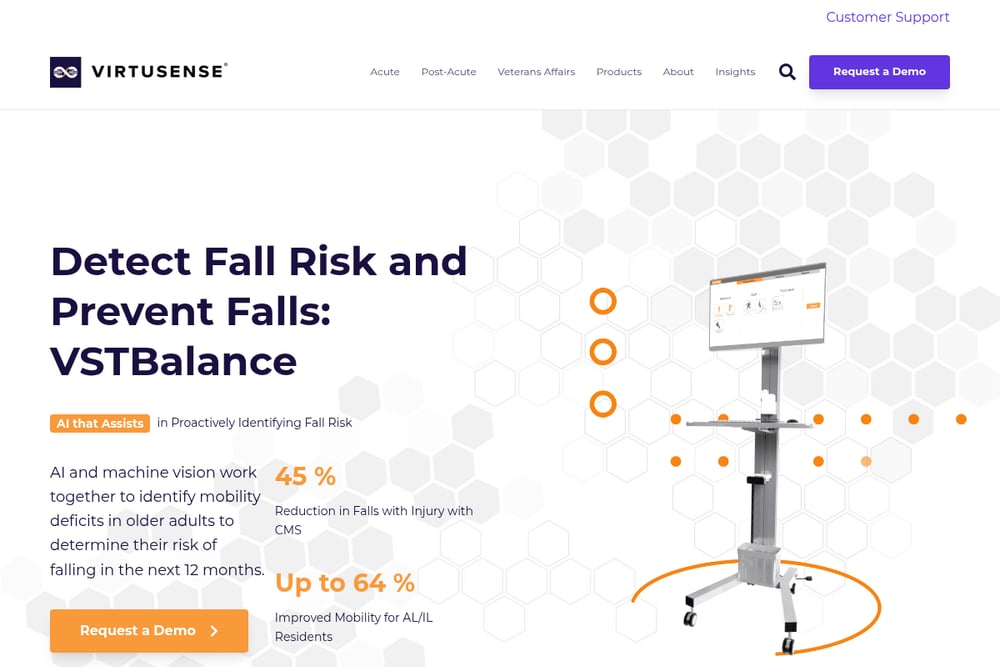 A screenshot of the VirtuSense website.
VirtuSense VSTBalance uses depth-sensor technology to capture objective balance data in under 60 seconds. It's designed for senior living communities and clinics, providing instant fall risk scores without requiring patient wearables. The system is portable and easy to set up, which encourages high resident participation. According to user testimonials, residents are 'excited to use it' and staff gain insights they 'never had access to before.' This tool bridges the gap between subjective observation and quantifiable metrics. It's a strong choice for facilities aiming to scale fall prevention efforts.
#2 Linus Health Mobility
 A screenshot of the Linus Health website.
Linus Health Mobility offers sensor-based, remote-enabled tools for gait, balance, and falls risk assessment. Its validated technology provides objective, data-driven insights that reduce the variability of subjective evaluations. The platform is particularly useful for researchers and clinicians tracking cognitive decline alongside mobility issues. By enabling remote assessments, it expands access to proactive care for older adults at home. Linus Health's approach integrates motor control and cognitive function analysis, addressing the root causes of falls. This makes it a comprehensive solution for both clinical and research settings.
#3 UpRight Science Balance Assessment
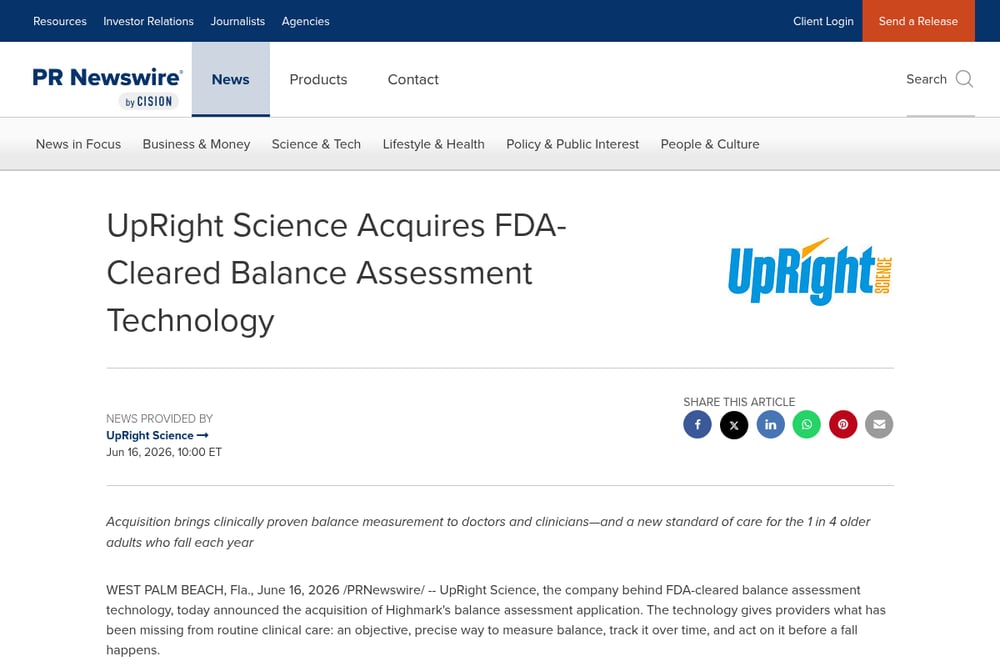 A screenshot of the UpRight Science website.
UpRight Science acquired FDA-cleared balance assessment technology to bring objective measurement into routine clinical care. The system tracks balance over time, giving providers a window to intervene before a fall occurs. As Dr. Sanjeev Sharma notes, 'Balance isn't something that disappears overnight. It declines gradually, and that's actually good news because it means there's a window to intervene.' The technology is cost-effective and designed for use in primary care and specialty clinics. It fills a critical gap where balance often goes unmeasured until an injury happens. UpRight Science is setting a new standard for preventive care in older adults.
#4 Librava Health
 A screenshot of the Librava Health website.
Librava Health automates balance and fall risk assessments using a streamlined digital platform. Based in San Diego, this early-stage business focuses on making evaluations efficient for healthcare providers. While it lacks the sensor hardware of some competitors, its software-first approach could simplify integration into existing workflows. The platform is designed to reduce manual assessment time and deliver consistent results. For small practices or telehealth services, Librava Health offers a lightweight entry point into automated fall risk screening. It's a promising option for providers who want to digitize their assessment process without heavy equipment investment.
#5 Tekscan Balance Assessment Systems
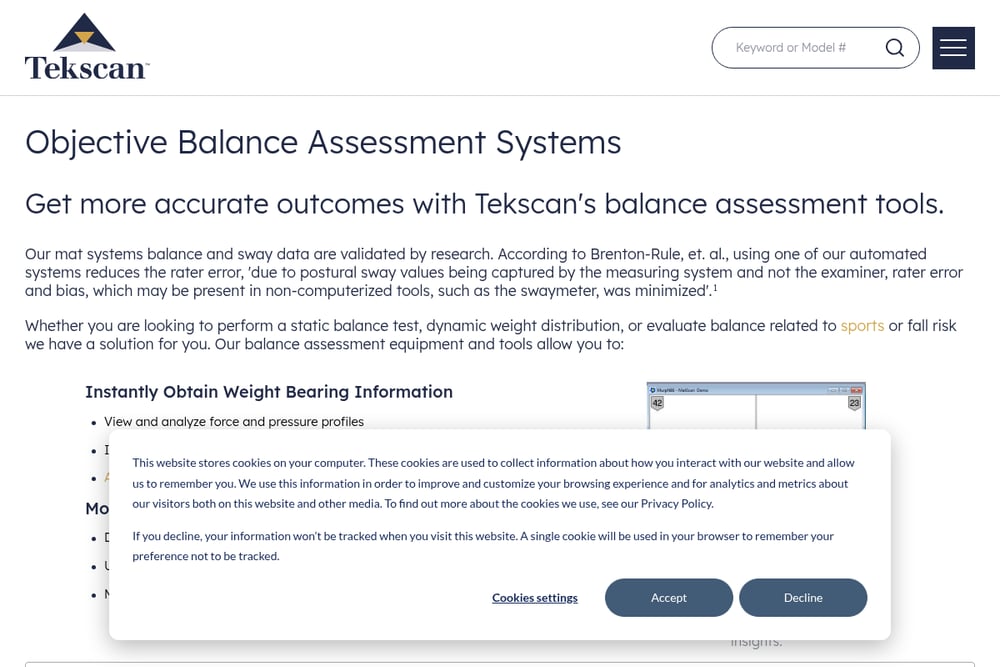 A screenshot of the Tekscan website.
Tekscan provides mat-based balance assessment systems that capture postural sway and weight distribution data. Their automated tools reduce rater error and bias, as validated by research from Brenton-Rule et al. You can instantly identify asymmetries, monitor treatment progress, and assess fall or injury risk with objective data. The systems support static balance tests, dynamic weight distribution analysis, and real-time visual feedback for training. Tekscan is ideal for physical therapy clinics and sports medicine practices that need precise, repeatable measurements. It's a research-backed solution for clinicians who prioritize accuracy.
How to Choose the Right Fall Risk Assessment Tool for Your Practice
Start by identifying your setting: a large senior living community may benefit from portable sensor systems like VirtuSense, while a small clinic might prefer a software-only option like Librava Health. Consider whether you need FDA clearance for regulatory compliance or remote assessment capabilities for telehealth. Evaluate the learning curve for your staff and the time required per patient. Finally, look for tools that integrate with your electronic health records to streamline data tracking. The best choice aligns with your patient volume, budget, and clinical goals.
Automating Fall Risk Workflows
Imagine this: a patient arrives for a routine checkup, stands on a sensor mat for 30 seconds, and the system automatically generates a fall risk score. That score is sent to the clinician's dashboard, flagged if above a threshold, and triggers a personalized care plan. No manual forms, no subjective guesswork. Tools like Linus Health and UpRight Science make this possible with remote monitoring and longitudinal tracking. Automation frees up staff time and ensures no high-risk patient slips through the cracks.
The Future of Fall Prevention Is Data-Driven
Fall risk assessment is moving from reactive to proactive, thanks to automated tools that catch declines early. Whether you choose a sensor-based system or a software platform, the key is consistency and objectivity. Librava Health offers a solid entry point for smaller practices, while VirtuSense and UpRight Science lead with hardware-backed solutions. The best investment is one that fits your workflow and helps you prevent falls before they happen. Start by trialing a tool that matches your patient volume and technical comfort level.