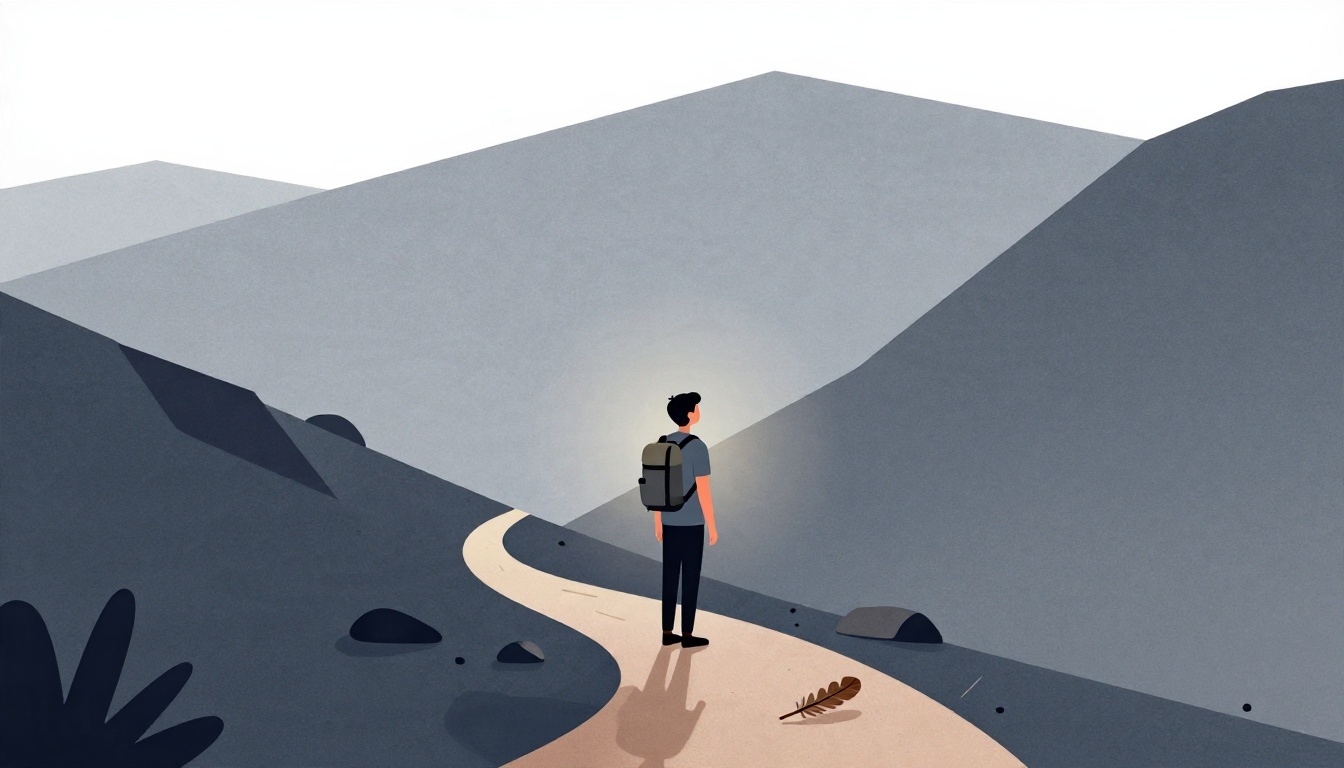
Facing Discomfort and Packing Light: A Hiker's Guide to Mindfulness
Tyler Golden, publisher of Golden Moment Publishing and author of The Trail to Here: An Unexpected Path to Presence, recently shared his perspective on the intersection of hiking and quiet practice. His approach is grounded in the reality that the trail offers lessons that are easy to learn but hard to carry home.
The Challenge of Bringing the Trail Home
When asked when the usual advice about mindfulness on the trail fails to fit the day, Golden pushed back on the premise. "Honestly, I think it all fits," he said. "The challenge is making space to apply what we learn on the trail to our daily lives."
He explained that the trail provides a natural container for practice—away from cell service, Wi-Fi, and the constant noise of daily life. "Back home, we have lots of responsibilities and distractions pulling our minds in every direction," he noted. "That's where a practice comes in. It makes space for our minds to focus on what really matters and let go of what doesn't."
For Golden, meditation has been a central tool. "It trains the mind to notice when challenging situations or feelings come up, which gives us a chance to respond mindfully instead of reacting without thought," he said. This skill of noticing—whether on a rocky ascent or in a tense conversation—is what bridges the gap between the trail and the rest of life.
The Unspoken Element: Discomfort
What do new hikers and meditators often miss that most online resources leave out? Golden's answer is direct: "I'm going to go with discomfort."
He described how both climbing a 14,000-foot peak and sitting down without distractions bring their own unique forms of discomfort. But rather than avoiding it, he sees discomfort as a gateway. "Facing discomfort ultimately helps us find the joy buried inside us," he said. "We were made to face discomfort. It's what helps us grow physically, mentally, and I'd even say spiritually."
Golden incorporates this principle into his Mountains to Mindfulness Framework™, where "Face Discomfort" is one of the supporting paths of the Peak of Acceptance. "The secret is learning to face discomfort instead of running from it," he added.
Start Light, Stay Present
When it comes to starting a practice—whether a hike or a meditation habit—Golden warns against two common mistakes: overloading on gear and fixating on the end goal.
"I'd say people start with too much gear and focus only on the end goal, whether that's a high summit or the end of a trail," he said. "What we forget is that the ounces we carry, just like our thoughts and emotions, add up quickly, especially over long miles."
He shared a personal anecdote: "My first pack was overflowing and didn't fit right. The result? My shoulders ached, and every step was harder than it needed to be." The lesson extends beyond physical weight. "So often we carry emotions just because they're familiar, not because they're useful," he observed. "Learning to carry only what's useful, and that it's more about the journey than the destination, were big lessons for me."
Practical Takeaways for Readers
- Practice transfer: Use meditation to train your mind to notice reactions, then apply that skill in daily life, not just on the trail.
- Embrace discomfort: Instead of avoiding it, see discomfort as a teacher that builds resilience and reveals joy.
- Pack light—physically and emotionally: Carry only what serves you. Familiar emotions may be heavy baggage.
- Focus on the journey: The destination matters less than the steps you take to get there.
Golden's perspective offers a grounded starting point for anyone looking to combine hiking with mindfulness. His book, The Trail to Here, is coming early 2027, and you can learn more at Golden Moment Publishing. Readers can also get a free copy of the Introduction on his site. For those interested in exploring mindfulness in nature, resources like Awake in the Wild and Deer Park Monastery offer additional paths to consider.