Small manufacturers often run production, inventory, purchasing, and finance across a patchwork of spreadsheets and disconnected tools. An ERP system can bring those pieces together, but the options vary widely in scope, deployment model, and the kind of shop they fit. This list covers seven ERP products worth knowing if you are evaluating software for a smaller manufacturing operation in 2026. The entries are presented in a plain list order, not as a quality ranking, and each is described by what it does and who it tends to suit.
How We Picked These Tools
These products were chosen because their own published pages describe manufacturing capabilities and address smaller or growing manufacturing businesses. Each entry is backed by quotes taken directly from the company's provided source page. No product is presented as better than another; the list is an orientation to the landscape, not a verdict.
| Provider | Best For |
|---|---|
| MRPeasy | Small manufacturers wanting an MRP-focused system |
| Global Shop Solutions | Job shops and make-to-order manufacturers |
| Odoo | Small manufacturers wanting a broad app suite |
| Fishbowl | Manufacturers focused on inventory and warehousing |
| Acumatica | Growing manufacturers moving to cloud ERP |
| Epicor | Manufacturers wanting industry-focused ERP |
| SYSPRO | Manufacturers and distributors needing supply chain depth |
The 7 Tools in Focus
#1 MRPeasy
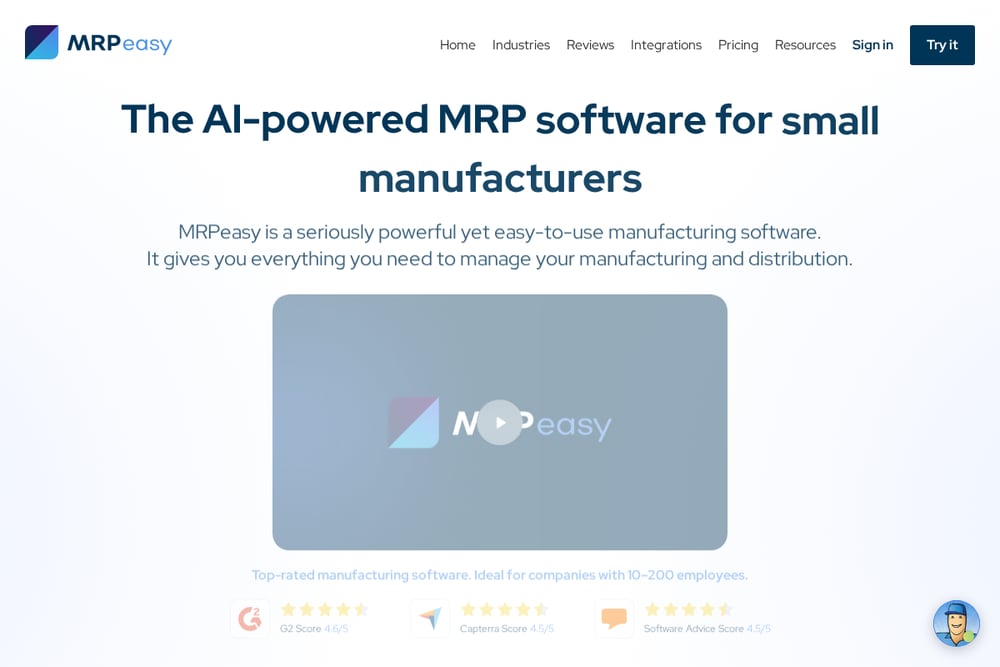 A screenshot of the MRPeasy website.
MRPeasy presents itself as an AI-powered MRP system aimed at smaller manufacturers, with production planning, inventory, sales, procurement, workforce, and finance functions in one place. It emphasizes accurate lead times, real-time inventory visibility, and shop floor reporting. The company positions the product for companies of a modest headcount rather than large enterprises. It also offers integrations with common business tools and a free trial.
#2 Global Shop Solutions
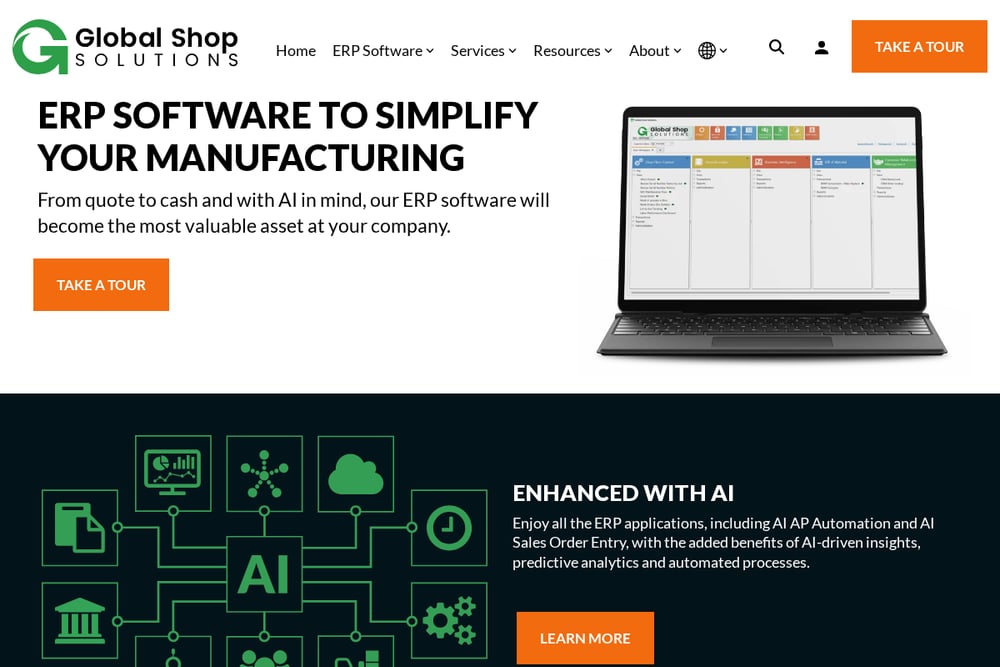 A screenshot of the Global Shop Solutions website.
Global Shop Solutions offers ERP software built around manufacturing, covering planning and scheduling, shop floor data collection, quality, inventory, purchasing, shipping, and job costing. It also includes estimating and quoting, bill of materials, and analytics dashboards. The company describes itself as debt free and family owned, with software designed, developed, and supported primarily from the USA. It offers cloud and on-premise platforms and positions its software as simplifying manufacturing from quote to cash.
#3 Odoo
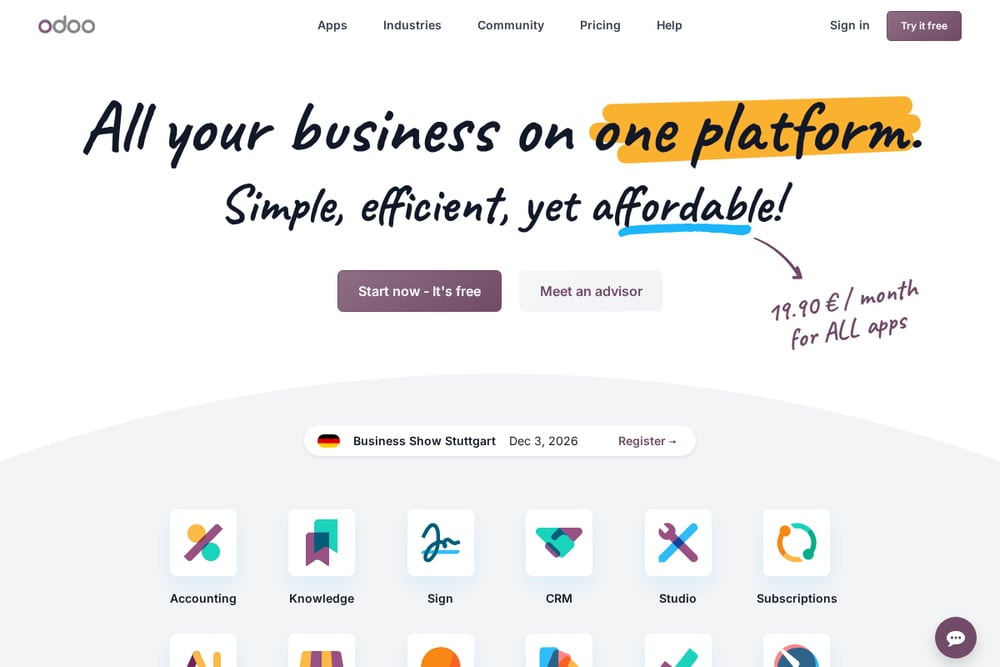 A screenshot of the Odoo website.
Odoo is a suite of open source business apps covering finance, sales, inventory, manufacturing, purchasing, and more, all on one platform. It offers a Community edition that is free and an Enterprise edition with extra apps, infrastructure, and professional services. The manufacturing app sits alongside modules for quality, maintenance, and product lifecycle management. The company emphasizes a single price per user and no vendor lock-in, with data stored in PostgreSQL.
#4 Fishbowl
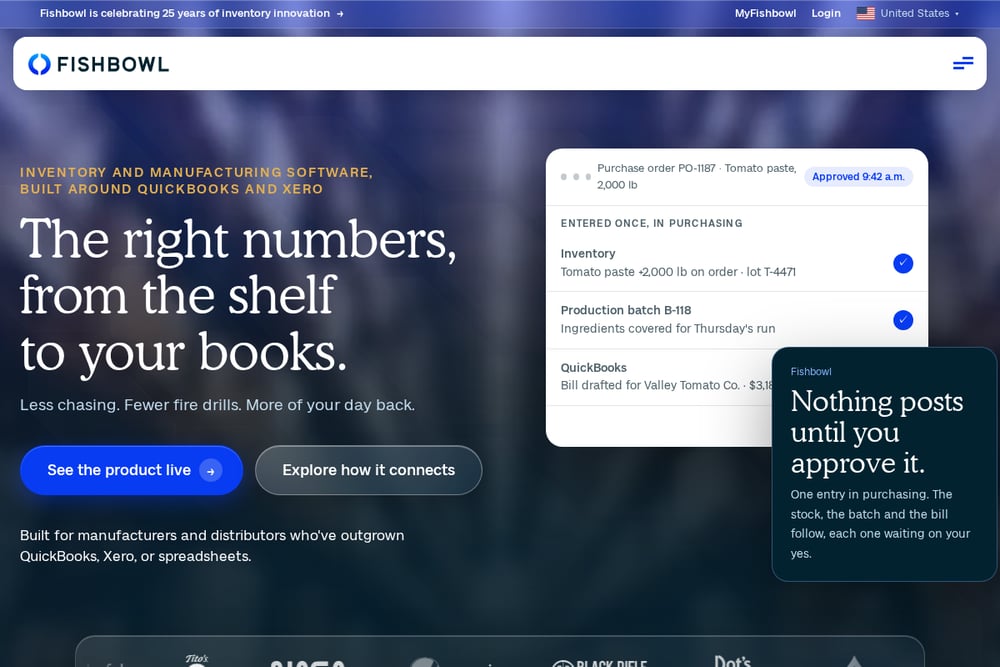 A screenshot of the Fishbowl website.
Fishbowl provides inventory, warehousing, and manufacturing software, with a manufacturing edition described as its most robust cloud hosted solution. It covers bill of materials, work orders, material resource planning, and time tracking and labor costing. Inventory features include real-time tracking across locations, purchasing, and order management. It integrates with accounting tools such as QuickBooks Online, QuickBooks Desktop, and Xero, and offers an AI assistant for business data and insights.
#5 Acumatica
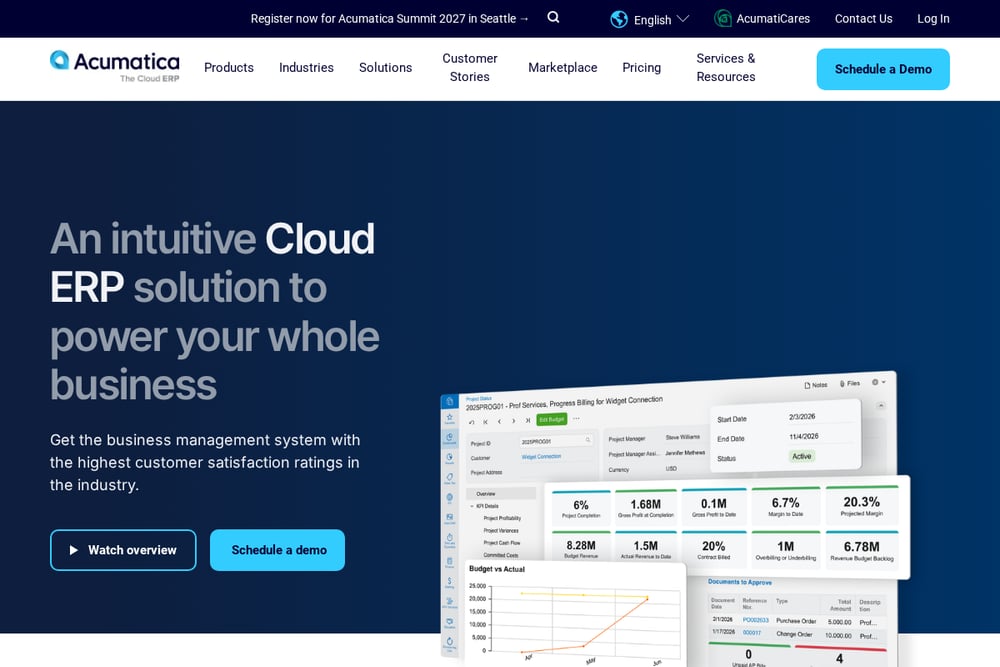 A screenshot of the Acumatica website.
Acumatica offers a cloud ERP platform with a dedicated manufacturing management module alongside financials, inventory, distribution, and order management. The company emphasizes usability, a true cloud platform, and AI-powered automation for routine processes. It publishes industry-specific solutions and offers calculators for manufacturing and distribution. Acumatica also highlights transparent pricing and unlimited users as part of its platform story.
#6 Epicor
 A screenshot of the Epicor website.
Epicor provides ERP platforms and AI-driven applications for manufacturing, logistics, and distribution, with products including Epicor Kinetic and Epicor CPQ. The company emphasizes industry experience and end-to-end ERP for supply chain businesses. It offers support through its customer portal and learning resources. Epicor positions its software around simplifying processes and strengthening the workforce for manufacturers and distributors.
#7 SYSPRO
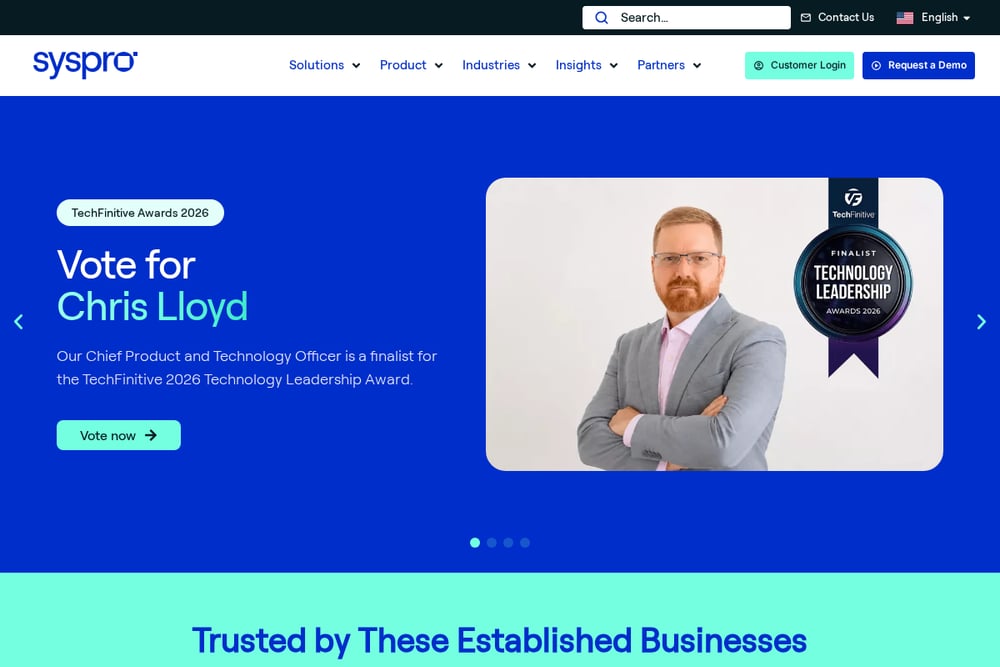 A screenshot of the SYSPRO website.
SYSPRO offers ERP software purpose-built for manufacturing and distribution, covering finance, manufacturing, supply chain, and advanced modules. Its manufacturing capabilities include work in progress, bill of materials, material requirements planning, engineering change control, and quality management. The company also provides cloud ERP and an industrial AI platform called Torque. It serves a range of manufacturing industries and offers a virtual tour of its ERP capabilities.
Which One Should You Choose?
Start with the shape of your operation. If production planning and material requirements are the core pain, look at products that lead with MRP and shop floor reporting. If inventory and warehousing dominate, weigh systems that emphasize real-time stock tracking and order fulfillment. Consider deployment: some products are cloud-first, others offer on-premise options, and one offers an open source edition. Check how each system connects to your accounting software and other tools you already use. Match the vendor's stated company size range and industry focus to your own, and ask for a demo or trial before committing.
Final Thoughts
The ERP landscape for small manufacturers is varied rather than uniform. Some products lean toward MRP and production planning, others toward inventory and warehousing, and others toward broad app suites or deep supply chain coverage. Each entry here is described by what its own pages say it does and who it suits. Use this list as a starting point for your own comparison, and evaluate fit against your processes, deployment preferences, and existing tools rather than treating any single product as the default answer.
Know a company that belongs on this list? Email us at editorial@peekwire.com.