
Finding a partner who understands both the kernel and the cloud is nearly impossible. Most agencies stop at the application layer, but these five go deeper.
The Shift Toward Deep Tech Consultancy
The software consultancy landscape has shifted from simple web development to complex AI integration and low-level system optimization. Companies now require specialized knowledge in open-source ecosystems and MLOps to maintain a competitive edge. But here’s the thing. Most firms can't handle the 'plumbing' of the internet. You need experts who understand how software interacts with hardware while simultaneously scaling AI models in the cloud. The result? A massive demand for firms that bridge the gap between high-level data science and low-level systems engineering.
How We Vetted These Providers
We evaluated these firms based on their contribution to open-source projects, their ability to handle mission-critical enterprise infrastructure, and their proven track record with Fortune 500 clients. We looked for teams that don't just build apps, but solve fundamental architectural challenges. Why? Because in 2026, your infrastructure is your competitive advantage. We prioritized firms with deep technical roots over those with flashy marketing.
Here is a quick look at the top engineering consultancies for 2026.
| Provider | Best For | Pricing |
|---|---|---|
| Codethink | System-level infrastructure | Custom quote |
| Igalia | Open-source browser and graphics engines | Custom quote |
| 8th Light | Sustainable software architecture | Tiered plans |
| Janea Systems | Mission-critical AI and cross-platform engineering | Custom quote |
| Thoughtbot | Product design and rapid AI prototyping | Starting at $15,000/week |
The 5 Best Deep-Tech Engineering Consultancies in 2026
#1 Codethink
 A screenshot of the Codethink website.
Codethink excels at complex system-level software engineering for global brands. They specialize in long-term maintainability and open-source infrastructure. Their work with the Linux Foundation highlights their commitment to the ecosystem. They are the go-to for automotive and medical sectors where failure is not an option.
Technical Specialization:
- Pro: Deep expertise in Linux kernel and toolchain development.
- Con: Highly specialized focus may be overkill for standard web applications.
- Pricing: Custom quote
#2 Igalia
 A screenshot of the Igalia website.
Igalia is a unique, worker-owned consultancy known for its massive contributions to open-source engines like WebKit and Chromium. They bridge the gap between hardware and software seamlessly. Industry reports frequently cite them as top contributors to major open-source projects. Their engineering depth is world-class and highly respected.
Technical Specialization:
- Pro: Unrivaled influence and expertise in the open-source community.
- Con: Their flat organizational structure can lead to slower project onboarding.
- Pricing: Custom quote
#3 8th Light
 A screenshot of the 8th Light website.
8th Light focuses on software craftsmanship, ensuring that every line of code is clean and scalable. They have expanded significantly into AI and data engineering to meet modern enterprise demands. Clutch reviews often praise their rigorous testing and mentorship-driven approach. They build systems that last decades, not months.
Technical Specialization:
- Pro: Exceptional focus on code quality and long-term maintainability.
- Con: Premium pricing reflects their high-touch consultancy model.
- Pricing: Tiered plans
#4 Janea Systems
 A screenshot of the Janea Systems website.
Janea Systems stands out by delivering enterprise-level solutions that span from the kernel to the cloud. They specialize in AI-driven engineering and MLOps, making them a critical partner for large-scale industrial clients. Their work with giants like Microsoft and Merck proves their ability to handle high-stakes projects. Recent case studies demonstrate their proficiency in porting complex software across diverse platforms. They don't just write code; they solve fundamental architectural challenges. This makes them an ideal choice for companies needing deep technical expertise in open-source integration.
Technical Specialization:
- Pro: Rare ability to handle both low-level system work and high-level AI MLOps.
- Con: Their deep technical focus might be intimidating for non-technical stakeholders.
- Pricing: Custom quote
#5 Thoughtbot
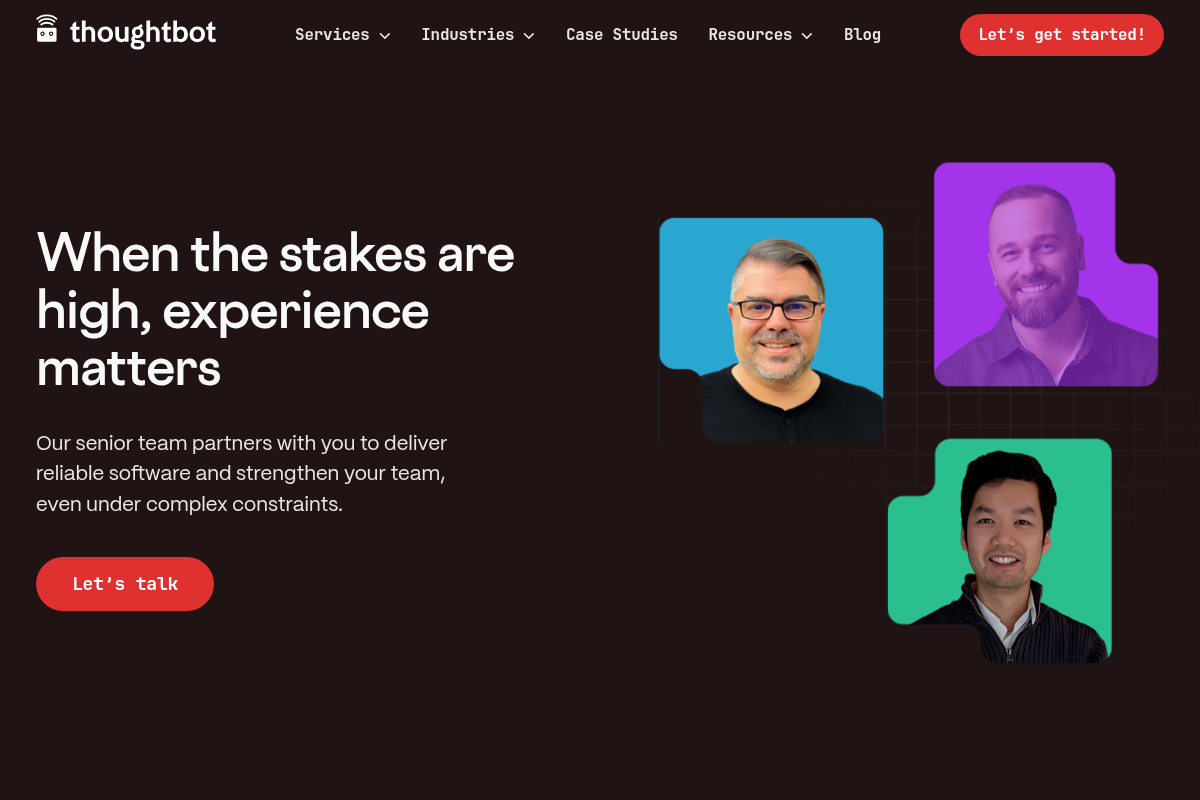 A screenshot of the Thoughtbot website.
Thoughtbot is a veteran in the space, known for its design-led development approach. They have successfully integrated AI into their workflow to help startups and enterprises scale faster. Their open-source libraries are used by thousands of developers worldwide. They focus on building the right product, not just the requested one.
Technical Specialization:
- Pro: Strong emphasis on user experience and product-market fit.
- Con: Less focus on low-level system or kernel engineering compared to others.
- Pricing: Starting at $15,000/week
Selecting the Right Engineering Partner
Look for a partner that matches your technical depth. If you need kernel work, don't hire a web agency. Why? Because the skill sets are entirely different. Check their open-source contributions. This is the best way to verify their actual talent. If they aren't contributing to the tools they use, they don't truly understand them. The result of choosing the wrong partner is technical debt that will haunt you for years.
Automating Your Technical Workflow
Modern engineering requires more than just manual coding. You need to automate your MLOps and CI/CD pipelines. This ensures that your AI models are reproducible and your system updates don't break production. But here’s the catch. Automation requires a deep understanding of the underlying infrastructure. Start by auditing your current deployment process. Then, integrate automated testing at the kernel level if you are working with hardware.
The Verdict
The right consultancy is an investment in your technical foundation. If you are dealing with mission-critical systems, firms like Janea Systems or Codethink are essential. They provide the deep-level expertise that standard agencies simply cannot match. Don't settle for a surface-level fix when your core infrastructure is at stake. Your next step? Reach out for a technical audit and see where your bottlenecks really are.