
If your operation is drowning in PDFs, spreadsheets, and manual data entry, these five platforms can turn that chaos into structured, automated workflows. From custom-built systems to enterprise-grade APIs, here's who you should know.
The State of Document Intelligence in 2026
Document intelligence has moved from a nice-to-have to a core operational necessity. Companies in the $5M to $100M+ revenue range are realizing that off-the-shelf tools can't handle the volume, variety, and velocity of documents they process daily. The market now offers everything from DIY cloud APIs to fully managed services with human-in-the-loop review. But the real differentiator isn't just extraction accuracy—it's how well the solution integrates with your existing stack and scales with your business. As AI models get cheaper and faster, the barrier to entry has dropped, but so has the margin for error. You need a partner who understands data engineering, not just prompt engineering.
How We Evaluated These Platforms
We looked at each platform through the lens of a scaling operation: service scope (can it handle your specific document types?), ease of integration (does it play nice with your current tools?), and the level of customization (are you locked into a template or can you build what you need?). We also considered the learning curve—some platforms are developer-first, while others are designed for business users. Finally, we weighed the total cost of ownership, including implementation time and ongoing maintenance. Each platform has its strengths, and we've highlighted what stood out for each.
Here's a quick snapshot of the five platforms we're covering, so you can see at a glance which one might fit your operation.
| Provider | Best For |
|---|---|
| super.AI | Guaranteed accuracy with human-in-the-loop review |
| Skyland Performa — Custom Software & AI Automation for Growing Operations | Custom-built automation for complex, unique workflows |
| Google Cloud Document AI | Developers who want granular control and Google Cloud integration |
| AWS Document Processing | Teams already on AWS who want to build custom pipelines |
| DocuWare | SMBs wanting a turnkey document management solution |
The Deep Dive: 5 Document Intelligence Platforms Worth Knowing
#1 super.AI
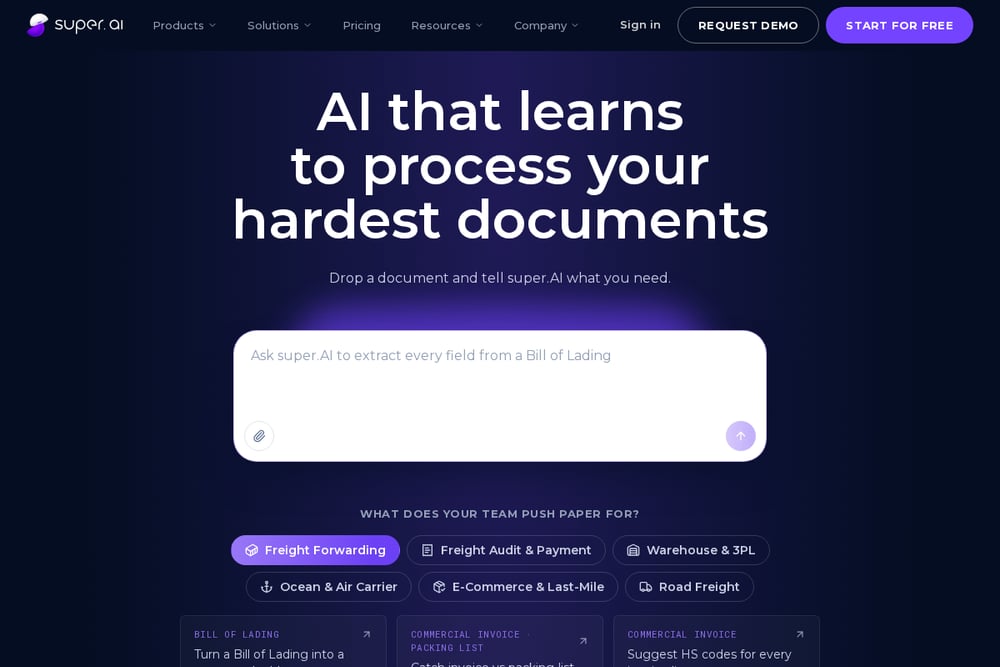 A screenshot of the super.AI website.
super.AI is a fully managed intelligent document processing platform that guarantees quality by combining AI models with human-in-the-loop review. It breaks down complex tasks into simpler ones and routes each to the best AI, human, or software worker, which is why it can achieve automation rates of 96-100% for clients like Target and Lano. You can define your desired quality, cost, and speed, and the platform automatically selects the right combination of workers to meet those goals. If you need extra hands, the Data Processing Crowd is available on demand for labeling and exception handling. This is a great fit if you want a hands-off solution that delivers consistent results without building your own infrastructure. It's particularly strong for logistics, financial services, and other high-volume document environments.
#2 Skyland Performa — Custom Software & AI Automation for Growing Operations
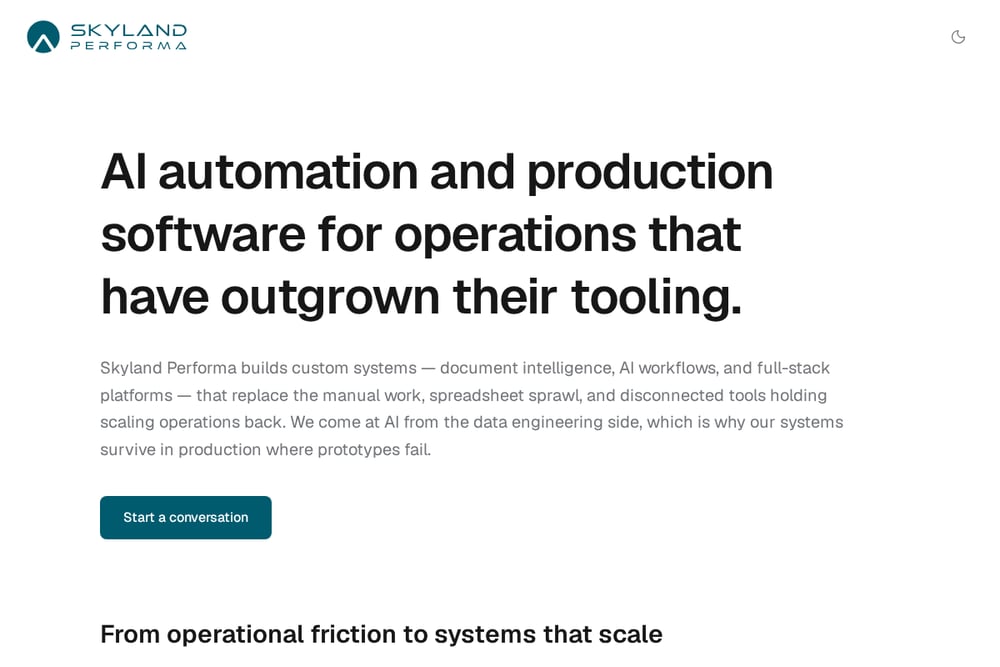 A screenshot of the Skyland Performa website.
Skyland Performa takes a different approach: instead of a one-size-fits-all platform, they build custom AI-powered production software tailored to your specific workflows. They focus on document intelligence, data integration, and automated pipelines, turning unstructured documents into clean, structured data in seconds. What sets them apart is their data engineering-first mindset—they build systems that survive in production, not just prototypes. They work with operations-heavy teams in the $5M to $100M+ revenue range across professional services, legal, retail, and construction. If you're tired of patching together off-the-shelf tools and want a system that scales with your exact processes, this is your partner. They also help connect fragmented systems, so your data moves seamlessly across revenue, inventory, and communication tools.
#3 Google Cloud Document AI
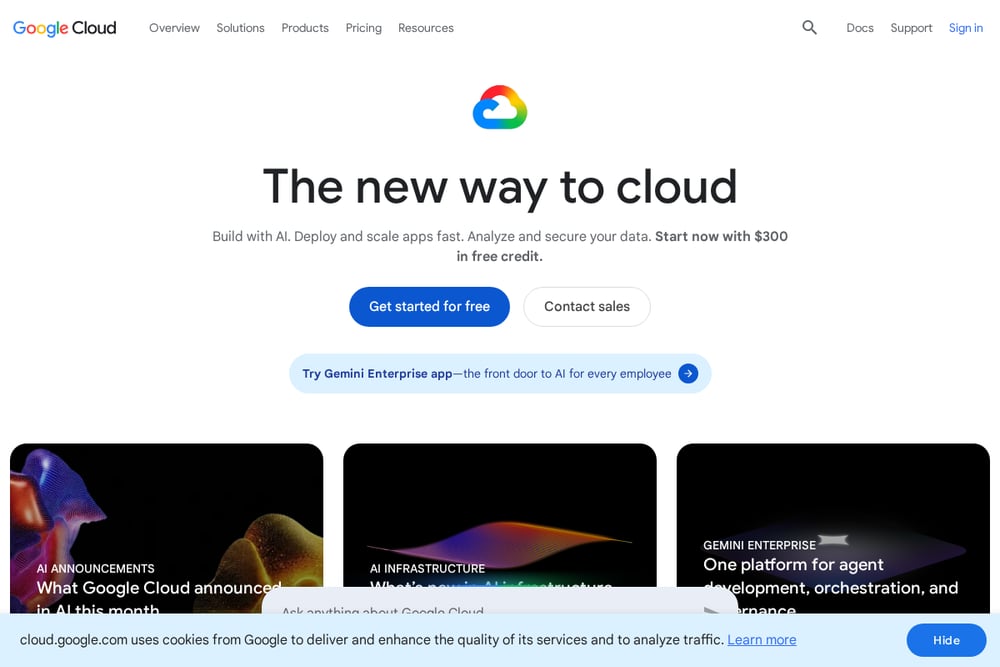 A screenshot of the Google Cloud Document AI website.
Google Cloud Document AI is a developer-friendly platform that lets you build high-accuracy document processors using pre-trained models or your own custom extractors. Its custom extractor is powered by generative AI, so you can get accurate results out of the box and fine-tune with as few as 10 documents. You can also use custom splitters to break down composite documents like mortgage packages into individual classes, and custom classifiers to sort documents automatically. It integrates seamlessly with BigQuery and other Google Cloud services, making it a solid choice if you're already in the Google ecosystem. The learning curve is steeper, but for teams with engineering resources, it offers unmatched flexibility. Plus, new customers get $300 in free credit to experiment.
#4 AWS Document Processing
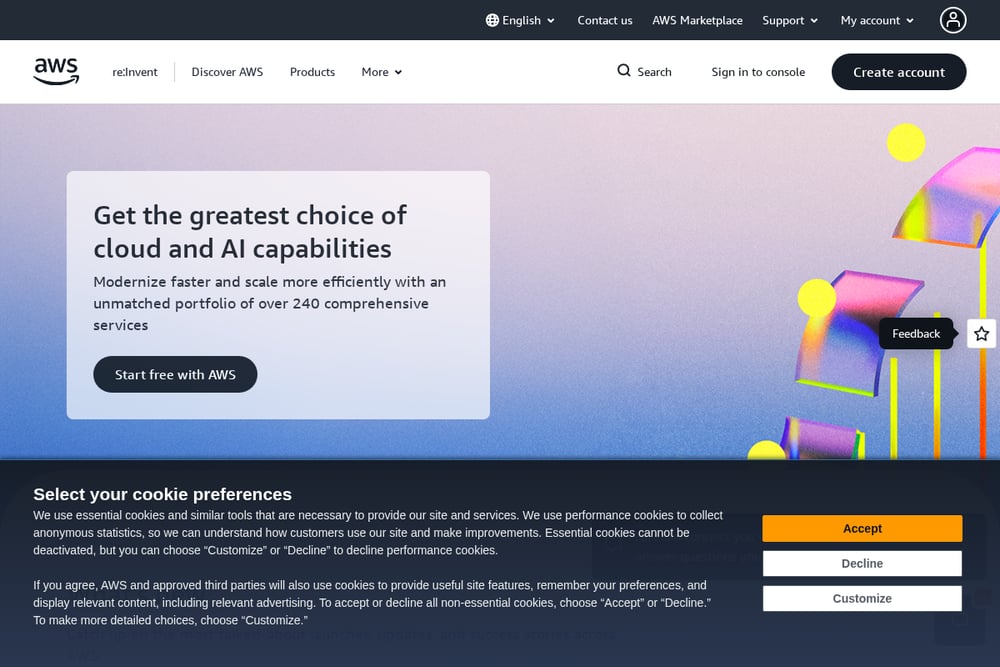 A screenshot of the AWS Document Processing website.
AWS offers a comprehensive suite of AI services for document processing, including Amazon Textract for extracting text and data from scanned documents, and Amazon Bedrock for building generative AI applications. You can automate data extraction and analysis at scale, and integrate with other AWS services like S3 and Lambda for a fully serverless pipeline. The platform is highly scalable, so it can handle everything from a few hundred documents to millions. However, it's a DIY approach—you'll need to assemble the pieces yourself, which requires technical expertise. If you're already on AWS and have a development team, this gives you maximum control and cost efficiency. It's not for the faint of heart, but the flexibility is unmatched.
#5 DocuWare
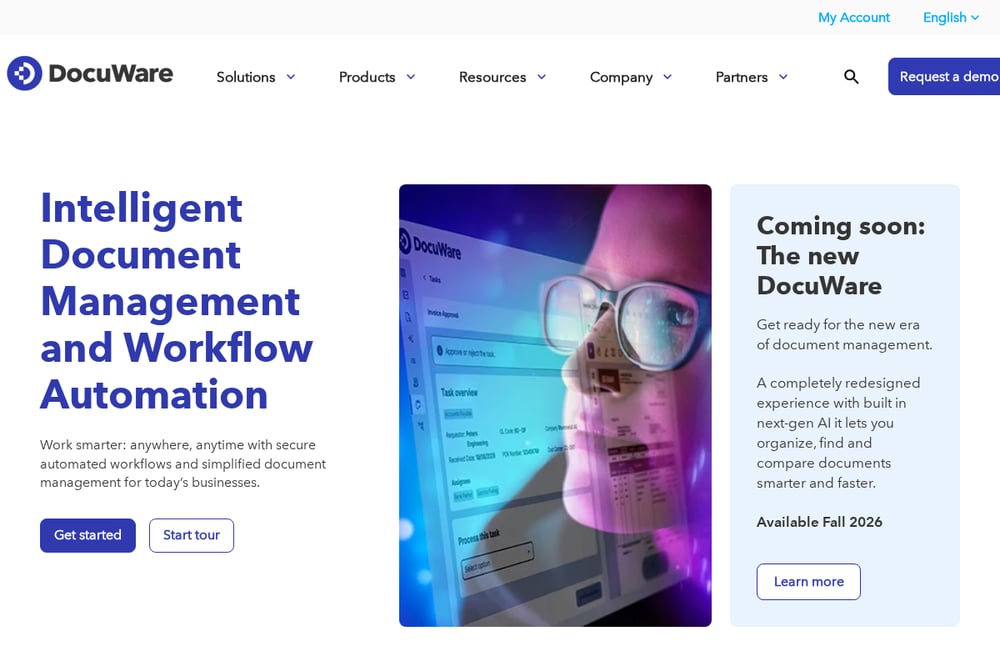 A screenshot of the DocuWare website.
DocuWare is a cloud-based document management and intelligent document processing platform designed for small to mid-sized businesses. It offers pre-built solutions for invoice processing, contract management, and employee file management, so you can get up and running quickly without custom development. Its Intelligent Document Processing (IDP) uses AI to automatically index and classify documents, and it integrates with popular tools like Microsoft Teams and SAP. You can choose between cloud or on-premises deployment, giving you flexibility in how you manage your data. DocuWare is a great option if you want a user-friendly, out-of-the-box solution that doesn't require a dedicated engineering team. It's particularly strong for finance and accounting departments looking to automate AP processes.
How to Choose the Right Document Intelligence Platform
Start by mapping out your document workflows—what types of documents you process, how many, and where the bottlenecks are. If you have a unique process that off-the-shelf tools can't handle, a custom solution like Skyland Performa might be worth the investment. If you need guaranteed accuracy and don't want to manage the tech, super.AI's managed service is a strong contender. For teams with engineering resources, Google Cloud Document AI and AWS offer the most flexibility but require more setup. And if you're a smaller business looking for a quick win, DocuWare's pre-built modules can get you automated in weeks. Consider your team's technical capacity, your budget, and how much customization you truly need. Don't forget to think about integration—your document platform should play nice with your existing CRM, ERP, and other tools.
Automation Workflow: From Manual to Machine
The typical journey starts with identifying the highest-volume document process—like invoice processing or contract review. You then capture documents digitally, either through scanning or email ingestion. Next, the AI extracts key data points, validates them against your business rules, and flags exceptions for human review. Once validated, the data flows directly into your core systems, eliminating manual entry. Over time, you can expand automation to more document types and even connect different systems to create event-driven workflows. The goal is to get to a point where your senior team spends zero time on administrative work and focuses on judgment calls that software can't make.
The Bottom Line
Document intelligence is no longer a luxury—it's a competitive necessity for scaling operations. Whether you choose a managed service like super.AI, a custom build from Skyland Performa, or a developer platform from Google or AWS, the key is to start with a clear understanding of your workflows. DocuWare offers a quick entry point for SMBs, but if your processes are complex, investing in a tailored solution will pay off in the long run. The right platform will not only save you hours but also improve data quality and give you real-time visibility into your operations. So take the time to evaluate your needs, and don't be afraid to start small and scale up as you see results.