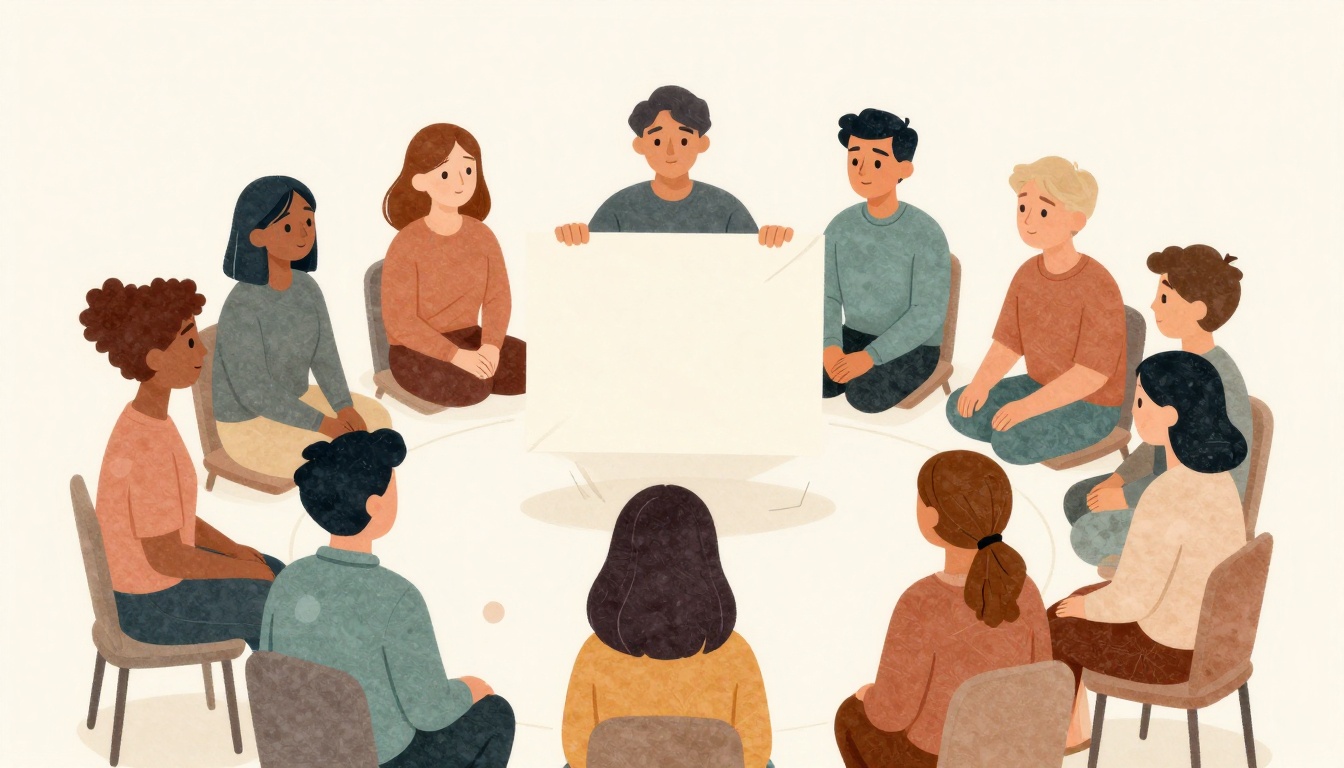
When a city wants to revitalize a downtown, launch a public health campaign, or redesign a park, the default move is often to hire a team of designers, planners, or consultants. The assumption is that fresh eyes and creative professionals will generate better ideas. But according to Bob Hastings, the artist and founder behind Oregon By Design, that instinct gets the relationship backward.
Hastings, whose work spans original watercolor paintings and community-focused design projects across Oregon, argues that the most common misunderstanding about design thinking in community engagement is the belief that outsiders hold the answers. In his view, “The community already possesses the essential knowledge: its history, culture, daily experience, aspirations, and understanding of what has—or has not—worked before.”
This is a radical reframe. It shifts the locus of expertise from the designer to the community itself. It also changes the designer’s job description. Instead of arriving with a solution, the designer’s role is to help people see more clearly. As Hastings puts it, “The designer’s role is not to arrive with the answer. It is to help people truly look and see, frame the right questions, make possibilities visible, and transform individual observations into a shared direction.”
That is a very different kind of facilitation. It requires humility, listening, and a willingness to let go of ego. It also requires a set of practical tools that go beyond sticky notes and brainstorming sessions.
One of the most powerful tools is visual thinking. Hastings, a watercolor artist, knows that images can communicate what words cannot. When community members sketch, map, or paint their experiences, they often surface patterns and emotions that would remain hidden in a verbal discussion. This is why visual facilitation is increasingly used in participatory planning—it levels the playing field and gives everyone a shared language.
Another key practice is asking better questions. Instead of “What should we build?” a more useful question might be “What do you love about this place?” or “What has failed here before, and why?” These questions invite storytelling and reflection, which are the raw materials of genuine insight. As design thinking frameworks emphasize, the problem-framing phase is often more important than the solution phase.
Hastings’ approach also challenges the timeline of typical engagement. Many public processes rush to a vision or a plan. But real seeing takes time. It requires walking the streets, talking to longtime residents, and sitting with discomfort. The payoff is that the resulting direction is not imposed but owned. “The best solutions are not presented to a community; they are created with the community.”
This philosophy has practical implications for anyone involved in civic projects. For one, it means budgeting for genuine co-creation, not just a few public meetings. It means recruiting facilitators who are skilled in listening, not just presenting. And it means being willing to let go of preconceived outcomes.
For communities, the message is empowering: you are not a passive recipient of design. You are the source. The designer is a partner who helps you articulate what you already know. This is especially relevant in Oregon, where local identity and community resilience are deeply valued. Hastings’ work at Oregon By Design reflects that ethos—whether he is painting a landscape or facilitating a workshop, the goal is the same: to reveal what is already there.
So the next time you hear “design thinking” in a community meeting, ask who holds the knowledge. If the answer is “the experts,” the process is likely to fail. If the answer is “everyone in the room,” you are on the right track.