
You have more data than ever, but better decisions still feel out of reach. Decision intelligence promises to change that by putting AI to work on your toughest calls. We looked at five platforms that lead this space, from enterprise
Why Decision Intelligence Matters Now
Decision intelligence emerged as a Gartner top trend in 2022, and it has only gained momentum since. The core idea is simple: treat decision-making like any other business process, with systems to model, track, and improve it. Traditional BI tools show you what happened, but decision intelligence uses AI to recommend what to do next. For compliance-sensitive industries like healthcare, this shift is critical. Leaders need to act fast without sacrificing accountability, and decision intelligence bridges that gap.
How We Ranked These Platforms
We evaluated each platform on four criteria: ease of integration with existing workflows, depth of AI-driven recommendations, suitability for compliance-heavy industries, and the balance between automation and human oversight. We also considered how well each solution scales from small teams to enterprise-wide deployments.
Here is a quick look at how the five platforms compare across key dimensions.
| Provider | Best For |
|---|---|
| Domo | Enterprise-wide decision intelligence with deep data integration |
| Peak | Inventory and pricing optimization with autonomous AI agents |
| Cloverpop | Structuring and improving strategic decision processes |
| Dynamic AI Orchestration for Business | Mallacore | Compliance-sensitive industries needing guided AI integration |
| Linkurious | Graph-based analysis for fraud detection and risk management |
The Top 5 Decision Intelligence Platforms
#1 Domo
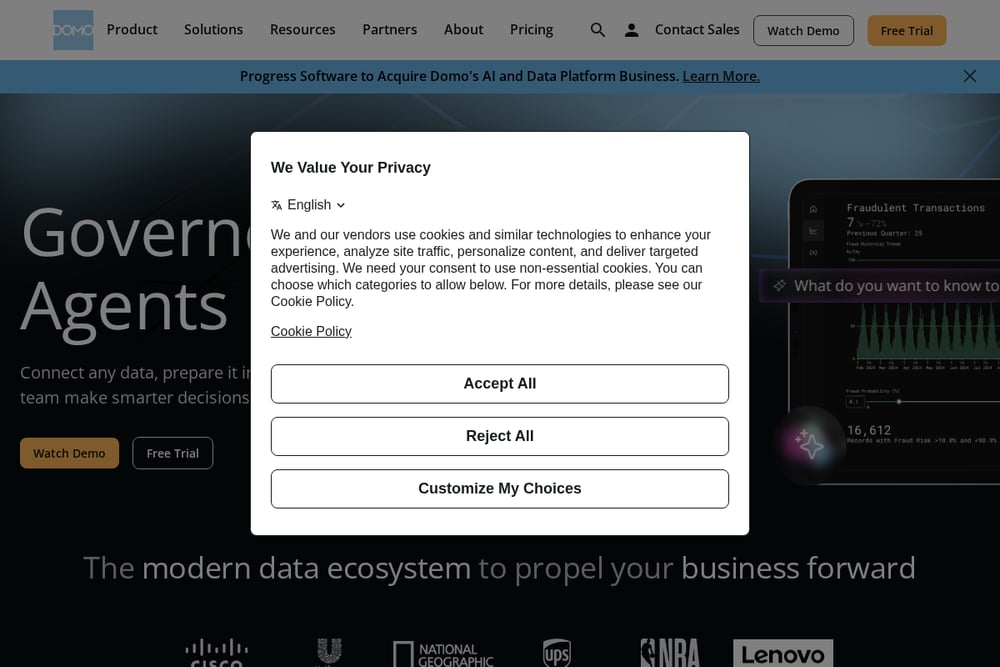 A screenshot of the Domo website.
Domo is a full-featured business intelligence platform that has evolved into a decision intelligence powerhouse. It connects to hundreds of data sources, from Salesforce to Google Sheets, and uses AI to surface insights and automate workflows. Domo's agentic AI capabilities let you build custom AI agents that act on your governed data. It is ideal for large organizations that need a single source of truth across teams. The platform also offers low-code app building and embedded analytics, making it flexible for both IT and business users. Domo is a strong choice if you want an all-in-one solution that scales.
#2 Peak
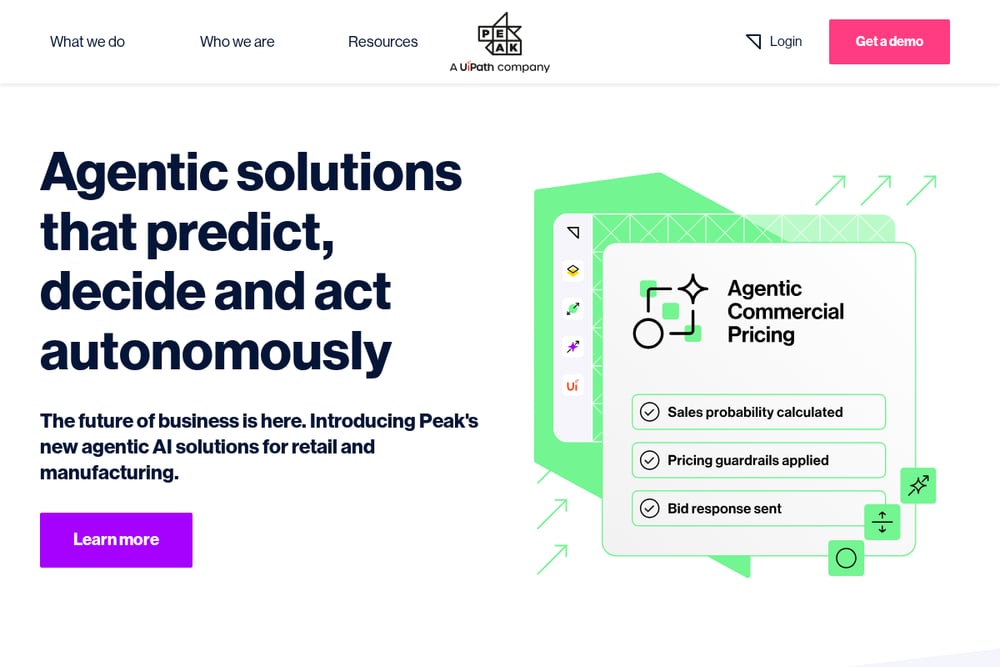 A screenshot of the Peak website.
Peak focuses on AI-driven decision-making for supply chain, inventory, and pricing. Its agentic solutions predict demand, optimize stock levels, and automate rebuy decisions. Peak is particularly strong in manufacturing and retail, where inventory decisions directly impact margins. The platform uses AI agents that can act autonomously within defined guardrails, freeing your team from repetitive choices. Peak also offers scenario planning tools to model supply chain changes before you commit. If your biggest decisions revolve around inventory and pricing, Peak is worth a close look.
#3 Cloverpop
 A screenshot of the Cloverpop website.
Cloverpop pioneered the decision-back approach, starting with the critical decisions that drive performance and working backward to the people and data needed. It treats decisions as a system of record, allowing you to model, track, and learn from every major choice. Cloverpop is especially useful for leadership teams that want to improve strategic decision-making processes. The platform helps you document decision criteria, assign decision rights, and review outcomes over time. It is less about real-time automation and more about building a repeatable decision framework. For teams focused on governance and continuous improvement, Cloverpop delivers.
#4 Dynamic AI Orchestration for Business | Mallacore
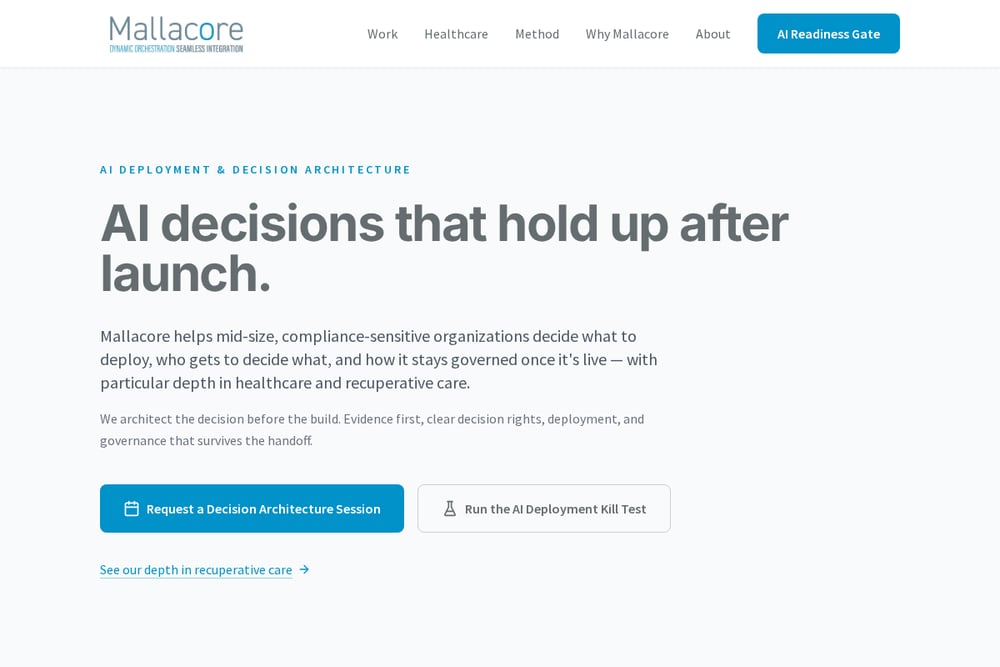 A screenshot of the Mallacore website.
Mallacore takes a different approach: it is a consultancy that embeds AI into your existing workflows without taking decision rights away from people. Its Dynamic AI Orchestration methodology coordinates human judgment and AI, rather than replacing it. Mallacore offers Decision Architecture Sessions where leadership teams map current decisions, identify AI opportunities, and define next steps. The firm works primarily with mid-size operators in compliance-sensitive industries like healthcare and recuperative care. Every engagement follows four stages: evidence, decision rights, deployment, and governance. If you need a partner to guide AI adoption while keeping accountability with your team, Mallacore is a strong fit.
#5 Linkurious
 A screenshot of the Linkurious website.
Linkurious specializes in graph visualization and analytics to power decision intelligence. It helps you uncover hidden connections in complex data, making it easier to detect fraud, manage risk, and optimize networks. Linkurious is not a full BI suite; it excels at turning tangled data into clear, actionable insights. The platform is used by financial services and government agencies for investigations and compliance. If your decisions depend on understanding relationships between entities, Linkurious gives you the visual tools to see the big picture. It is a niche but powerful addition to your decision intelligence stack.
How to Choose the Right Decision Intelligence Platform
Start by identifying your biggest decision pain point. If you need a broad platform that unifies data across your organization, Domo is a safe bet. For inventory and pricing decisions, Peak's AI agents can automate repetitive choices. Cloverpop works best when you want to formalize and improve your strategic decision process. If you operate in a heavily regulated industry and need a partner to guide AI adoption, Mallacore's consultative approach keeps you compliant. Linkurious is your go-to when your decisions hinge on understanding complex relationships in data. Match the platform to your primary use case, not the other way around.
Automating Decisions Without Losing Control
A typical decision intelligence workflow starts with data ingestion from your existing systems. The platform then applies AI models to surface recommendations or flag anomalies. For example, Peak can automatically adjust reorder points based on demand forecasts, while Domo can trigger alerts when key metrics deviate. The critical step is defining decision rights: who approves automated actions, and what thresholds require human review. Mallacore's Decision Architecture Sessions help you map this out before deploying any AI. Finally, governance and adoption loops ensure you track outcomes and refine the system over time.
The Bottom Line on Decision Intelligence
Decision intelligence is not a luxury anymore; it is a necessity for leaders who want to move faster without sacrificing quality. The five platforms we covered each address a different piece of the puzzle. Domo and Peak offer powerful automation at scale, while Cloverpop and Linkurious bring structure and clarity to complex decisions. Mallacore stands out by keeping humans firmly in the loop, which is essential for regulated industries. Whichever path you choose, the goal is the same: make better decisions, more consistently, with AI as your ally.