Small data teams need ELT tools that are easy to set up, maintain, and afford. This list covers five options worth knowing in 2026, each with different strengths for teams with limited engineering resources. We describe what each tool does and who it suits, without ranking them as better or worse.
How We Picked These Tools
We selected tools that offer managed or open-source ELT capabilities, have transparent pricing or free tiers, and are designed for teams that need to move data without heavy engineering. Each tool is described using only information from its official website.
| Provider | Best For |
|---|---|
| Fivetran | Teams seeking a fully managed, low-maintenance ELT platform |
| Airbyte | Teams wanting open-source flexibility and self-hosting options |
| Hevo Data | Small teams looking for a no-code, fully managed pipeline with transparent pricing |
| Estuary | Teams needing unified real-time and batch data integration with deployment flexibility |
| Portable | Teams that want expert help and a wide connector library |
The 5 Tools in Focus
#1 Fivetran
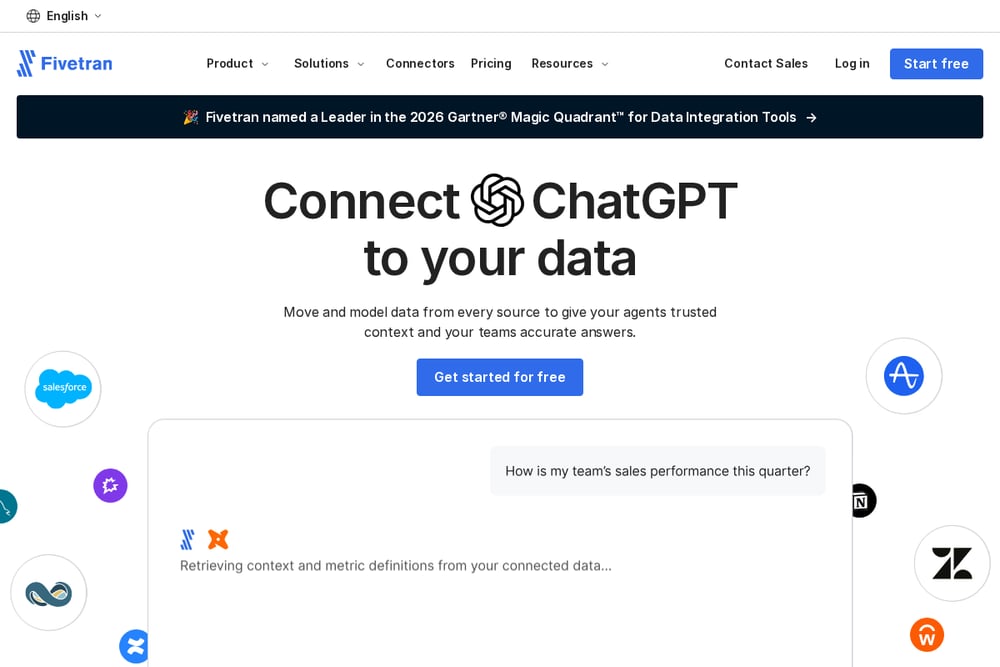 A screenshot of the Fivetran website.
Fivetran provides a fully managed data integration platform that moves data from various sources into warehouses and lakes. It offers automated transformations and a semantic layer to help teams and AI use consistent data definitions. The platform emphasizes security and governance with features like column hashing and private deployment. It is designed for organizations that want a reliable, low-maintenance pipeline solution.
#2 Airbyte
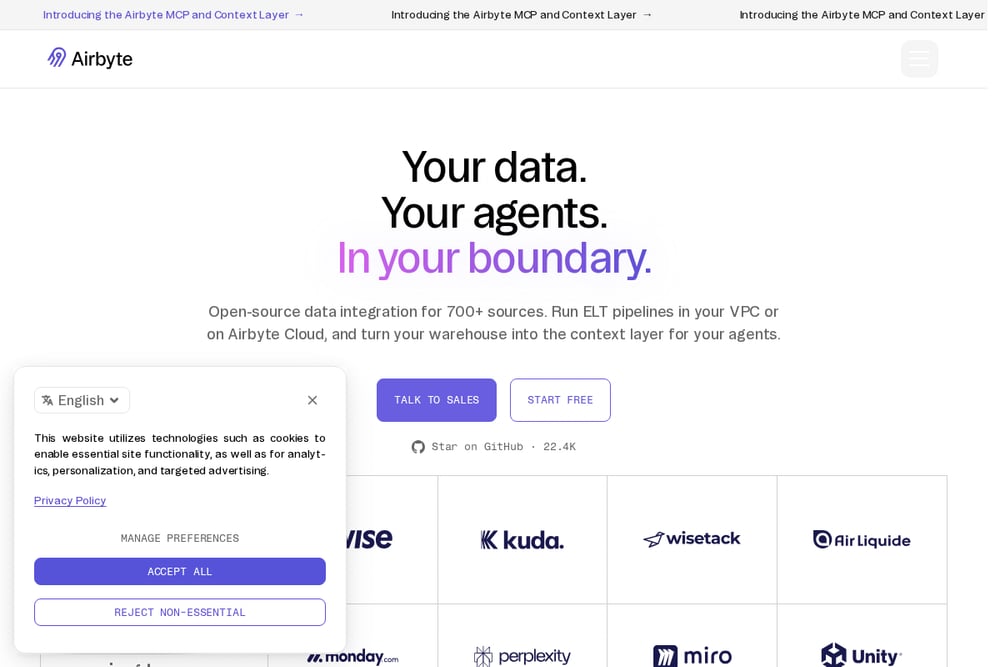 A screenshot of the Airbyte website.
Airbyte is an open-source data integration platform that supports ELT pipelines for a wide range of sources. It can be self-hosted or used via Airbyte Cloud, and it includes a connector builder for custom integrations. The platform also offers an MCP and context layer to turn your warehouse into a context layer for AI agents. It suits teams that value flexibility and open-source options.
#3 Hevo Data
 A screenshot of the Hevo Data website.
Hevo Data offers a fully managed data pipeline platform that combines extraction, loading, and dbt-based modeling. It provides pre-built connectors and a connector builder agent for custom sources. The platform emphasizes ease of use with no-code setup and automatic schema drift handling. It is designed for teams that want a transparent, predictable pricing model.
#4 Estuary
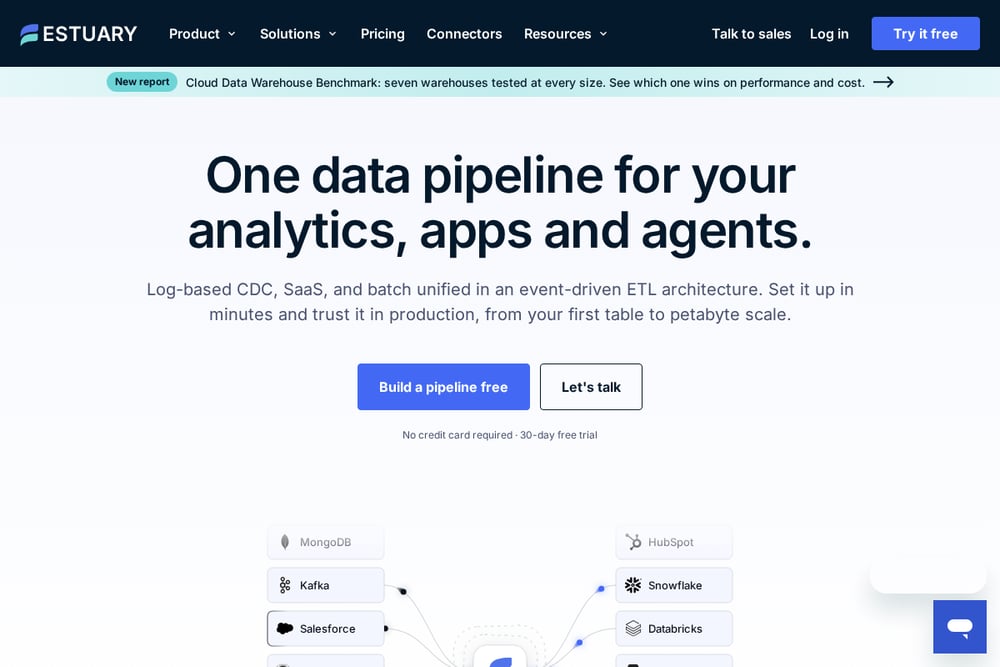 A screenshot of the Estuary website.
Estuary provides a fully managed platform for real-time and batch data integration, unifying CDC, SaaS, and batch sources. It stores data in your own cloud bucket and supports in-flight transformations with Python, SQL, and TypeScript. The platform offers deployment options including public, private, and bring-your-own-cloud. It suits teams that need both real-time and batch data movement with security flexibility.
#5 Portable
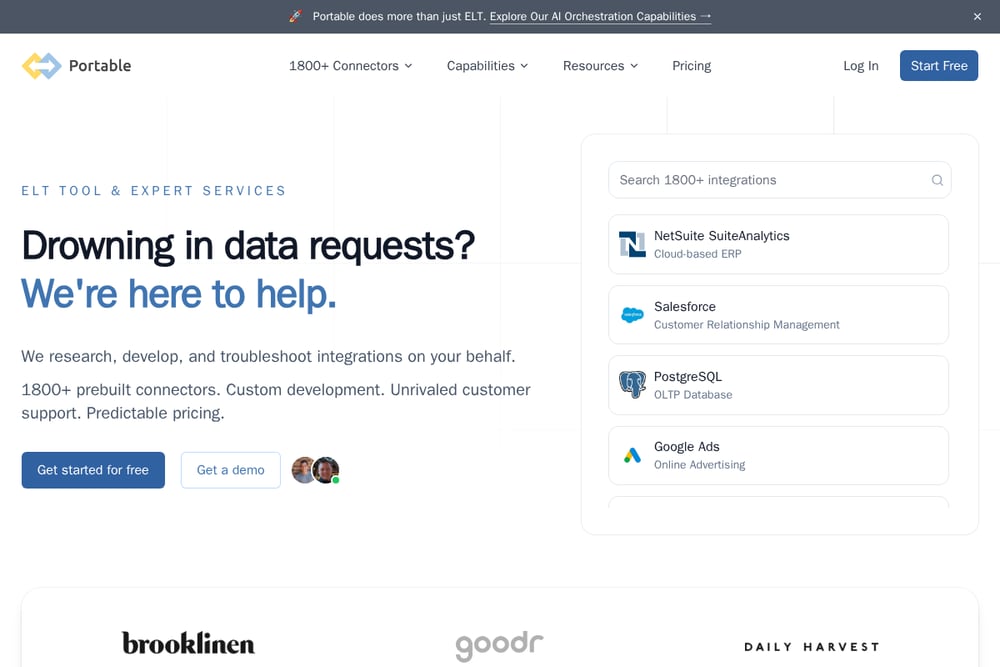 A screenshot of the Portable website.
Portable offers ELT tools and expert services, including a large library of prebuilt connectors and custom development. The company focuses on helping teams with data integration projects by providing research, development, and troubleshooting support. It also provides predictable pricing and a free start option. Portable suits teams that need hands-on assistance with integrations.
Which One Should You Choose?
Consider your team's technical capacity: if you prefer a fully managed service with minimal maintenance, look at Fivetran or Hevo. If you want open-source flexibility and control, Airbyte is a strong option. For real-time and batch needs with deployment flexibility, consider Estuary. If you need expert help and a vast connector library, Portable may fit. Evaluate based on your specific requirements and budget.
Final Thoughts
Each tool on this list addresses different needs of small data teams. Fivetran and Hevo offer managed convenience, Airbyte provides open-source adaptability, Estuary focuses on real-time integration, and Portable adds expert services. There is no single best choice; the right fit depends on your team's skills, budget, and data sources.
Know a company that belongs on this list? Email us at editorial@peekwire.com.