Customer data platforms sit between where events happen and where teams act on them. For B2B SaaS, the choice usually comes down to how much of the warehouse you want to own, how much governance you need, and whether marketing or engineering drives the buying decision. This list covers five platforms worth knowing, each with a different center of gravity. The order is a plain list, not a quality ranking.
How We Picked These Tools
We picked platforms whose public pages describe collecting, unifying, or activating customer data, and that speak directly to SaaS-style use cases such as product events, warehouse-native audiences, and lifecycle marketing. Each entry is backed by quotes taken from the company's own site. No platform is presented as better than another; they differ in architecture and audience.
| Provider | Best For |
|---|---|
| Segment | Teams that want a managed CDP tied to a communications platform |
| Hightouch | Warehouse-first SaaS teams that want to activate existing data |
| RudderStack | Data teams that want warehouse-native pipelines with governance |
| Freshpaint | Privacy-sensitive teams that need compliant marketing data |
| Jitsu | Engineering teams that want an open-source event collection layer |
The 5 Tools in Focus
#1 Segment
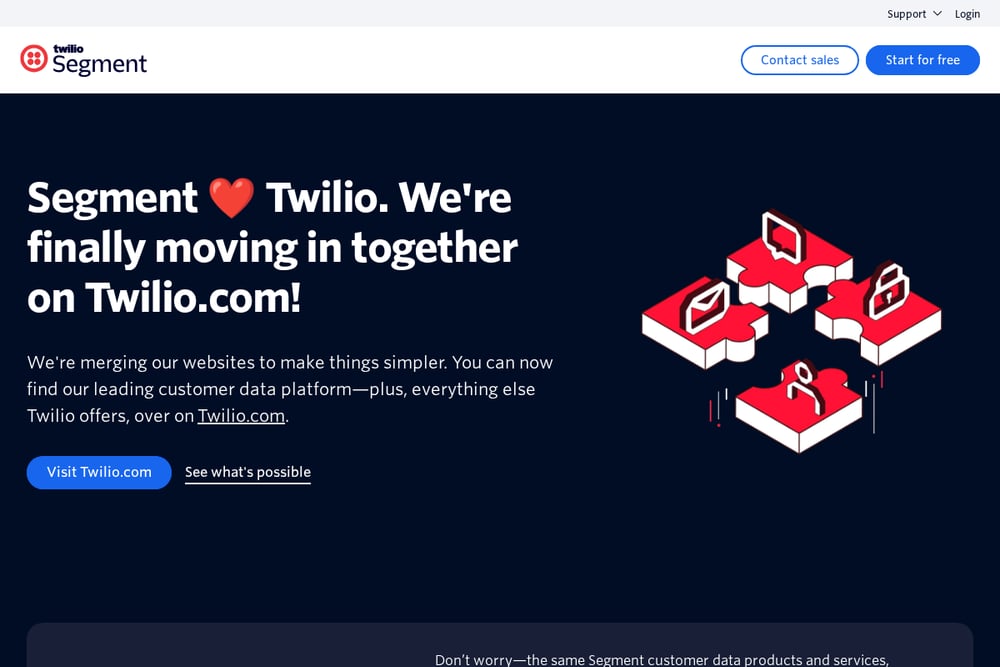 A screenshot of the Segment website.
Segment is a customer data platform within the Twilio ecosystem. It collects customer data and routes it to destinations, and it sits alongside Twilio's communication and engagement products. The site frames the broader platform as connecting communication channels, customer context, and AI. It suits teams that want a managed CDP that plugs into messaging, email, and support tooling.
#2 Hightouch
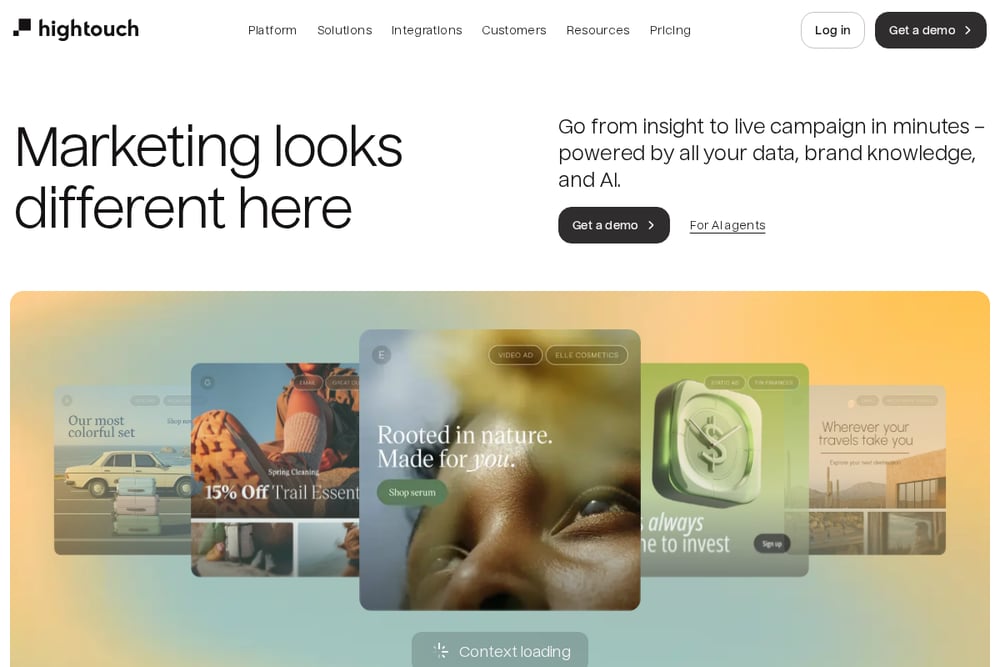 A screenshot of the Hightouch website.
Hightouch describes itself as a composable customer data platform that connects directly to your data warehouse. It offers audience building, reverse ETL, identity resolution, and event collection, plus an agentic marketing layer for campaigns and ads. Because data stays in the warehouse, governance and storage remain under your control. It suits SaaS teams with an existing warehouse that want to activate data without moving it.
#3 RudderStack
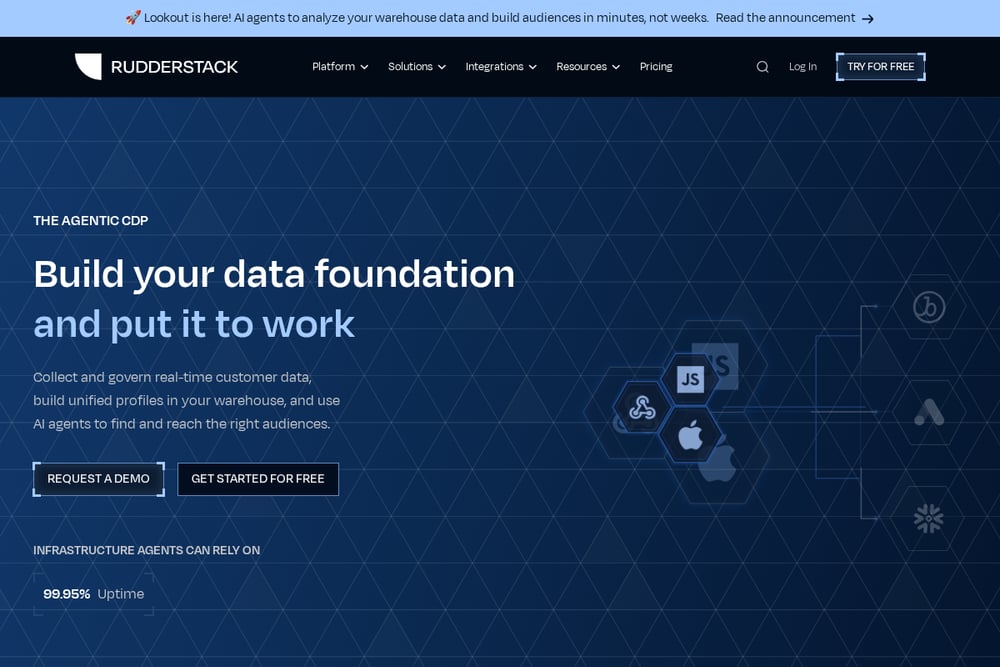 A screenshot of the RudderStack website.
RudderStack calls itself an agentic CDP built around collecting and governing real-time customer data. It builds unified profiles in your warehouse and uses AI agents to find and reach audiences. The platform spans collection, identity resolution, activation, and governance, with a strong emphasis on data quality and compliance. It suits data and engineering teams that want control over pipelines while giving marketers self-serve access.
#4 Freshpaint
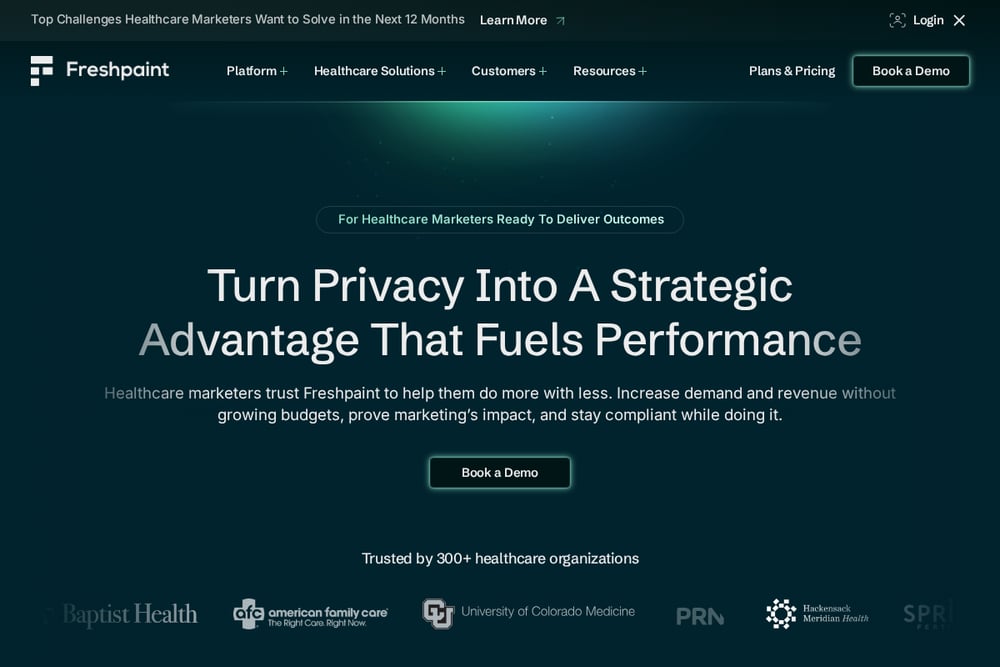 A screenshot of the Freshpaint website.
Freshpaint is a privacy-first platform aimed at healthcare marketers, replacing risky pixels and trackers with a controlled foundation. It covers audience targeting, conversion optimization, ROI measurement, consent management, and web tracker monitoring. The product is built around keeping sensitive data compliant while still running modern marketing tools. It suits SaaS and healthtech teams operating under strict privacy rules who still need performance marketing.
#5 Jitsu
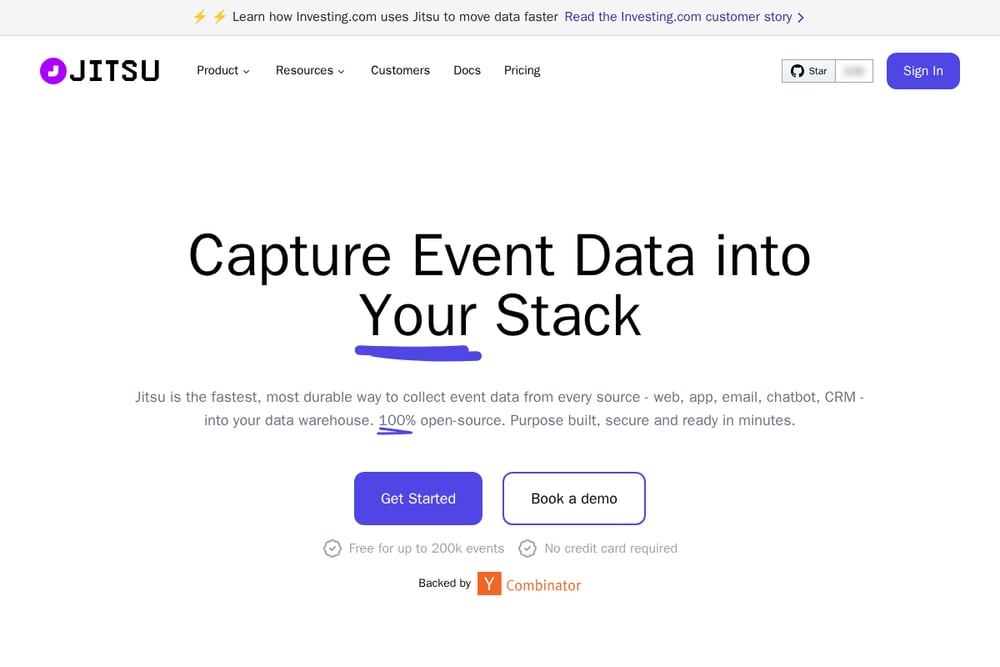 A screenshot of the Jitsu website.
Jitsu focuses on capturing event data from web, app, email, chatbot, and CRM sources into your data warehouse. It is open source and self-hostable, with a warehouse-first design and JavaScript functions for transforming events before storage. Setup is described as adding a tag, similar to a web analytics snippet. It suits engineering-led SaaS teams that want a lightweight, open collection layer feeding their own warehouse.
Which One Should You Choose?
Start with where your data already lives. If you have a mature warehouse and want to keep governance there, warehouse-native options like Hightouch, RudderStack, and Jitsu will feel natural. If you would rather buy a managed platform that connects to messaging and engagement tools, Segment is built for that. If compliance is the constraint, Freshpaint puts privacy controls at the center. Then match the buying team: engineering-led teams tend to favor open, self-hostable collection, while marketing-led teams tend to favor audience builders and campaign tooling.
Final Thoughts
These five platforms overlap in purpose but differ in architecture and audience. Some are managed CDPs tied to broader engagement suites, some are composable layers over your warehouse, one is an open-source collection tool, and one is built around privacy compliance. None is universally better; the right fit depends on your warehouse maturity, your governance needs, and whether engineering or marketing owns the decision.
Know a company that belongs on this list? Email us at editorial@peekwire.com.