
If you're navigating the aftermath of coercive control or a high-control group, finding a practice that truly understands the somatic and relational layers of recovery is vital. These five US-based services offer distinct pathways to reclaim your body, trust, and joy.
The Landscape of Cult Recovery and Somatic Healing
The field of cult recovery has expanded far beyond traditional talk therapy. Today, practitioners blend trauma-informed somatic work, EMDR, and relational coaching to address the nervous system's adaptations to control and fear. As awareness grows around spiritual abuse and high-control environments, more survivors are seeking holistic, body-centered approaches that honor the deep, often unspoken, wounds. This roundup highlights practices that stand out for their specialized focus, ethical grounding, and commitment to empowering individuals on their unique healing journeys.
How We Evaluated These Practices
We assessed each practice on its service scope, clarity of offerings, and alignment with trauma-informed principles. We looked for a clear articulation of how somatic and recovery work is integrated, the accessibility of introductory consultations, and the depth of expertise in coercive control and cult dynamics. Each practice brings a distinct strength, from specialized EMDR to relational therapy and educational training, ensuring a range of options for different needs.
Here's a quick snapshot of the five practices, each offering a unique entry point into healing and empowerment.
| Provider | Best For |
|---|---|
| Center For Healing & Personal Growth | Comprehensive clinical care with forensic expertise |
| Gracefull Awakenings: movement, empowerment, joy | Survivor-led somatic movement and empowerment coaching |
| NobleTree Therapy | Relational and somatic therapy for couples and individuals |
| ThriveWell Therapy | Somatic-informed EMDR for high-control group trauma |
| Traumastery | Professional training and certification in cult recovery |
Detailed Look at Each Practice
#1 Center For Healing & Personal Growth
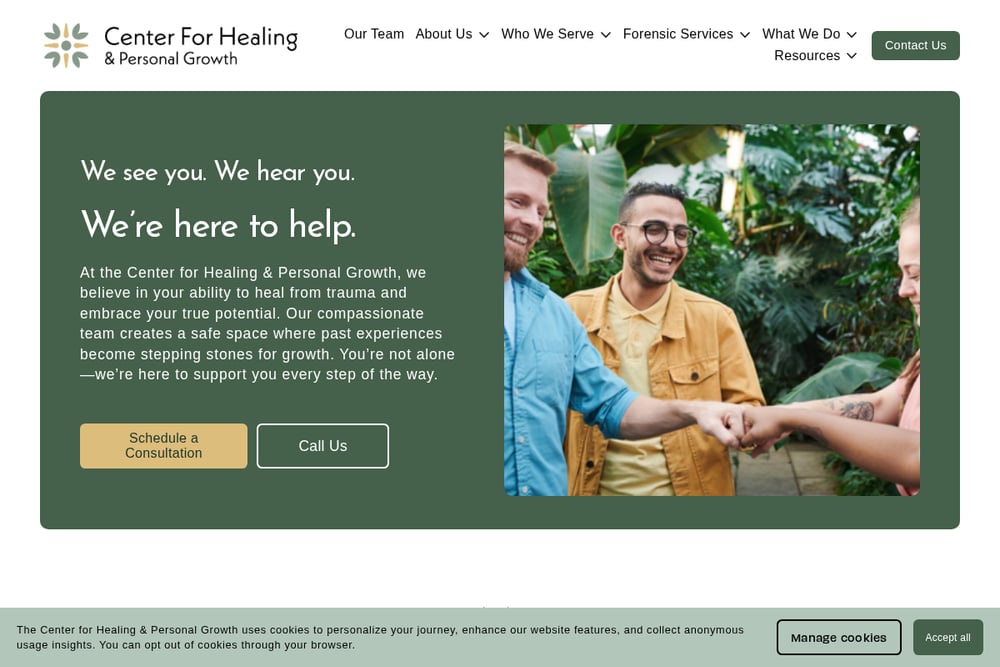 A screenshot of the Center For Healing & Personal Growth website.
This Los Angeles-based center offers a comprehensive range of services, including specialized cult recovery therapy, EMDR, and forensic consultations. They provide both in-person and telehealth options, making their expertise accessible to a wider audience. Their team integrates psychological assessment with somatic and coaching approaches, catering to individuals, couples, and families. If you're seeking a multi-disciplinary team that can address complex trauma with clinical rigor, this is a strong choice. Their website clearly outlines fees and insurance, which adds a layer of transparency for potential clients.
#2 Gracefull Awakenings: movement, empowerment, joy
 A screenshot of the Gracefull Awakenings: movement, empowerment, joy website.
Miranda Grace brings a deeply personal and embodied perspective to recovery, drawing from her own experience as a cult whistleblower and trafficking survivor. Her practice focuses on trauma-informed somatic movement, empowerment coaching, and coercive control recovery, all offered in group and private settings. She emphasizes a safe, ethical, and inclusive space, and provides free emergency advice for those in crisis. Her approach integrates natural cycles, breath, and radical sincerity to help you reconnect with your body and break free from dissociation. The free 20-minute introductory consultation is a welcoming first step for anyone exploring this path.
#3 NobleTree Therapy
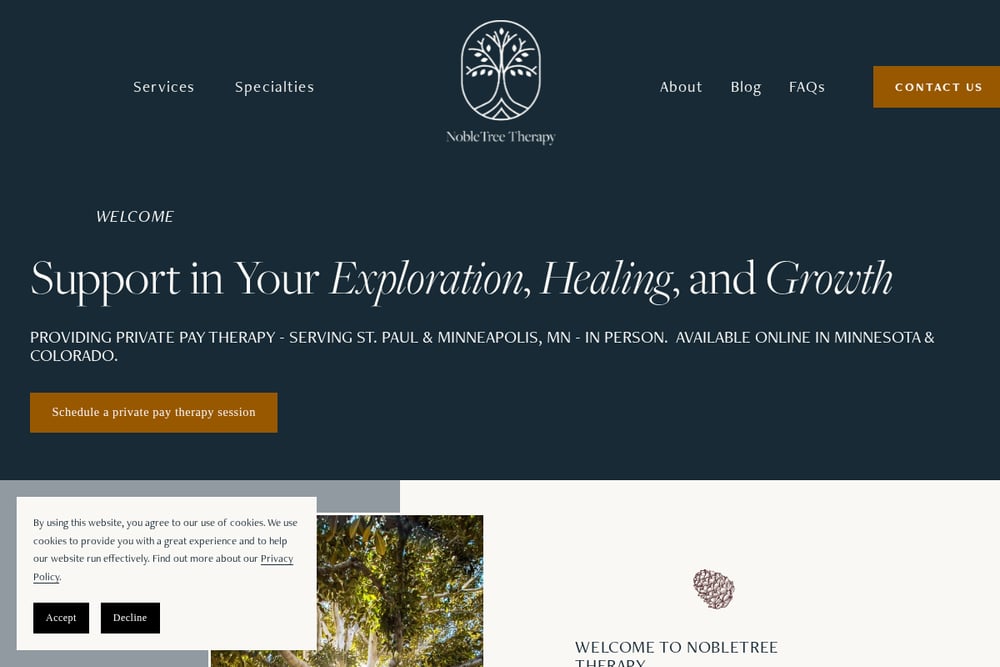 A screenshot of the NobleTree Therapy website.
Based in St. Paul, Minnesota, NobleTree Therapy offers online therapy for adults, couples, and families, with a specialty in religious trauma and spiritual abuse. Their blog post on why cult recovery is relational underscores their understanding that healing happens in connection. They integrate somatic therapy into their work, helping you rebuild trust and safety in relationships after high-control experiences. This practice is particularly suited for those who want to explore how attachment patterns and relational dynamics are impacted by cult involvement. Their focus on creative expression and identity development adds a unique, holistic dimension.
#4 ThriveWell Therapy
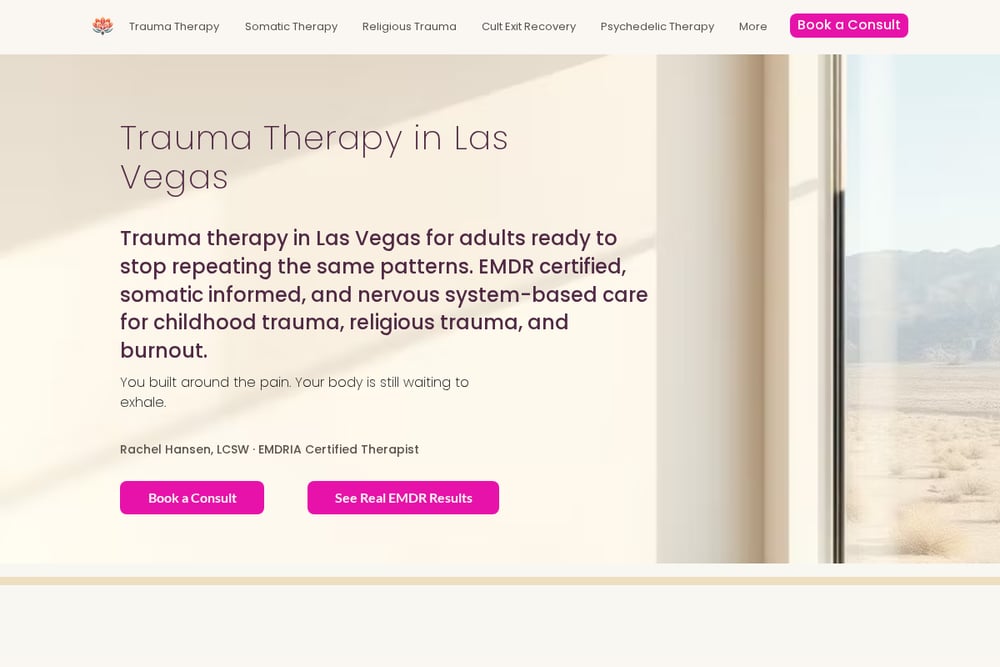 A screenshot of the ThriveWell Therapy website.
Rachel Hansen, an EMDRIA Certified Therapist, leads ThriveWell Therapy with a specialized focus on somatic-informed EMDR for cult recovery. She works with survivors of religious cults, MLMs, wellness groups, and other high-control communities, both in-person in Las Vegas and online across several states. Her approach directly addresses how chronic control rewires the nervous system, helping you move from survival mode to rest. The practice is explicit about the signs of high-control group trauma, making it easier for you to recognize your own experiences. If you're looking for a structured, evidence-based method like EMDR, this is a solid option.
#5 Traumastery
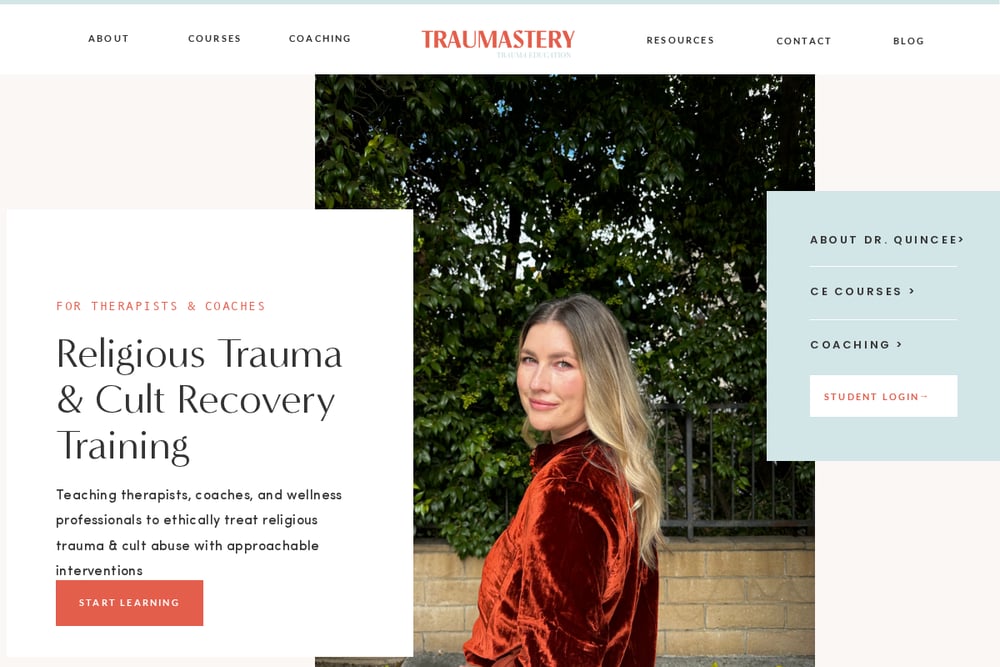 A screenshot of the Traumastery website.
Traumastery, led by Dr. Quincee, focuses on educating therapists, coaches, and wellness professionals to ethically treat religious trauma and cult abuse. While not a direct client service, it offers courses and coaching that equip practitioners with the tools to support survivors effectively. This is an invaluable resource if you're a professional looking to deepen your expertise or if you prefer to work with someone trained through this rigorous program. Their approachable interventions and survivor-led perspective make complex topics accessible. For those seeking to build a career in this niche, Traumastery provides a clear pathway.
How to Choose the Right Practice for You
Start by identifying your primary needs: are you looking for individual somatic sessions, couples therapy, or professional training? Consider whether you prefer a survivor-led approach like Gracefull Awakenings or a more clinical setting like the Center For Healing & Personal Growth. Think about logistics—do you need online sessions across state lines, or is in-person care important? Also, reflect on the therapeutic modality: EMDR, somatic movement, or relational talk therapy each offer different entry points. Finally, take advantage of free consultations where offered, as they can give you a feel for the practitioner's style and safety.
Streamlining Your Search for Healing
To efficiently compare these practices, create a simple spreadsheet with columns for location, services offered, insurance acceptance, and consultation availability. Use the websites to fill in the details, and note any free resources like blogs or guides that can help you learn more. Set up a calendar reminder to book a consultation with your top two choices, and prepare a list of questions about their experience with coercive control and somatic approaches. This structured approach ensures you make an informed decision without feeling overwhelmed.
Bringing It All Together
Each of these five practices offers a unique and valuable pathway to recovery from cult and coercive control experiences. Whether you're drawn to the embodied empowerment of Gracefull Awakenings, the clinical depth of the Center For Healing & Personal Growth, or the relational focus of NobleTree Therapy, there's a fit for your journey. Remember that healing is not linear, and finding the right support is a courageous step. Take your time, explore your options, and trust your intuition as you move toward greater freedom and joy.