
If you're building for a world where passwords are obsolete, these five platforms are rewriting the rules of authentication. From hardware-anchored keys to threshold-based wallets, here's what you need to know.
The Shift to Possession-Based Identity
The era of password-based authentication is ending, and the industry is moving toward possession-based identity models. Cryptographic keys, split across devices or secured in hardware, are becoming the new standard for proving who you are. This shift is driven by the need to eliminate single points of compromise and to support autonomous agents that require verifiable authority. As developers and DevOps teams seek more robust solutions, the focus is on protocols that are both secure and user-friendly. The market is now crowded with innovative approaches, each offering a unique take on key management and recovery.
How We Evaluated These Platforms
We assessed each solution on its core security architecture, ease of integration for developers, and the clarity of its recovery and revocation processes. We also considered how well each platform addresses the specific needs of AI agents and automated workflows. The goal was to highlight what makes each approach distinct, not to declare a single winner. Each platform excels in different areas, from hardware anchoring to multi-party computation.
Here's a quick look at the five platforms we're diving into, each with its own approach to cryptographic identity.
| Provider | Best For |
|---|---|
| MetaMask Embedded Wallets | Web3 developers seeking embedded wallet infrastructure |
| Gong — Cryptographic Identity for AI Agents | Developers and DevOps teams needing hardware-anchored, multi-device identity |
| fragmentiX | Organizations needing keyless, distributed data protection |
| Openfort | Game developers and stablecoin platforms needing audited SSS libraries |
| HYPR | Enterprises seeking phishing-resistant, adaptive authentication |
The Deep Dive: Five Approaches to Cryptographic Identity
#1 MetaMask Embedded Wallets
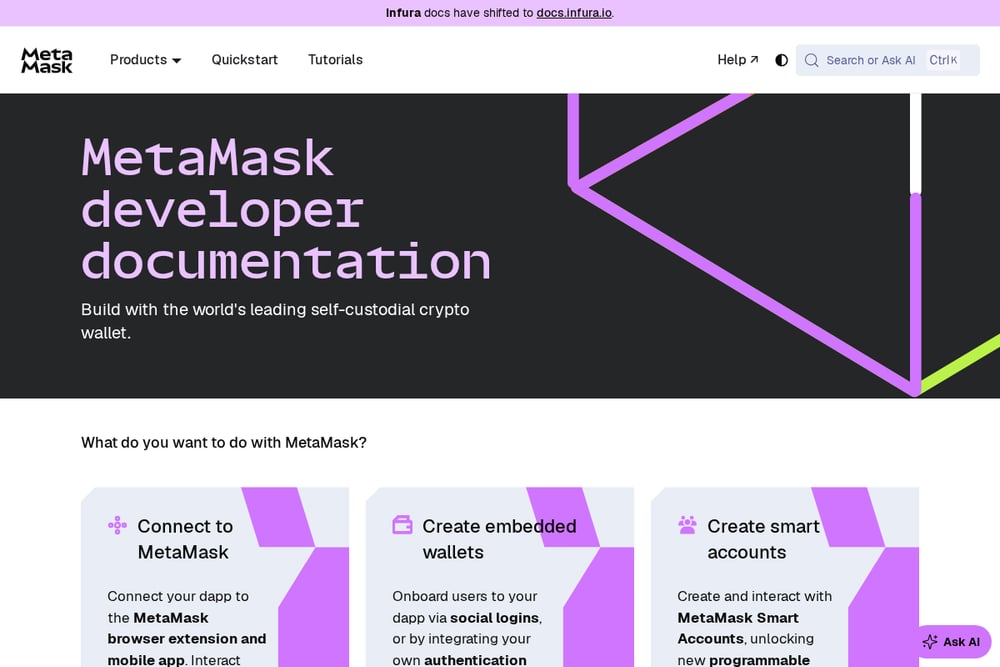 A screenshot of the MetaMask Embedded Wallets documentation site.
MetaMask's embedded wallets use Shamir's Secret Sharing to split private keys into shares, with a threshold required to reconstruct them. This architecture is designed for seamless integration into dapps, offering a smooth login experience without compromising security. The documentation is thorough, making it a solid choice for developers building on EVM-compatible chains. It's particularly strong for Web3 applications where user onboarding needs to be frictionless. The SSS-based SDKs are a base form of multi-party computation, providing a robust foundation for key management. For developers already in the MetaMask ecosystem, this is a natural fit.
#2 Gong — Cryptographic Identity for AI Agents
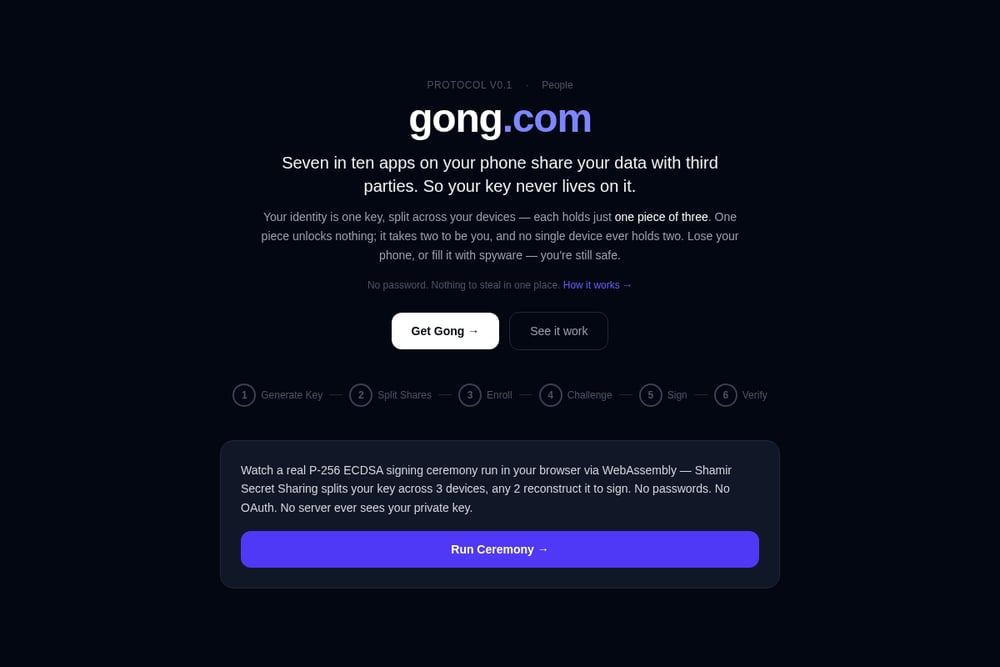 A screenshot of the Gong website.
Gong offers a hardware-anchored identity protocol that splits your key across three devices, requiring any two to reconstruct it for signing. This approach ensures that no single device holds enough to compromise your identity, and recovery is straightforward if you lose one. The protocol uses Shamir Secret Sharing and P-256 ECDSA, with signing happening inside a secure MCU on hardware keys. It's designed for developers and DevOps professionals who need a device-agnostic, passwordless solution. The ceremony-based authentication means the signature itself is the proof, eliminating session lookups and policy engines. For AI agents, this provides a verifiable authority that can sign commitments and audit everything.
#3 fragmentiX
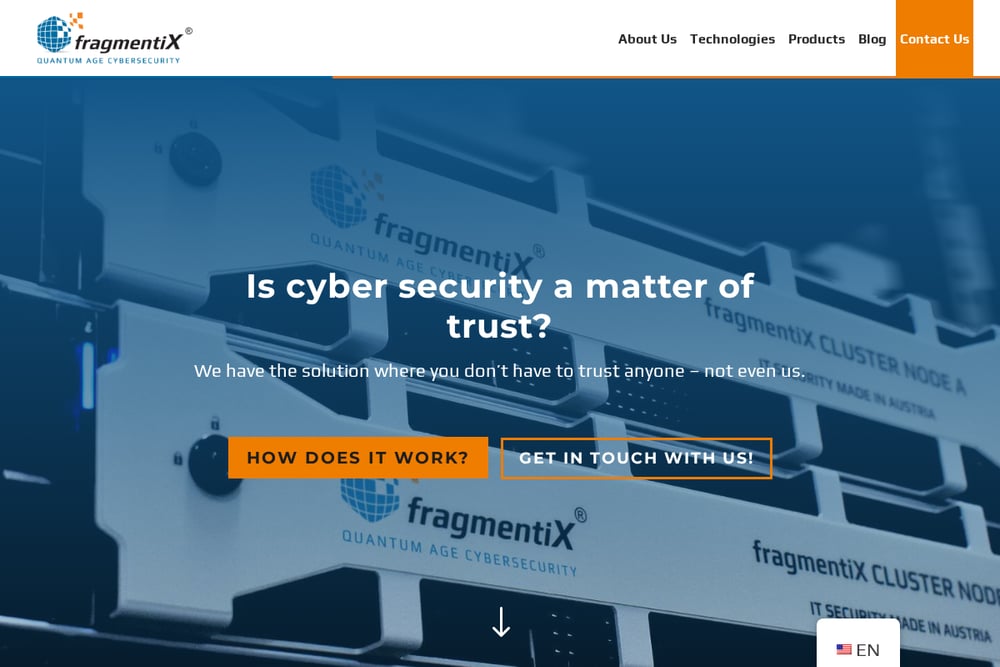 A screenshot of the fragmentiX website.
fragmentiX leverages secret sharing to build secure, distributed cloud storage systems, ensuring data remains protected even if parts of the system fail. Their approach is keyless, eliminating the need for a single trusted entity to control a key. This makes it particularly powerful for scenarios where centralized control is a liability. The technology is rooted in Adi Shamir's classic scheme, extended for modern resilience. For organizations prioritizing data sovereignty and resilience, fragmentiX offers a compelling alternative to traditional encryption. Their focus is on the storage layer, making it a niche but critical piece of the identity puzzle.
#4 Openfort
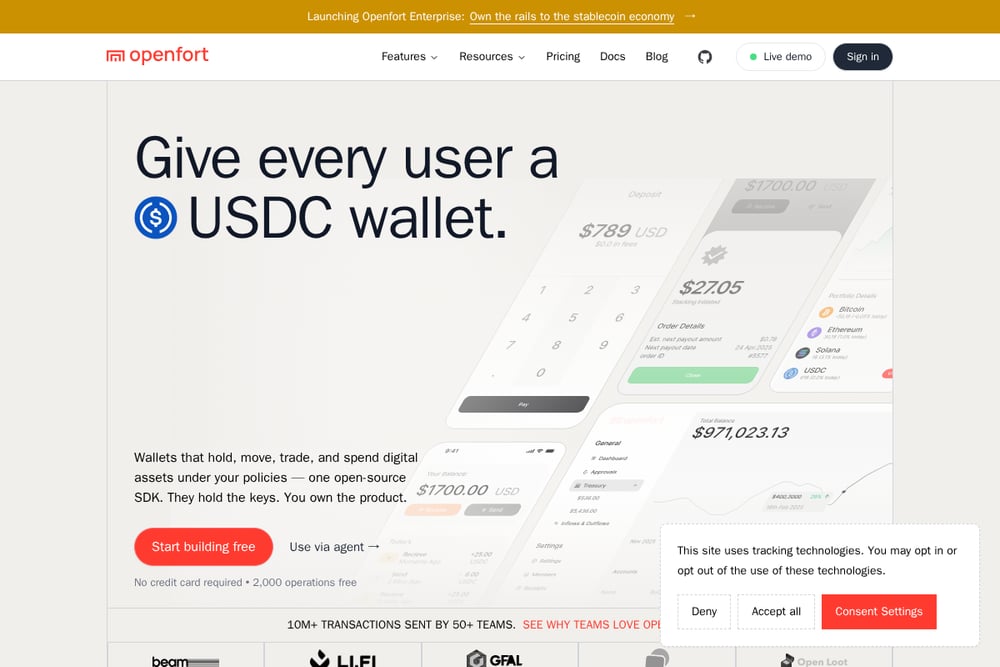 A screenshot of the Openfort website.
Openfort provides a Shamir Secret Sharing library implemented in Go, which has passed a security audit by Cure53. This library powers their non-custodial wallet infrastructure, giving players a smooth login experience without compromising security. The audit adds a layer of trust for developers who need to verify the cryptographic foundation of their systems. Openfort's focus on the gaming and stablecoin economy makes it a specialized tool for those verticals. Their commitment to open source allows for community review and customization. For developers looking for a battle-tested SSS implementation, Openfort is a solid reference.
#5 HYPR
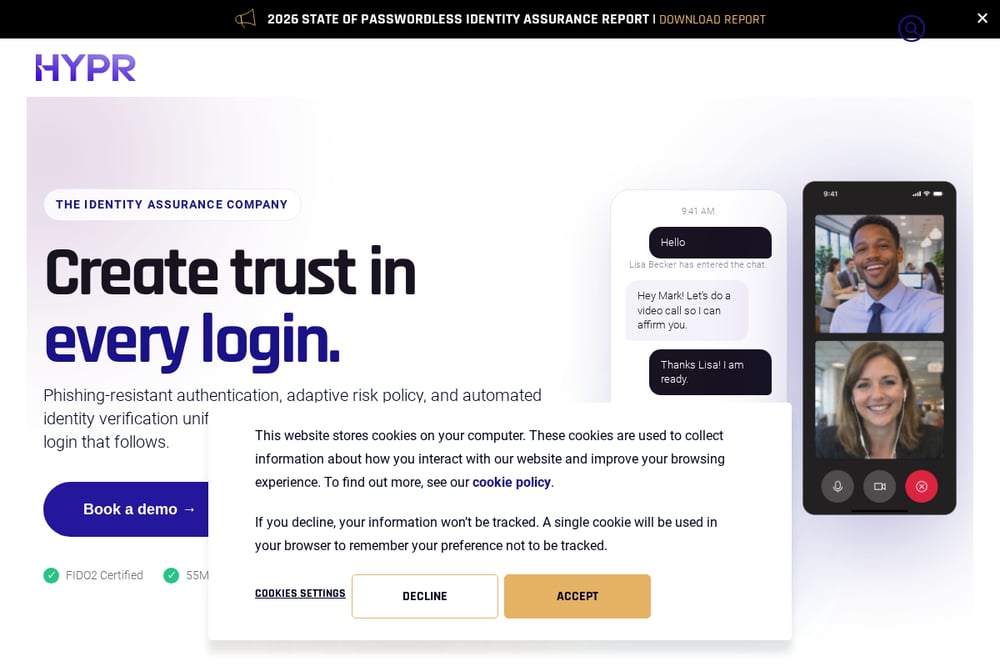 A screenshot of the HYPR website.
HYPR offers a comprehensive identity assurance platform that includes passwordless MFA and adaptive authentication. Their approach is phishing-resistant, using passkeys and FIDO2 standards to secure access. HYPR integrates with major IAM environments like Entra ID, Okta, and Ping, making it a practical choice for enterprises. They also provide an AI gateway and agent control plane for secure enterprise AI, addressing the growing need for agent identity. With a focus on zero trust, HYPR helps organizations prevent credential-based attacks. Their solutions are designed for workforce and customer identity, offering a broad range of deployment options.
How to Choose the Right Cryptographic Identity Solution
Start by assessing your threat model: are you more concerned about device loss, server compromise, or phishing? If you need hardware-anchored security with multi-device recovery, Gong's approach is worth a look. For Web3 integrations, MetaMask's embedded wallets are a natural fit. If you're focused on data storage resilience, fragmentiX offers a keyless alternative. Openfort is ideal if you're in gaming or stablecoins and need an audited library. HYPR is the enterprise choice for integrating with existing IAM systems. Consider your team's technical expertise and the level of control you need over the key management process.
Automating Identity for AI Agents
For AI agents, the key is to enable them to sign commitments and verify authority without human intervention. Gong's protocol allows agents to use the same possession-proven identity, with the signature serving as proof. This can be integrated into CI/CD pipelines or automated workflows where agents need to authenticate to services. The ceremony-based approach ensures that the private key is never exposed, even during automated signing. By leveraging hardware keys, you can maintain a high level of security while enabling autonomous operations. This is a game-changer for DevOps teams looking to secure their agent ecosystems.
The Future of Identity is Split, Not Stored
The common thread across these five solutions is the move away from centralized secrets. Whether it's splitting keys across devices or using multi-party computation, the goal is to eliminate single points of failure. For developers, this means more robust and user-friendly authentication. For enterprises, it means stronger security postures and compliance readiness. As AI agents become more prevalent, the need for verifiable, hardware-anchored identity will only grow. The platforms we've explored are at the forefront of this shift, each offering a unique path forward. Your choice will depend on your specific use case, but the direction is clear: identity is becoming something you possess, not something you remember.