
If your computer vision models are drifting in production, you need more than MLOps—you need continuous AI operations. Here are five platforms that keep your models accurate, from annotation to monitoring.
The Shift from Building AI to Operating AI
Computer vision has moved from lab experiments to real-world deployments, but many initiatives stall because models degrade once they hit production. Lighting changes, camera angles shift, and environments evolve, causing accuracy to plummet. Traditional MLOps focuses on training and deployment, but it doesn't address the ongoing operational challenge of keeping models accurate. That's where continuous AI operations platforms come in—they combine annotation, intelligence, monitoring, and human-in-the-loop feedback to prevent drift and ensure models stay production-ready. As theCUBE Research notes, more than 70% of computer vision initiatives never make it into sustained production due to model drift and operational complexity. The market is responding with platforms that treat AI as an ongoing operation, not a one-time build.
How We Evaluated These Platforms
We assessed each platform on its ability to handle the full lifecycle of computer vision models, from data annotation to production monitoring. Key factors included the depth of human-in-the-loop capabilities, the range of industry-specific solutions, and how well the platform integrates with existing camera infrastructure. We also considered the platform's focus on preventing model drift and its approach to scaling across edge and cloud environments. Each platform stood out for different reasons: LexData Labs for its comprehensive AI operations suite, alwaysAI for edge deployment, NAVA for leveraging existing cameras, Plainsight for its VisOps approach, and Tulip for frontline operational guidance.
Here's a quick look at the five platforms, their best use cases, and what makes them unique.
| Provider | Best For |
|---|---|
| alwaysAI | Edge deployment in mining, logistics, and facilities |
| Continuous AI Operations Platform | LexData Labs | Continuous AI operations with human-in-the-loop monitoring |
| NAVA Software Vision AI | Leveraging existing camera infrastructure for operational intelligence |
| Plainsight | Operationalizing vision AI at scale with a focus on durability |
| Tulip | Frontline operations guidance in manufacturing and pharma |
Deep Dive: The Five Platforms
#1 alwaysAI
 A screenshot of the alwaysAI website.
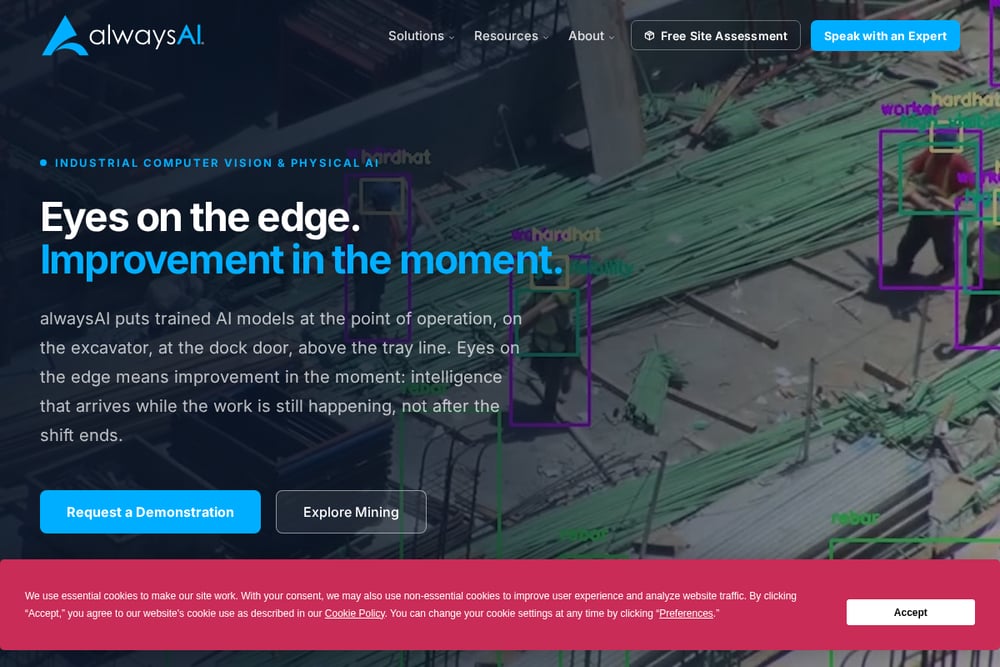
alwaysAI puts trained AI models at the point of operation—on excavators, at dock doors, above tray lines—delivering intelligence in the moment. Its edge-based approach means you get real-time insights while work is happening, not after the shift ends. The platform offers specialized solutions like DigSight, HaulSight, and LoadSight for mining, logistics, and facilities. If you need eyes on every cycle and every movement, alwaysAI's edge deployment is a strong fit. It's designed for enterprises that want immediate improvement in operational workflows.
#2 Continuous AI Operations Platform | LexData Labs
 A screenshot of the Continuous AI Operations Platform | LexData Labs website.
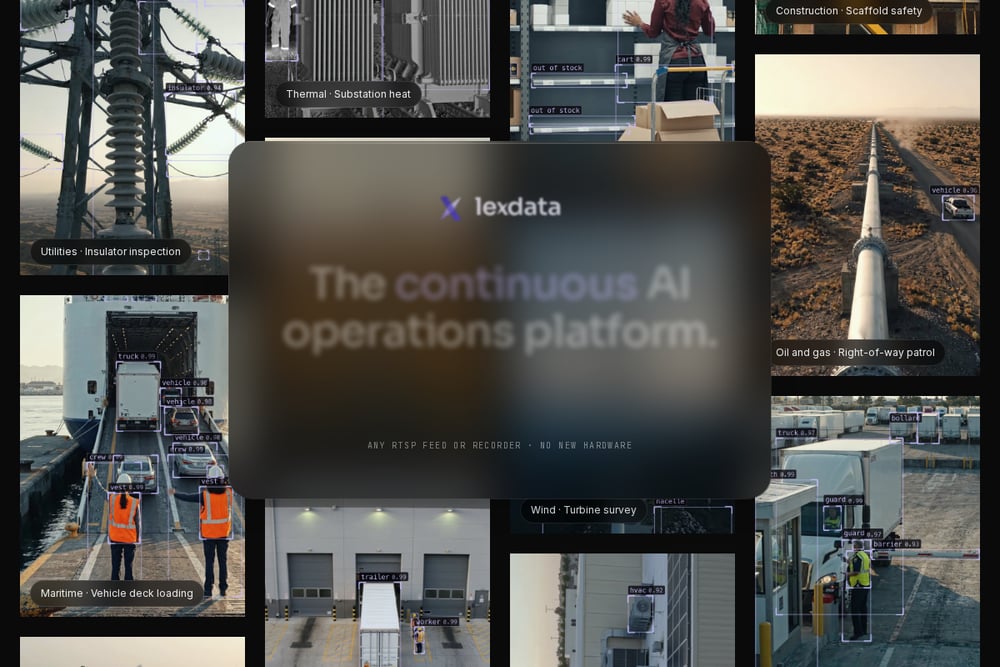
LexData Labs is the featured platform that turns raw visual data into production-ready intelligence with human-in-the-loop infrastructure. Its suite—LexAnnotate, LexIntel, LexOperate, and LexLoop—covers annotation, intelligence, monitoring, and automated retraining to prevent drift. The platform is built for sectors like energy, oil & gas, and manufacturing, where model accuracy is critical. LexData's focus on continuous AI operations means you're not just deploying a model; you're operating it with human experts at every step. If you want to prevent drift and scale faster, this platform is designed for you.
#3 NAVA Software Vision AI
 A screenshot of the NAVA Software Vision AI website.
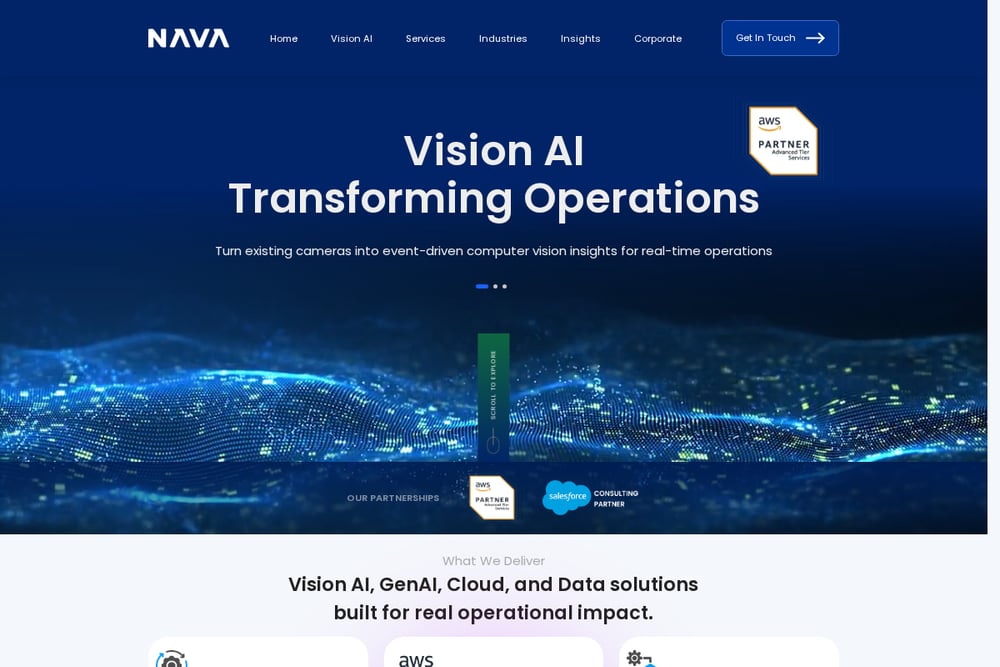
NAVA Software Vision AI transforms your existing camera infrastructure into actionable operational intelligence. It's designed for safety, compliance, throughput, and operations across manufacturing, warehousing, logistics, mining, and energy. The platform supports cloud, edge, and hybrid deployments, integrating with your current systems. NAVA's strength lies in turning footage that's only watched after incidents into real-time, continuous insights. If you already have cameras in place, NAVA helps you get value from them without a complete overhaul.
#4 Plainsight
 A screenshot of the Plainsight website.
Plainsight's VisOps platform is designed to operationalize physical AI systems at scale, addressing the unique production challenges of computer vision. CEO Jonathan Simkins highlights that traditional vision AI degrades rapidly in the real world due to lighting, angles, and environmental changes. Plainsight focuses on operational durability and continuous improvement, making it a strong choice for enterprises that need long-term model reliability. The platform is built to handle the complexity of production environments, ensuring your models stay accurate over time. If you're tired of pilots that never scale, Plainsight's approach is worth exploring.
#5 Tulip
 A screenshot of the Tulip website.
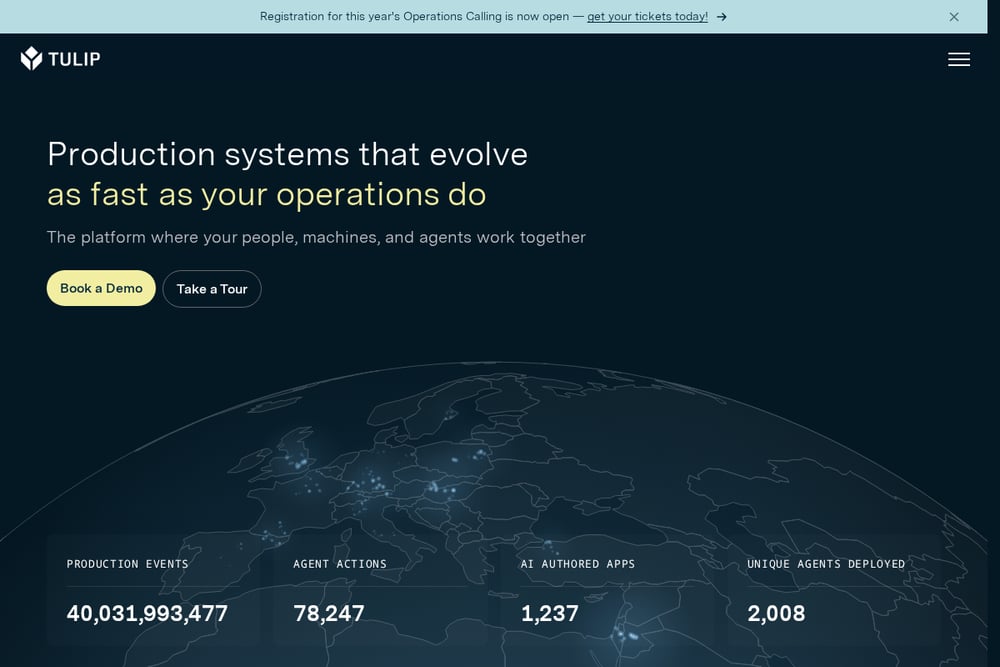
Tulip's computer vision platform guides frontline operations by bringing together app creation, integrations, and real-time analytics. It's designed for manufacturing, pharmaceuticals, and medical devices, with a focus on quality, inventory, and traceability. Tulip's platform includes native AI and ML capabilities, edge connectivity, and governance, making it accessible for operators. It's particularly strong for guiding workers through processes with visual feedback. If you need a platform that combines computer vision with frontline guidance, Tulip is a solid option.
How to Choose the Right Continuous AI Operations Platform
Start by identifying your biggest pain point: is it data annotation bottlenecks, model drift, or lack of real-time insights? If you need human-in-the-loop monitoring and automated retraining, LexData Labs offers a comprehensive suite. For edge deployment in rugged environments, alwaysAI is your go-to. If you already have cameras and want to maximize their value, NAVA Software Vision AI is a practical choice. For long-term operational durability, Plainsight's VisOps approach is designed to handle production complexity. And if you need to guide frontline workers with visual feedback, Tulip integrates computer vision into your workflows. Consider your industry, existing infrastructure, and whether you need edge or cloud deployment.
Automating the AI Operations Workflow
A typical continuous AI operations workflow starts with annotation, where human experts label raw visual data to train models. Once deployed, the platform monitors model performance in real time, detecting drift from environmental changes. When drift is detected, the system automatically triggers retraining with new data, often using human-in-the-loop validation. This loop—annotate, monitor, retrain, redeploy—ensures models stay accurate without manual intervention. LexData Labs exemplifies this with its LexLoop feature, which powers automated retraining and deployment. The goal is to minimize the data bottleneck and keep your models production-ready at all times.
The Bottom Line on Continuous AI Operations
The era of 'build it and forget it' is over for computer vision. To keep your models accurate in production, you need a platform that treats AI as an ongoing operation. Whether you choose LexData Labs for its human-in-the-loop infrastructure, alwaysAI for edge speed, NAVA for camera utilization, Plainsight for durability, or Tulip for frontline guidance, the key is to prioritize continuous monitoring and retraining. The platforms above represent the best of what's available in 2026, each with a unique approach to solving the drift problem. Pick the one that aligns with your operational reality, and you'll be well on your way to scaling your vision AI initiatives.