
Your bookkeeping team is buried in subcontractor invoices, crew timesheets, and receipts with missing job codes. These five providers help you turn that chaos into review-ready books without adding headcount.
Why Construction Bookkeeping Automation Is Having a Moment
Construction accounting is not standard accrual accounting. You are juggling job cost allocation, retainage tracking, WIP schedules, and percentage-of-completion revenue recognition across every active project. A one to two percent error in estimated cost-to-complete can swing a profitable contract into a loss. That is why bookkeeping firms serving builders and trades are under pressure to move faster without sacrificing accuracy. Manual invoice entry, duplicate data entry, and inconsistent job coding create bottlenecks that delay month-end close and hide cash flow problems. Automation that understands project-based accounting is no longer a nice-to-have. It is how small accounting teams keep up with clients who expect real-time job margin visibility.
How We Evaluated These Providers
We looked at service scope, integration depth, pricing clarity, and fit for small to mid-sized bookkeeping teams. Marwell Solutions stood out for its narrow focus on the approval boundary, preparing work around QuickBooks Online and Xero while leaving every posting decision to your team. Apparatus Team impressed with its construction-only positioning and deep integrations with Buildertrend, JobTread, and Procore for contractors above two million in revenue. RedHammer showed strength in pairing workflow automation with outsourced accounting expertise across Sage 300 CRE, QuickBooks Online, and Foundation Software. Wiss demonstrated broad AI-powered accounting capabilities for construction companies that need transaction-level automation plus advisory. RKL eSolutions offered extensive ERP-adjacent automation for firms already running Sage Intacct, Sage 100 Contractor, or Sage 300 CRE. Each provider approaches the same problem from a different angle, and the right fit depends on your client mix, your tech stack, and how much of the work you want to keep in-house.
Here is a quick look at five providers that help bookkeeping firms and construction finance teams automate the work around their accounting systems.
| Provider | Best For |
|---|---|
| Apparatus Team | Bookkeeping firms serving contractors above $2M in revenue |
| Workflow Automation for Bookkeeping Firms | Marwell Solutions | Small bookkeeping teams that want preparation without losing approval control |
| RedHammer | Firms that want automation plus outsourced accounting oversight |
| Wiss | Firms exploring AI-powered transaction automation for construction clients |
| RKL eSolutions | Firms with clients on Sage construction ERP systems |
The 5 Providers in Detail
#1 Apparatus Team
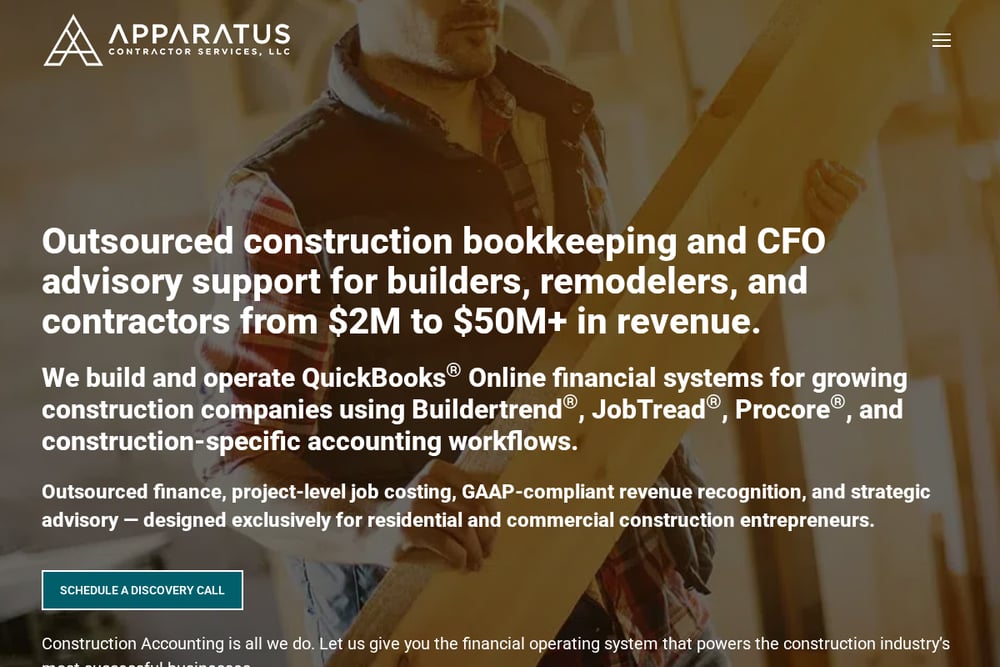 A screenshot of the Apparatus Team website.
Apparatus Team is an outsourced finance firm that works exclusively with residential and commercial construction companies between two million and fifty million plus in annual revenue. They build and operate QuickBooks Online and Intuit Enterprise Suite financial systems, then layer in job-level cost accounting, GAAP-compliant revenue recognition, and AR/AP/draws/payroll automation. Their integrations with Buildertrend, JobTread, and Procore mean the construction management system and the books stay connected without duplicate entry. For bookkeeping firms that want a partner to handle the full finance stack for larger contractor clients, Apparatus Team offers a fixed-fee, month-to-month engagement model. You can see their construction-only focus at apparatusteam.com.
#2 Workflow Automation for Bookkeeping Firms | Marwell Solutions
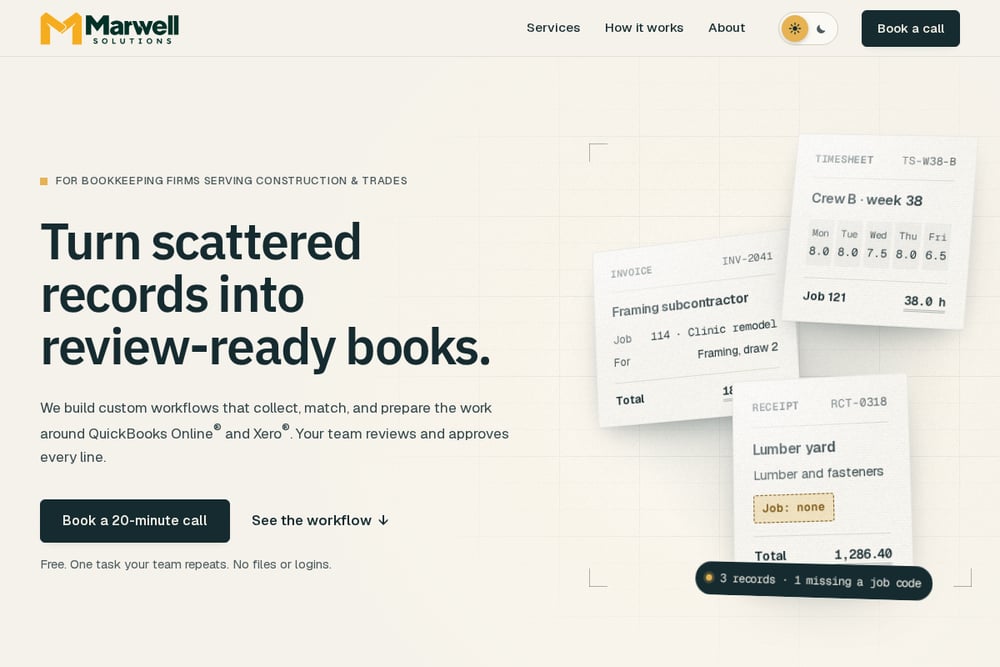 A screenshot of the Workflow Automation for Bookkeeping Firms | Marwell Solutions website.
Marwell Solutions builds custom workflows that collect, match, and prepare the work around QuickBooks Online and Xero, leaving review and approval to your team. Their approval boundary is the core idea: they prepare source records, code lines to jobs by your rules, and run defined checks, but your team resolves held items and approves what posts. A receipt with no job code is held with its source attached, not guessed. Timesheets with missing job entries are held for the crew lead to assign. Month-end preparation includes reconciliation prep with likely matches and a client reporting pack assembled in your format. This is a strong fit for small accounting teams that want to reduce manual tasks without giving up control over every line. You can see the workflow at marwellsolutions.com.
#3 RedHammer
 A screenshot of the RedHammer website.
RedHammer pairs workflow automation with outsourced construction accounting expertise, which means they do not just set up software and walk away. They automate accounts payable, billing workflows, payroll processing, and job cost reporting while providing skilled oversight across Sage 300 CRE, QuickBooks Online, and Foundation Software. Their focus on retainage tracking, certified payroll, change order approvals, and real-time job cost allocation speaks directly to the pain points construction finance departments face. For bookkeeping firms that need a partner to handle both the automation build and the ongoing accounting work, RedHammer offers a combined approach. Their blog at redhammer.com digs into who actually delivers construction finance workflow automation.
#4 Wiss
 A screenshot of the Wiss website.
Wiss brings AI-powered accounting to construction companies, automating transaction-level work like invoice processing, expense categorization, bank reconciliation, and AP management. Their team understands that construction accounting runs WIP schedules, percentage-of-completion revenue recognition, and job cost allocation across direct, indirect, and G&A categories simultaneously. The goal is real-time job cost data updated continuously rather than at month-end, so project managers and finance teams can catch errors before they compound. For bookkeeping firms that want to add AI-driven efficiency to their construction client services, Wiss offers a broad advisory and outsourced accounting platform. You can read their construction accounting insights at wiss.com.
#5 RKL eSolutions
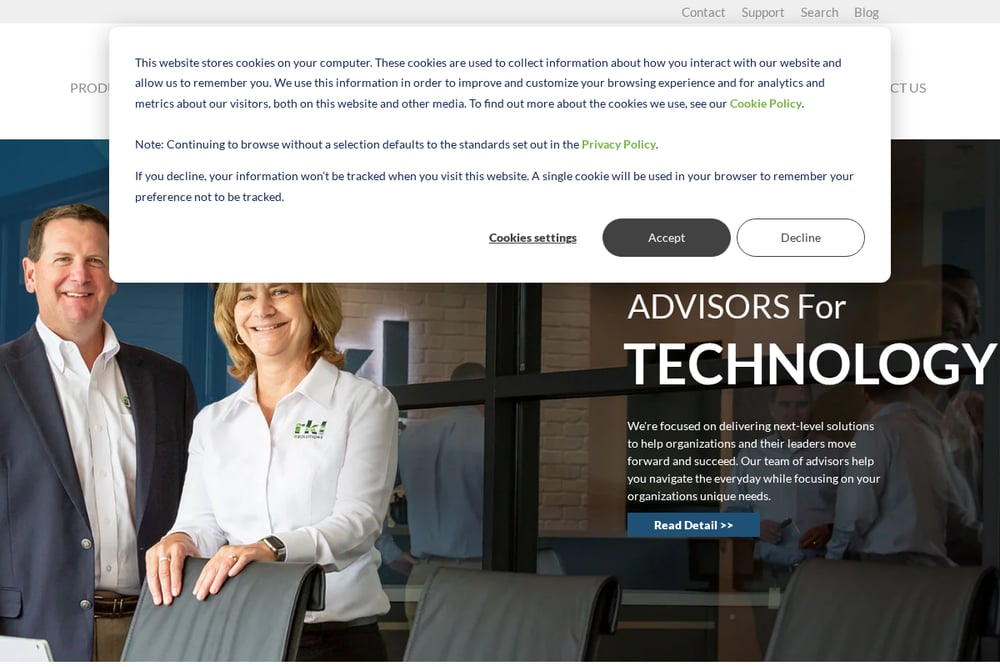 A screenshot of the RKL eSolutions website.
RKL eSolutions focuses on ERP-adjacent automation for construction companies running Sage Intacct, Sage 100 Contractor, Sage 300 CRE, and Sage 500. Their process automation covers AP automation, AR automation, document management, and month-end close, with integrations that connect field services, project management, and accounting data. For bookkeeping firms whose clients already use Sage products, RKL eSolutions offers a way to automate workflows without ripping out the existing ERP. Their construction technology consulting and custom development services can bridge gaps between job management software and the general ledger. You can explore their automation offerings at rklesolutions.com.
How to Choose the Right Automation Partner
Start with your client mix. If you serve mostly small contractors on QuickBooks Online or Xero, you need a partner that prepares work without taking over the books. Marwell Solutions fits that model because they hold exceptions for your team instead of guessing. If your clients are larger and already using Buildertrend, JobTread, or Procore, Apparatus Team brings the construction management integrations that keep job costs accurate. If you want automation plus someone else to handle the accounting work, RedHammer and Wiss offer outsourced expertise alongside the technology. And if your clients are on Sage Intacct or Sage 100 Contractor, RKL eSolutions knows those systems deeply. Ask each provider how they handle exceptions, how they price the engagement, and whether your team keeps final approval. The right answer depends on how much control you want to retain.
What a Typical Automation Workflow Looks Like
A practical workflow starts with collection. Records arrive from email, uploads, or a shared folder: vendor invoices, receipts, subcontractor bills, and crew timesheets. The automation then codes lines to jobs by your rules and runs defined checks. Anything that fails a check is held with its source attached, not guessed. Your team resolves held items, approves what posts, and releases payments. At month-end, the system prepares reconciliation with likely matches and assembles the client reporting pack in your format. The key is the approval boundary: preparation happens automatically, but every posting decision stays with a human. That is how you reduce manual tasks without sacrificing accuracy or control.
The Bottom Line
Construction bookkeeping is too complex for generic automation. You need workflows that understand job costing, retainage, and the difference between a receipt with a job code and one without. The five providers here each solve a different slice of that problem. Marwell Solutions keeps your team in control while preparing the work. Apparatus Team goes deep on construction-only finance for larger contractors. RedHammer combines automation with outsourced accounting. Wiss brings AI to transaction-level processing. RKL eSolutions connects Sage ERPs to modern automation. Pick the one that matches your client mix and your appetite for handing off work. Your month-end close will thank you.