
Compliance doesn't have to be a startup killer. These five platforms help you automate the grind, win enterprise deals, and keep your engineering team focused on building.
The Compliance Automation Landscape in 2026
For SaaS startups, compliance is no longer optional—it's a sales enabler. Enterprise buyers and partners increasingly demand SOC 2, ISO 27001, or HIPAA attestation before they'll even take a meeting. But traditional compliance programs are built for large corporations with dedicated security teams, leaving startups drowning in spreadsheets, evidence collection, and audit prep. That's where compliance automation platforms step in. They streamline evidence gathering, automate policy management, track risks, and even help you find the right auditor. The market has exploded with options, from all-in-one GRC suites to lean, startup-focused tools. The challenge is picking the one that fits your team's size, budget, and growth stage. This roundup breaks down five platforms that are making compliance accessible for startups, each with its own strengths and trade-offs.
How We Evaluated These Platforms
We assessed each platform on the same five factors: service scope (breadth of frameworks and features), pricing clarity (how transparent and startup-friendly the cost is), ease of use (how quickly you can get up and running), automation depth (how much manual work is eliminated), and local fit (how well it serves US-based SaaS startups). For ComplyJet, we noted its strong focus on first-time compliance and its promise of up to 50% lower cost than legacy vendors. Vanta impressed with its extensive integration ecosystem and AI-powered automation. Cynomi stood out for its CISO Intelligence and multi-framework support, making it a fit for MSPs and vCISO firms. Risk Cognizance offered a comprehensive GRC platform with a wide range of modules, suitable for more complex needs. Unicis provided a modular approach with strong privacy and data protection features, appealing to startups with GDPR or privacy-heavy requirements.
Here's a quick snapshot of the five platforms, their best use cases, and what you can expect from each.
| Provider | Best For |
|---|---|
| Vanta | Startups that want a comprehensive, integration-rich platform with AI capabilities. |
| ComplyJet - SOC 2, HIPAA, ISO 27001 for SaaS Companies | SaaS startups seeking fast, affordable, and guided compliance for SOC 2, ISO 27001, or HIPAA. |
| Cynomi | MSPs, vCISO firms, and startups that want AI-driven strategic guidance. |
| Risk Cognizance | Startups that need a comprehensive GRC platform with broad framework support and scalability. |
| Unicis | Startups that want a modular, privacy-centric compliance platform with self-hosting options. |
The Five Platforms, In Depth
#1 Vanta
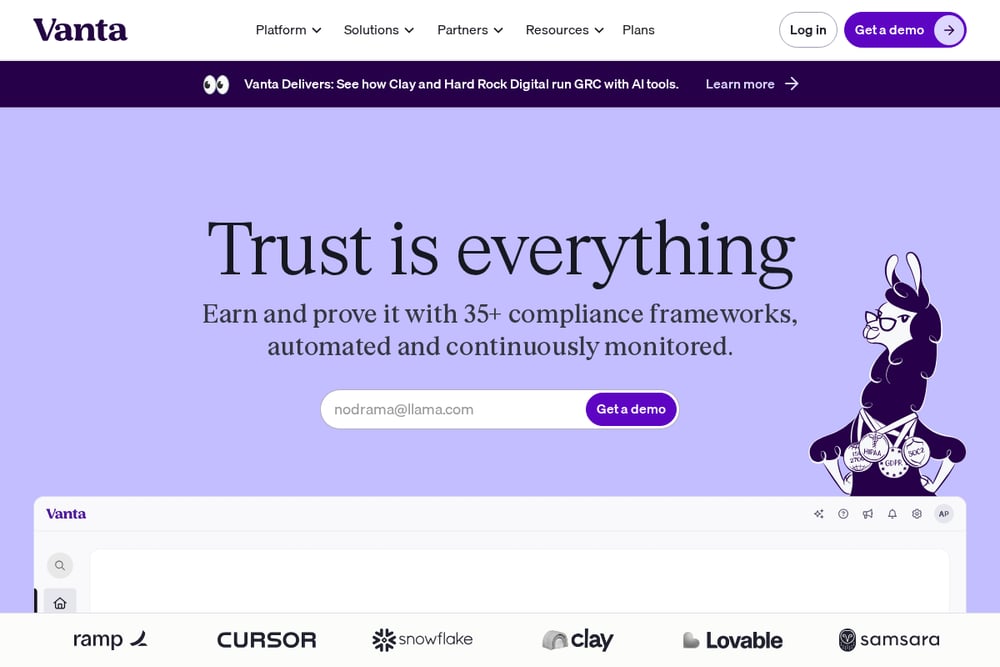 A screenshot of the Vanta website.
Vanta is a heavyweight in the compliance automation space, known for its extensive library of 400+ integrations that automatically pull evidence from your existing tools. It covers a wide range of frameworks, including SOC 2, ISO 27001, HIPAA, and GDPR, and its AI-powered features help you automate questionnaire responses and uncover insights. Vanta's Trust Center and streamlined audit prep make it a solid choice for startups that want a proven, scalable solution. However, its pricing can be on the higher side, and the sheer number of features might feel overwhelming for very small teams. If you're looking for a platform that grows with you and has a massive ecosystem, Vanta is a strong contender.
#2 ComplyJet - SOC 2, HIPAA, ISO 27001 for SaaS Companies
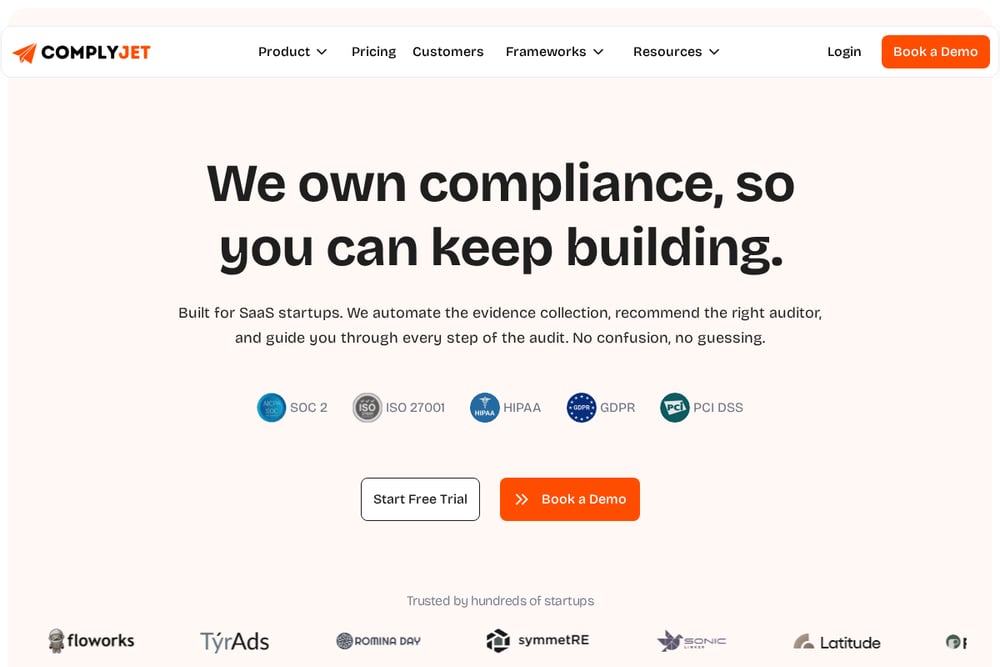 A screenshot of the ComplyJet website.
ComplyJet is built specifically for SaaS startups that want to get compliant fast without the enterprise price tag. It automates evidence collection, guides you through the audit process, and even recommends pre-vetted auditors, so you're never left guessing. The platform supports over 25 frameworks, including SOC 2, ISO 27001, and HIPAA, and includes features like audit management, risk tracking, and security awareness training. ComplyJet's promise of up to 50% lower cost than legacy vendors makes it an attractive option for bootstrapped teams. If you're a first-time compliance seeker, ComplyJet's hands-on support and simplified approach can be a game-changer.
#3 Cynomi
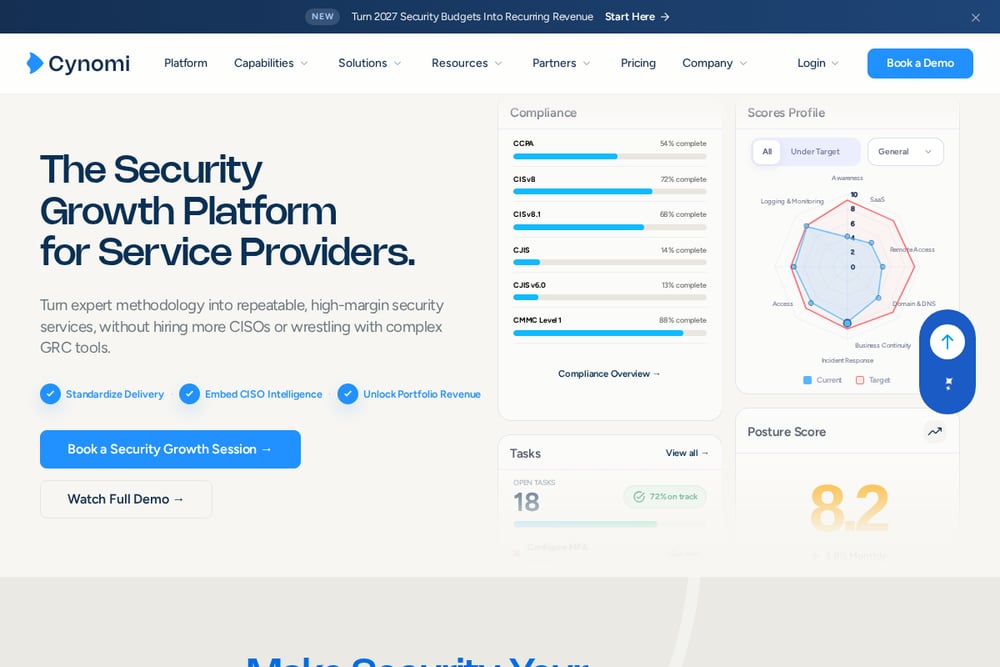 A screenshot of the Cynomi website.
Cynomi positions itself as a platform that brings CISO-level intelligence to your compliance efforts. Its CISO Intelligence engine guides you through building and running security programs, mapping controls to 40+ frameworks, and quantifying risk. It's particularly strong for MSPs and vCISO firms that need to serve multiple clients, but it also works well for startups that want a strategic, advisory-driven approach. Cynomi's focus on revenue insights—turning security gaps into opportunities—is unique. However, its pricing is not publicly listed, which might be a hurdle for startups that need upfront cost clarity. If you want a platform that acts like a virtual CISO, Cynomi is worth a look.
#4 Risk Cognizance
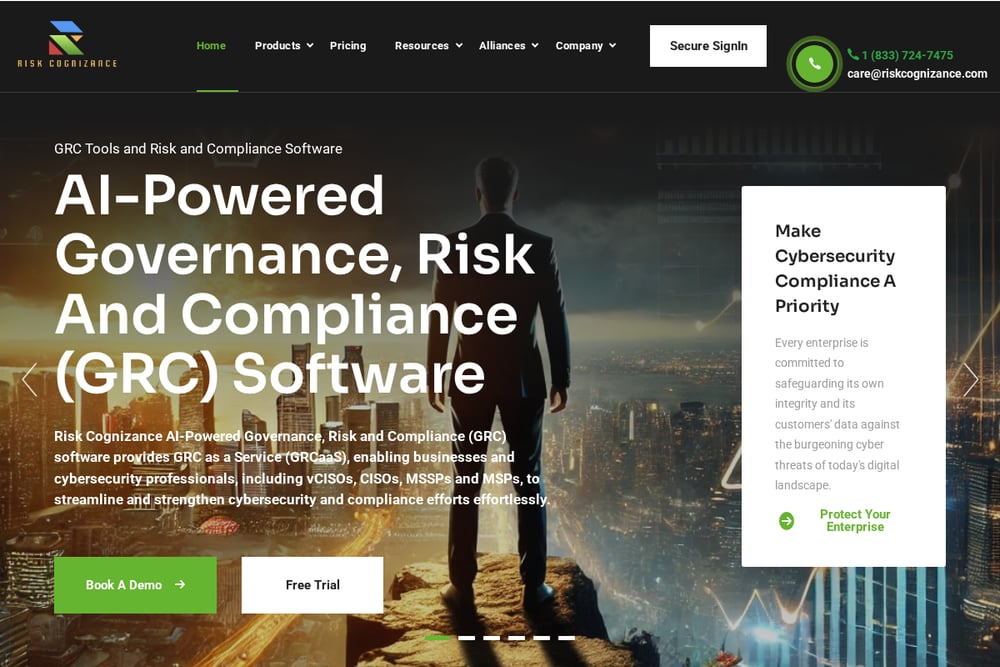 A screenshot of the Risk Cognizance website.
Risk Cognizance offers a full-fledged GRC platform with a wide array of modules, including compliance management, third-party risk, policy management, and attack surface management. It supports a broad set of frameworks, from HIPAA and NIST CSF to ISO 42001 and FedRAMP, making it a versatile choice for startups with complex or multi-framework needs. The platform is designed for scalability, so it can grow with you as you move from startup to mid-market. However, its extensive feature set might be overkill for a small team just starting out, and the learning curve could be steeper. If you need a comprehensive GRC tool that can handle everything from audits to operational resilience, Risk Cognizance is a robust option.
#5 Unicis
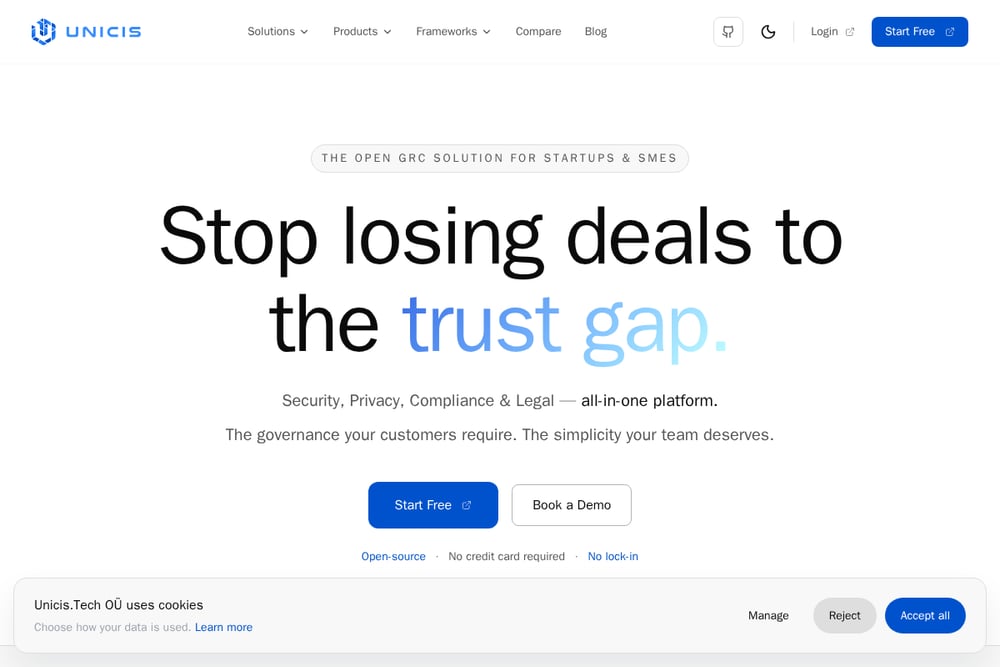 A screenshot of the Unicis website.
Unicis takes a modular approach to compliance, offering separate products for privacy, cybersecurity, and compliance management. This lets you pick and choose the modules you need, which can be cost-effective if you only need specific capabilities. It supports frameworks like GDPR, ISO 27001, NIST CSF, and SOC 2, and includes features like records of processing activities, asset inventory, and interactive awareness programs. Unicis also offers self-hosted options, which might appeal to startups with strict data residency requirements. However, its modular nature means you might need to piece together multiple tools to get full coverage. If you're looking for a flexible, privacy-focused platform, Unicis is a solid choice.
How to Choose the Right Compliance Automation Platform
Start by mapping out your immediate compliance goals. Are you a first-time SOC 2 candidate that needs hand-holding? Then a platform like ComplyJet, with its guided approach and auditor recommendations, might be your best bet. If you're already using a ton of tools and want to automate evidence collection seamlessly, Vanta's integration ecosystem is hard to beat. Consider your budget—some platforms have transparent pricing, while others require you to request a demo. Also, think about your team's bandwidth. A lean startup might prefer a simpler, more automated tool, while a growing company with more complex needs might require a full GRC suite like Risk Cognizance. Finally, don't overlook the importance of vendor support and the ability to scale. You want a platform that can grow with you, not one you'll outgrow in a year.
Automation Workflow: From Sign-Up to Audit-Ready
The typical workflow with these platforms starts with connecting your existing tools—like AWS, GitHub, or Google Workspace—to automatically collect evidence. The platform then maps that evidence to the controls required by your chosen framework, flagging any gaps. You'll get a prioritized list of tasks, from drafting policies to setting up access reviews, many of which can be automated. For example, ComplyJet automates evidence collection and guides you through the audit, while Vanta uses AI to answer security questionnaires. You can also automate employee training and policy sign-offs, ensuring your team is compliant without manual follow-ups. Finally, the platform helps you prepare for the audit by organizing all your documentation and, in some cases, even recommending a pre-vetted auditor. The result is a streamlined process that can cut months off your compliance timeline.
The Bottom Line
Compliance automation is no longer a luxury—it's a necessity for SaaS startups that want to close enterprise deals and build trust. The five platforms we've covered each offer unique strengths, from ComplyJet's startup-friendly pricing and guided support to Vanta's massive integration ecosystem. Cynomi brings AI-driven strategic insight, Risk Cognizance offers a full GRC suite, and Unicis provides modular flexibility. The right choice depends on your specific needs, budget, and growth stage. Take advantage of free trials and demos to see which platform feels like the best fit for your team. Remember, the goal is to make compliance a competitive advantage, not a burden. With the right tool, you can achieve and maintain compliance while keeping your focus on building your product and growing your business.