
Digital literacy is no longer optional. Whether you are a student trying to submit homework online, a senior navigating telehealth, or a job seeker filling out applications, basic tech skills are essential. Yet millions of Americans still lack access to
Why Digital Literacy Training Matters More Than Ever
The digital divide is not just about having a device or internet access. It is about knowing how to use them effectively. In 2026, basic digital skills are prerequisites for education, employment, healthcare, and civic participation. Yet many adults and seniors still struggle with tasks like creating a resume, using email, or recognizing phishing scams. Community-based training programs fill this gap by offering hands-on, low-pressure learning environments. They partner with libraries, schools, and nonprofits to reach people where they already are. The best programs combine practical skills with confidence-building, helping learners not just use technology but thrive with it.
How I Ranked These Programs
I evaluated each program based on four factors: accessibility (free or low-cost, language options, location flexibility), curriculum depth (range of topics and skill levels), community impact (partnerships, reach, and outcomes), and learner support (hands-on workshops, facilitator guides, device access). Programs that offered multiple learning paths or intergenerational options scored higher. I also considered how well each program addresses the needs of underserved populations, including seniors, non-English speakers, and job seekers.
Here is a quick comparison of the five programs to help you find the right fit for your community or organization.
| Provider | Best For |
|---|---|
| DigitalLearn.org (PLA) | Self-paced online learning with library support |
| Inspiredu (Bridge to Technology) | Family and intergenerational digital skill-building |
| United Way of Greater Nashua (Confident Online) | Beginner-friendly workshops with a focus on online safety |
| Digital Community Empowerment | Customizable community workshops for all generations |
| Community Tech Initiative (CTI) | Long-term job placement through tech training |
Deep Dive: The Top 5 Community Tech Training Programs
#1 DigitalLearn.org (PLA)
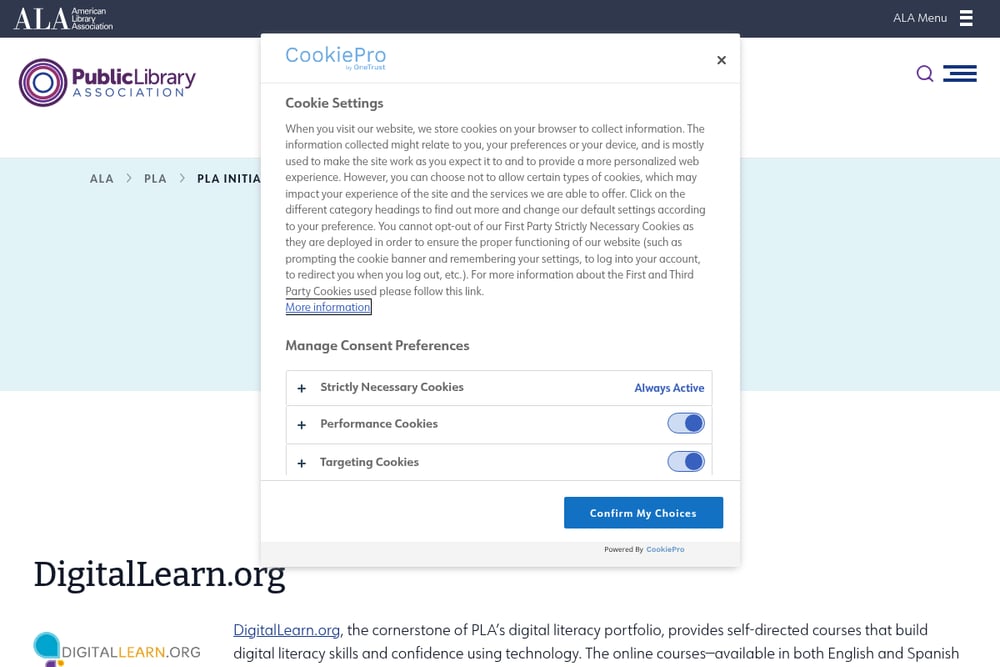 A screenshot of the DigitalLearn.org website.
DigitalLearn.org is the cornerstone of the Public Library Association's digital literacy portfolio. It offers self-directed courses that build basic skills like email, web navigation, and cybersecurity. The courses are free and available in both English and Spanish, making them accessible to a wide audience. Libraries can also download facilitator guides, scripts, and handouts to run their own workshops. This is a scalable, library-backed solution that meets learners where they are.
#2 Inspiredu (Bridge to Technology)
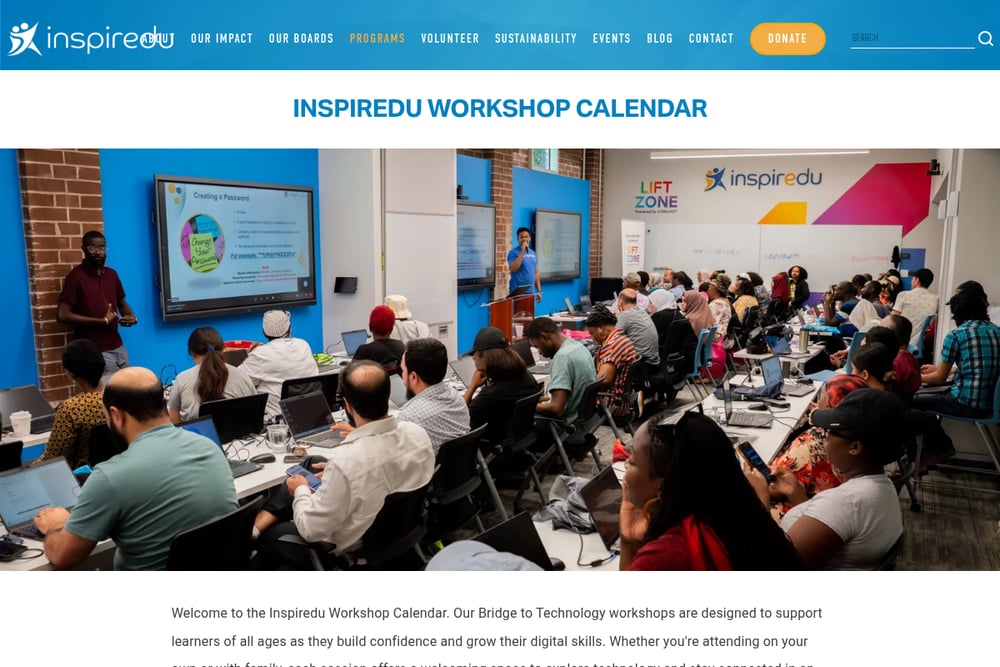 A screenshot of the Inspiredu workshop calendar page.
Inspiredu's Bridge to Technology workshops are designed for learners of all ages, from pre-K students to adults. Their Family Learning Program lets students and parents build digital skills together, while Adult Digital Literacy workshops focus on work readiness. Participants can even earn a device through workshop attendance. This program emphasizes intergenerational learning and practical outcomes, making it a strong choice for families and workforce development.
#3 United Way of Greater Nashua (Confident Online)
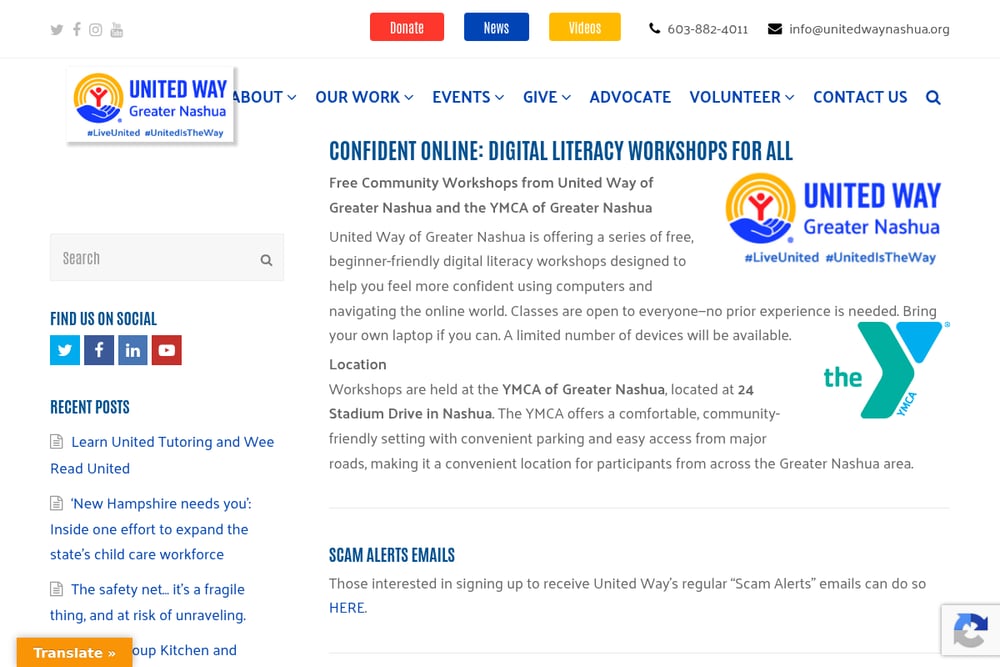 A screenshot of the United Way of Greater Nashua digital literacy page.
United Way of Greater Nashua offers a series of free, beginner-friendly digital literacy workshops held at the YMCA. Topics include avoiding online scams, basic computer use, and navigating the web. No prior experience is needed, and participants can bring their own laptop or use a limited number of provided devices. The program also sends out regular scam alert emails to keep the community informed. It is a straightforward, community-driven model that prioritizes safety and confidence.
#4 Digital Community Empowerment
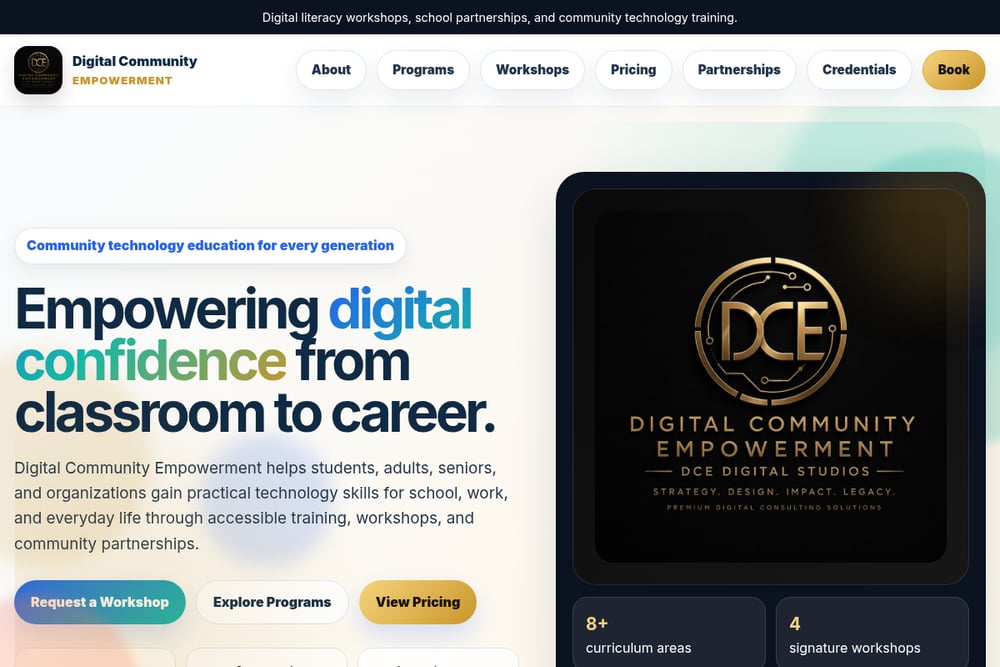 A screenshot of the Digital Community Empowerment website.
Digital Community Empowerment, founded by Miata N. Moses, delivers hands-on digital literacy workshops for students, adults, and seniors. They partner with schools, libraries, churches, and workforce programs to offer training in computer basics, online safety, job readiness, and student skills like Word and PowerPoint. Their step-by-step workshop path guides learners from beginner skills to monthly digital skills programs. This organization stands out for its tailored approach to different age groups and its strong community partnership model.
#5 Community Tech Initiative (CTI)
 A screenshot of the Community Tech Initiative website.
Community Tech Initiative is a 501(c)(3) that has been providing technology training and access to underserved communities for over twenty years. They started with computer training and job placement, helping over 27 people purchase homes through employment. More recently, they have expanded into green economy training and construction job placement. CTI's long track record and focus on economic mobility make it a proven option for communities seeking sustainable change.
How to Choose the Right Digital Literacy Program for Your Community
Start by identifying your audience. Are you training seniors who need basic computer skills? Look for programs with beginner-friendly workshops and in-person options like United Way of Greater Nashua or Digital Community Empowerment. For families, Inspiredu's intergenerational model is a strong fit. If you need a scalable online solution that libraries can adopt, DigitalLearn.org offers ready-made courses and facilitator materials. For long-term economic impact, consider Community Tech Initiative's job placement focus. Always check if the program provides devices or certificates, as these can boost learner motivation and outcomes.
Automation Workflow: Streamlining Digital Literacy Training
You can automate parts of your digital literacy program using simple tools. Use a scheduling app like Calendly to let learners book workshop slots. Set up an email sequence in Mailchimp to send reminders, follow-up resources, and scam alerts. Create a shared Google Drive folder with handouts and video tutorials that participants can access anytime. For libraries or nonprofits, use a CRM like HubSpot's free tier to track attendance and follow up with learners. This frees up your staff to focus on teaching and community building.
Closing Thoughts: Building a Digitally Confident Future
The organizations in this list prove that digital literacy is not a luxury. It is a pathway to opportunity. Whether you are a librarian, a workforce developer, or a community organizer, you can adapt these models to your own context. Start small: one workshop, one partnership, one learner at a time. The goal is not just to teach technology, but to build confidence and connection. And that is something every community can achieve.