
If your supply chain still runs on spreadsheets and guesswork, it's time to look at the cloud platforms that are redefining how goods move from factory to doorstep. Here are five that caught our eye this year.
The State of Cloud Supply Chain in 2026
Supply chains have never been more complex—or more critical. With tariffs shifting overnight, customer expectations at an all-time high, and disruptions becoming the norm, businesses are turning to cloud-based platforms to gain real-time visibility and agility. The market has responded with a wave of AI-driven tools that promise to unify everything from sourcing to last-mile delivery. But not all platforms are created equal, and choosing the right one can make or break your operations. In this roundup, we look at five platforms that are leading the charge, each with its own strengths and focus areas.
How We Evaluated These Platforms
To give you a clear picture, we evaluated each platform on the same set of factors: the breadth of their service scope, how clearly they communicate pricing and deployment, and how well they fit different types of businesses—from DTC brands to enterprise manufacturers. We also looked at their AI capabilities, integration flexibility, and the overall user experience. What stood out for each platform was unique: Osa impressed with its cloud-agnostic, tech-agnostic approach; Stord shined with its integrated fulfillment and software combo; Oracle brought deep enterprise integration; SAP offered autonomous orchestration; and Infor focused on resilience and sustainability. No single platform is the best for everyone, but each has a distinct value proposition.
Here's a quick snapshot of the five platforms we're diving into, so you can see at a glance what each one brings to the table.
| Provider | Best For |
|---|---|
| Stord | DTC and B2B brands needing integrated fulfillment and software |
| Osa Unified Commerce Platform | Manufacturers and 3PLs seeking a cloud-agnostic, AI-powered unified platform |
| Oracle | Large enterprises needing deep integration with ERP and advanced AI |
| SAP | Global enterprises seeking autonomous, AI-driven supply chain orchestration |
| Infor | Mid-to-large companies prioritizing resilience, sustainability, and scenario planning |
The Deep Dive: 5 Cloud Supply Chain Platforms to Watch
#1 Stord
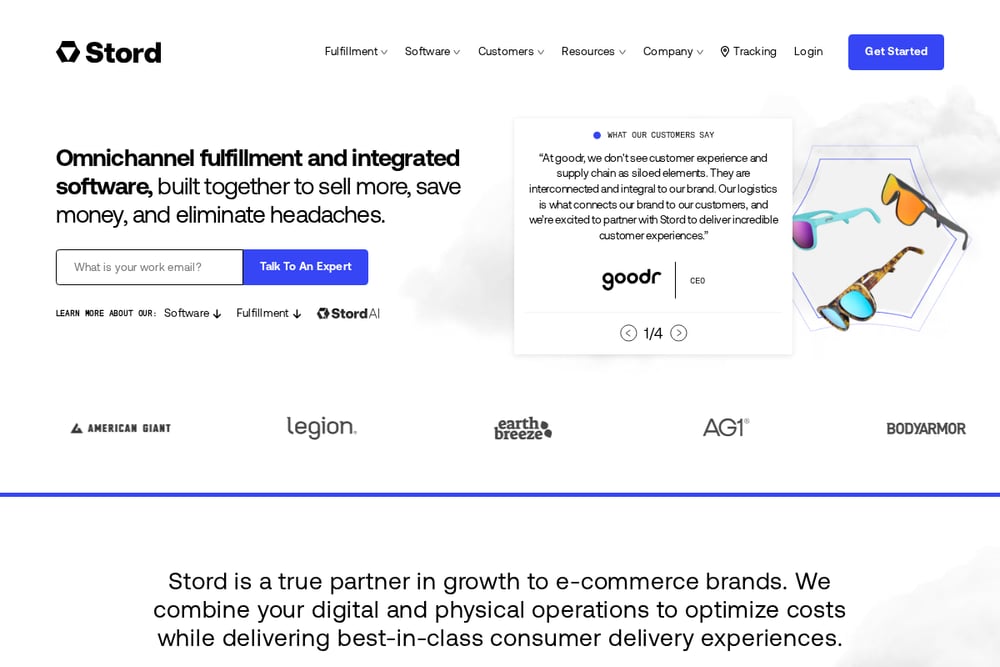 A screenshot of the Stord website.
Stord is a cloud supply chain platform that combines physical fulfillment with AI-powered software, making it a one-stop shop for DTC and B2B brands. They power over $10 billion in commerce annually, with services ranging from pre-purchase tools to last-mile delivery and post-purchase brand protection. Their software suite includes an AI OMS, multichannel inventory management, and last-mile optimization, all built to work seamlessly with their fulfillment network. If you're a brand like AG1 or Native, Stord's integrated approach can save you days in transit and boost customer loyalty. Their focus on consumer experience—from estimated delivery dates to branded tracking portals—sets them apart. For brands that want to scale without juggling multiple vendors, Stord is a compelling choice.
#2 Osa Unified Commerce Platform
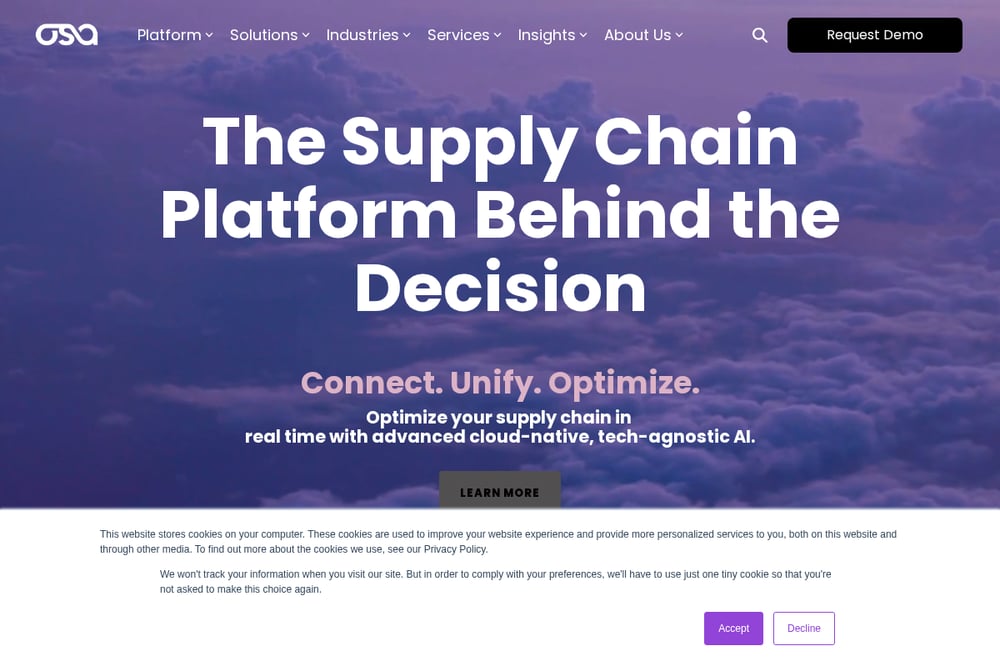 A screenshot of the Osa Unified Commerce Platform website.
Osa is a cloud-native, AI-driven platform that unifies your entire supply chain—from sourcing and manufacturing to warehouse and last-mile operations. What makes Osa stand out is its cloud-agnostic, tech-agnostic approach, meaning it can integrate with your existing systems without forcing a complete overhaul. The platform offers a wide range of modules, including warehouse management, order management, demand forecasting, and route optimization, all powered by AI to predict outcomes and automate decisions. Osa also emphasizes security with a built-in cybersecurity framework, which is crucial in today's threat landscape. For manufacturers and 3PL providers looking to sync operations across multiple channels, Osa provides a flexible, end-to-end solution. Their case studies show improved margins and customer satisfaction, making them a strong contender for mid-to-large enterprises.
#3 Oracle
Oracle's Supply Chain Management (SCM) suite is a comprehensive set of applications that covers everything from product lifecycle management to logistics. It's built for large enterprises that need deep integration with ERP and other business systems. Oracle uses built-in AI and agentic applications to help you plan, produce, and deliver with confidence, even as conditions change. The platform is known for its robustness and scalability, making it a favorite among mission-critical operations like Grupo Bimbo and Milwaukee Tool. If you're already in the Oracle ecosystem, the SCM suite will feel like a natural extension. However, the complexity and cost may be overkill for smaller businesses. For enterprises that need a complete, integrated solution, Oracle is a powerhouse.
#4 SAP
SAP's Supply Chain Management software is all about orchestrating your people, processes, and technology to exceed customer expectations. With the rise of autonomous supply chains, SAP has introduced Joule Agents and Assistants that turn siloed data into intelligent, connected workflows. The platform offers end-to-end visibility, real-time awareness, and AI-driven recommendations to help you adapt quickly to disruptions. SAP is particularly strong for large, complex organizations that need to coordinate across multiple lines of business. Their focus on autonomous operations means you can automate decisions with minimal effort, freeing up your team to focus on strategic tasks. If you're looking for a platform that can handle global scale and complexity, SAP is a solid choice.
#5 Infor
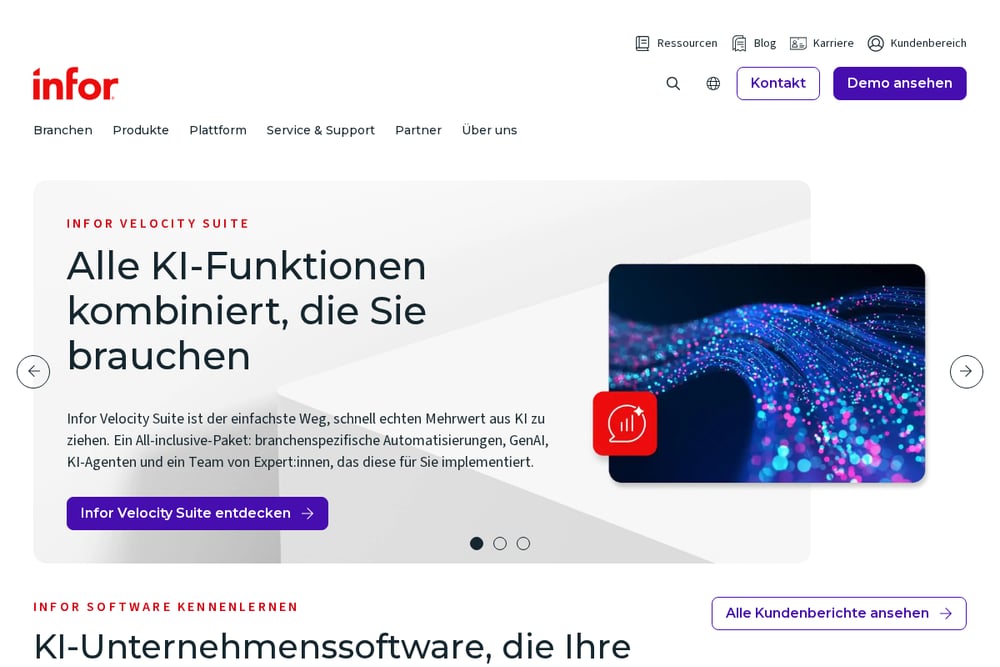 A screenshot of the Infor website.
Infor's Supply Chain Management software is designed to help you adapt to an unpredictable world, with a focus on resilience and sustainability. The platform offers AI-powered tools for planning, forecasting, production scheduling, supplier collaboration, warehousing, and logistics—all on a multi-tenant cloud that keeps pace with AI. Infor stands out for its emphasis on ESG goals, helping you reduce waste and emissions while tracing materials and complying with regulations. Their intelligent control tower gives you holistic, real-time visibility across your supply chain, so you can pivot at scale when disruptions hit. For mid-sized to large companies that want to build a more resilient and sustainable supply chain, Infor offers a compelling package. It's a great fit if you're looking for a platform that balances innovation with practical, scenario-based planning.
How to Choose the Right Cloud Supply Chain Platform
Start by assessing your current pain points: Is it lack of visibility, manual processes, or poor integration between systems? Then, consider your company's size and complexity—a DTC brand might thrive with Stord's integrated fulfillment, while a global manufacturer may need Oracle's or SAP's enterprise-grade capabilities. Think about your existing tech stack: Osa's cloud-agnostic approach is great if you have a mix of systems, while Oracle and SAP are ideal if you're already in their ecosystem. Don't forget to evaluate the AI features—are they just buzzwords, or do they actually automate decisions and predict outcomes? Finally, consider your budget and implementation timeline. Some platforms require significant upfront investment and change management, while others are more plug-and-play. Take advantage of demos and case studies to see how each platform handles real-world scenarios like yours.
Automating Your Supply Chain with AI
The real power of these platforms lies in their ability to automate routine tasks and provide intelligent recommendations. For example, Osa's AI can forecast demand and optimize inventory levels, while Stord's OMS automatically routes orders to the best fulfillment center. Oracle and SAP use agentic AI to handle complex workflows, like adjusting production schedules in response to supply disruptions. Infor's scenario planning lets you run what-if analyses to prepare for tariff changes or supplier issues. To get the most out of automation, start small: automate one process, like order routing or inventory replenishment, and then expand as you see results. Ensure your data is clean and integrated across systems, because AI is only as good as the data it feeds on. With the right platform, you can move from reactive firefighting to proactive, predictive supply chain management.
The Bottom Line
Choosing the right cloud supply chain platform is a strategic decision that can transform your operations. Whether you're a fast-growing brand needing integrated fulfillment, a manufacturer seeking a unified AI-driven view, or a global enterprise requiring deep orchestration, there's a platform on this list for you. Take the time to evaluate your needs, test the platforms, and consider how they'll scale with you. The future of supply chain is cloud-native, AI-powered, and collaborative—and these five are leading the way.