
AI can code, but can your cloud keep you in control? These five platforms are shaping how humans and agents ship production software together.
The New Cloud Stack for Agentic Development
The software industry is shifting from human-only coding to a hybrid model where AI agents write code, spin up previews, and even deploy—but humans still own the risk. In 2026, the cloud platforms that win are those that give agents speed while giving humans guardrails: production-shaped previews, runtime logs, rollback, and review gates. You're no longer just picking a host; you're picking the governance layer for your AI workforce. The leaders in this space are blending infrastructure with policy, so you can let agents move fast without losing sleep over what reaches your users.
How We Evaluated These Platforms
We looked at each platform through the lens of a team that wants to deploy with agents but stay in control. Key factors: service scope (does it cover the full loop from code to production?), human review capabilities (can you approve or reject agent changes?), runtime visibility (logs, history, rollback), and how well it fits into your existing stack. We also considered pricing clarity and the learning curve for teams that are new to agentic workflows. Each platform brings a different strength, and we've highlighted what stood out for each.
Here's a quick look at the five platforms we're covering, from the agent-first cloud to the enterprise giants.
| Provider | Best For |
|---|---|
| Gemini Enterprise Agent Platform | Enterprises needing a full-stack, governed agent platform |
| floo | the cloud for human-agent software teams | Teams that want agent speed with human review gates |
| Northflank | Container-native workloads with durable agent execution |
| Qovery | Teams needing governed agent deploys in their own cloud |
| AWS Agentic AI | Enterprises already on AWS looking to add agentic AI |
The Five Platforms, Up Close
#1 Gemini Enterprise Agent Platform
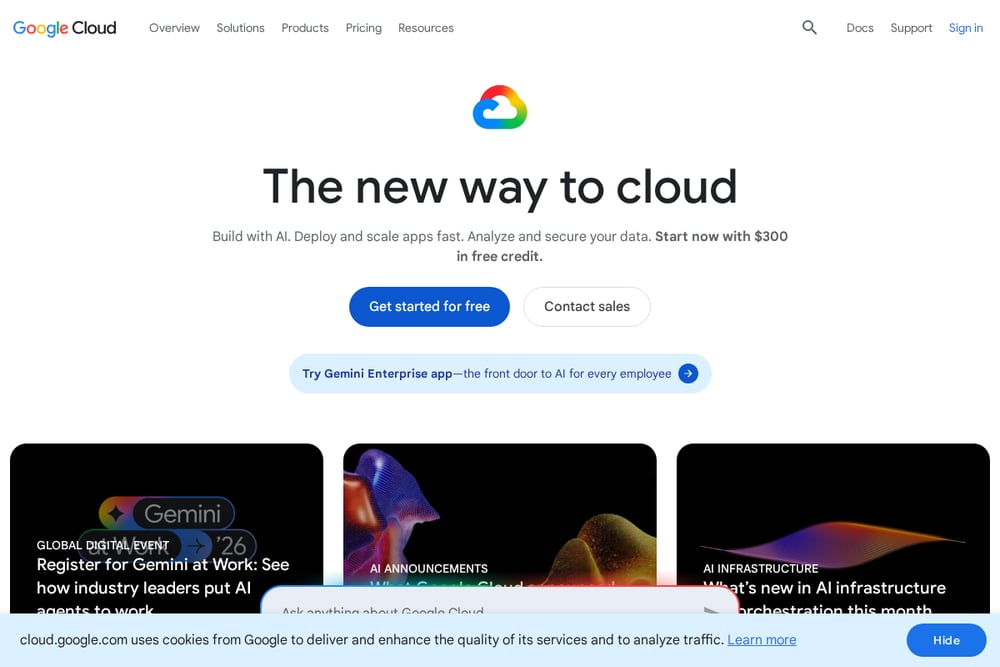 A screenshot of the Gemini Enterprise Agent Platform website.
Google's Gemini Enterprise Agent Platform (formerly Vertex AI) is a comprehensive destination for building, scaling, and governing enterprise-grade agents. It gives you a unified environment to develop agents grounded in your enterprise data, with tools for training, tuning, and deploying models. You get full-stack support, from data integration to agent orchestration, and it scales to global enterprise needs. The platform also integrates with Gemini Enterprise app for managing and governing custom agents, making it a strong choice for large organizations. If you're already in the Google Cloud ecosystem, this is a natural fit for agentic development. It's a heavyweight that brings Google's AI muscle to your production workflows.
#2 floo | the cloud for human-agent software teams
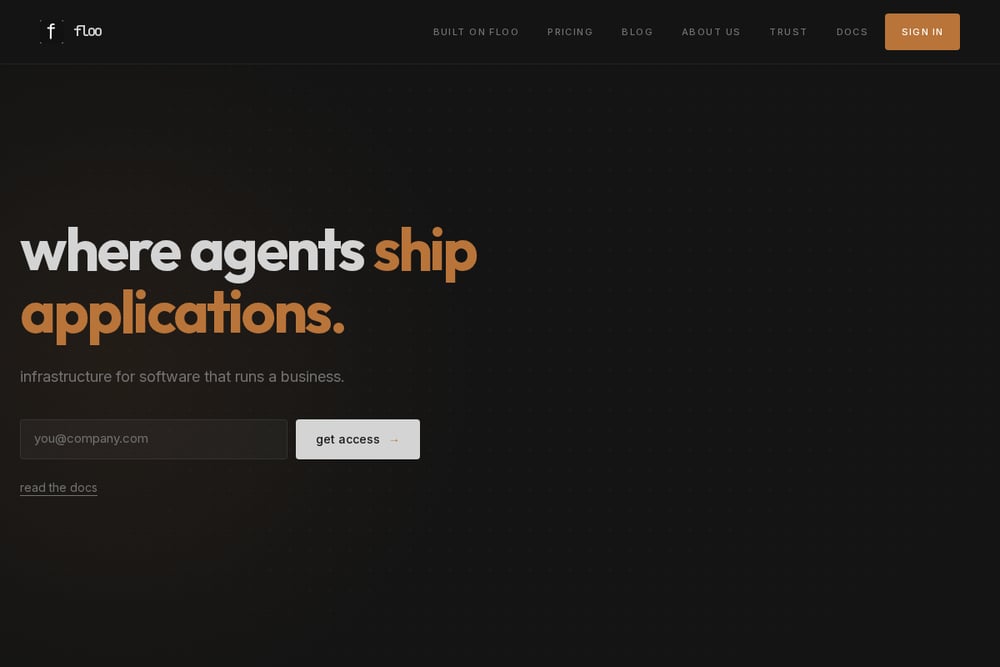 A screenshot of the floo website.
Floo is built specifically for the new reality where AI agents code and humans decide what ships. It gives you production-shaped previews for every agent change, so you can see exactly how a change will behave in a real environment before it goes live. Runtime logs, deploy history, and rollback are all in one place, so you can trace any issue back to the agent that caused it. The human review layer is the standout: you approve launches, access, spend, and data risk, keeping control where it matters. Floo is designed for teams that want agents to move fast but need a safety net for production. It's the cloud that treats human judgment as a first-class citizen in the deployment loop.
#3 Northflank
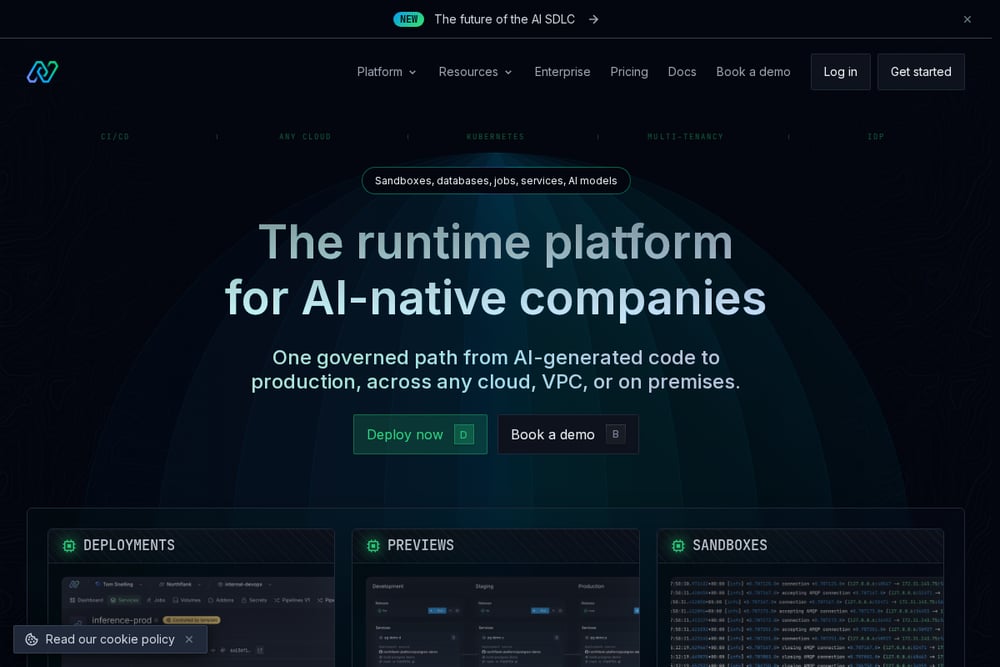 A screenshot of the Northflank website.
Northflank is a container-native platform that excels at running long-running AI agents with durable state, background workers, and queues. It provides a complete production stack, including databases, object storage, and secure code execution, all under one operational model. You can run agents, APIs, and jobs on CPU or GPU, with support for BYOC (bring your own cloud) for teams that need to stay in their own infrastructure. Northflank's strength is its flexibility: it's not just for agents, but for any workload that needs to persist and scale. If you're building agentic systems that require stateful execution, Northflank gives you the tools to keep them running reliably. It's a solid choice for startups and enterprises that want a self-serve platform with deep control.
#4 Qovery
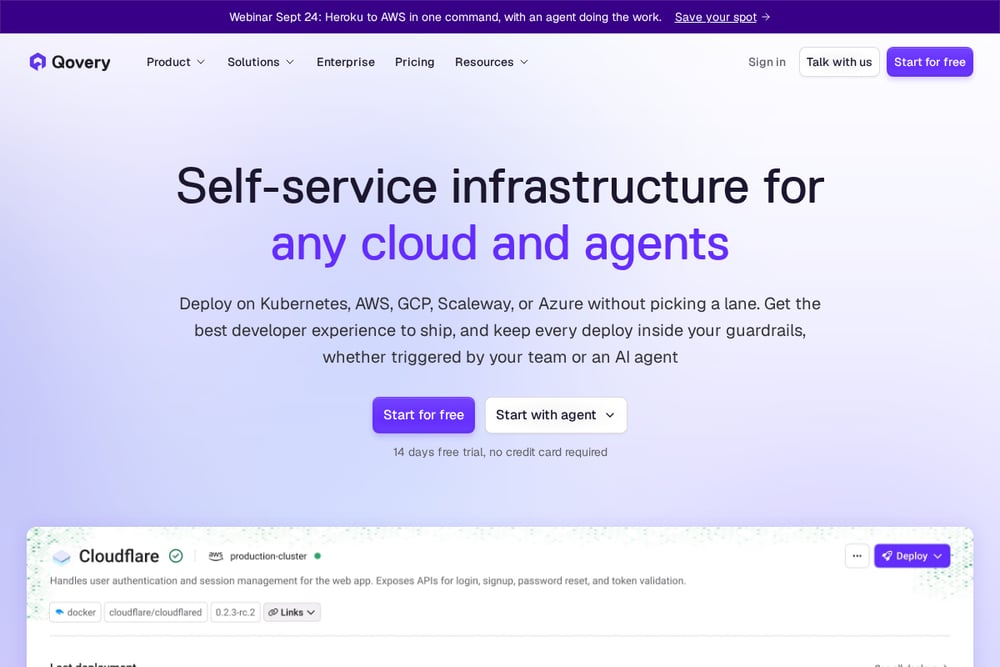 A screenshot of the Qovery website.
Qovery is a platform that focuses on governed agent deploys inside your own AWS, GCP, Azure, or Kubernetes cluster. It's built for teams that need deterministic execution and governed API access, with scoped tokens, per-environment RBAC, and policy checks. Qovery gives you audit trails and execution limits, so you can track exactly what your agents did and prevent them from going rogue. It's a strong option if you're already invested in a major cloud provider and want to add a governance layer for agentic workflows. The platform is designed to give you the speed of agent-driven deploys without sacrificing security or compliance. For teams that need multi-cloud flexibility with strict guardrails, Qovery delivers.
#5 AWS Agentic AI
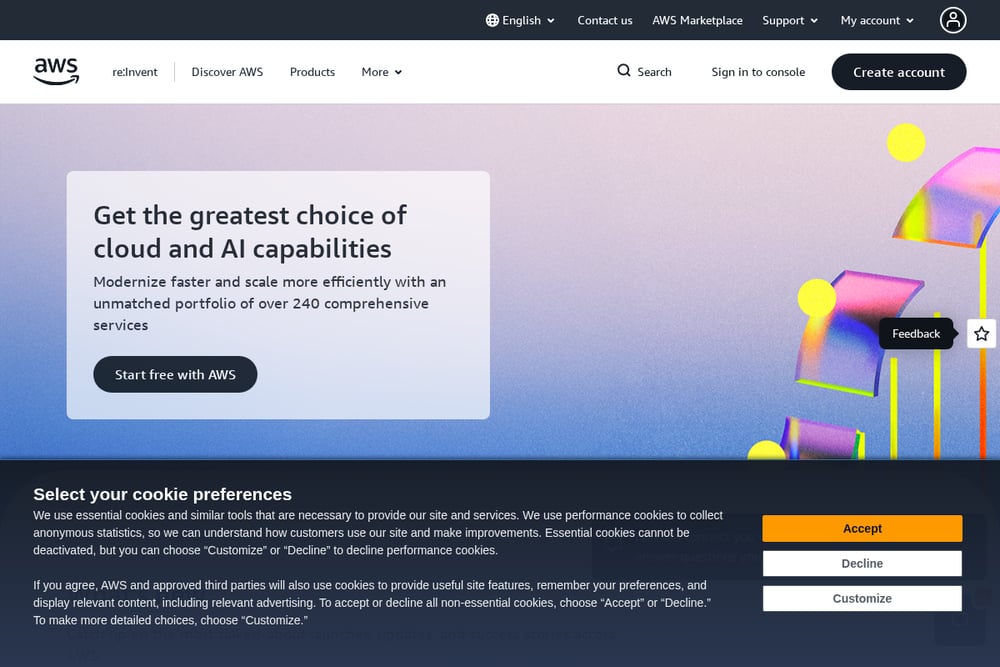 A screenshot of the AWS Agentic AI website.
AWS Agentic AI is Amazon's umbrella for building and deploying AI agents at scale, with services like Amazon Bedrock and Amazon Quick. It's a broad ecosystem that gives you access to foundation models, agent toolkits, and data capabilities to ground your agents in real business data. AWS provides the infrastructure and security that enterprises expect, with tools to modernize legacy systems and automate workflows. The platform is ideal if you're already deep in the AWS ecosystem and want to leverage existing services like EC2 and Aurora. It's less about a single product and more about a suite of tools that you can assemble to fit your needs. For teams that want the reliability of AWS with agentic AI capabilities, this is a powerful option.
How to Choose the Right Platform for Your Team
Start by asking where your agents will run and who needs to approve their work. If you want a purpose-built cloud that puts human review at the center, floo is your pick. If you're an enterprise that needs a full AI platform with governance, Gemini Enterprise Agent Platform is a strong contender. For teams that need durable, stateful agent execution on their own infrastructure, Northflank and Qovery offer different trade-offs: Northflank for container-native flexibility, Qovery for strict policy control. And if you're already all-in on AWS, AWS Agentic AI gives you a familiar path to agentic development. Consider your existing cloud investments, the level of control you need, and how much you trust your agents to run without supervision. The right choice is the one that lets your agents move fast while keeping you in the driver's seat.
Automating the Human-Agent Loop
The most effective teams set up a workflow where agents handle the heavy lifting—writing code, creating previews, running tests—and humans step in only at key decision points. For example, an agent pushes a change, the platform automatically builds a production-shaped preview, runs checks, and then flags it for human review. You review the diff, check the logs, and either approve the launch or send it back for fixes. This loop lets you scale your engineering output without sacrificing quality. Platforms like floo and Qovery are building these review gates directly into the deployment pipeline, so you don't have to bolt them on later. The goal is to automate everything that's safe, and keep human judgment for what matters: launch, access, spend, and data risk.
The Bottom Line
The era of human-only coding is over, but so is the era of agent-only deploys. The winning teams are those that combine agent speed with human control, and the platforms above are leading that charge. Whether you choose floo for its human-first review loop, Gemini for enterprise scale, Northflank for durable execution, Qovery for governance, or AWS for ecosystem depth, the key is to find the one that fits your team's risk tolerance and infrastructure. Start small, test with a pilot project, and scale as you build trust in your agents. The cloud is now the place where humans and agents collaborate—make sure you're on the one that keeps you in control.