
You have the data, the hypothesis, and the drive. But turning a clinical research idea into a published paper is a different beast. It demands rigorous methodology, statistical know-how, and the art of medical writing. The right training platform can
The State of Clinical Research Training
The demand for skilled clinical researchers is surging, yet traditional academic programs often leave graduates unprepared for the practical hurdles of publication. Many professionals turn to online platforms for targeted, flexible training. These range from massive membership organizations offering certification to niche courses focused on the publish-or-perish pipeline. The best programs don't just teach theory; they provide a structured path from study design to journal submission, addressing common pitfalls like statistical analysis and writer's block.
How We Ranked These Platforms
We evaluated each platform on four key criteria: curriculum depth (does it cover the full research lifecycle?), practical application (are there hands-on exercises with real tools?), publication focus (does it explicitly teach writing and submission strategies?), and value for money (is the cost justified by the outcomes?). We also considered the target audience and the level of support provided.
Here is a quick look at how the five platforms stack up against each other.
| Provider | Best For |
|---|---|
| ACRP | Professional certification and GCP compliance |
| SOCRA | Continuing education and CCRP certification |
| FreeGCP | Free, accredited GCP training |
| MedDopamine - Master Clinical Research & Get Published | Step-by-step guidance to your first publication |
| NCURA | Research administration and grants management |
The Top 5 Clinical Research Training Platforms
#1 ACRP
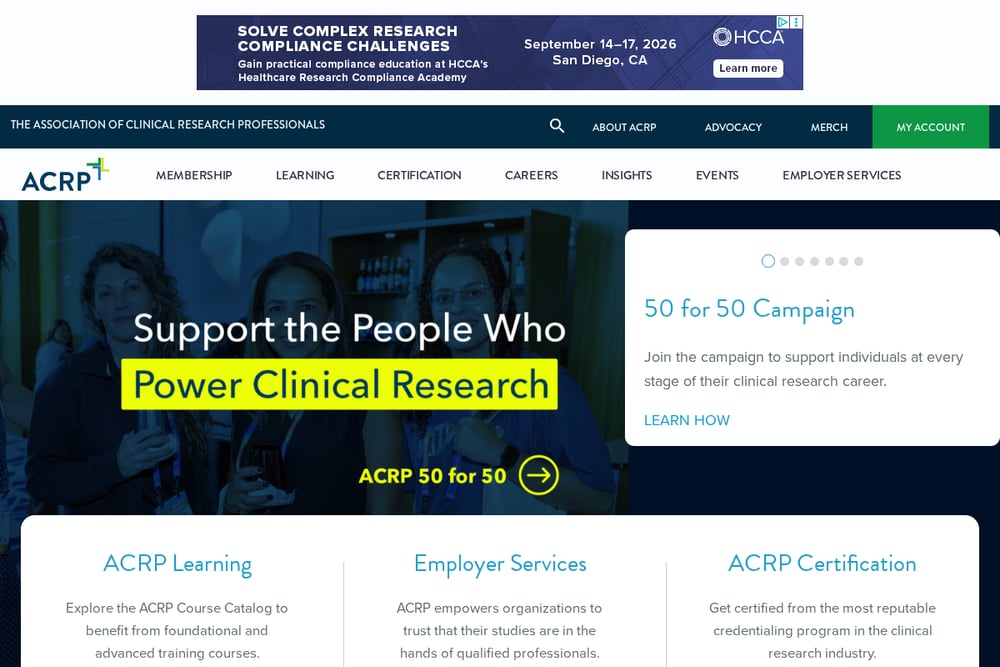 A screenshot of the ACRP website.
ACRP is the gold standard for professional certification in clinical research. With a global network of over 22,000 members, it offers rigorous credentials like the CCRC and CCRA that are widely recognized by employers. Their training focuses heavily on Good Clinical Practice (GCP), protocol understanding, and site management. If your primary goal is to become a certified clinical research coordinator or associate, ACRP's structured exam preparation and competency guidelines are unmatched. However, its focus is less on the academic publication process and more on the operational conduct of trials.
#2 SOCRA
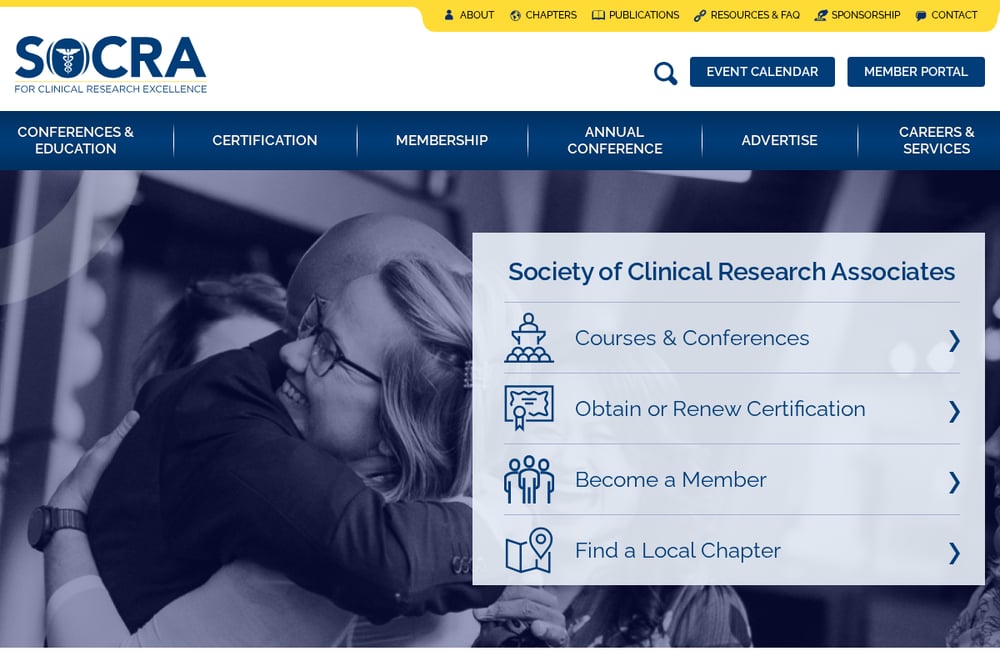 A screenshot of the SOCRA website.
SOCRA provides a robust array of online courses and live conferences designed for clinical research professionals. Their curriculum emphasizes quality, participant protection, and practical skills like source documentation and data management. SOCRA's CCRP certification is another highly respected credential in the industry. For researchers seeking continuing education units (CEUs) and a strong foundation in regulatory and ethical conduct, SOCRA is a top-tier choice. Like ACRP, its strength lies in operational excellence rather than the specific journey of writing and publishing a manuscript.
#3 FreeGCP
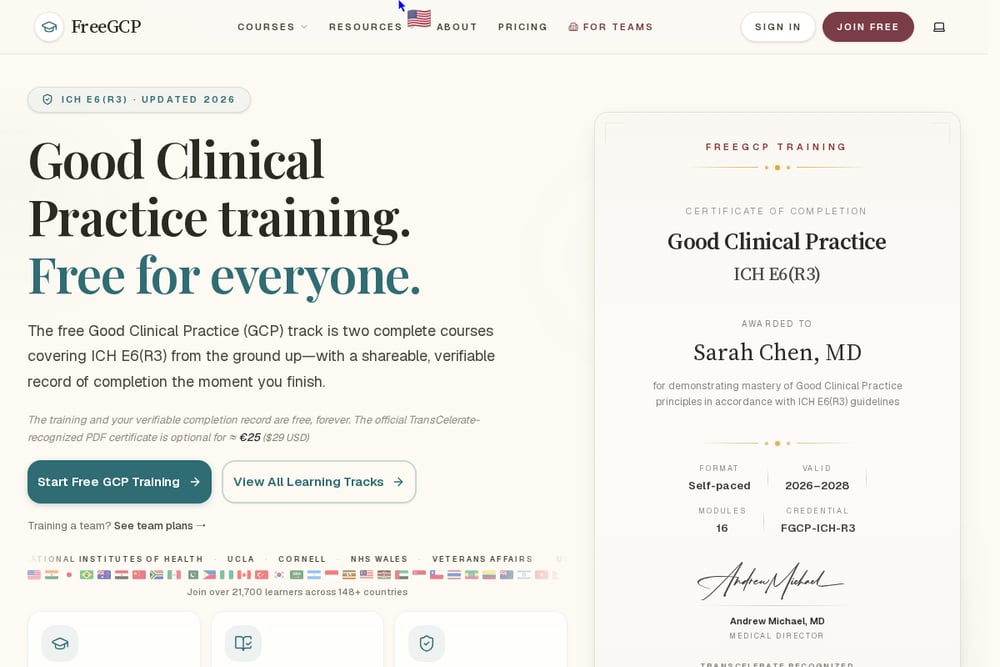 A screenshot of the FreeGCP website.
FreeGCP lives up to its name by offering ICH E6(R3)-aligned GCP training at no cost. This is an excellent starting point for anyone needing foundational knowledge in clinical research compliance. The platform uses scenario-based assessments and provides verifiable credentials, making it a practical resource for teams and individuals. While it is a fantastic free resource for GCP essentials, it does not cover the broader skills of biostatistics or medical writing needed to get a paper published. It is best used as a supplement to a more comprehensive program.
#4 MedDopamine - Master Clinical Research & Get Published
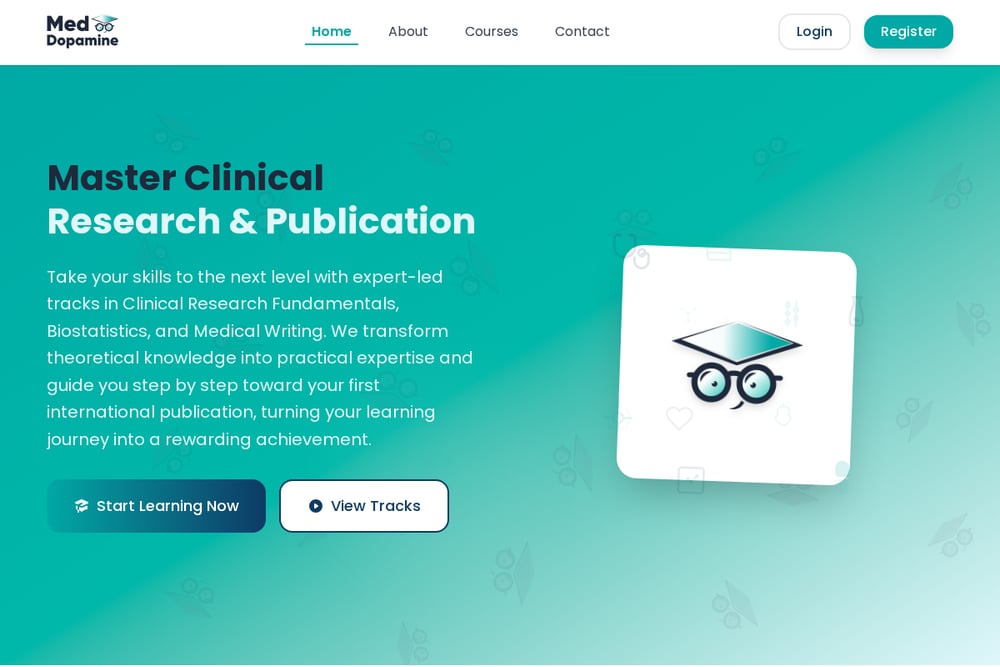 A screenshot of the MedDopamine website.
MedDopamine is built from the ground up for one specific mission: helping you publish your research. Unlike the certification-focused giants, it offers a step-by-step curriculum covering the entire publication lifecycle. Courses like 'Fundamentals of Clinical Research' ($50), 'Foundations of Biostatistics' ($120 with hands-on Jamovi software), and 'How to Write and Publish Your Research' ($70) are laser-focused on practical output. This platform is ideal if you already have a research idea or data and need expert guidance on analysis, writing, and navigating journal submissions. It fills a critical gap left by broader professional organizations.
#5 NCURA
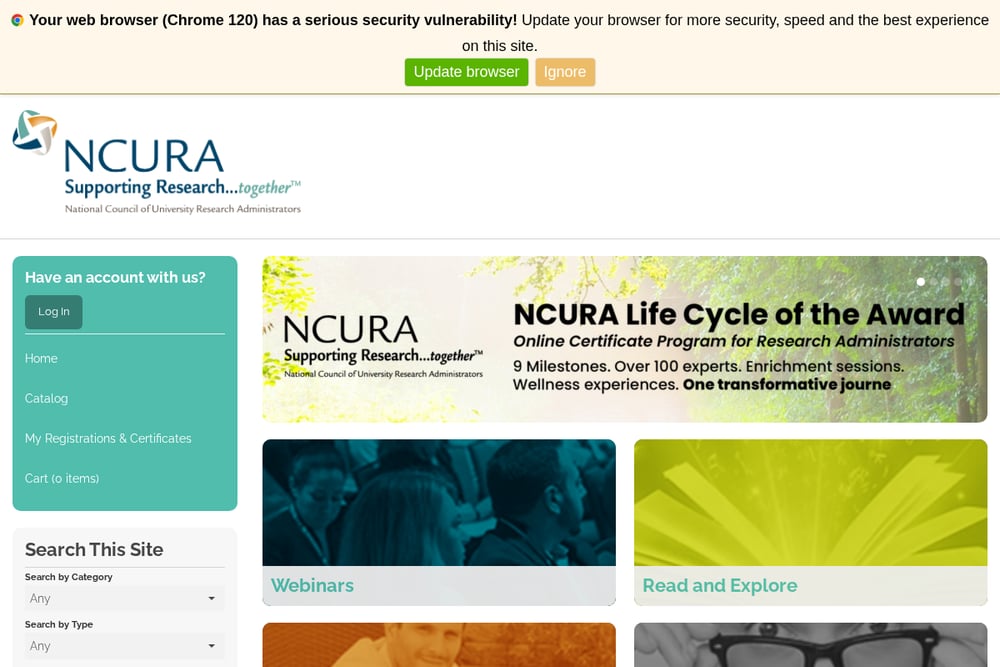 A screenshot of the NCURA website.
NCURA is a specialized resource for research administrators and professionals managing the financial and regulatory side of clinical trials. Their online learning includes courses on clinical trials management, pre-award and post-award processes, and compliance. This platform is invaluable if your role involves budgeting, contracting, or overseeing the operational logistics of a study. However, it is not designed for individual researchers seeking to learn biostatistics or write a manuscript. It serves a different, but crucial, part of the research ecosystem.
How to Choose the Right Platform for You
Start by defining your end goal. If you need a globally recognized certification to advance your career as a coordinator or monitor, ACRP or SOCRA are your best bets. If you need a free, quick primer on GCP compliance, use FreeGCP. If you are a research administrator, NCURA is essential. But if your primary, burning goal is to take your research data and turn it into a published paper in a peer-reviewed journal, then MedDopamine's targeted, publication-focused courses offer the most direct path. Consider your budget and time commitment, and choose the platform that aligns with your specific next step.
Automating Your Research Workflow
Once you have mastered the fundamentals, you can streamline your research process. Use reference managers like Zotero or Mendeley to automate citation collection and formatting. Employ statistical software like Jamovi (taught in MedDopamine's biostatistics course) to automate data analysis and generate publication-ready tables. Finally, use grammar and style checkers like Grammarly or Hemingway to polish your manuscript before submission. This workflow reduces manual errors and frees you to focus on the science.
Your Path to Publication Starts Now
Getting published is a marathon, not a sprint. The right training platform is your coach, providing the map, the tools, and the encouragement. Whether you choose the certification route with ACRP or SOCRA, the free foundation from FreeGCP, the administrative expertise of NCURA, or the publication-focused path of MedDopamine, the key is to take the first step. Invest in your skills, and your research will find its audience.