
Climate risk is no longer a future problem. It is a line item on your balance sheet today. As extreme weather events accelerate and regulatory pressure mounts, the infrastructure for climate, nature, and energy markets is being rebuilt from the
The Climate Intelligence Market Is Booming
The global climate resilience infrastructure market hit $159.4 billion in 2025 and is projected to reach $378.2 billion by 2034, growing at a 9.8% CAGR. Meanwhile, the broader climate tech market crossed $37.5 billion in 2025 and is expected to surge to $421.4 billion by 2036. These numbers reflect a fundamental shift: climate intelligence is no longer a niche service but a core requirement for institutional investors, energy participants, and project developers. As extreme weather events cost $75 billion in the first half of 2022 alone, the demand for data-driven decision support has never been higher. The platforms profiled here represent the leading edge of this transformation, each offering a distinct approach to managing climate risk and opportunity.
How We Ranked the Platforms
We evaluated each platform on five criteria: data granularity and coverage, integration with existing financial workflows, actionable insights for decision-makers, scalability across asset classes and geographies, and the strength of the underlying economic or policy framework. Platforms that combined hyperlocal risk data with seamless integration into investment models scored highest. Those that offered a broader strategic or advisory layer were ranked for their ability to translate data into action. Direct investment platforms were assessed on their track record and market influence.
Here is a quick comparison of the five platforms to help you find the right fit for your climate intelligence needs.
| Provider | Best For |
|---|---|
| MSCI GeoSpatial Asset Intelligence | Granular physical risk assessment across millions of assets |
| Climate Policy Initiative | Tracking climate finance flows and policy alignment |
| ClimaTwin | Quantifying resilience ROI for infrastructure assets |
| 2Net0 — Intelligence Infrastructure for Transition Markets | Full-stack market intelligence for transition markets |
| Climate Adaptive Infrastructure | Direct investment in climate-resilient infrastructure projects |
Deep Dive: The Five Platforms Reshaping Climate Intelligence
#1 MSCI GeoSpatial Asset Intelligence
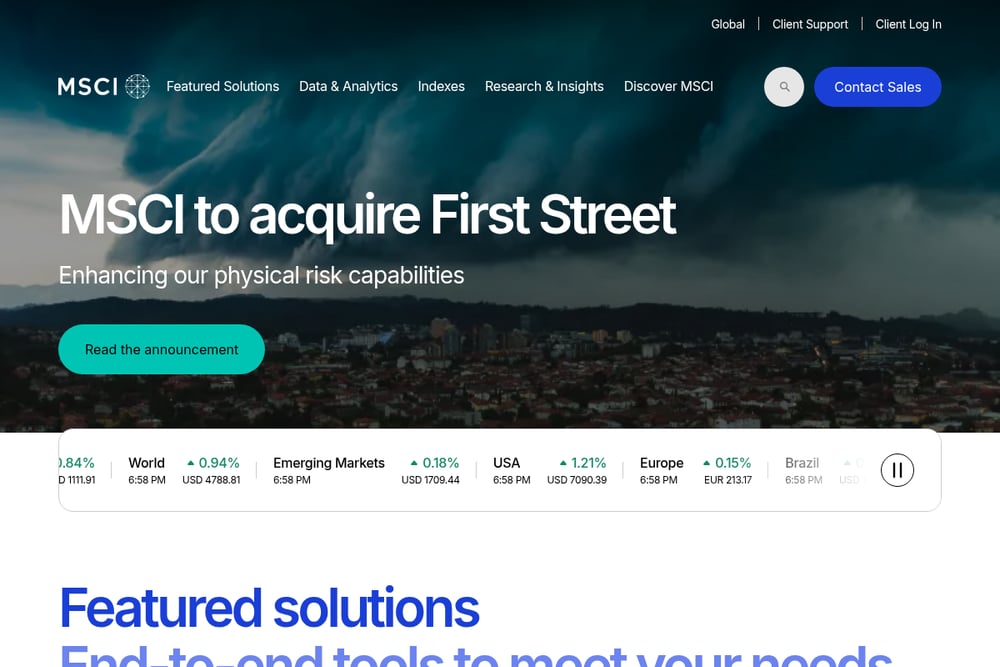 A screenshot of the MSCI GeoSpatial Asset Intelligence website.
MSCI GeoSpatial Asset Intelligence gives you hyperlocal risk data across more than two million locations for 700,000 public and private companies. It covers 28 hazard types, 11 climate scenarios, and multiple time horizons, all powered by AI and Google Cloud's Earth Engine. You can pinpoint exposure to floods, storms, and heat waves down to the individual facility level. This granularity is a game-changer for portfolio managers who need to quantify physical risk in real terms. The platform integrates seamlessly with Snowflake, so you can plug insights directly into your internal risk models. If you need asset-specific intelligence at scale, this is the benchmark.
#2 Climate Policy Initiative
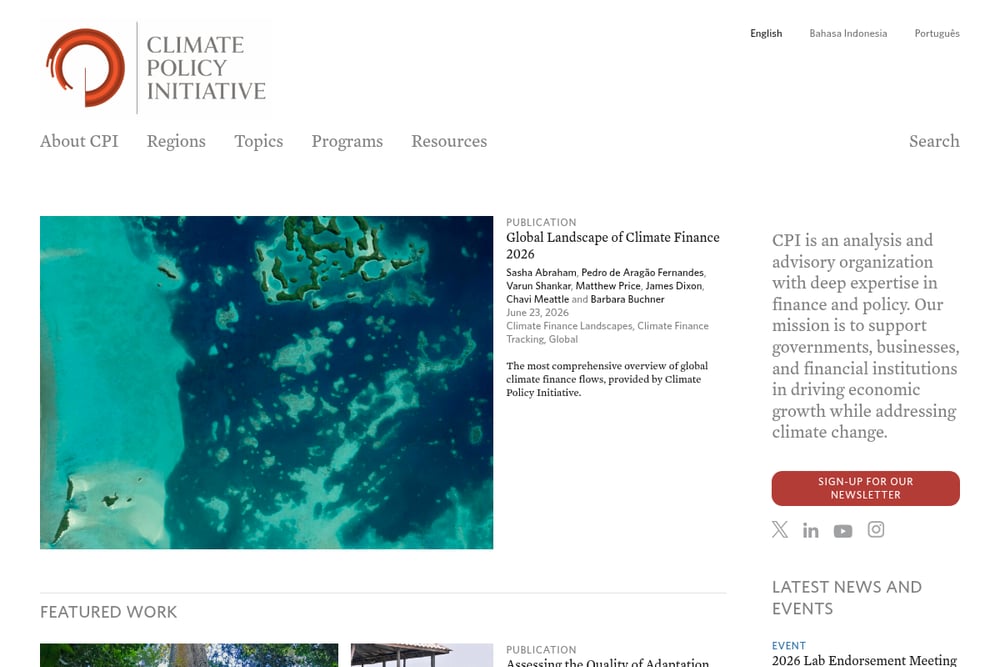 A screenshot of the Climate Policy Initiative website.
Climate Policy Initiative (CPI) is the go-to source for tracking global climate finance flows and policy effectiveness. Their research reveals that nearly 90% of climate finance still goes to mitigation, leaving a massive gap in adaptation funding. CPI's analysis of climate-resilient infrastructure investments helps you understand where public and private capital is actually flowing. They provide the data backbone for aligning your investment strategy with the Paris Agreement's adaptation goals. If you want to benchmark your portfolio against global finance trends and policy mandates, CPI's insights are indispensable.
#3 ClimaTwin
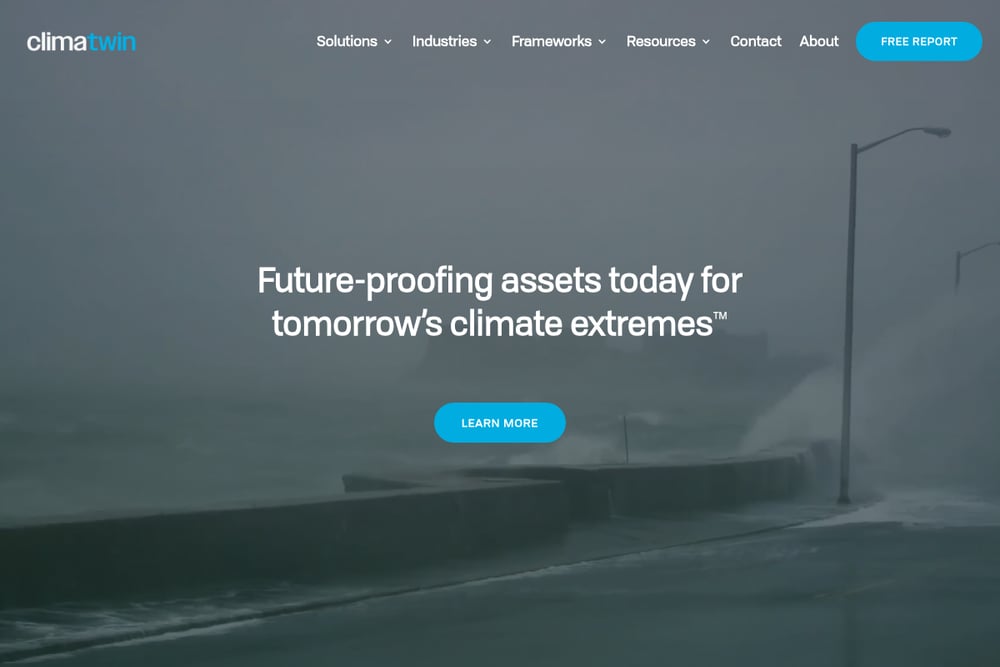 A screenshot of the ClimaTwin website.
ClimaTwin bridges the $4.3 trillion adaptation investment gap by embedding climate analytics directly into infrastructure asset lifecycles. Their Climate Business Intelligence framework integrates predictive climate data with financial metrics like CAPEX, OPEX, and value-at-risk. The economic case is compelling: every dollar invested in resilience yields six to eight dollars in avoided losses, according to UN data. ClimaTwin translates climate science into board-level business language, making it easier to justify resilience spending. For infrastructure operators and project developers, this platform turns climate risk into a quantifiable financial variable.
#4 2Net0 — Intelligence Infrastructure for Transition Markets
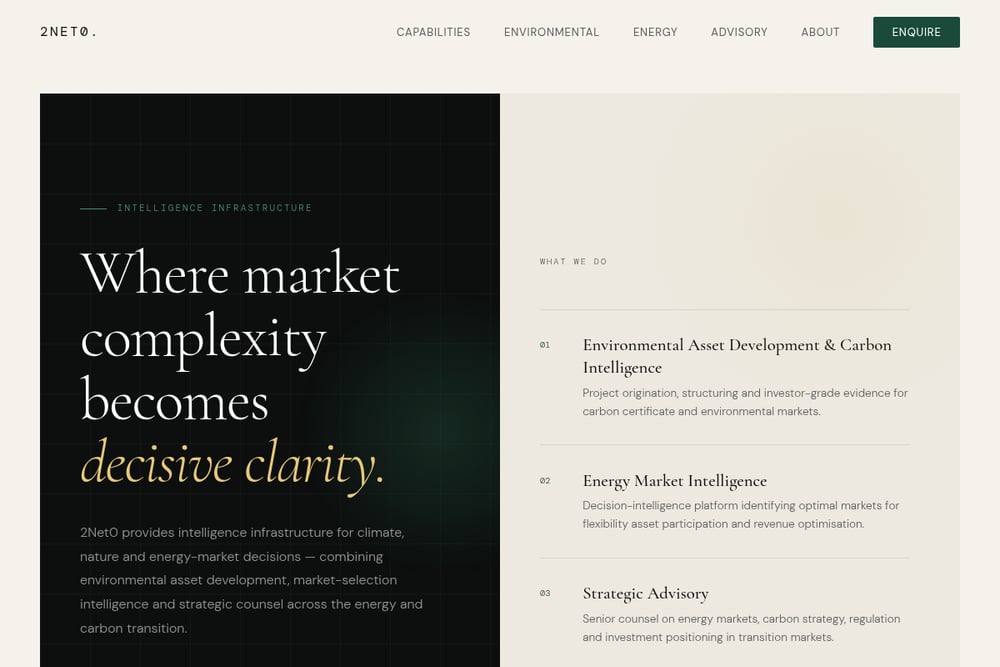 A screenshot of the 2Net0 website.
2Net0 provides a full-stack intelligence infrastructure for climate, nature, and energy markets. They combine environmental asset development, market selection intelligence, and strategic advisory into a single platform. This means you get data-driven decision support for everything from carbon credit sourcing to renewable energy project siting. Their approach is particularly valuable for institutional investors and energy participants who need to navigate the complexity of transition markets. 2Net0 acts as an operating system for your climate strategy, not just a data feed. If you are building a portfolio in emerging climate markets, this platform gives you the infrastructure to move faster and with more confidence.
#5 Climate Adaptive Infrastructure
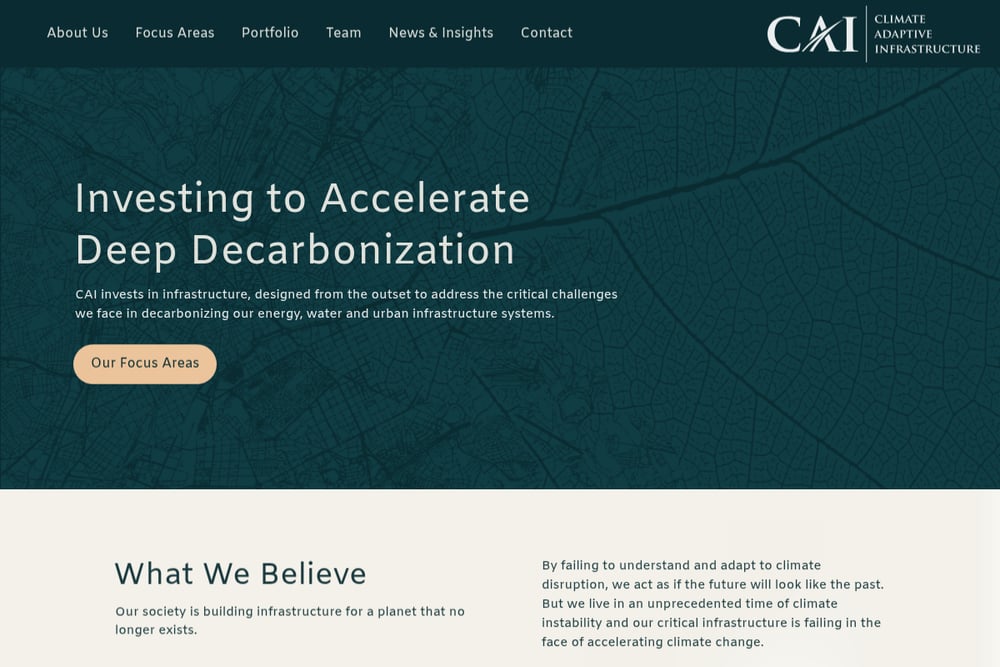 A screenshot of the Climate Adaptive Infrastructure website.
Climate Adaptive Infrastructure (CAI) is an investment firm focused on accelerating deep decarbonization through water, energy, and urban infrastructure projects. They take a hands-on approach, deploying capital into real assets that build climate resilience. Recent moves, like bringing on an ex-Argo MD as president and spinning out IPX Power, show they are actively shaping the market. CAI is less about software analytics and more about direct investment and project development. For investors who want to put capital to work in tangible climate-resilient infrastructure, CAI offers a proven track record and a focused portfolio.
How to Choose the Right Climate Intelligence Platform for You
Start by defining your primary use case. If you need to assess physical risk across a large portfolio of assets, MSCI GeoSpatial Asset Intelligence offers the deepest data coverage. If your focus is on tracking policy and finance flows to align with global frameworks, Climate Policy Initiative provides the authoritative research. For infrastructure operators looking to quantify the ROI of resilience investments, ClimaTwin bridges the gap between climate science and financial metrics. If you are building a portfolio in transition markets and need end-to-end market intelligence, 2Net0 delivers a full-stack solution. And if you prefer direct capital deployment into climate-resilient projects, Climate Adaptive Infrastructure offers a proven investment vehicle. Match the platform to your decision-making process, not the other way around.
Automation Workflow: Building Your Climate Intelligence Pipeline
To get the most out of these platforms, integrate them into a continuous intelligence workflow. Start with MSCI GeoSpatial Asset Intelligence to flag high-risk assets in your portfolio. Feed those insights into ClimaTwin to model the financial impact of resilience investments. Use Climate Policy Initiative data to validate your strategy against global policy trends. Then leverage 2Net0 to identify new market opportunities in transition markets. Finally, deploy capital through Climate Adaptive Infrastructure for direct project investment. This pipeline turns raw data into a repeatable, automated decision engine.
The Bottom Line on Climate Intelligence
The climate intelligence market is maturing fast, and the platforms profiled here represent the best options available today. Whether you are an institutional investor, a project developer, or an energy participant, there is a platform that fits your specific needs. The key is to stop treating climate risk as a separate concern and start embedding intelligence into every investment decision. The platforms that do this best will define the winners in the transition to a low-carbon, climate-resilient economy. Choose your stack wisely.