
You know the drill: students graduate with theory but no real-world chops. Employers want job-ready talent, and universities are scrambling to bridge the gap. That's where experiential learning platforms come in. I've analyzed the top players that connect learners with
Why Experiential Learning Is No Longer Optional
The disconnect between what universities teach and what employers need has reached a crisis point. Graduates lack practical skills, and companies spend billions on training. Enter the experiential learning industry — a fast-growing niche where platforms connect students with real projects, internships, and simulations. These providers sit at the intersection of higher education, workforce development, and corporate talent pipelines. They're not just nice-to-have; they're becoming essential for any institution that wants to stay relevant. The market is crowded, but the best platforms share one thing: they make students job-ready before they even graduate.
How I Ranked These Platforms
I evaluated each platform based on four criteria: (1) depth of university partnerships and institutional adoption, (2) variety and quality of hands-on experiences (projects, internships, simulations), (3) pricing transparency and scalability for different program sizes, and (4) alignment with the core mission of bridging education and workplace demands. I also considered user feedback and market reputation from the verified research sources.
Here's a quick comparison of the top five platforms. Each one takes a slightly different approach, but all are proven to boost employability.
| Provider | Best For | Pricing |
|---|---|---|
| Riipen | Universities seeking large-scale curriculum integration | Custom quote (free for employers to post projects) |
| Parker Dewey | Employers looking for low-risk, paid micro-internships to assess talent | Pilot $5K one-time (10 projects); Parker Dewey+ $7.5K/yr (15 projects); Team $15K/yr (30 projects); individual projects $200-$600 |
| Virtual Internships | Universities wanting guaranteed, global remote internship placements | Custom quote based on program size |
| IndeGlobe Learning Solutions | Universities seeking customized, end-to-end employability programs | Not publicly listed (custom quote based on program scope) |
| Forage | Students exploring careers and building confidence through free simulations | Free for students; employers pay custom pricing for simulation creation and recruitment access |
The Top 5 Platforms for Industry-Driven Learning
#1 Riipen
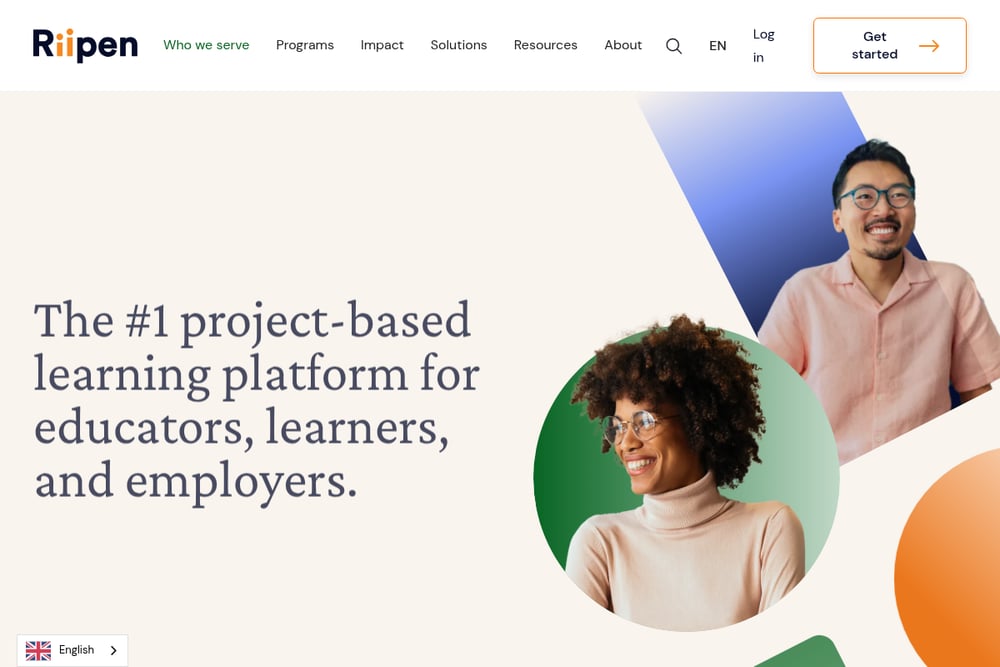 A screenshot of the Riipen website.
Riipen is the heavyweight in project-based experiential learning. It connects over 760 educational institutions with employers to embed real industry projects directly into curricula. You can browse projects from startups to Fortune 500s, giving students hands-on experience before they graduate. Riipen focuses on closing the employability gap through scalable, curriculum-integrated work. It's a direct competitor to IndeGlobe Learning Solutions, but with a larger institutional footprint. If you want a turnkey platform for university-wide adoption, Riipen is the gold standard.
Platform:
- Pro: Massive network of 760+ institutions and thousands of employers ensures project variety and scale.
- Con: Pricing is opaque and can be expensive for smaller programs.
- Pricing: Custom quote (free for employers to post projects)
#2 Parker Dewey
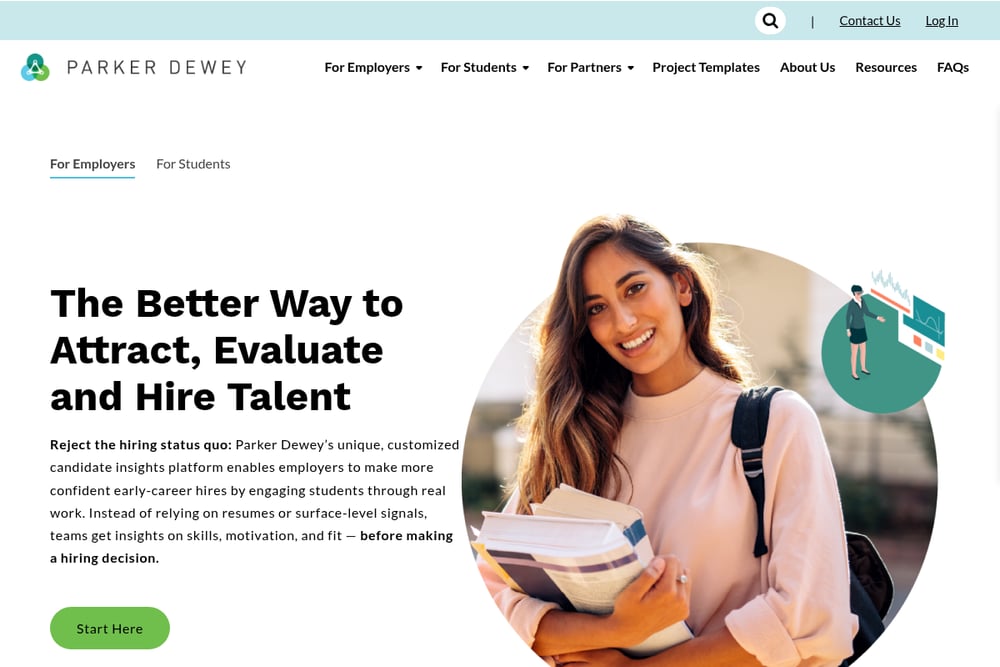 A screenshot of the Parker Dewey website.
Parker Dewey pioneered the micro-internship model — short, paid projects that let students prove their skills without a full-time commitment. With 5,900+ schools and programs in its network, it's a powerhouse for skills-based hiring. Parker Dewey focuses on early-career talent assessment, making it easy for employers to try before they hire. Their transparent pricing tiers (Pilot at $5K, Plus at $7.5K/yr, Team at $15K/yr) give you clear options. It's a great fit if you want low-risk, high-impact work samples from students.
Platform:
- Pro: Transparent pricing and a huge school network make it easy to start small.
- Con: Projects are short-term (10-40 hours), which may not suit deeper skill development.
- Pricing: Pilot $5K one-time (10 projects); Parker Dewey+ $7.5K/yr (15 projects); Team $15K/yr (30 projects); individual projects $200-$600
#3 Virtual Internships
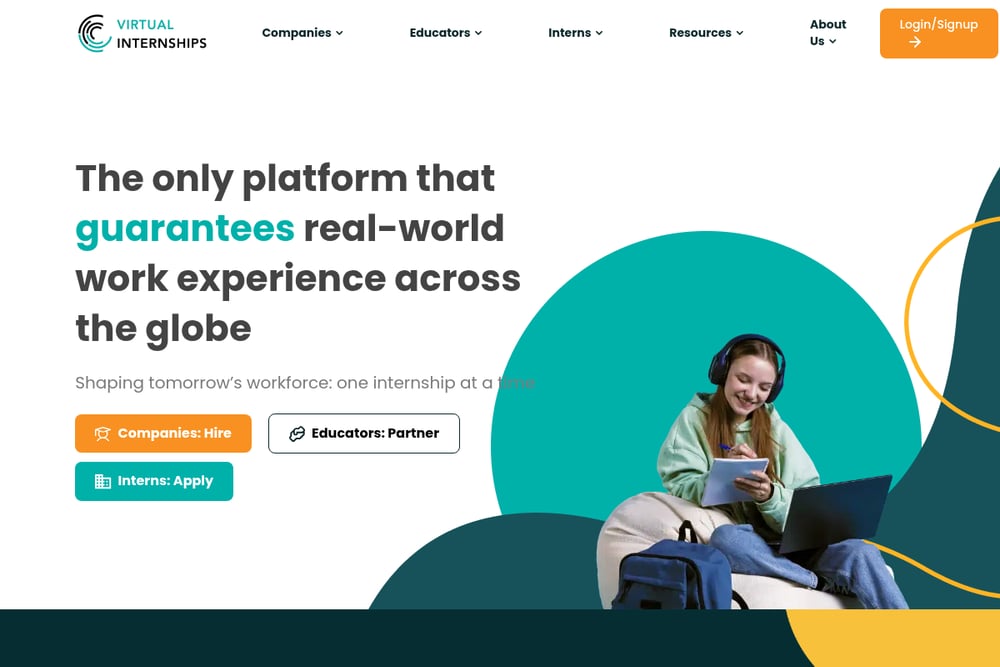 A screenshot of the Virtual Internships website.
Virtual Internships guarantees remote internship placements for students across the globe. They partner with universities to provide structured, mentor-supported experiences that mirror real-world work. Virtual Internships focuses on closing the gap between education and employment through guaranteed placements, which removes the uncertainty for students. Their global reach means you can offer internships in diverse industries and time zones. It's a solid choice if you need a reliable, scalable internship solution without the logistics headache.
Platform:
- Pro: Guaranteed placements reduce student anxiety and administrative burden for universities.
- Con: No project-based learning option — it's strictly internship-focused.
- Pricing: Custom quote based on program size
#4 IndeGlobe Learning Solutions
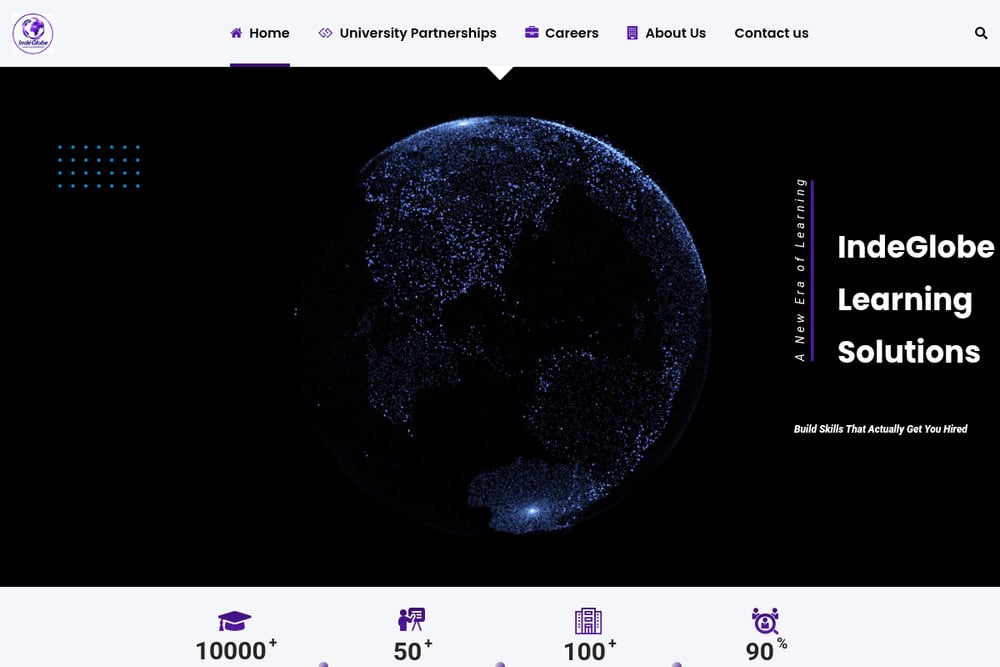 A screenshot of the IndeGlobe Learning Solutions website.
IndeGlobe Learning Solutions offers industry-driven skill development programs that bridge university education and workplace demands. They partner with universities to embed employability into curricula, providing hands-on projects, internships, and career-focused outcomes. IndeGlobe focuses on making students job-ready through a blend of training, real-world projects, and university collaboration. Their approach is holistic — covering everything from curriculum design to placement support. If you're looking for a partner that tailors programs to your institution's specific industry needs, IndeGlobe is a strong contender.
Platform:
- Pro: Customizable programs that align closely with specific industry demands and university goals.
- Con: Smaller network compared to Riipen or Parker Dewey, which may limit project variety.
- Pricing: Not publicly listed (custom quote based on program scope)
#5 Forage
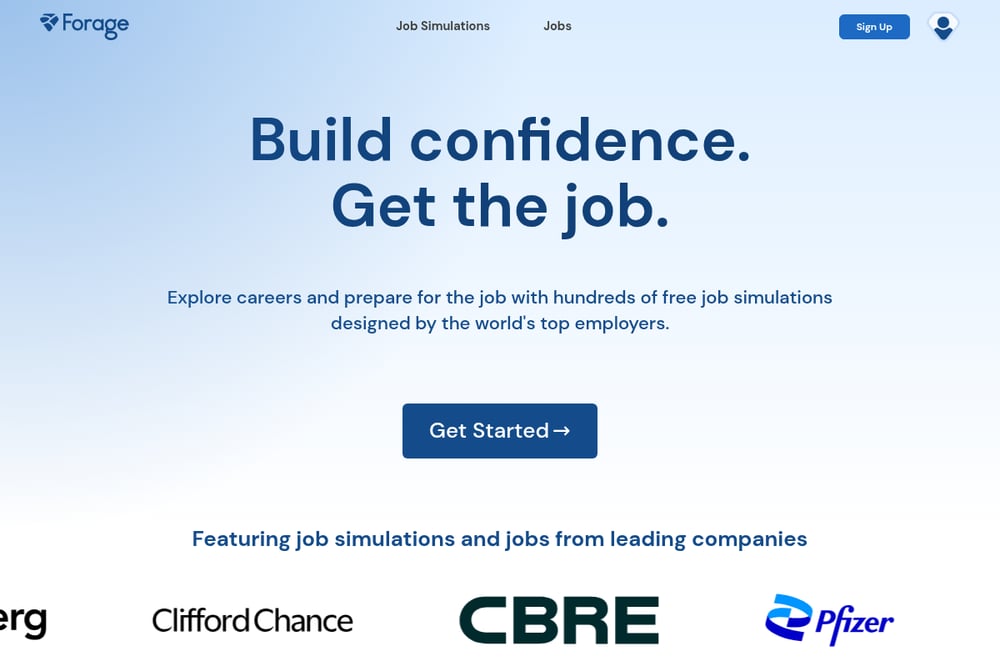 A screenshot of the Forage website.
Forage offers free, self-paced virtual job simulations designed by top employers like Goldman Sachs, JPMorgan, and BCG. With over 5 million students and 300+ simulations, it's the most accessible entry point for career exploration. Forage lets you try real tasks from actual companies without any cost or time commitment. It's perfect for students who want to test-drive careers before investing in internships. Employers use Forage to build brand awareness and pre-screen talent. The catch? It's not live project work — but it's an unbeatable starting point.
Platform:
- Pro: Completely free for students with high-quality simulations from prestigious employers.
- Con: No live interaction with employers or real-time feedback — it's a solo experience.
- Pricing: Free for students; employers pay custom pricing for simulation creation and recruitment access
How to Pick the Right Platform for Your Needs
Start by defining your primary goal. If you want to integrate real projects into existing courses at scale, Riipen is your best bet. For short, paid assessments that let employers test talent, go with Parker Dewey. If guaranteed remote internships are your priority, Virtual Internships delivers. IndeGlobe Learning Solutions shines when you need a fully customized program tailored to specific industry partners. And if you're on a tight budget or just want to let students explore careers risk-free, Forage is unbeatable. Consider your institution's size, budget, and desired level of hands-on involvement before committing.
Automating the Experiential Learning Workflow
To streamline the process of connecting students with opportunities, many platforms offer APIs and integration tools. For example, Riipen allows you to embed project matching into your LMS. Parker Dewey automates project posting and student matching. IndeGlobe Learning Solutions provides a consultative approach but can also integrate with university systems for seamless tracking. The ideal workflow: (1) define learning outcomes, (2) match students to projects or internships via platform algorithms, (3) monitor progress through dashboards, and (4) collect employer feedback to improve future cycles. Automation reduces administrative overhead and ensures every student gets a relevant experience.
The Bottom Line
The days of graduating with just a degree are over. Employers want proof of skills, and experiential learning platforms are the bridge. Whether you choose a giant like Riipen, a specialist like Parker Dewey, or a custom partner like IndeGlobe Learning Solutions, the key is to start now. The platforms I've covered here are proven to make students job-ready — and they're only getting better. Pick the one that fits your institution's DNA, and watch your graduates land roles faster.