Small churches often need a manageable set of tools rather than an enterprise platform. This list covers five church management software options worth knowing in 2026, described by what they do and the kind of church they tend to suit. It is a plain list, not a quality ranking, and no company is presented as the best choice.
How We Picked These Tools
These five options were chosen because each addresses the core needs of a small church, such as a member database, communication, giving, and volunteer or service planning. Each is described using only the company's own provided pages, and the list order is not a quality ranking. The aim is to show a range of approaches, from modular products to all-in-one bundles, so a small church can compare styles of software rather than a single verdict.
| Provider | Best For |
|---|---|
| Planning Center | Churches that want to start with a free membership database and add modules as needs grow |
| Tithely | Churches that want giving, people, messaging, apps, and a website bundled at one flat rate |
| Breeze | Volunteer-run churches that want a simple people database with phone and email support |
| Flocknote | Churches whose priority is email, text, and a clean household database |
| Elvanto | Churches that want administration, worship planning, and pastoral care in one all-inclusive cloud system |
The 5 Tools in Focus
#1 Planning Center
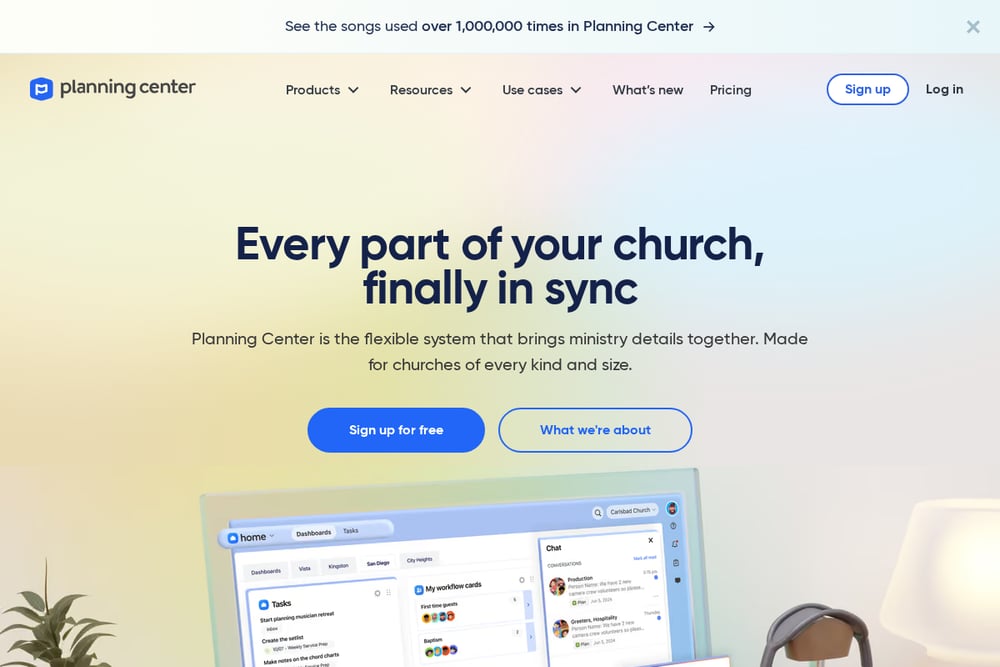 A screenshot of the Planning Center website.
Planning Center is a flexible system that brings ministry details together, made for churches of every kind and size. It is organized as a collection of products covering people, scheduling, registrations, check-ins, worship planning, giving, and a custom church app. Churches can begin with the pieces they need and expand over time. It suits congregations that prefer to assemble their tools module by module rather than buy one fixed bundle.
#2 Tithely
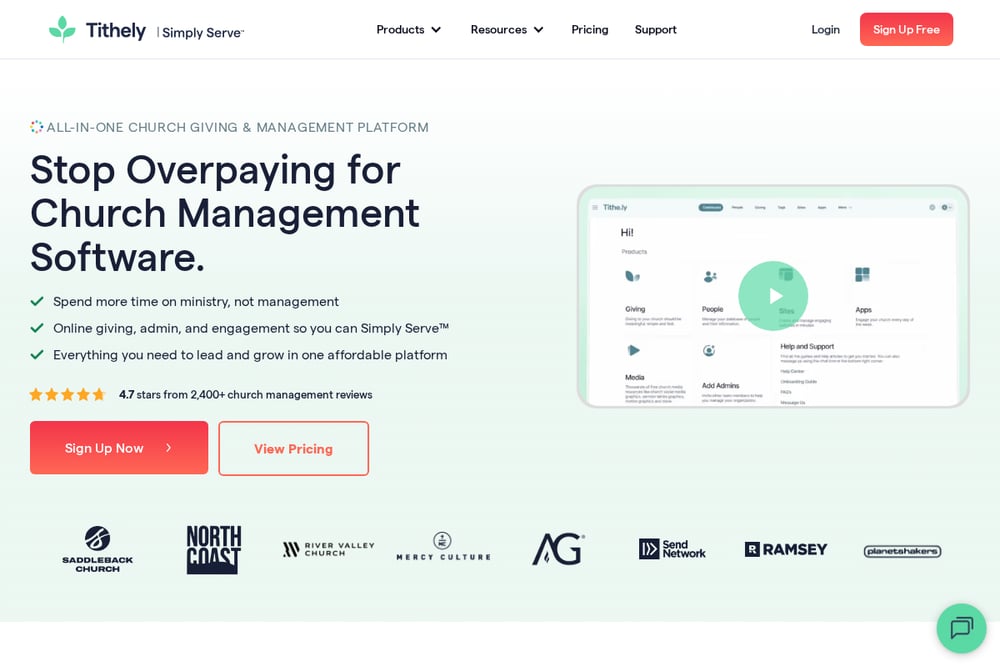 A screenshot of the Tithely website.
Tithely presents itself as an all-in-one church giving and management platform. Its All Access plan bundles giving, people, messaging, church management, church apps, events, and sites into one plan. Giving tools include online, mobile, and text donations, and the People product is a free way to track member info that syncs with giving data. It suits churches that would rather run everything from one place than stitch together separate services.
#3 Breeze
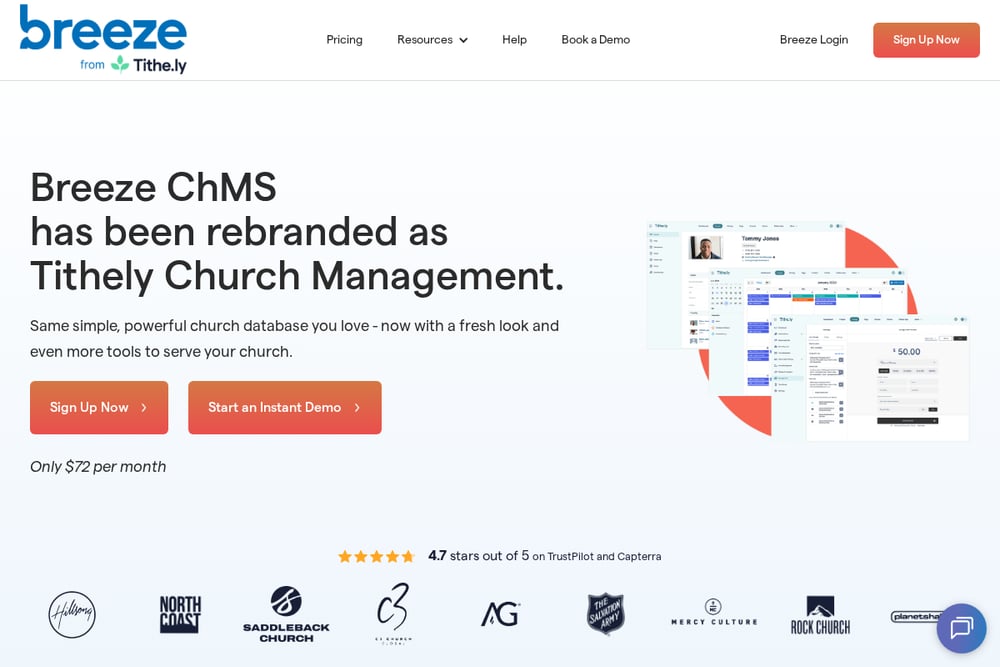 A screenshot of the Breeze website.
Breeze ChMS is a church database built around a people database, groups, events, service planning, and forms. It lists core features such as unlimited contacts, free data export and import, online and text giving, text messaging, unlimited emails, event management, member directories, a mobile app, check-in and name tags, and attendance and giving reporting. Breeze notes that it has been rebranded as Tithely Church Management while keeping the same church database. It suits churches that want straightforward administration and free phone and email support.
#4 Flocknote
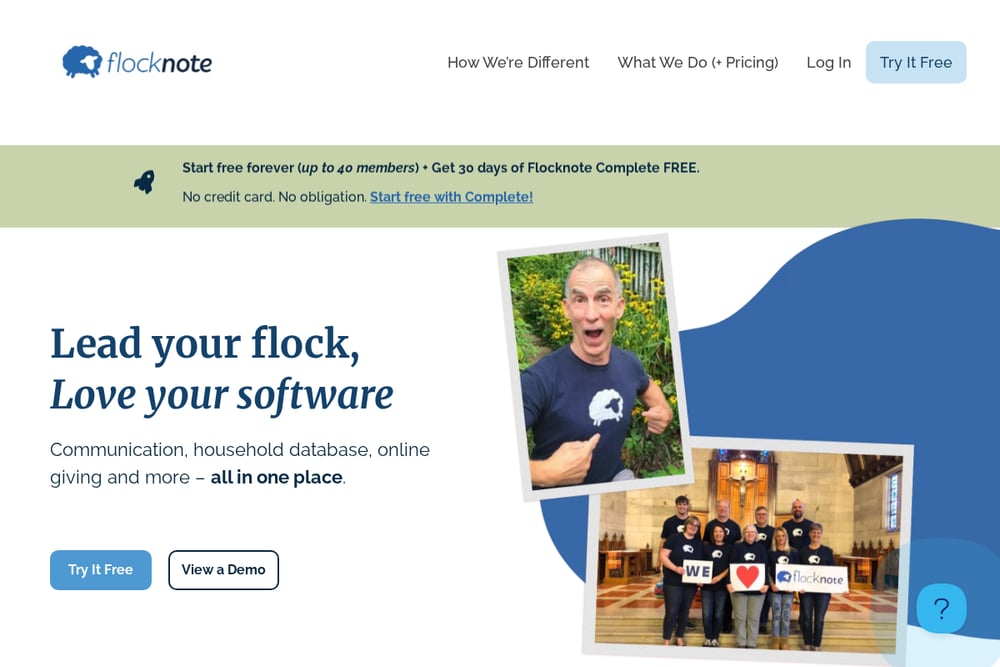 A screenshot of the Flocknote website.
Flocknote focuses on communication, a household database, online giving, and registration and event signups in one place. It offers unlimited email and texting so churches can reach members and hear back. The household database lets teams customize member data, organize members into households, track attendance and participation, and set parental contacts for children. Online giving is included free with all Flocknote plans, and the company says it will migrate existing member and historical giving data for free. It suits churches that want friendly, communication-first software.
#5 Elvanto
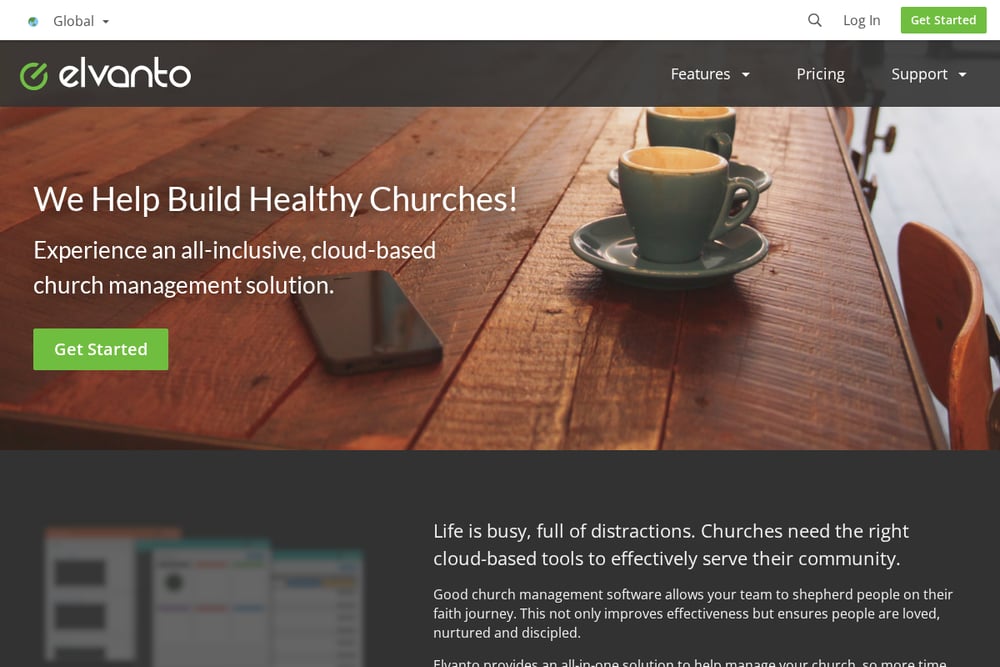 A screenshot of the Elvanto website.
Elvanto describes itself as an all-inclusive, cloud-based church management solution. Its features cover administration, pastoral care, worship, children and youth, and financial tools. The worship tools let teams create run sheets, schedule volunteers, and access a song database with lyrics and chords through a drag-and-drop interface. Elvanto states that its advanced features are all inclusive, with no add-on modules and no extra charges. It suits churches that want a broad set of tools in a single cloud system.
Which One Should You Choose?
Start with the task that causes the most friction each week, whether that is tracking members, scheduling volunteers, or collecting giving. Check whether the tools you need are included in the base plan or require an upgrade. Look at how the system handles communication, since reaching members is a daily need for most small churches. Confirm what support is available, especially if your team is volunteer-run. Take advantage of free trials, demos, or free tiers to test the workflow with real data before committing.
Final Thoughts
Small churches rarely need every module a large congregation uses, so the practical question is which system matches the way your team already works. A free membership database and giving tools suit churches that want to start simply and add features later. A flat-rate all-in-one plan suits churches that would rather bundle giving, people, and a website together. A straightforward database with phone support suits volunteers who are not computer savvy. A communication-first tool suits churches whose main need is email, text, and a clean household list. An all-inclusive cloud system suits churches that want administration, worship planning, and pastoral care in one place without add-on charges. Read each listing against your own routines, try the free trials or demos where offered, and choose the one your volunteers can actually keep up with.
Know a company that belongs on this list? Email us at editorial@peekwire.com.