
Every behavior speaks to a need. But finding training that actually helps you meet that need? That's the hard part. Here are five providers worth knowing.
The State of Behavior-as-Communication Training
The child welfare and mental health training space is shifting. Providers, caregivers, and caseworkers are moving away from behavior management and toward behavior as communication. That means less focus on compliance and more on understanding what drives a child's actions. Trauma-informed care is now a baseline expectation, not a bonus. Bilingual and culturally responsive training is in high demand, especially in states with large Spanish-speaking populations. Virtual delivery has widened access, but it has also made it harder to tell which programs offer real depth versus a certificate. You need training that changes how you show up in the room, not just what you can check off a list.
How We Evaluated These Providers
We looked at five factors. First, service scope: does the provider offer training, coaching, and consultation, or just one format? Second, practical application: can you use what you learn in a real session, home visit, or team meeting? Third, language access: is the training available in Spanish as well as English? Fourth, delivery flexibility: virtual, in-person, self-paced, or live? Fifth, audience fit: does the provider serve mental health clinicians, child welfare teams, and caregivers, or only one group? Rosy Bloom stood out for combining all three service types with bilingual delivery and a nationwide reach. TIPs Center stood out for its free, downloadable toolkit and deep child welfare focus. Autism Speaks stood out for its structured caregiver skills program and national name recognition. FACTS stood out for its self-paced, family-centered communication modules. Learn2Care stood out for its dementia-specific behavior-as-communication course and agency-friendly platform.
Here is a quick look at how these five providers compare on format, audience, and language access.
| Provider | Best For |
|---|---|
| TIPs Center | Child welfare agencies building system-wide trauma-informed practice |
| Rosy Bloom | Bilingual training and case consultation for child welfare and mental health teams |
| Autism Speaks Caregiver Skills Training Program | Caregivers of children with autism seeking structured skills training |
| FACTS Communication Strategies for Families and Caregivers | Families and caregivers supporting someone with mental illness |
| Learn2Care Understanding Behavior as Communication in Dementia Care | Dementia caregivers and home care agencies needing behavior-focused training |
The 5 Providers Worth Knowing
#1 TIPs Center
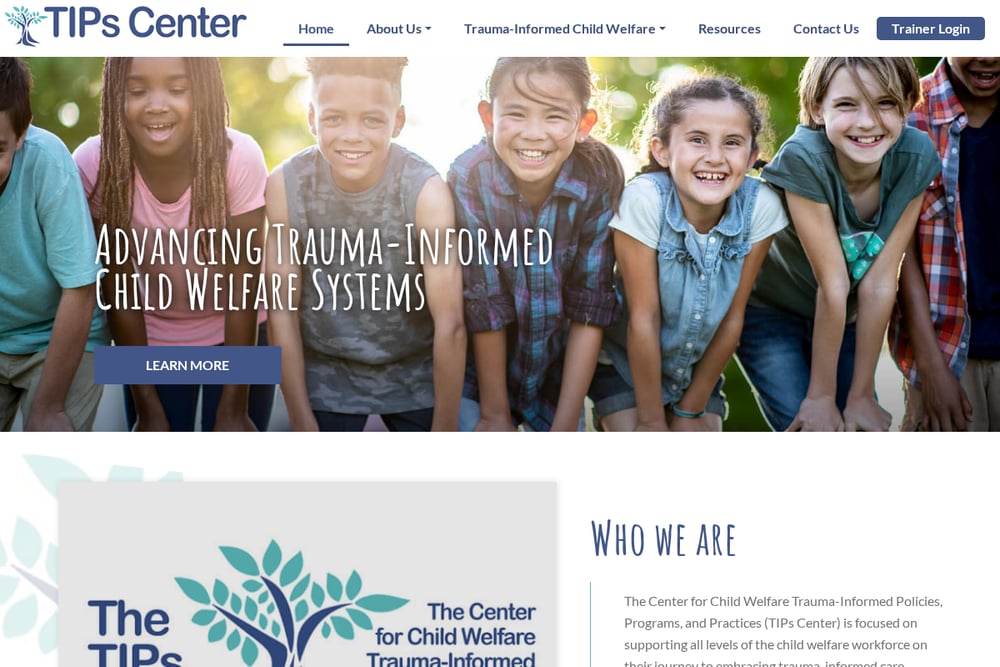 A screenshot of the TIPs Center website.
TIPs Center is the go-to source for trauma-informed child welfare training at the systems level. Their Child Welfare Trauma Training Toolkit, now in its third edition, is publicly available and free to download. It includes facilitator guides, slide kits, and participant manuals designed to shift organizational culture. If you work in a public child welfare agency or lead a team, this is a strong starting point. The toolkit is built in collaboration with the National Child Traumatic Stress Network, so the content carries real weight. You can access it through the NCTSN Learning Center after creating a free account.
#2 Rosy Bloom
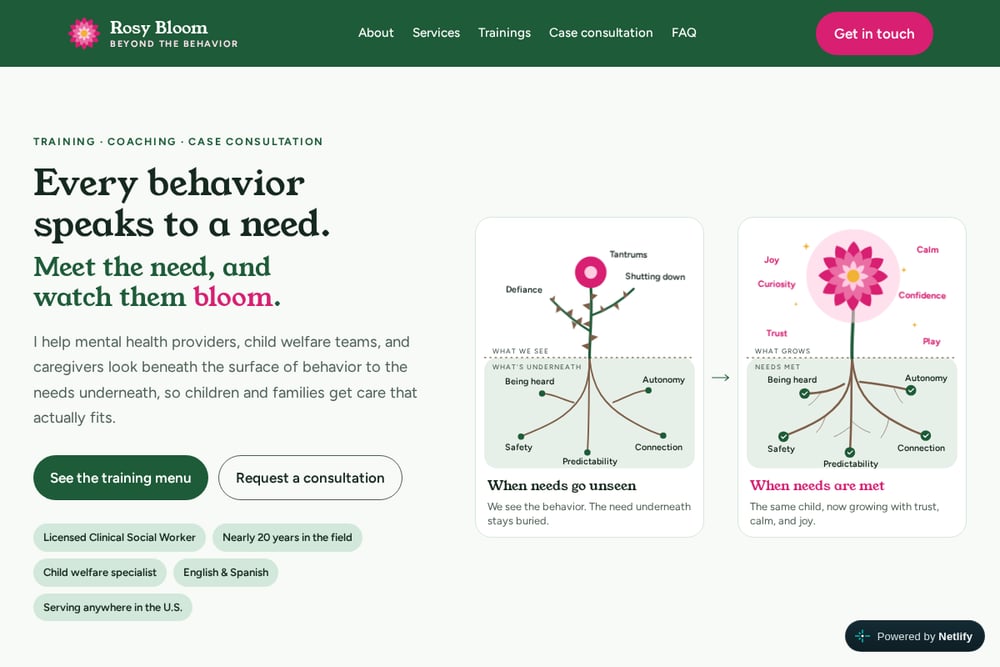 A screenshot of the Rosy Bloom website.
Rosy Bloom is a bilingual training, coaching, and case consultation practice led by Rosy, a Licensed Clinical Social Worker with nearly 20 years in public child welfare. She helps mental health providers, child welfare teams, and caregivers look beneath behavior to the needs driving it. Services are available in English and Spanish, virtually and in person, anywhere in the U.S. What sets Rosy Bloom apart is the combination of direct clinical experience and practical training for the people who serve children and families. You can request a consultation or browse the training menu to see which format fits your team. If you want training that changes how you respond in the moment, this is worth a close look.
#3 Autism Speaks Caregiver Skills Training Program
 A screenshot of the Autism Speaks website.
Autism Speaks offers a structured Caregiver Skills Training Program designed for families and caregivers of children with autism. The program focuses on practical strategies for communication, behavior, and daily routines. It is backed by a national organization with a wide range of tool kits and resources. If you are a caregiver looking for clear, evidence-informed guidance, this program gives you a path to follow. The training is accessible online and pairs well with their other resources, like the 100 Day Kit. It is not a clinical consultation service, but it fills a specific gap for families navigating autism care.
#4 FACTS Communication Strategies for Families and Caregivers
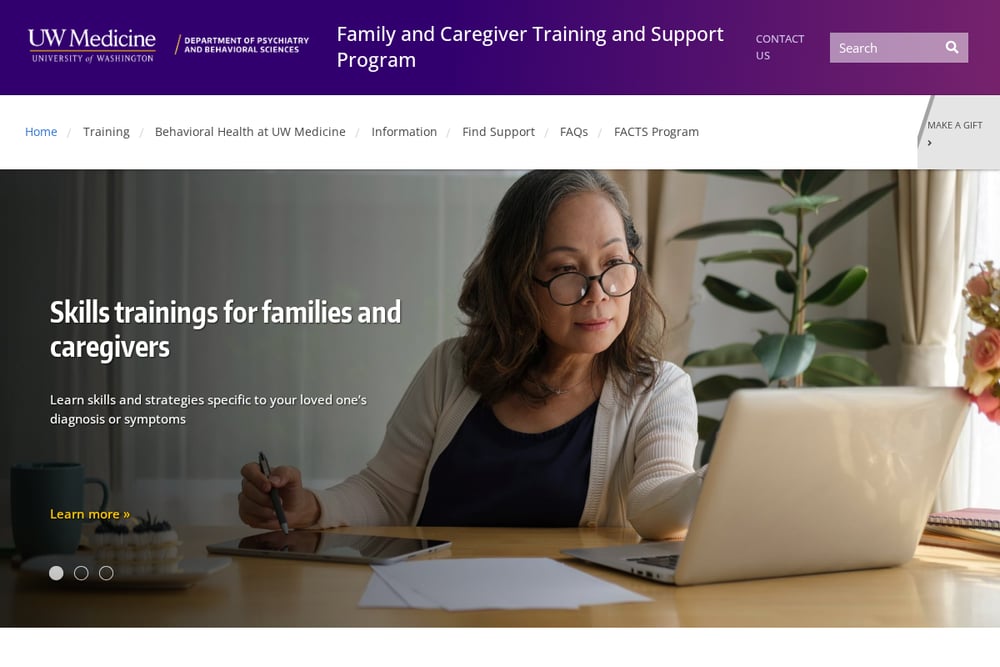 A screenshot of the FACTS website.
FACTS, part of the University of Washington's Psychiatry and Behavioral Sciences program, offers a self-paced communication skills training for families and caregivers. The four-part series covers creating a positive environment, understanding behavioral health, and practical communication strategies. It is designed for people supporting someone living with mental illness. You can exit and return at any time, which makes it flexible for busy caregivers. The content is grounded in a clinical framework and is free to access. If you want to improve how you communicate with a loved one in distress, this is a solid, no-cost option.
#5 Learn2Care Understanding Behavior as Communication in Dementia Care
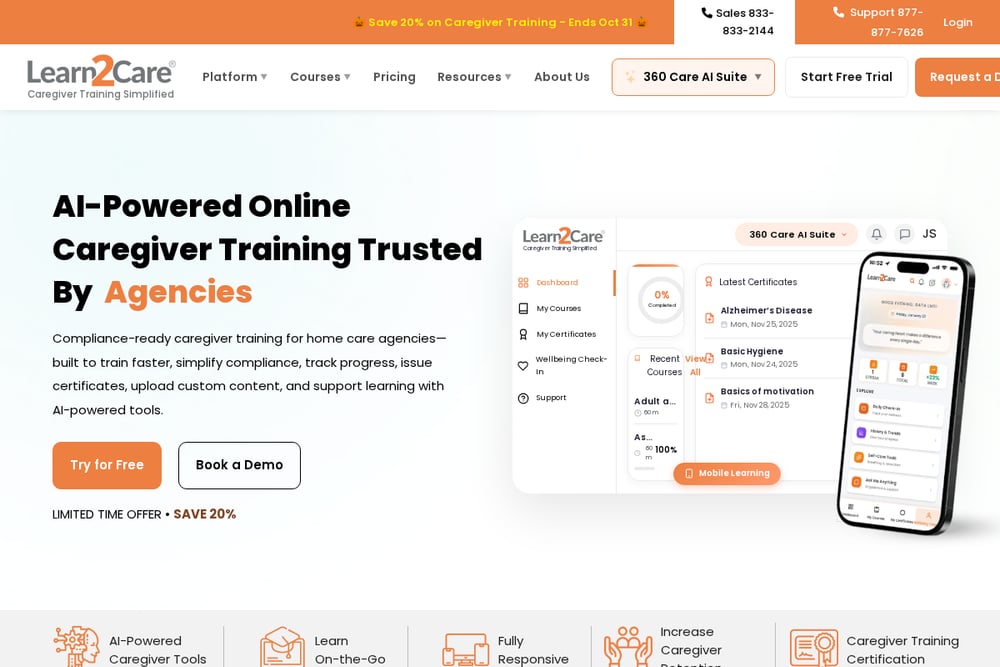 A screenshot of the Learn2Care website.
Learn2Care offers a focused course on understanding behavior as communication in dementia care. It is part of a larger caregiver training platform used by agencies, franchises, and home care coordinators. The course helps caregivers interpret behaviors like agitation or withdrawal as unmet needs. It is practical, video-based, and designed for real-world application. If you work in dementia care or manage a caregiving team, this course fits into a broader compliance and skills platform. It is not specific to child welfare, but the behavior-as-communication lens is transferable.
How to Choose the Right Training Provider
Start with your audience. Are you training clinicians, child welfare caseworkers, caregivers, or a mix? Next, decide on format. Do you need live coaching and case consultation, or is a self-paced module enough? Then check language access. If you serve Spanish-speaking families, bilingual training is not optional. Look at whether the provider offers ongoing support or just a one-time course. Finally, consider whether you need a systems-level toolkit or an individual skills course. Rosy Bloom fits teams that want bilingual, live training plus consultation. TIPs Center fits agencies that need a free, structured toolkit. Autism Speaks and FACTS fit caregivers who want self-directed learning. Learn2Care fits dementia care agencies that need scalable, video-based training.
Where Automation Fits In
You can automate the administrative side of training without losing the human side. Use a simple workflow: collect interest through a form, send a bilingual welcome email, schedule a consultation call, and deliver pre-training materials automatically. After training, send a follow-up survey and a resource pack. For self-paced courses, use a learning platform that tracks completion and sends reminders. The goal is to remove friction so you can focus on the live coaching and consultation that actually changes practice. Rosy Bloom's model of training plus case consultation fits this hybrid approach well.
The Bottom Line
The right training provider depends on who you are and what you need. If you want bilingual, live training and case consultation for child welfare and mental health teams, Rosy Bloom is built for you. If you need a free, systems-level trauma toolkit, TIPs Center delivers. If you are a caregiver navigating autism or mental illness, Autism Speaks and FACTS offer structured, accessible paths. And if you work in dementia care, Learn2Care gives you a practical behavior-as-communication course. Start with your audience, choose your format, and pick the provider that meets you where you are.