
If you're tired of manual jar testing and unpredictable chemical costs, these five platforms are changing how water treatment facilities handle coagulation and flocculation dosing.
The State of Chemical Dosing in Water Treatment
Water treatment plants across the US are under pressure to cut chemical waste and meet stricter environmental standards. The coagulation and flocculation process is notoriously tricky because incoming water quality varies, making manual dosing error-prone. Overdosing not only burns through the $9.3 billion spent annually on additives but also drives up a plant's environmental footprint. Automation is the obvious answer, but many existing systems are too complex or expensive for plants with highly variable feed water. That's where a new wave of smart dosing controls comes in, promising precision without the headache.
How We Evaluated These Dosing Control Solutions
We looked at each provider's ability to handle real-world variability in water quality, the simplicity of their automation setup, and how clearly they communicate pricing and service scope. We also considered whether they offer hardware, software, or a full integrated approach, and how well they support plants that are new to automated dosing. Each solution was assessed on its own merits, not against each other, to highlight what makes it stand out for different operational needs.
Here's a quick snapshot of the five systems we're highlighting, from full-service integrators to specialized automation tools.
| Provider | Best For |
|---|---|
| Chemtec | Plants needing reliable flow sensors and quick hardware delivery |
| Home - OptikTechnik | Water treatment facilities wanting automated, precise dosing control |
| Pure Aqua, Inc. | Facilities needing a wide range of water treatment equipment and dosing pumps |
| Membracon UK | Complex water treatment projects needing integrated dosing and AI optimization |
| ProChem Water | Custom wastewater treatment and dosing systems with treatability testing |
The Five Dosing Control Systems to Watch
#1 Chemtec
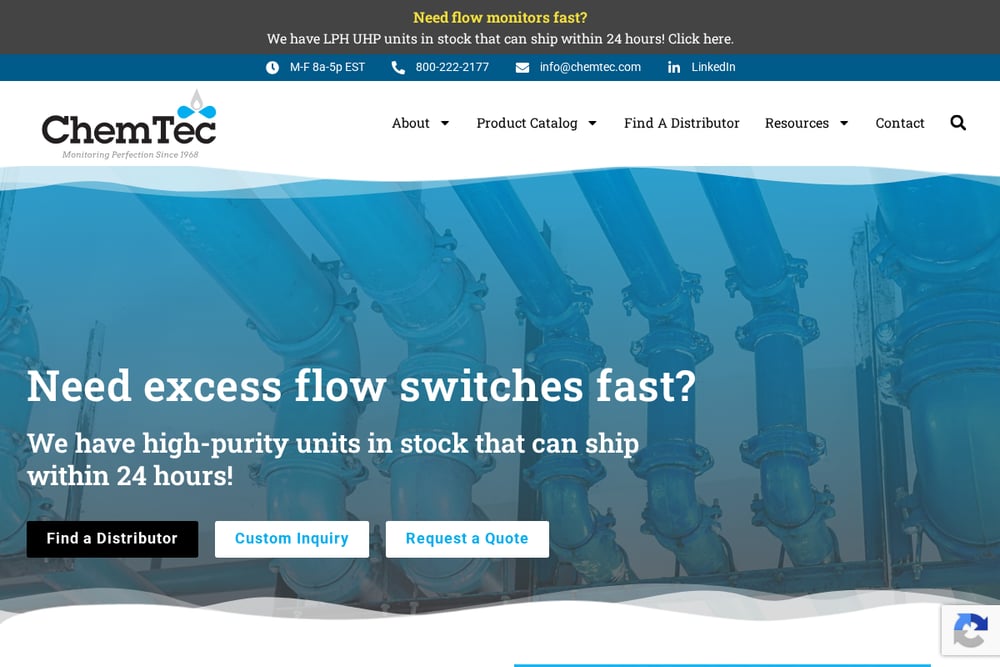 A screenshot of the Chemtec website.
Chemtec brings a hardware-first approach to chemical dosing, with flow monitors, sensors, and excess flow valves that help you dial in precise chemical injection. Their smart systems are designed to integrate with existing setups, so you can upgrade without ripping out your whole plant. They emphasize fast availability, with many units ready to ship within 24 hours, which is a lifesaver when you need a quick fix. If you're looking to optimize dosing through better flow measurement, Chemtec's components are a solid starting point. Their focus on flow sensors directly addresses the root cause of overdosing: inaccurate chemical delivery. For plants that want to build their own control loop, this is a practical, hands-on option.
#2 Home - OptikTechnik
 A screenshot of the Home - OptikTechnik website.
OptikTechnik is tackling the exact problem you face: the variability of contaminants in wastewater that makes manual dosing a guessing game. Their automated control system monitors the effect of your additives in real time and adjusts chemical dosages automatically, so you can ditch the jar tester for good. This isn't just about saving money—though cutting the $9.3 billion annual chemical spend is a big win—it's also about reducing the environmental damage caused by over-dosing. The system is designed to handle highly variable feed waters, which is where many existing automation options fall short. By focusing specifically on coagulation, flocculation, and dewatering chemistries, OptikTechnik offers a specialized solution that's both simpler and more effective than generic automation. If you're ready to stop overdosing and start saving, this is the one to watch.
#3 Pure Aqua, Inc.
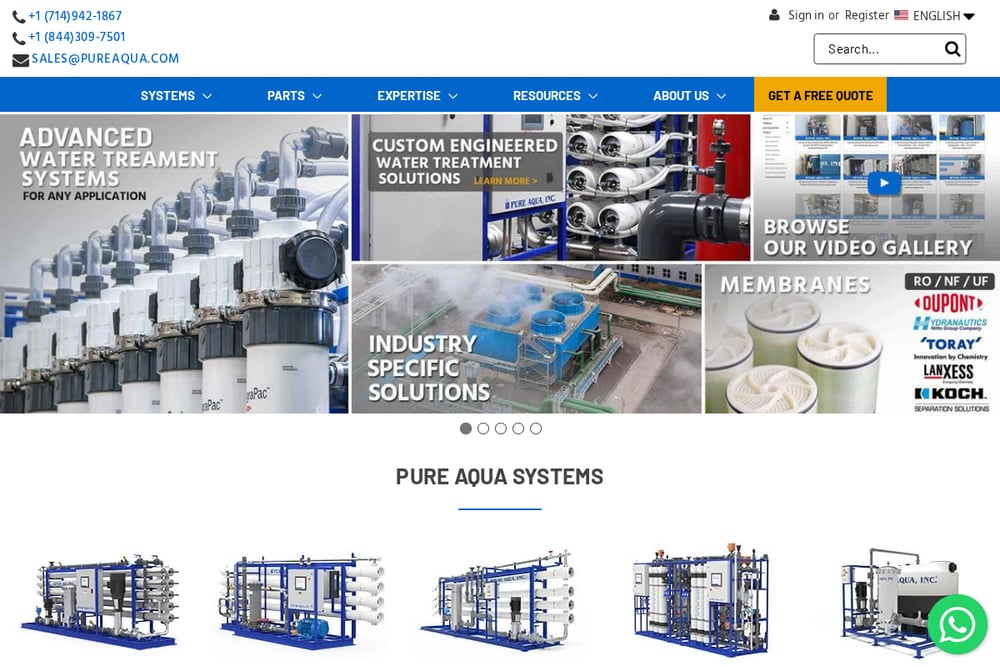 A screenshot of the Pure Aqua, Inc. website.
Pure Aqua is a one-stop shop for water treatment, offering everything from chemical dosing pumps to complete reverse osmosis systems. Their catalog includes dosing pumps from trusted brands like Pulsafeeder and Grundfos, so you can mix and match to fit your exact needs. They also provide a wide range of monitoring instruments, like flowmeters and pH controllers, to help you keep tabs on your dosing accuracy. If you're looking for a broad solution that covers multiple treatment stages, Pure Aqua's extensive product line is hard to beat. Their global reach and in-house expertise make them a reliable partner for both municipal and industrial projects. For plants that want to consolidate suppliers, this is a strong choice.
#4 Membracon UK
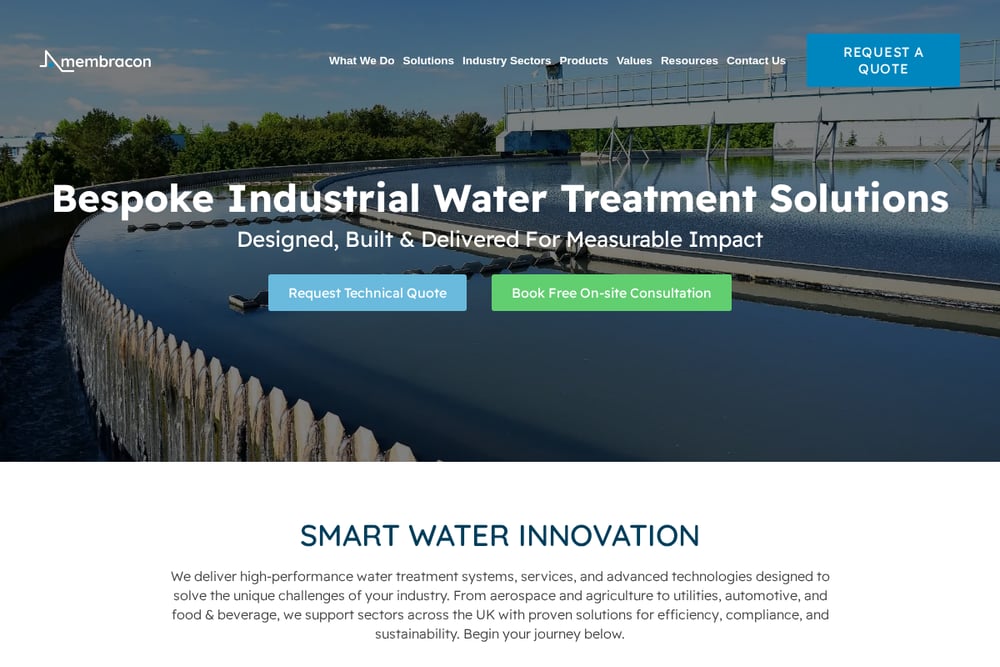 A screenshot of the Membracon UK website.
Membracon UK takes a holistic approach to chemical dosing, integrating it into larger water treatment systems like ultrafiltration and reverse osmosis. They emphasize the importance of precise chemical injection for disinfection, pH correction, and scale inhibition, and they offer AI-driven process optimization to take the guesswork out of dosing. Their service extends beyond just equipment—they provide design, build, and maintenance contracts, so you can outsource the entire dosing setup. If you're dealing with complex effluent treatment or need a partner to manage your whole water cycle, Membracon's expertise is valuable. They also offer training and water analysis to ensure your team gets the most out of the system. For a comprehensive, long-term solution, this is a solid pick.
#5 ProChem Water
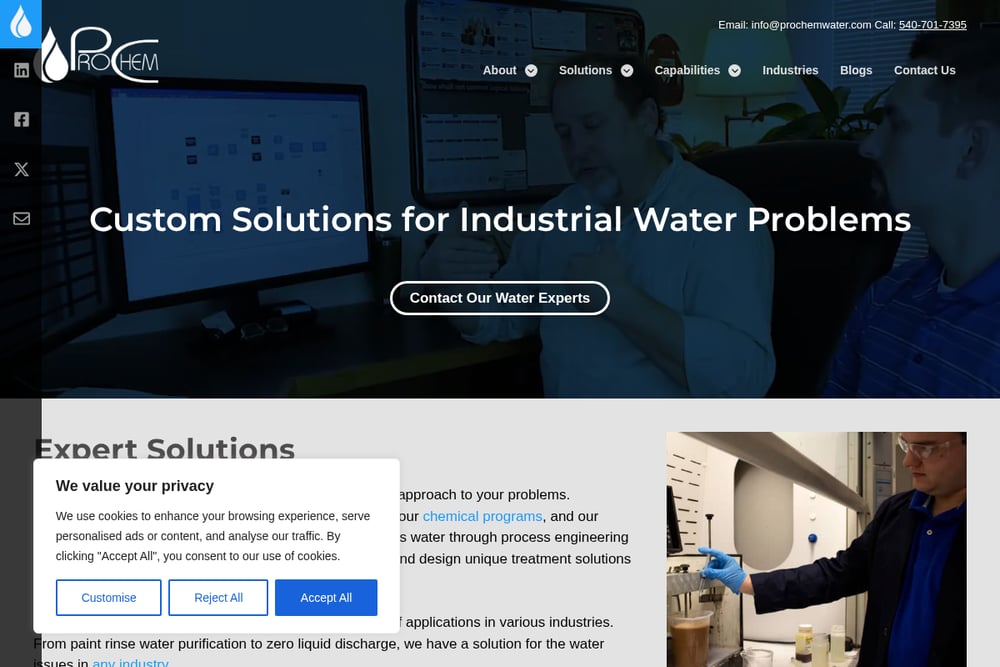 A screenshot of the ProChem Water website.
ProChem Water focuses on custom wastewater treatment solutions, including chemical dosing pumps that are tailored to your specific application. They offer treatability testing and custom system design, so you can be confident that the dosing setup will work for your unique water profile. Their blog is a treasure trove of practical advice on topics like pH control and chlorine monitoring, which is great for operators who want to learn more. If you're dealing with challenging wastewater compliance issues, ProChem's hands-on approach can help you get from problem to solution. They also provide contract operations, meaning they can run your treatment system for you if you lack in-house expertise. For plants that need a partner to solve a specific dosing headache, this is a reliable option.
How to Choose the Right Dosing Control System
Start by assessing your plant's biggest pain point: is it chemical waste, labor costs, or inconsistent water quality? If you need a quick fix, look for providers that offer off-the-shelf components like flow sensors or dosing pumps. If you want a fully automated solution that adapts to variable feed water, prioritize systems like OptikTechnik that specialize in real-time control. Consider the total cost of ownership, including installation, training, and maintenance. Also, think about scalability—will the system grow with your plant's needs? Finally, don't overlook the importance of vendor support; a partner that offers training and ongoing service can make all the difference.
Automating Your Dosing Workflow
The ideal workflow starts with real-time monitoring of your water quality parameters, such as turbidity or pH. That data feeds into a control algorithm that calculates the optimal chemical dose. The system then automatically adjusts your dosing pumps, eliminating manual intervention. Over time, the system learns from historical data to refine its predictions, even as your feed water changes. This not only saves chemicals but also frees up your operators to focus on other tasks. The result is a more consistent effluent quality and lower environmental impact.
The Bottom Line on Dosing Control
The days of relying on jar tests and guesswork are numbered. Whether you choose a hardware-focused approach like Chemtec, a comprehensive integrator like Pure Aqua, or a specialized automation system like OptikTechnik, the goal is the same: precise dosing that saves money and protects the environment. Each of these five providers brings something unique to the table, so the right choice depends on your plant's specific challenges. Take the time to evaluate your needs, and you'll find a solution that pays for itself many times over.