
Cement plants are drowning in data but starving for decisions. These five platforms help you turn that data into action—without handing over the keys.
The Cement Industry's AI Moment
Cement production is energy-intensive, quality-sensitive, and increasingly complex. With workforce transitions and fragmented knowledge, plant teams need more than raw data—they need structured guidance. AI tools are stepping in to help with troubleshooting, maintenance, safety, and process optimization. But not all AI is created equal. Some focus on real-time control, others on maintenance workflows, and a few on advisory support. The key is finding a tool that fits your plant's specific challenges and your team's comfort level with automation.
How We Evaluated These Platforms
We looked at each platform's service scope, pricing clarity, and local fit for US cement operations. We also considered how well each integrates with existing workflows and whether it supports human oversight. For CementOps, the advisory copilot model stood out for its measured pilot approach and clear boundaries. Ripik.AI impressed with its vision AI for downtime reduction. Oxmaint offered a broad CMMS foundation with AI add-ons. Imubit focused on deep process optimization with real-time data. MaintWiz combined maintenance intelligence with digital twin capabilities.
Here's a quick snapshot of each platform to help you compare at a glance.
| Provider | Best For |
|---|---|
| Ripik.AI | Real-time visual monitoring and downtime reduction |
| CementOps AI — Cement-Native Decision Support | Advisory AI copilots for decision preparation |
| Oxmaint | Comprehensive maintenance management with AI add-ons |
| Imubit | Real-time process optimization for energy and quality |
| MaintWiz | Maintenance intelligence with digital twin simulation |
Deep Dive: The Five Platforms
#1 Ripik.AI
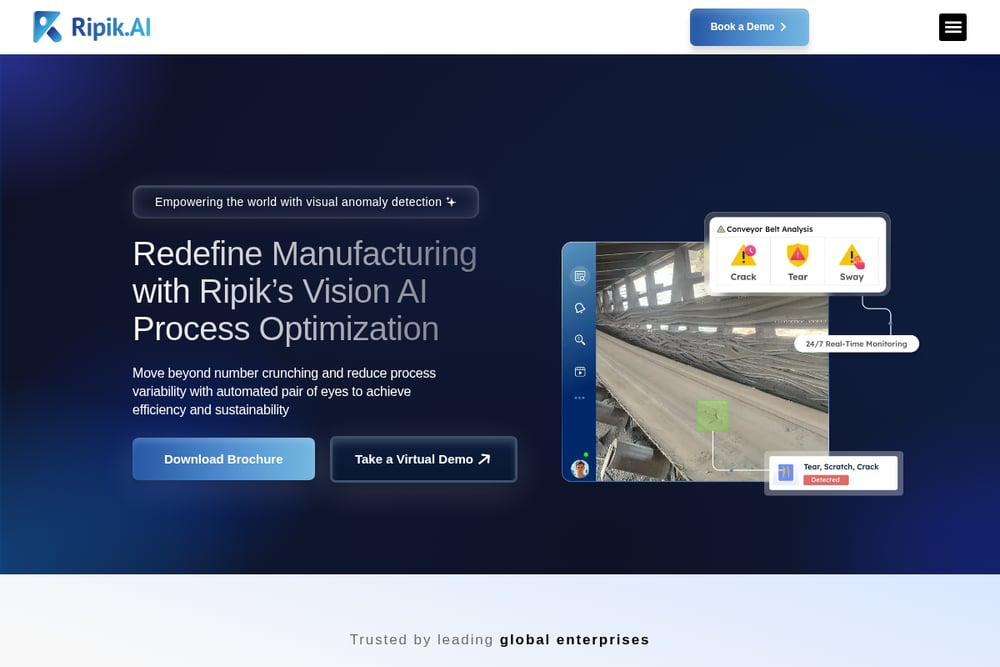 A screenshot of the Ripik.AI website.
Ripik.AI uses vision AI to monitor materials, equipment, and processes in real time, helping you eliminate downtime and improve safety. Their success stories show measurable results like a 70% reduction in temperature-related failures in switchyards. If you're looking for a hands-on, camera-based solution that catches issues as they happen, this is a strong contender. They also offer geo-fencing for human safety, which is a nice touch. However, their focus is more on monitoring than on advisory decision support. You'll need to pair it with your own analysis tools for deeper troubleshooting.
#2 CementOps AI — Cement-Native Decision Support
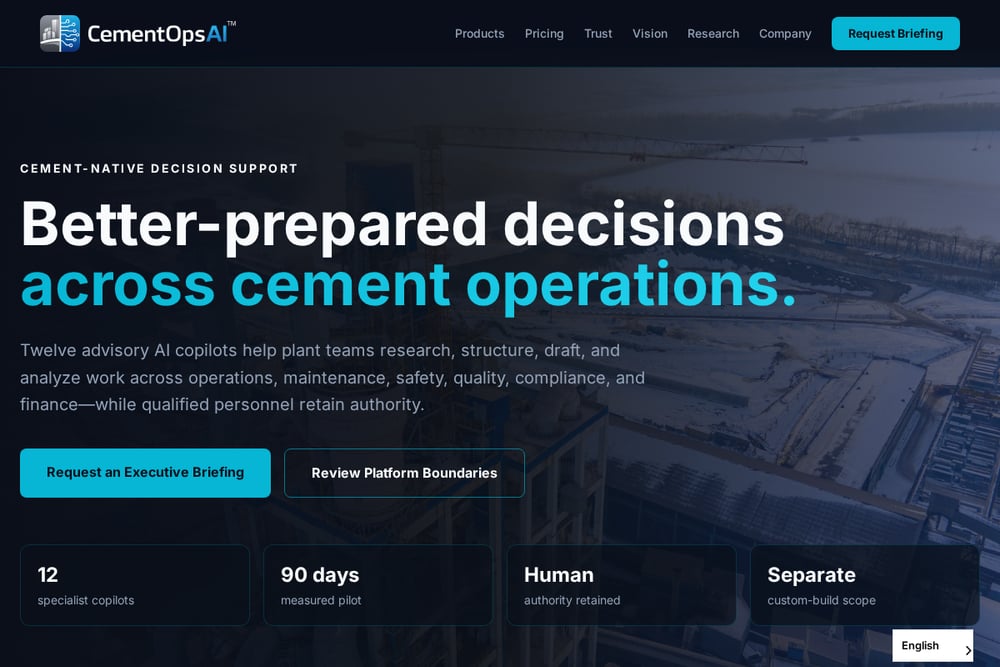 A screenshot of the CementOps AI website.
CementOps AI provides twelve advisory AI copilots that help your team research, structure, draft, and analyze work across operations, maintenance, safety, quality, compliance, and finance. The platform is designed around cement workflows, not autonomous control, so qualified personnel retain authority. You get a 90-day measured pilot with clear boundaries, which is perfect for testing without long-term commitment. Their copilots turn plant questions into review-ready briefs, like optimizing the HRP with a system-level sequence. This is ideal if you want to scale access to expertise without blurring accountability. It's a thoughtful, human-in-the-loop approach that fits well with US plant culture.
#3 Oxmaint
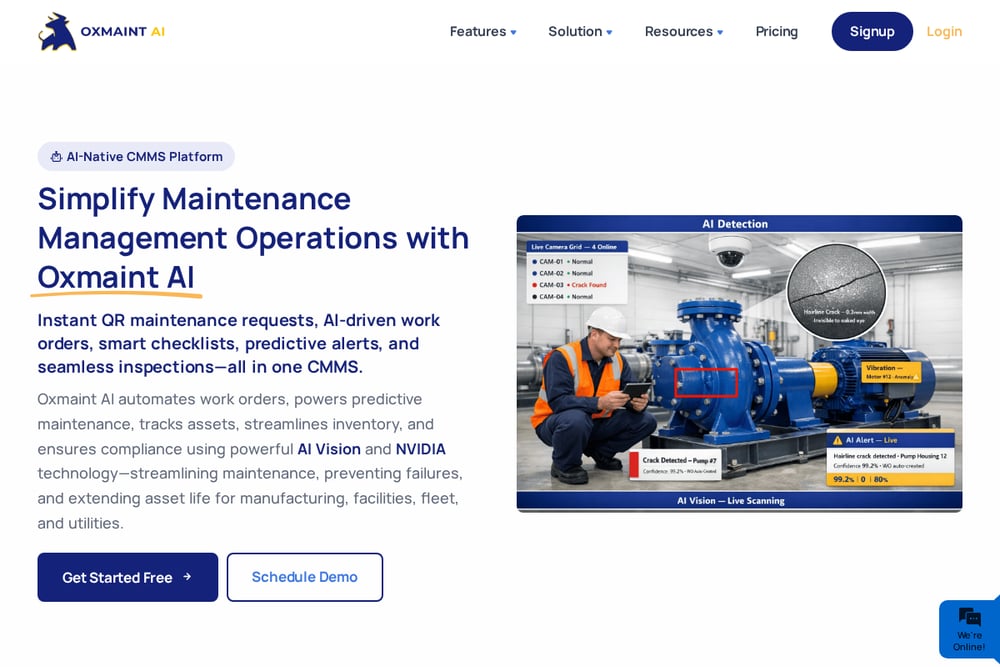 A screenshot of the Oxmaint website.
Oxmaint is a mobile-first CMMS that covers maintenance management, asset performance, and safety compliance. It integrates with SAP, PLC sensors, and GPS, making it a solid backbone for your maintenance operations. The AI features include predictive maintenance and AI vision, which can help you spot issues early. It's a comprehensive tool, but it's more about managing maintenance workflows than providing cement-specific decision support. If you need a broad platform that handles work orders, inventory, and analytics, this is a reliable choice. Just be prepared for a steeper learning curve given the feature set.
#4 Imubit
 A screenshot of the Imubit website.
Imubit focuses on AI-driven process optimization for cement plants, using real-time data to optimize kiln heat and mill load. Their approach can lead to lower energy costs, consistent quality, and reduced downtime. They cite McKinsey research showing 10-15% production increases with AI in industrial plants. This is a powerful tool if you're ready to let AI directly control process parameters. However, it requires significant integration with your control systems and a comfort level with autonomous adjustments. It's best for plants that want to push the envelope on efficiency.
#5 MaintWiz
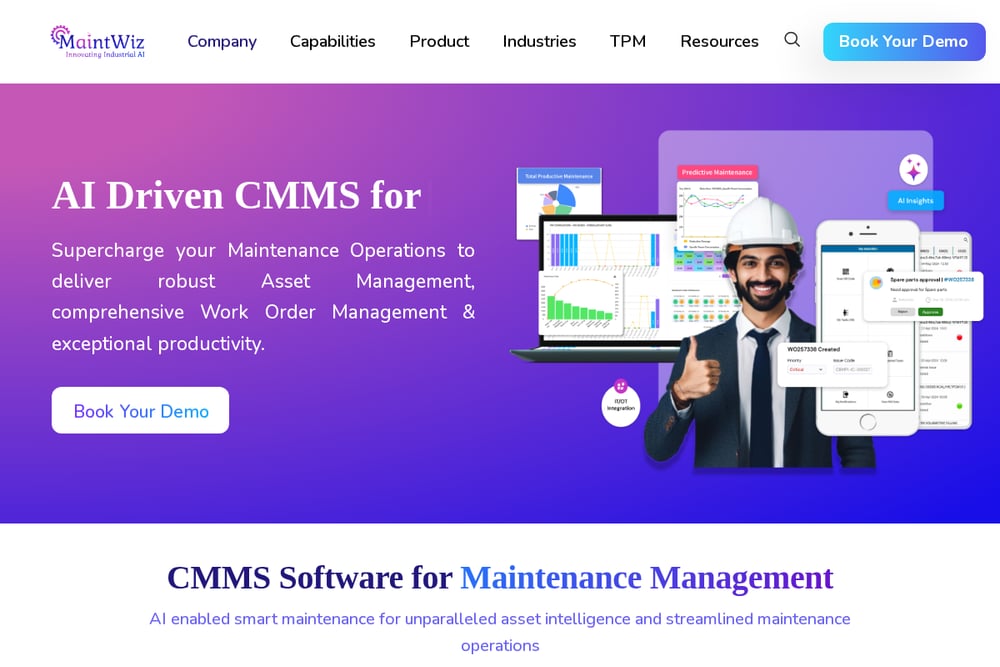 A screenshot of the MaintWiz website.
MaintWiz offers an AI-powered CMMS with predictive maintenance, digital twins, and seamless integration with ERP and OT systems. It's designed to streamline maintenance workflows and improve asset reliability. The digital twin feature lets you simulate scenarios, which is great for planning shutdowns or testing changes. They also emphasize compliance with ISO and OSHA, which is a plus for safety-conscious plants. However, like Oxmaint, it's more of a maintenance platform than a cement-specific decision support tool. You'll need to adapt it to your cement processes.
How to Choose the Right AI Tool for Your Cement Plant
Start by identifying your biggest pain point. Is it downtime, energy costs, or decision preparation? If you need real-time monitoring, Ripik.AI or Imubit might be your best bet. If you want to improve maintenance workflows, Oxmaint or MaintWiz offer robust CMMS features. But if you're looking for advisory support that helps your team make better decisions without losing control, CementOps AI is worth a serious look. Consider your team's readiness for automation and how much integration you're willing to handle. Also, think about the pilot approach—CementOps offers a measured 90-day pilot, which is a low-risk way to test. Finally, check if the tool speaks your plant's language, both literally and in terms of cement-specific workflows.
Automation Workflow: From Data to Decision
The ideal workflow starts with data collection from sensors, CMMS, and process logs. Then, AI tools analyze that data to identify patterns and anomalies. For advisory tools like CementOps, the AI structures the problem, suggests hypotheses, and prepares a brief for your team to review. For control-oriented tools like Imubit, the AI adjusts process parameters in real time. The key is to define clear boundaries—what the AI can do autonomously and what requires human approval. A measured pilot helps you establish these boundaries safely. Over time, you can expand the AI's role as trust builds.
The Bottom Line
The cement industry is ripe for AI, but the right tool depends on your goals. If you want to keep human authority while scaling expertise, CementOps AI offers a unique advisory model. If you're after real-time control, Imubit delivers. For maintenance-focused teams, Oxmaint and MaintWiz provide solid foundations. And if you need visual monitoring, Ripik.AI has you covered. Take the time to evaluate each against your specific challenges, and don't be afraid to start with a pilot. The future of cement operations is smarter, but it's still human-led.