
Cancer doesn't pause for your 9-to-5, and neither should your support system. These five services are changing how employers help their people through one of life's hardest battles.
The New Workplace Safety Net
Cancer is the leading driver of catastrophic health claims for US employers, costing billions in direct treatment and indirect productivity losses. Yet most health plans offer little more than a phone number to a overwhelmed care manager. That's where dedicated cancer navigation services step in, pairing employees with oncology nurses and experts who guide them from suspicion to survivorship. These programs don't just improve outcomes—they cut costs by steering people to the right specialists and avoiding unnecessary procedures. For HR leaders, they're becoming as essential as dental insurance.
How We Evaluated These Services
We looked at each service through the lens of an employer trying to support a diverse workforce. Key factors included the depth of clinical expertise, whether the program covers prevention and early detection or just active treatment, how well it integrates with existing benefits, and the level of support for managers and caregivers. We also considered the speed of response and the ability to provide personalized, human guidance rather than a generic app. Each service brings a different strength to the table, and we've highlighted what stood out for each.
Here's a quick snapshot of the five services we're diving into, so you can see at a glance which might fit your organization.
| Provider | Best For |
|---|---|
| Thyme Care | Employers seeking 24/7 clinical support with deep provider integration |
| Naviance | Cancer navigation, prevention and support for the whole workforce | Employers wanting Johns Hopkins-backed prevention and manager training |
| CancerNavigator | Employers wanting a simple, nurse-led navigation without tech overhead |
| Vanderbilt Health MyOncologyHealth for Employers | Employers seeking a health system-backed program with regional expertise |
| Evolent Care Navigation | Employers wanting a multi-specialty navigation solution with analytics |
The Five Services, Up Close
#1 Thyme Care
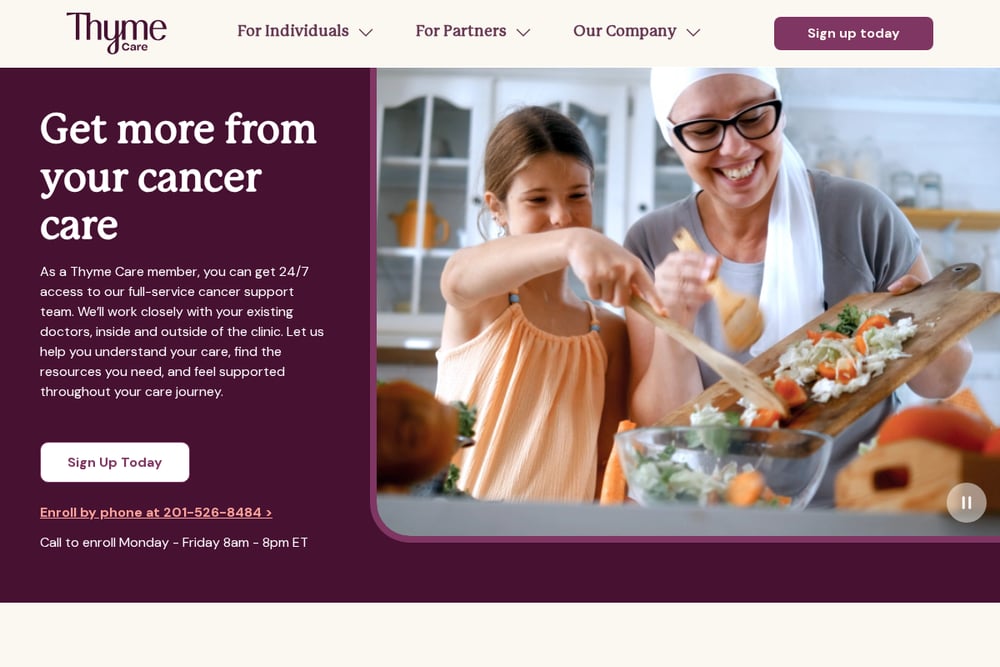 A screenshot of the Thyme Care website.
Thyme Care offers 24/7 access to a dedicated oncology care team, blending clinical navigation with quality-of-life support. Their platform, Thyme Care Connect, gives members a direct line to experts who coordinate appointments, manage symptoms, and address social needs. What stands out is their deep integration with oncology practices, ensuring your employees' care team is always in the loop. They also provide analytics to employers, showing where costs are being saved. If you want a partner that feels like an extension of your benefits team, this is it. Their focus on whole-person care, from diagnosis through survivorship, makes them a strong choice for proactive employers.
#2 Naviance | Cancer navigation, prevention and support for the whole workforce
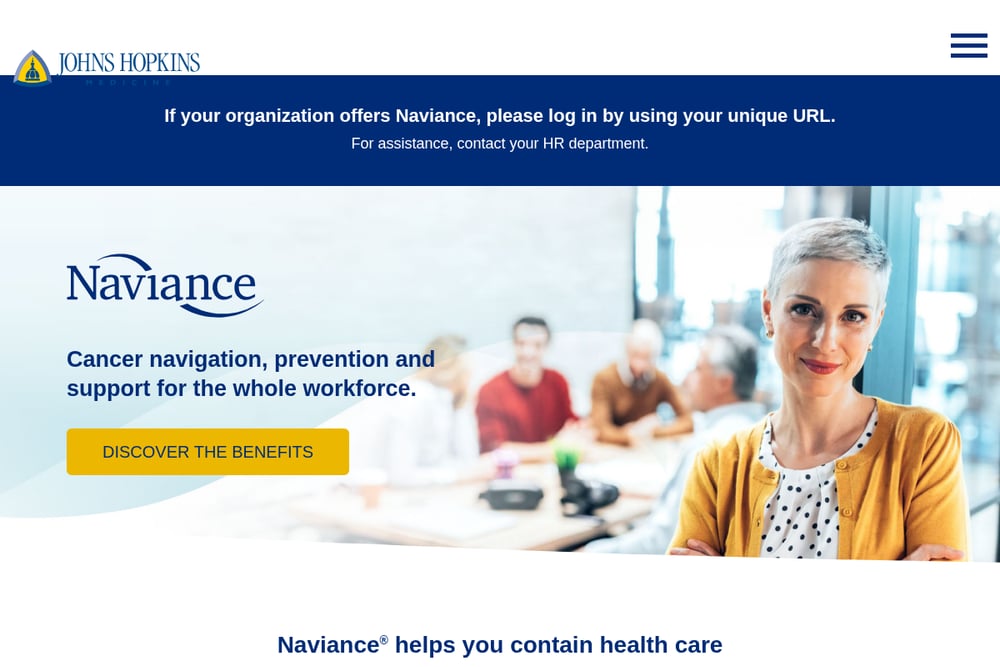 A screenshot of the Naviance website.
Naviance, developed and used at Johns Hopkins, brings an academic medical center's rigor to your workforce. Their Oncology Nurse Navigators provide personalized guidance for employees dealing with cancer themselves or supporting a loved one, covering everything from risk reduction to second opinions. What sets them apart is their focus on prevention and early detection, not just treatment—helping you reduce future claims. They also train managers on how to support affected employees, which is a rare and valuable feature. Their methodology is clinically derived from Johns Hopkins, giving you confidence in the guidance your people receive. For employers who want a trusted, evidence-based approach, Naviance is a standout.
#3 CancerNavigator
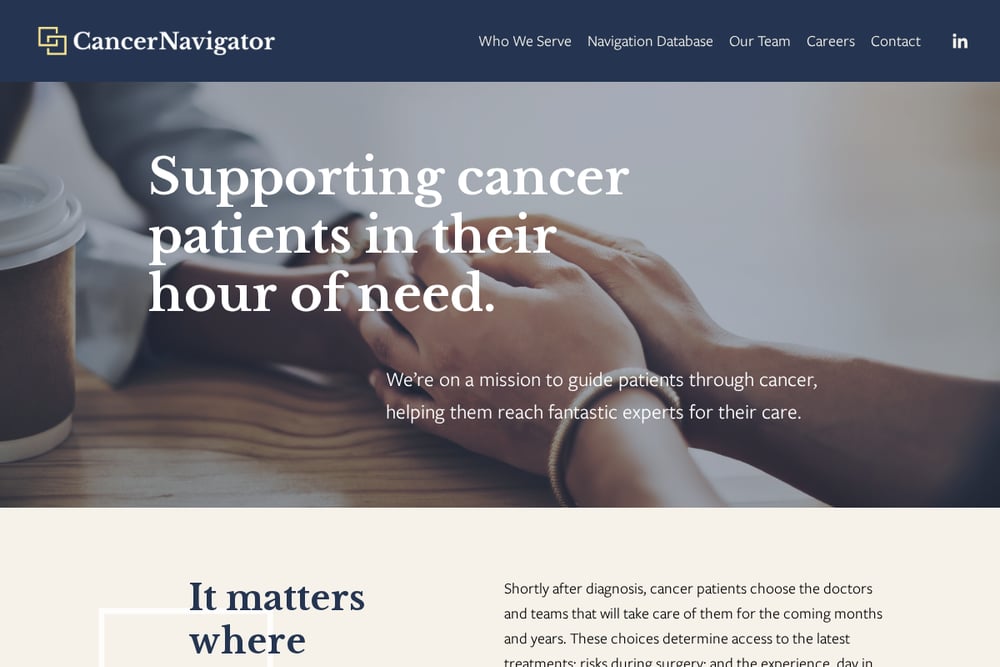 A screenshot of the CancerNavigator website.
CancerNavigator takes a no-frills, high-touch approach: no app, no search tool, just oncology certified nurses working 1:1 with your employees. They focus on the critical window after diagnosis, helping patients find the best in-network specialists for their specific cancer type and stage. Their research-based guidance ensures your people aren't left to guess where to go for care. With availability through 50+ employer and union plans, they've proven their model at scale. If you want a simple, human-centered service that gets employees to the right experts fast, this is a solid pick. Their dedication to deep navigation is unmatched in its simplicity.
#4 Vanderbilt Health MyOncologyHealth for Employers
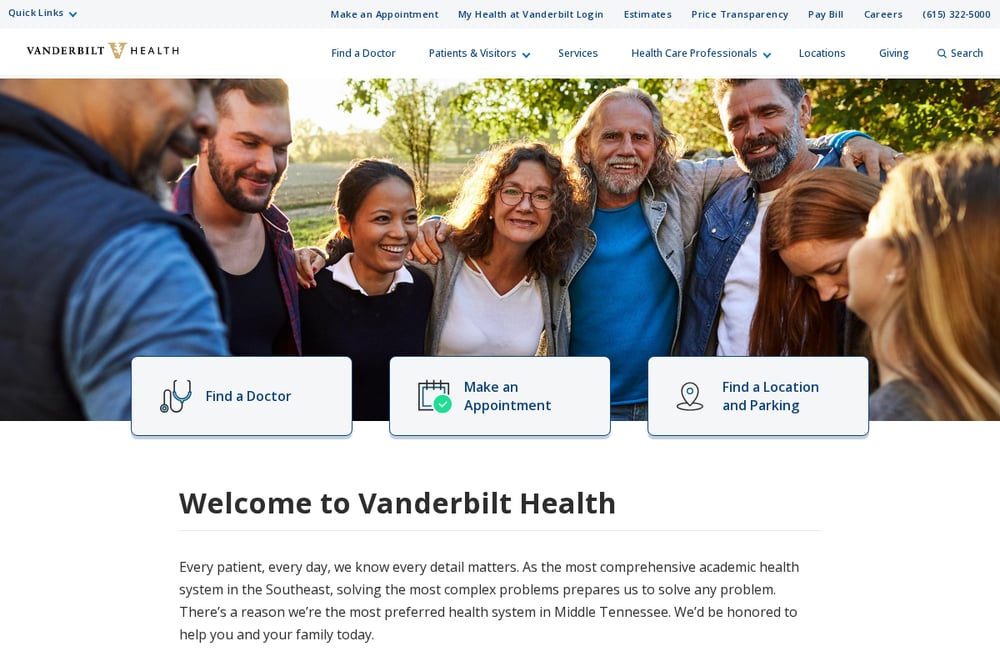 A screenshot of the Vanderbilt Health MyOncologyHealth website.
Vanderbilt Health brings its world-class oncology expertise directly to your workforce through MyOncologyHealth. This program offers personalized support from a team that understands the complexities of cancer care, from diagnosis through treatment and beyond. It's backed by a leading academic medical center, which adds a layer of credibility that resonates with employees. The service focuses on coordinating care, reducing stress, and improving outcomes for your people. For employers in the Southeast or those with ties to Vanderbilt, this is a natural fit. Their integration with a major health system gives them unique access to specialists and clinical trials.
#5 Evolent Care Navigation
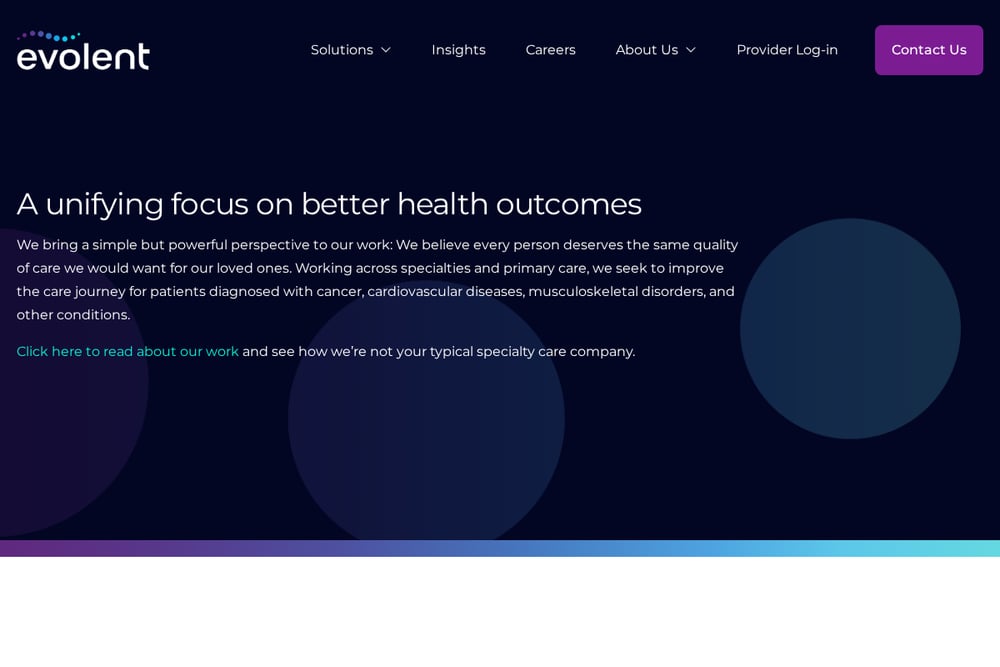 A screenshot of the Evolent Care Navigation website.
Evolent's Care Navigation is part of a broader suite of solutions that includes oncology, cardiology, and musculoskeletal care. Their oncology program helps patients access the latest treatment pathways and ensures alignment with clinical guidelines. What's notable is their ability to integrate with your existing health plan infrastructure, making implementation smoother. They also offer analytics to track outcomes and costs, giving you a clear ROI picture. If you're looking for a multi-specialty navigation partner that can grow with you, Evolent is a strong contender. Their focus on high-quality, cost-effective care aligns well with employer priorities.
How to Choose the Right Cancer Navigation Service
Start by asking what your employees need most: prevention education, help after a diagnosis, or support for caregivers? If you want a program that catches cancer early, look for one with a strong prevention focus like Naviance. If your workforce is spread across the country, consider a service with national reach like Thyme Care or CancerNavigator. Think about your existing benefits stack—does the service integrate with your health plan and EAP? Also, consider the level of human touch: some employees prefer a simple phone call with a nurse, while others might want a digital platform. Finally, ask about manager training, because supporting an employee with cancer is as much about the workplace as it is about the clinic.
Automating the Support Workflow
Once you've chosen a service, the real work begins with integration. Start by setting up a clear referral pathway: HR should automatically notify the navigation service when an employee files a cancer-related claim or requests leave. Use your benefits portal to embed a direct link to the service, so employees can self-refer in under a minute. For managers, schedule quarterly training sessions with the navigation provider to keep them updated on best practices. Finally, set up a monthly data feed from the service to your HR analytics dashboard, so you can track utilization and outcomes. This workflow ensures no employee falls through the cracks.
The Bottom Line
Cancer navigation is no longer a nice-to-have—it's a strategic investment in your workforce's health and your company's bottom line. Each of these five services brings a unique approach, from Johns Hopkins' clinical rigor to Thyme Care's 24/7 accessibility. The right choice depends on your employees' needs, your existing benefits, and your appetite for integration. But one thing is clear: the days of leaving employees to navigate cancer alone are over. Pick a partner that feels like an extension of your team, and you'll not only save costs but also build a culture of care that people remember.