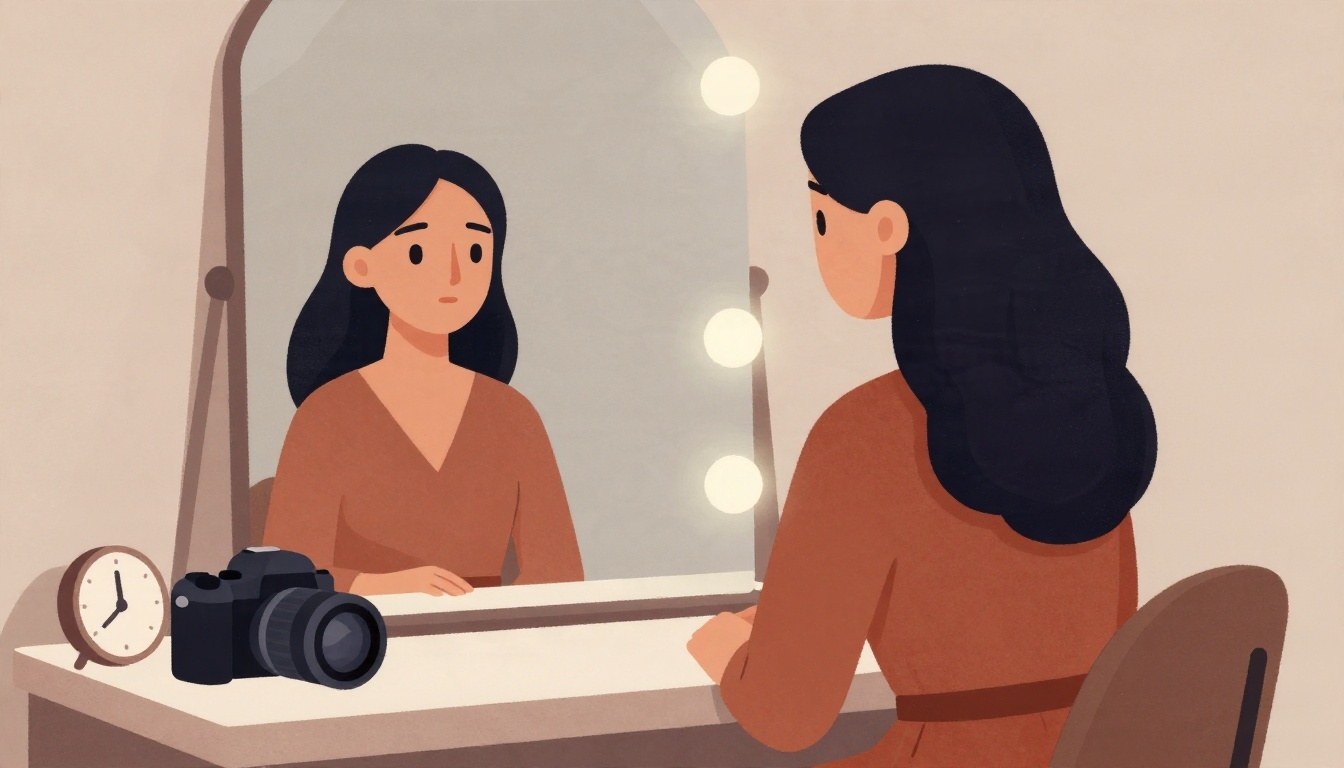
When the First Trial Misses the Mark
For many South Asian brides, the search for a makeup artist does not end with the first booking. Rubina, the artist behind Makeup by Rubina, often works with brides who have already had a trial elsewhere. She said the issue is rarely about a lack of skill. It is about translation.
"When a South Asian bride comes to me after a trial with another artist, she is usually trying to fix a disconnect between her vision and how it was translated," she said. "Whether due to miscommunication or execution issues, the original look didn't align with what she envisioned."
That gap can come from many places: a reference photo that did not account for skin tone, a rushed conversation about the event schedule, or a look that photographed differently than it appeared in person. Rubina's answer points to a practical takeaway for brides: the trial is not just a test of the artist's technique. It is a test of whether the two of you can communicate clearly about what you want.
What Online Advice Leaves Out
Bridal makeup advice online tends to focus on products, trends, and inspiration photos. Rubina said there are three things that come up in real trials and wedding days that brides are often not warned about.
First, the camera. "Test the look on camera, not just in the mirror," she said. "South Asian undertones can shift under flash and studio lighting." A look that feels balanced in a bathroom mirror may read differently under the flash of a photographer's setup or the mixed lighting of a venue. Testing with photos, not just reflection, gives a bride a more accurate picture of how the makeup will appear in the images she will live with.
Second, the audience. "Trials are not a family committee," Rubina said. "Decide whose opinion matters most before your appointment." Bridal makeup decisions often involve family members with strong views, and a trial can quickly become a group negotiation. Rubina's advice is to settle that question in advance so the appointment stays focused on the bride's own vision.
Third, the clock. "South Asian wedding days often run on their own clock, so protect your timeline and plan buffer time accordingly," she said. Multi-event schedules and long days can put pressure on the makeup timeline, and buffer time helps absorb the unexpected without rushing the final result.
The Questions Brides Skip
When it comes to choosing an artist, Rubina said brides often compare rates before asking deeper questions. "Brides often compare rates before asking deeper questions about whether the artist can match their skin tone, handle complex event schedules, or work with family expectations," she said.
She recommends two questions in particular. The first is about scope: "What is included in the rate (trials, travel, number of events, assistants, touch-up kits)?" A lower rate can look different once travel, additional events, or touch-up support are added, so clarifying the full package helps brides compare like with like.
The second is about proof: "Can you show full, unedited photos of brides with a similar skin tone or undertone?" Portfolios often feature polished, edited images, and unedited photos of brides with a similar complexion give a clearer sense of how the artist works with undertones and lighting.
A Practical Checklist
Rubina's answers point to a set of practical steps for South Asian brides. Test the look on camera, not just in the mirror. Decide in advance whose opinions will shape the trial. Build buffer time into the wedding-day schedule. Ask what the rate actually covers. And ask to see unedited photos of brides with a similar skin tone.
For brides who have already had a trial elsewhere, Rubina's first answer offers a useful frame: the goal is not to start over, but to close the gap between the vision and its execution. Clear communication, realistic timelines, and the right questions can make that gap smaller before the wedding day arrives.
Readers looking for more context on South Asian bridal makeup can explore general guidance on bridal makeup trials and advice on makeup for photography. Rubina's work is featured alongside other artists in the Peekwire list of South Asian bridal makeup artists in New Jersey and New York City.