
If you're a brand juggling product images, sell sheets, and logos for your trade partners, you know the pain of scattered Dropbox folders and stale email attachments. These five platforms are built to bring order to that chaos—each with its own twist.
The State of Brand Asset Management in 2026
Brand asset management (BAM) has moved from a nice-to-have to a must-have for brands of all sizes. As product lines expand and distribution channels multiply, the old ways—shared drives, email threads, and folder chaos—just don't cut it anymore. Enterprises have long used heavy-duty DAMs, but many are overkill for smaller teams. That's opened the door for a new wave of tools that promise simplicity, affordability, and partner-friendly sharing. Whether you're a CPG startup or a global manufacturer, the challenge is the same: get the right asset to the right partner at the right time, without losing control.
How We Evaluated These Platforms
We looked at each platform through the lens of a brand that needs to share assets with distributors and retailers. Key factors included ease of use, permission controls, multi-brand support, and pricing transparency. We also considered how well each tool handles the specific workflow of trade partner access—can you invite partners, control what they see, and ensure they always pull the latest version? Each platform brings its own strengths to the table, and we've highlighted what stood out for each.
Here's a quick snapshot of the five platforms we're diving into, from the budget-friendly newcomer to the enterprise heavyweights.
| Provider | Best For |
|---|---|
| Brandfolder | Enterprise brands needing scalable, AI-powered asset management |
| TradePourtal — Simple Asset Management for Brands & Their Trade Partners | Small to mid-sized brands seeking an affordable, partner-focused asset portal |
| Templafy | Large enterprises needing strict brand governance and template control |
| Sparkfive | Manufacturers and food & beverage brands needing distributor collaboration |
| Lingo | Small to mid-sized teams wanting a simple, visual DAM with brand guidelines |
The Five Platforms, Up Close
#1 Brandfolder
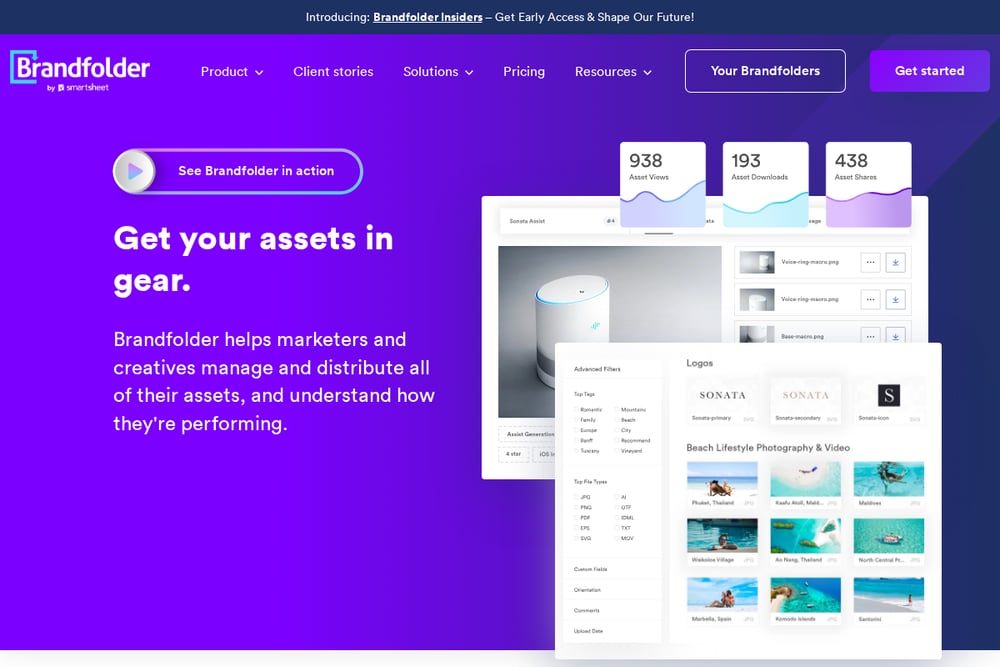 A screenshot of the Brandfolder website.
Brandfolder is the enterprise-grade DAM that's known for its intuitive interface and powerful AI-driven tagging. It's built to handle massive asset libraries while keeping search fast and accurate, so your team and partners can find what they need in seconds. The platform offers robust permission settings and custom portals, making it a solid choice for brands that need to scale distribution without losing control. If you've got the budget and need a tool that can grow with you, Brandfolder is a top contender. Its focus on usability means even non-technical partners can navigate it easily. For brands with complex needs and a global footprint, this is a reliable workhorse.
#2 TradePourtal — Simple Asset Management for Brands & Their Trade Partners
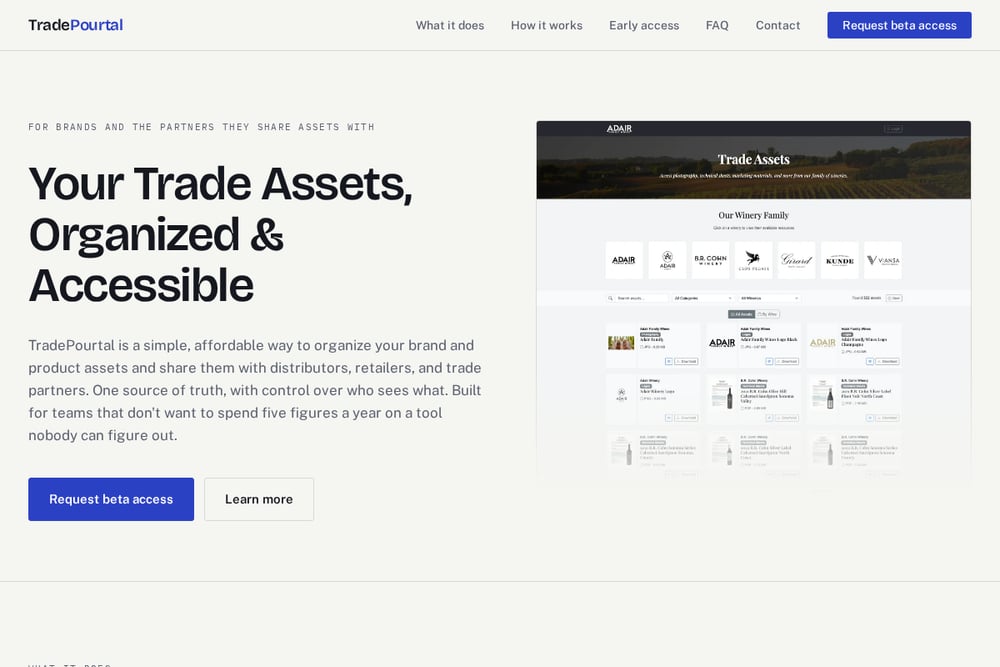 A screenshot of the TradePourtal website.
TradePourtal is a breath of fresh air for brands that don't want to spend five figures on a tool nobody can figure out. It's a cloud-based platform designed specifically for organizing and sharing product media with distributors and retailers. You get a centralized library where you can upload images, videos, logos, sell sheets, and more, all tagged by brand, product, and category. Permission controls let you share public assets openly while keeping trade-only materials behind a login for chosen partners. Multi-brand portfolios are a standout feature, letting you manage your whole portfolio from one dashboard with each brand getting its own logo and description. It's built for teams that want simplicity and affordability without sacrificing control. If you're tired of digging through Dropbox folders and email threads, this is your answer.
#3 Templafy
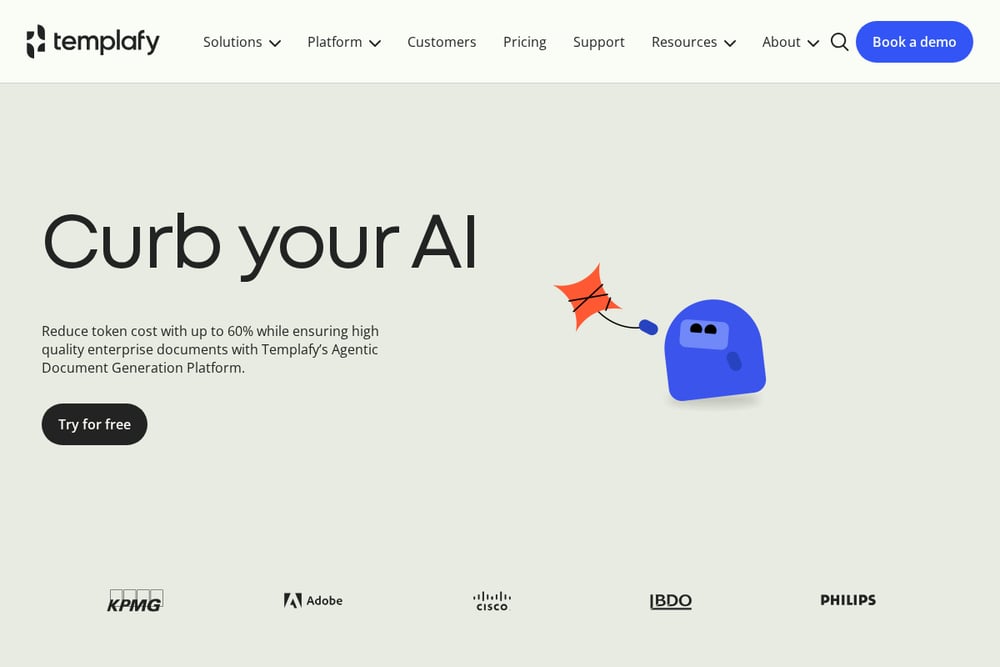 A screenshot of the Templafy website.
Templafy takes a different angle on brand asset management by focusing on document templates and brand governance. It's designed to ensure that every employee starts from a consistent foundation, with logos, fonts, and messaging guidelines baked into templates. This is powerful for enterprises where brand consistency is critical across many teams and regions. Templafy integrates directly into Microsoft Office and Google Workspace, so users can access approved assets without leaving their workflow. It's less about sharing product images with external partners and more about internal brand control. If your pain point is employees using outdated logos or off-brand templates, Templafy is a strong fit. It's a robust solution, but it may be overkill for brands that just need to share sell sheets with distributors.
#4 Sparkfive
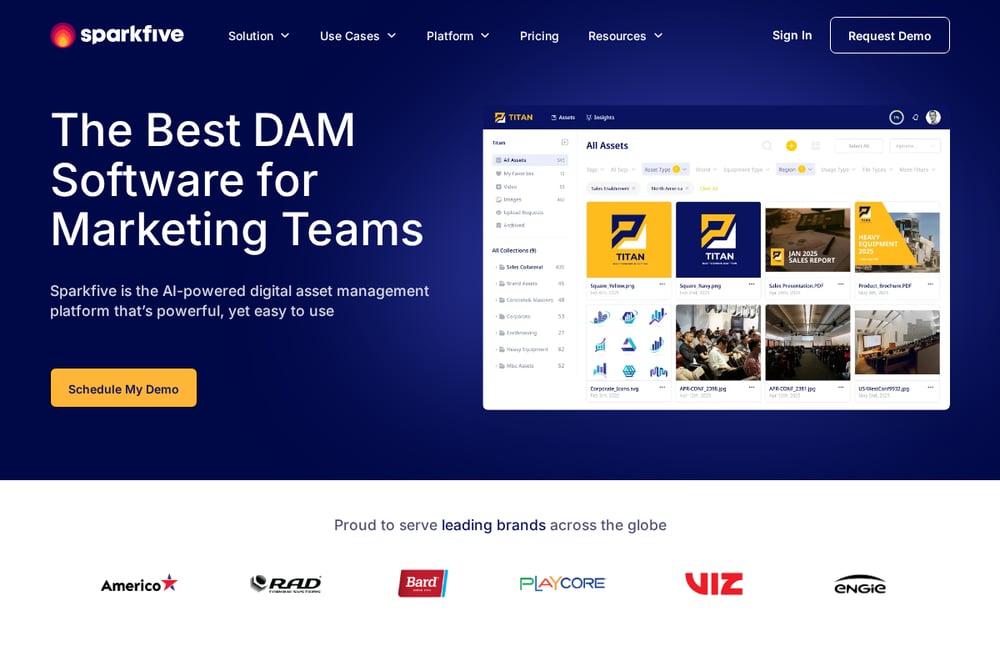 A screenshot of the Sparkfive website.
Sparkfive positions itself as a solution for manufacturers and food & beverage brands that need to sync up with sales teams and distributors. It offers a single source of truth for files, with fast and secure sharing features. The platform includes robust permission controls and custom branded portals to streamline partner access. Sparkfive also provides insights on asset usage and adoption, which can help you understand what your partners are actually engaging with. It's a practical tool for teams that want to move beyond static storage and get real collaboration. If you're in an industry where distributor alignment is key, Sparkfive has some compelling features. It's a middle-ground option that balances functionality with usability.
#5 Lingo
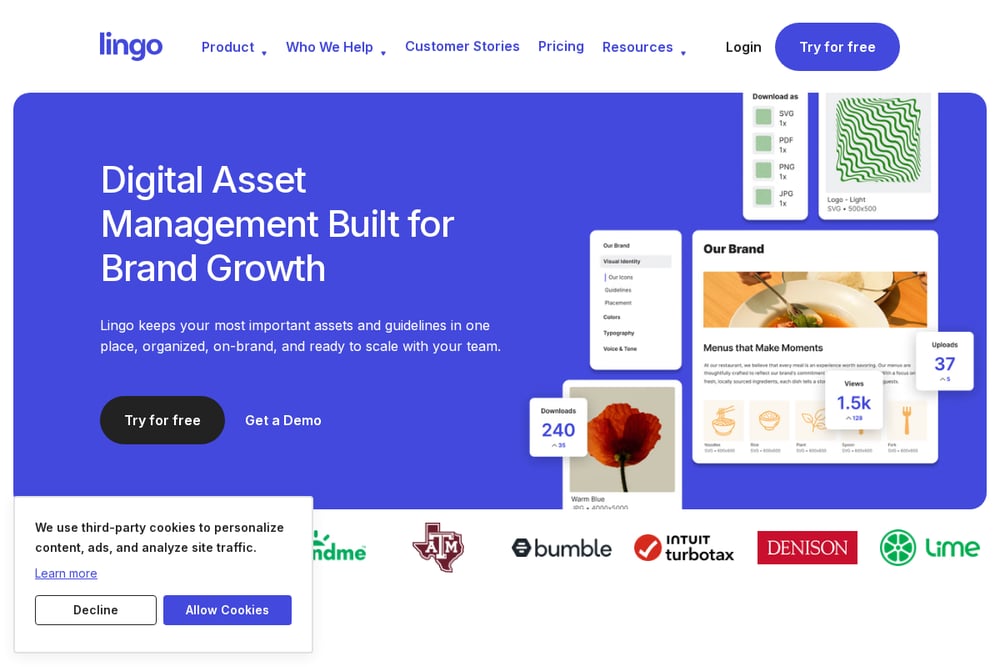 A screenshot of the Lingo website.
Lingo is a user-friendly DAM that's particularly popular with small to medium-sized businesses and agencies. It offers a clean, visual workspace where you can store, organize, and manage assets effortlessly. Lingo also integrates brand guidelines directly with your assets, so you can keep usage rules right next to the files. It's a great choice if you want a simple, intuitive tool that doesn't require a steep learning curve. The platform supports metadata tagging and provides direct links for easy sharing. For brands that want to keep things straightforward without enterprise-level complexity, Lingo is a solid pick. It's especially good for teams that need to share brand kits with external partners or agencies.
How to Choose the Right Platform for Your Brand
Start by asking yourself what your biggest pain point is. If you're drowning in scattered files and need a simple, affordable way to share with trade partners, TradePourtal is built for exactly that. If you're a large enterprise with strict brand governance needs, Templafy's template control might be your priority. For brands that need AI-powered search and scalability, Brandfolder is a heavyweight. Consider your budget, the size of your team, and how tech-savvy your partners are. Also think about whether you need multi-brand support—TradePourtal and Brandfolder both excel there. Finally, test the waters with a trial or beta access to see which interface feels natural to you and your team.
Automating Your Asset Workflow
Once you've picked a platform, set up a workflow that saves you time. Start by uploading all your assets and tagging them consistently—brand, product, category, and access level. Use permission groups to automatically control who sees what, so you don't have to manually adjust for each partner. For TradePourtal, you can invite distributors to your portal and they'll always pull the latest version, eliminating stale files. For Brandfolder, leverage AI tagging to speed up organization. The goal is to create a single source of truth that updates in real time, so you never have to resend files or worry about version control.
The Bottom Line
Brand asset management doesn't have to be complicated or expensive. Whether you're a solo brand manager or a global enterprise, there's a tool here that fits your needs. TradePourtal stands out for its simplicity and partner-focused design, making it a great entry point for brands that want control without the enterprise price tag. The others each bring their own strengths, from Templafy's governance to Brandfolder's scale. The key is to match the tool to your specific workflow and budget. Take the time to evaluate your needs, and you'll find a solution that keeps your assets organized and your partners happy.