Nonprofit boards juggle volunteer directors, committee work, compliance duties, and mission-driven decision-making, often without a large administrative staff. The right board management software can make meetings easier to prepare, documents easier to find, and governance easier to keep on track. This list covers five platforms worth knowing if you are evaluating options for a nonprofit board in 2026. Each entry describes what the tool does and who it tends to suit, using details published on the companies' own sites. The order is a plain list, not a quality ranking.
How We Picked These Tools
These tools were selected because each company's published materials describe board management capabilities relevant to nonprofit governance, such as meeting preparation, document sharing, committee workspaces, and secure access. Each entry includes facts quoted directly from the company's provided source page. No company is presented as better than another; the goal is to help you understand the fit and features of each option.
| Provider | Best For |
|---|---|
| Diligent | Nonprofits seeking a broader governance platform |
| BoardEffect | Mission-driven organizations wanting an intuitive board portal |
| Boardable | Nonprofits wanting a right-sized, mission-specific platform |
| OnBoard | Nonprofits wanting a structured governance system of record |
| Aprio | Nonprofits wanting an all-inclusive, easy-to-use board portal |
The 5 Tools in Focus
#1 Diligent
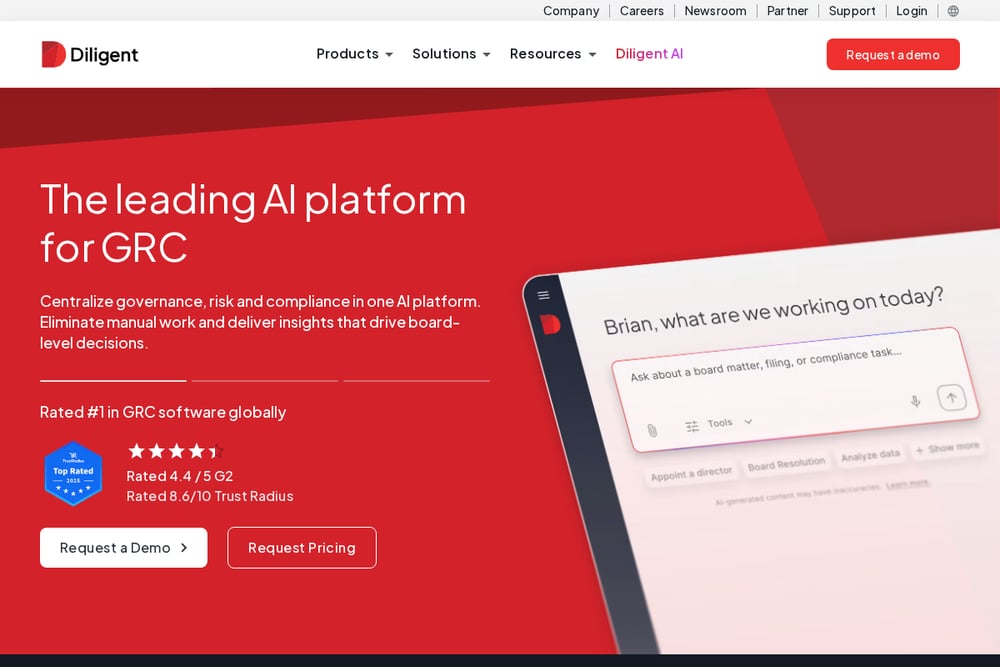 A screenshot of the Diligent website.
Diligent offers a broad governance platform, and its BoardEffect product is described as secure, flexible board management software for nonprofits and higher education. The company also provides tools for entities, community governance, and risk and compliance work. Its materials emphasize automating meeting prep and securing sensitive data for directors. This may suit nonprofits that want a governance platform with room to expand into related risk and compliance areas.
#2 BoardEffect
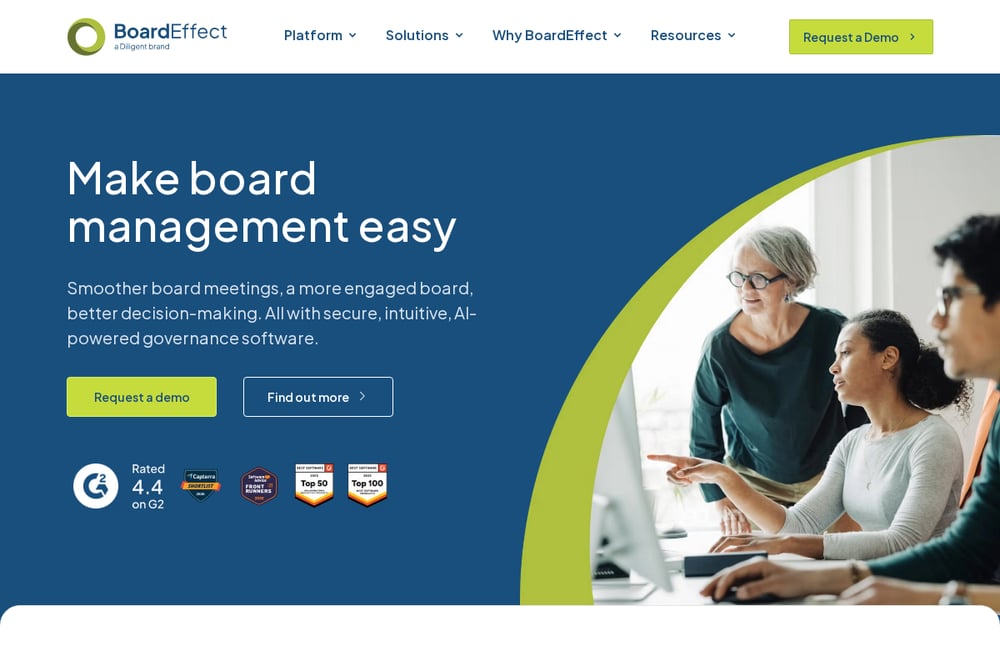 A screenshot of the BoardEffect website.
BoardEffect presents itself as board management software built for mission-driven organizations. Its platform includes AI-powered agendas and meeting summaries, digital board books, secure workspaces for committees, and tools for assigning actions and requesting approvals. The company highlights onboarding support and polls and surveys for gauging board sentiment. It may suit nonprofits that want an intuitive, governance-focused board portal with strong support for board engagement.
#3 Boardable
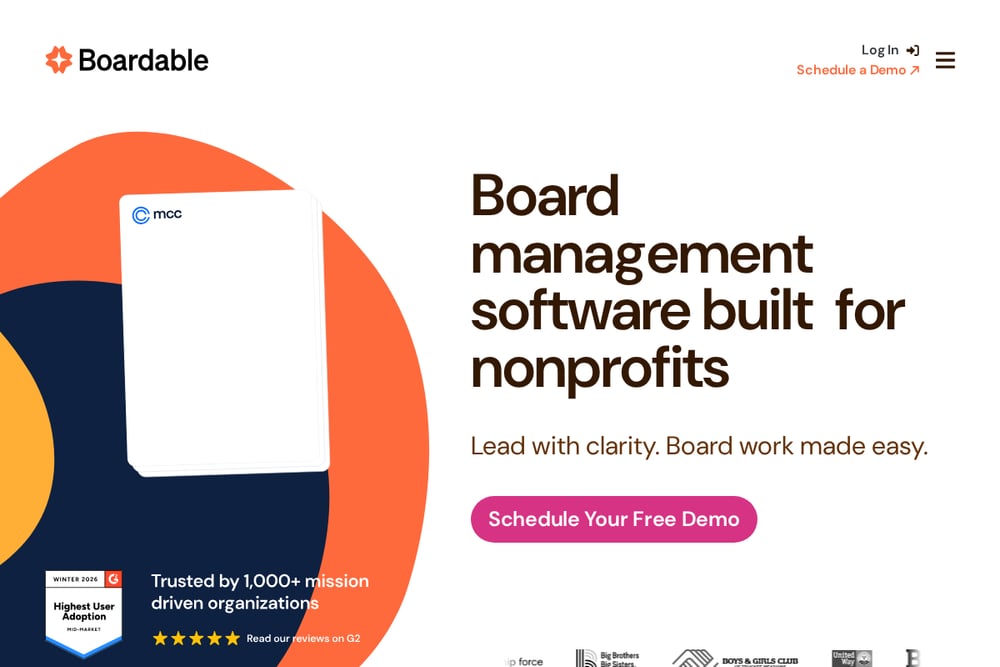 A screenshot of the Boardable website.
Boardable describes its board management software as built for nonprofits. The platform brings meetings, documents, collaboration, mobile access, and video into one place, with AI-powered tools to simplify tasks. It includes features such as an agenda builder, document center, groups and committees, surveys, eSignatures, and a digital board packet. Its materials emphasize transparent per-user pricing with volunteer discounts. This may suit nonprofits that want a right-sized platform with mission-specific features.
#4 OnBoard
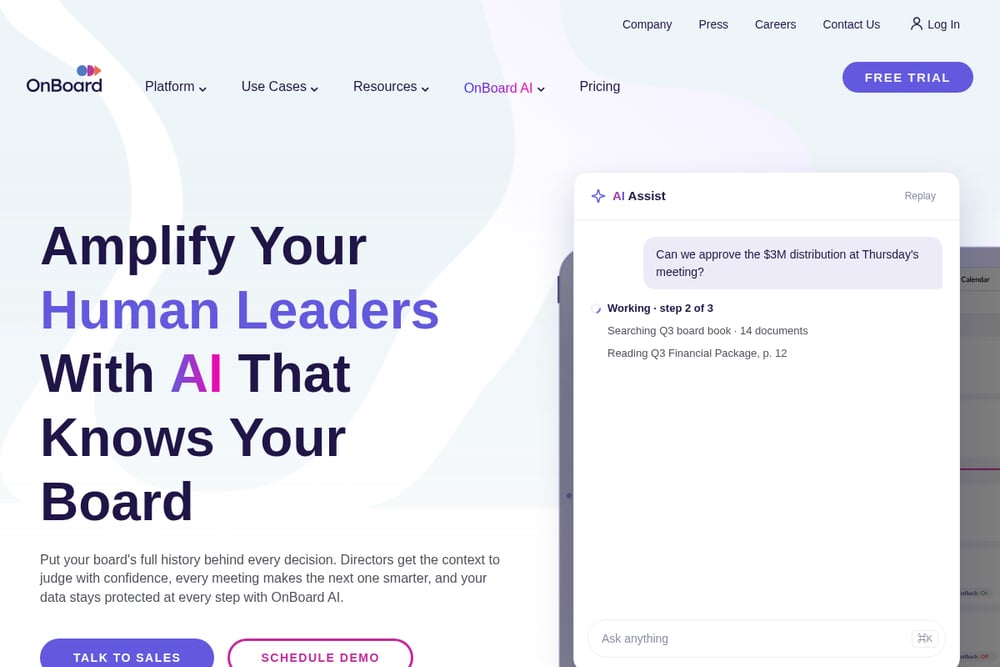 A screenshot of the OnBoard website.
OnBoard focuses on meeting lifecycle management and a governance system of record. Its platform includes agenda and minutes builders, committee management, task management, eSignatures, secure messaging, and mobile apps. The company also offers AI features such as AI Assist, AI Agenda, and AI Minutes. OnBoard lists nonprofits among the sectors it serves. It may suit nonprofits that want a structured system for meeting preparation, follow-through, and board history.
#5 Aprio
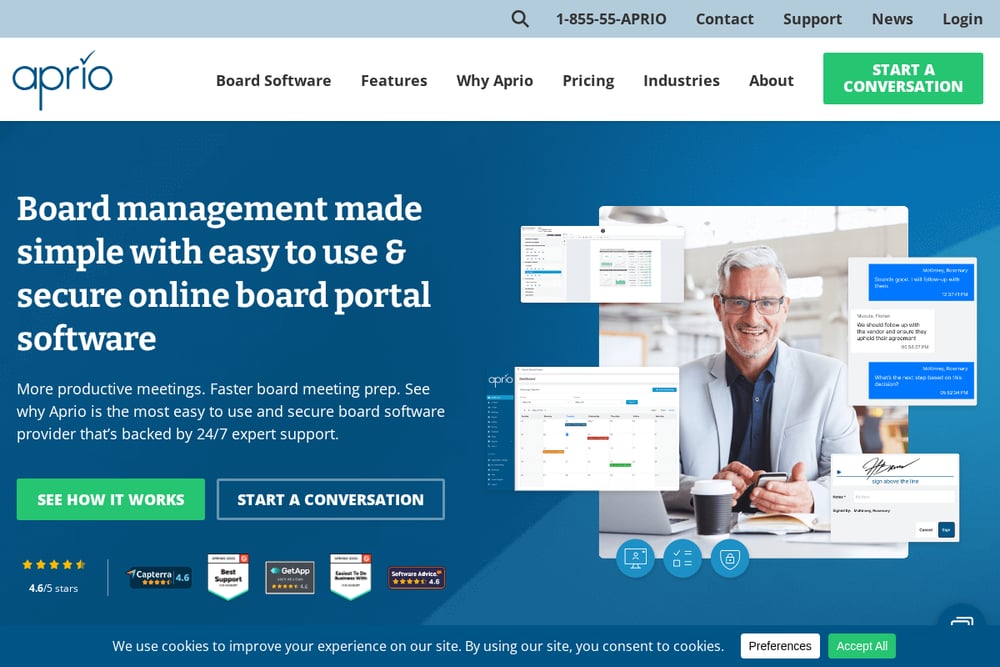 A screenshot of the Aprio website.
Aprio offers a secure online board portal with features for agenda building, meeting minutes, task management, board assessments, virtual meetings, voting, and reporting. The company emphasizes ease of use, security features such as multi-factor authentication and single sign-on, and support from former board administrators. It also includes an AI governance advisor called ChatDPQ in every plan. Aprio lists non-profits and social services among the industries it serves. This may suit nonprofits that want an all-inclusive board portal with strong support.
Which One Should You Choose?
Start with how your board actually works. If your directors are volunteers who need simple access and clear meeting materials, look for tools that emphasize ease of use, mobile access, and document sharing. If your committees do a lot of work between meetings, check for dedicated committee workspaces and task tracking. If governance records and compliance are a priority, look for minutes tools, approvals, and a system of record. Consider whether you want a focused board portal or a broader governance platform that can grow into risk and compliance work. Ask about pricing structure, onboarding and training, and support availability, since volunteer boards often need extra help getting started. Finally, confirm that the features you need are included in the plan you are considering.
Final Thoughts
Each of these platforms approaches nonprofit board management from a slightly different angle. Diligent offers a broad governance platform with a nonprofit-focused product. BoardEffect emphasizes an intuitive portal for mission-driven organizations. Boardable positions itself as a right-sized platform built for nonprofits. OnBoard centers on meeting lifecycle management and a governance system of record. Aprio emphasizes an all-inclusive, easy-to-use board portal with strong support. None of these is presented as the best choice; the right fit depends on your board's size, workflow, committee structure, and support needs. Use the quoted facts here as a starting point, then request demos and compare how each tool handles your board's real meeting cycle.
Know a company that belongs on this list? Email us at editorial@peekwire.com.