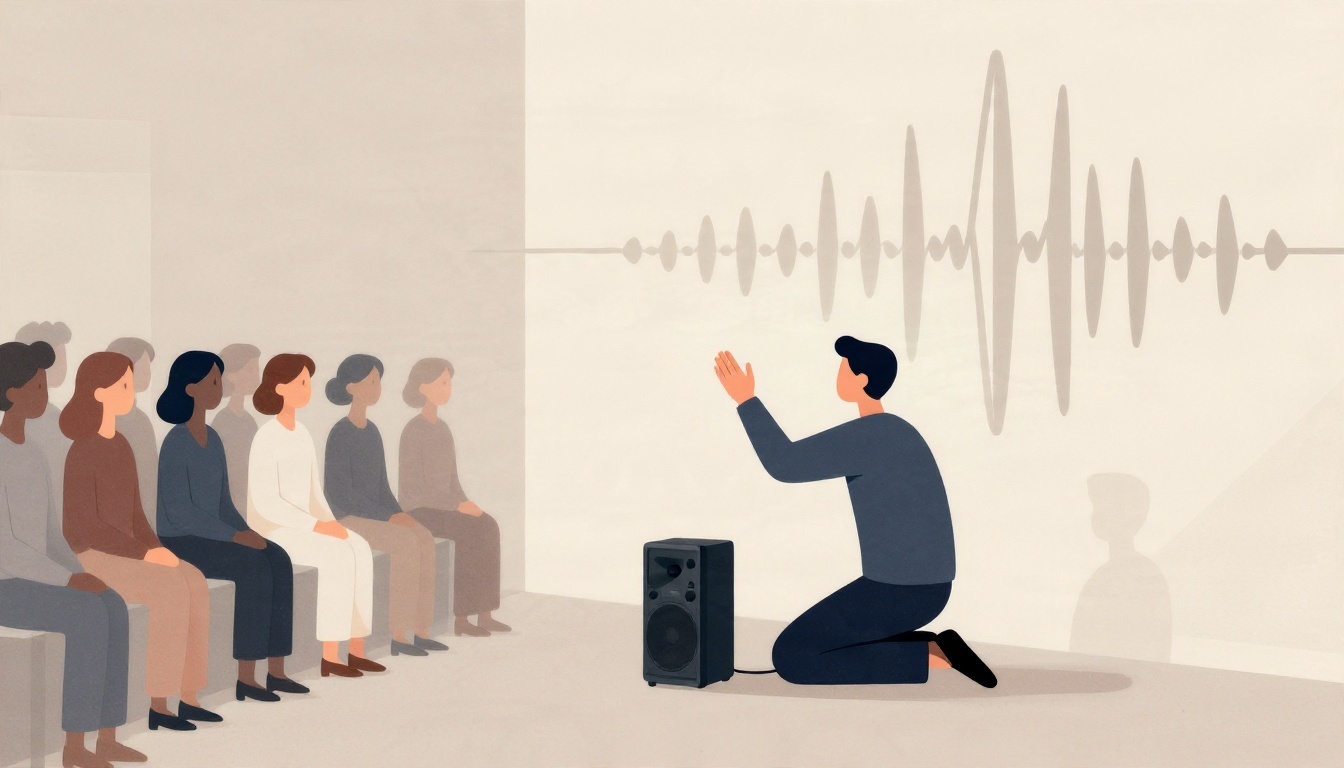
Blueprint Audio's Ryan Cullins on Why Churches Replace Gear Before Diagnosing the Room
When a congregation can't understand the pastor, the instinct is often to buy something new. Ryan Cullins, who runs Blueprint Audio, a professional audio systems provider in Ohio, argues that instinct is usually backwards. In a written interview, he walked through two recurring scenarios — livestream audio that never sounds right and speech clarity that online advice fails to fix — and explained why he believes diagnosis should come before equipment.
The livestream problem churches can't solve alone
Cullins said one of his most common calls involves livestream audio. Churches have tried everything they know, he said, but their Facebook or livestream audio still sounds terrible.
The reason, he explained, is that mixing for a stream is a different job than mixing for a room. It requires the right equipment, proper connections, a good signal path, and ideally someone dedicated to mixing for the online audience. Churches often treat livestream audio as a set-once-and-forget system, but he said it needs attention throughout the service just like the sanctuary mix. "What sounds great in the room doesn't necessarily sound great to someone watching from home."
He also pointed to microphone choice as a frequent culprit. One local church had persistent feedback with its lapel and headset microphones, assumed the old microphones were the problem, and bought new ones. The feedback continued. When Cullins inspected the setup, he found the new microphones were omnidirectional — picking up sound from every direction — in a small, rectangular room with virtually no acoustic treatment. Reflections off the walls made the environment difficult for that pickup pattern.
He returned the new microphones and selected replacements with tighter directional patterns, and replaced the choir microphones, which had the same omnidirectional issue. After installing the appropriate microphones and setting proper gain levels throughout the system, the feedback became much more manageable. The next step is treating the room itself to control reflections.
"The church thought it needed newer microphones. What it actually needed were microphones better suited to the room and how they were being used."
Why EQ and volume don't fix clarity
Asked what keeps coming up in rooms where people can't understand the pastor, Cullins named a common misconception: that speech clarity can be fixed by adjusting the EQ or simply turning up the volume.
The room has a huge influence on what people hear, he said. Speaker type, positioning, how evenly they cover the congregation, reflective surfaces, reverberation, and even microphone technique all affect clarity. Something that sounds perfectly clear at the mixing console might be difficult to understand a few rows away or on the other side of the sanctuary.
Online advice, in his view, tends to focus on individual pieces of equipment, but sound reinforcement is a complete system. "You have to understand how the microphones, processing, speakers and room work together." Sometimes the answer isn't buying something new — it's getting the existing equipment properly configured for the space.
The decision churches make too quickly
Cullins said churches often jump to the conclusion that they need new equipment before understanding why their existing system isn't performing well. And even when new equipment is genuinely needed, they sometimes choose what they're familiar with rather than what works best for their room.
Loudspeakers are his go-to example. Many churches automatically choose traditional point-source speakers because that's what they've always used. There's nothing wrong with point-source speakers, he said — in the right environment they're fantastic — but they aren't always the best choice. Options like line arrays and column-array speakers exist, and he is particularly fond of column arrays for acoustically challenging spaces.
In a sanctuary with low ceilings, hard reflective surfaces, or structural pillars, traditional speakers can struggle to provide consistent coverage without sending too much sound toward surfaces that create unwanted reflections. A properly designed column-array system can control where sound goes, especially vertically, which can make a noticeable difference in intelligibility. No design is perfect for every room, he said — that's the point. You have to understand the space before deciding what belongs in it.
When Cullins evaluates a system, he wants to understand the room, the congregation's needs, and what's actually causing the problem. Sometimes the solution is adjusting what's already there. Sometimes it's acoustic treatment. Other times, changing the speaker design makes a dramatic difference. Churches often have limited budgets, and he said he believes there's a responsibility to help them make wise decisions with those resources.
"My goal isn't to sell churches more equipment. It's to help them communicate their message clearly and effectively."
Practical takeaways for church audio teams
- Treat the livestream as its own mix. It needs dedicated attention throughout the service, not a one-time setup.
- Match microphone pickup patterns to the room. Omnidirectional mics in a reflective, untreated space invite feedback.
- Don't assume EQ or volume will fix clarity. Coverage, positioning, reflections, and reverberation all play a role.
- Diagnose before replacing. New gear rarely solves a problem the room or configuration is causing.
- Consider speaker design options. Column arrays can offer better control in difficult spaces, but the room should drive the choice.
Cullins summarized the approach behind Blueprint Audio simply: understand the problem before recommending the solution.